


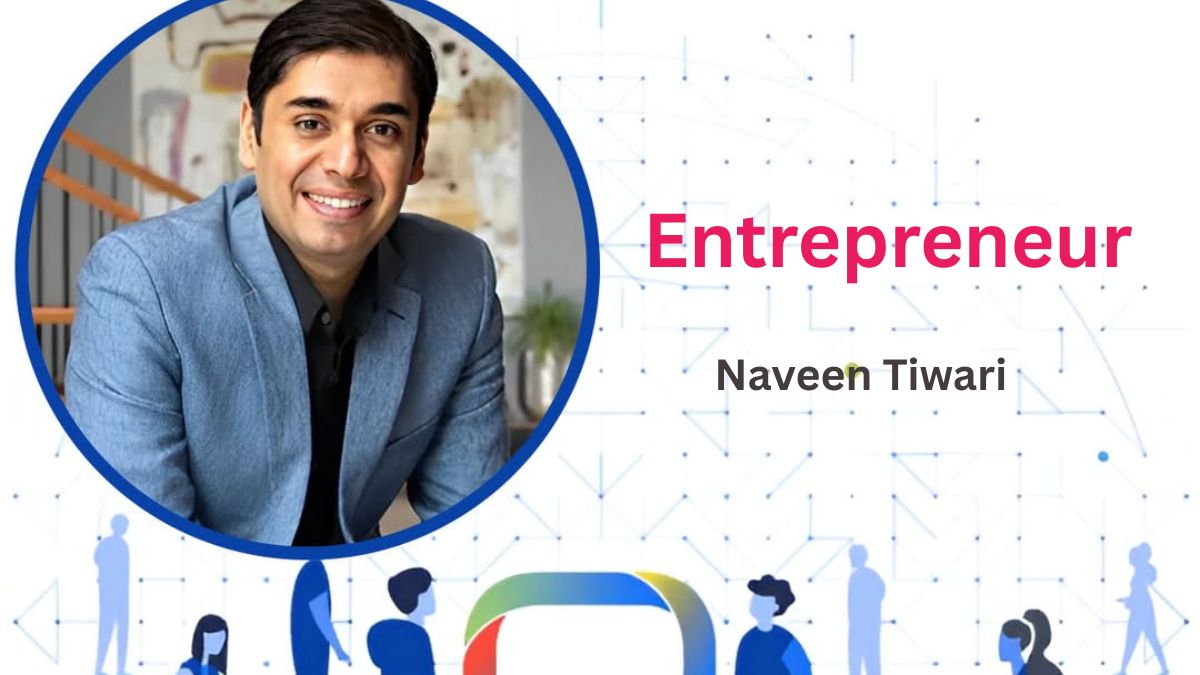
Introduction
In the world of Indian startups and global AdTech, few names shine as brightly as Naveen Tewari and the way he approaches ideas reveals a powerful, reliable roadmap for entrepreneurs everywhere.
In this deep dive we explore How Naveen Tewari Approaches Ideas his mindset, strategies, and frameworks that helped transform modest beginnings into the powerhouse InMobi and beyond. We examine his entrepreneurial journey, decision-making style, idea validation framework, leadership values, and learnings for early-stage founders. If you are building a startup, or are interested in influencer marketing, UGC Videos, or digital brand building Tewari’s story offers real, actionable lessons.
- Introduction
- 1. From mKhoj to InMobi: The Genesis of a Vision
- 2. Idea Validation & Execution: The Framework That Worked
- 3. Leadership Style & Cultural Philosophy
- 4. From Ads to Content: Reinventing the Digital Story
- 5. Lessons for Founders : What We Learn from How Naveen Tewari Approaches Ideas
- 6. Why Tewari’s Approach Matters for Influencer Marketing & UGC Era
- 7. InMobi & Glance : Snapshot of Scale & Impact
- 8. Common Misconceptions & Why Many Founders Miss the Mark
- 9. What “How Naveen Tewari Approaches Ideas” Means for You (as brand / influencer / creator)
- 10. (Bonus) Applying Tewari’s Philosophy to Modern Indian Digital Landscape
- Conclusion : Key Learnings & Takeaways
- Final Thoughts
- About Hobo.Video
1. From mKhoj to InMobi: The Genesis of a Vision
1.1 The early spark
Naveen Tewari started his professional journey after a mechanical-engineering degree from Indian Institute of Technology, Kanpur (IIT Kanpur) and an MBA from Harvard Business School. InMobi
Initially, he co-founded a venture called mKhoj a SMS-based search engine. The idea made sense in 2007 (pre-smartphone boom in India), but it did not scale as expected. Instead of giving up, the founders responded with bold pivot. They asked: What could really work globally? This pivot is the first major lesson: a great founder doesn’t cling to ideas, but to solving real problems.
1.2 The decisive pivot: mobile advertising
In 2008, mKhoj transformed into InMobi a mobile advertising platform (Wikipedia). By building SDKs and a real-time ad server (AdROItTM), Tewari and team offered a new alternative to monetise mobile apps and feature-phone ecosystems.
Their timing was perfect. Mobile was exploding worldwide; data-plans were becoming affordable; global brands were seeking scalable mobile reach. InMobi tapped that wave.
Within just a few years, InMobi had:
- Transformed from a dying SMS-search engine to a global ad-network.
- Attracted investments (Series A and B) ~$7.1 million in 2008, ~$8 million in 2010.
- Earned $200 million from SoftBank Group in 2011, which made InMobi India’s first unicorn.
That bold pivot underlines one of the most important aspects of How Naveen Tewari Approaches Ideas: he treats ideas as hypotheses. If early data rejects them, he is not afraid to reframe and reinvent.
2. Idea Validation & Execution: The Framework That Worked
2.1 Treat ideas like experiments
Tewari never held onto ego. When mKhoj failed to scale, he did not double down stubbornly. Instead he re-evaluated user needs, market readiness, and adopted data-driven reasoning. That spirit of humility is central to his approach. He emphasised user behaviour, not hype. The switch to adtech was based on emerging patterns: rise of mobile usage, need for app monetization, and the gap in ad networks.
This aligns with what many successful startups call an “Idea-to-Execution Framework for Startups.” First: identify user pain or unmet need. Second: build a minimal viable product or service. Third: test it quickly. Fourth: pivot (if required).
2.2 Scaling fast, globally
Once InMobi’s pivot proved promising, Tewari moved swiftly. By 2011, the company was already generating $100 million in revenue considered by him an “inflection point.” Fortune India
Growth accelerated rapidly. In 2012, the company grew its workforce from 200 to 900 in mere months (The Economic Times). But with fast hiring came chaos overlapping roles, unclear mandates, inefficiency. Tewari and team then added structure, while retaining agility.
This helps us see how his “Founders decision-making process” works: rapid execution followed by disciplined process building only when needed. Not over-engineering, but not anarchy either.
2.3 Diversifying through new verticals
By mid-2010s, global adtech competition intensified. Tewari foresaw that pure ad networks might face pressure. Instead of relying solely on core business, they started building new verticals.
Thus came Glance (lock-screen content discovery) and TruFactor (data-intelligence platform). Glance turned unicorn within two years of launch (Foundervoice). This “multi-vertical, multi-product” approach spread risk, opened fresh growth arenas, and built a lasting enterprise — not just a fast-growing startup.
3. Leadership Style & Cultural Philosophy
3.1 People-first culture over rigid policies
Many startups tumble because they scale too fast without building culture. Tewari avoided this by embedding deep trust. He believes that “having a set of people matters more than having perfect systems.” In 2024, during a fireside chat at TechSparks, he said 70–75% of InMobi’s leadership team has been with them for over eight years.
He also revealed the company has no rigid travel or leave policies. The idea: create an environment where people don’t just work for money. They stay because they care. This style relational, trust-based, human forms the foundation on which strong, lasting companies emerge.
3.2 Encouraging intrapreneurship & “boomerang” mindset
Tewari didn’t just build a company, he built a launchpad. InMobi encouraged employees to explore ideas, leave to build something new, and come back if things didn’t work. The “Boomerang programme” offered that flexibility. Many former InMobi employees went on to build iconic Indian startups for example, founders of Meesho and ET Money.
This mindset build, launch, experiment, fail safely defines what a “early-stage startup playbook” should be. It fosters innovation without risking livelihoods.
3.3 Long-term vision, not quick wins
Tewari never built InMobi for quick sale or exit. From 2007 onward, his vision aimed for global scale, sustainable growth, and diversified products. That long view differentiates his leadership mindset.
Even when faced with turbulence e.g. 2015 where business fell 25% quarter on quarter, they didn’t panic. Instead, they invested in new verticals (Glance, TruFactor) rather than retrench core business. This resilience underscores his founder decision-making process: stay grounded, stay strategic, think long-term.
4. From Ads to Content: Reinventing the Digital Story
Though InMobi’s roots lie in mobile advertising, Tewari saw a larger prize consumer-facing content experiences. He believed that content + commerce + personalisation would define the next wave.
Thus Glance was born in 2019.
Glance aimed to use the smartphone lock screen the space people see most to deliver personalised, bite-sized content (news, entertainment, video, shopping). This insight was simple, yet powerful. Instead of chasing ads alone, they leaned into consumer behaviour time spent, attention patterns, and the desire for instant gratification. That shift from ad-tech to content-tech reflects a broader vision: digital brand building, user stickiness, and long-term engagement.
In many ways, this evolution mirrors trends in influencer marketing, UGC, and creator economy. If brands want sustained engagement, they must treat users as audiences, not clicks.
5. Lessons for Founders : What We Learn from How Naveen Tewari Approaches Ideas
From Tewari’s journey, we can draw multiple key lessons relevant to today’s Indian startup ecosystem, influencer marketing space, and digital brand building in general:
- Treat ideas as hypotheses. Don’t cling when data says otherwise. Pivot fast when needed.
- Prioritise real user problems, not hype. Build for global scale, but start with genuine needs.
- Scale fast, but build culture before chaos eats you. Hiring without values kills growth later.
- Allow Safe Failure & Re-entry (“Boomerang”). Give employees wings — and let them return if they crash.
- Diversify early. Don’t rely on a single product or vertical — hedge by building multiple verticals.
- Think long-term, not short-term exit. Build companies that last decades.
- Adapt to user behaviour trends. As content consumption shifts, companies must evolve e.g. from ads to content & engagement.
These lessons form a robust framework an early-stage startup playbook, enriched by Tewari’s real-world experience, especially for Indian entrepreneurs.
6. Why Tewari’s Approach Matters for Influencer Marketing & UGC Era
The digital marketing world is already shifting toward user-generated content (UGC), influencer marketing, and AI-powered personalisation.
- In content discovery platforms like Glance and even ad networks like InMobi user behaviour and relevance matter more than raw push advertising. That mindset aligns with UGC Videos, AI influencer marketing, and best influencer platform strategies.
- For brands exploring “What is influencer marketing India?,” the Tewari framework underscores authenticity, relevance, and long-term engagement.
- As more Indian users consume content on mobile lock screens, apps, short-form video companies need to understand real user needs. Blind ad-bombardment won’t work.
- Whether you are a brand, a creator, or a budding influencer the road to success lies in understanding user pain, creating value, iterating fast, and building trust.
Thus, knowing How Naveen Tewari Approaches Ideas gives any brand or influencer a blueprint to build content-first, trust-driven, sustainable digital presence.
7. InMobi & Glance : Snapshot of Scale & Impact
Here are some real, public figures that show how far the vision scaled:
- InMobi was founded in 2007; by 2011 it became India’s first unicorn after raising $200 million.
- By FY23, InMobi reported revenue of US$281 million, with around 2,500 employees worldwide.
- In its earlier growth phase, InMobi served 800 million mobile users monthly across 165 countries. Forbes India
- Glance launched in 2019 emerged as a successful content & discovery platform under the same leadership.
These numbers aren’t vanity stats, they reflect consistent execution, global ambition, and the power of a founder’s vision grounded in real markets.
8. Common Misconceptions & Why Many Founders Miss the Mark
Many aspiring entrepreneurs believe that success depends on a unique idea. But Tewari’s experience shows otherwise: success lies in execution, adaptability, and cultural foundation. Others chase quick exits, aggressive valuations but that often leads to shallow companies built on hype. In contrast, Tewari built slowly, diversified, and stayed committed.
Some founders scale fast but overlook internal culture leading to burnout, confusion, or collapse. InMobi avoided that by building trust, enabling freedom, and maintaining values. Finally, in the era of influencer marketing and UGC, many brands rely on tactics: quick shoutouts, paid posts, or surface-level content. But Tewari’s approach demands deeper build genuine value, leverage real user behaviour, iterate with data, and scale with purpose.
9. What “How Naveen Tewari Approaches Ideas” Means for You (as brand / influencer / creator)
- If you are a brand or startup, don’t chase flash. Start by solving real user pain. Then experiment. Then scale.
- If you are an influencer or content creator, focus on stories, relevance, and building community not only on follower count or quick virality.
- Use UGC Videos, AI influencer marketing, and content-first strategy but anchor them in authenticity and user value.
- Build patience. Resist shortcuts. Embrace feedback. Create not only for today, but for long-term trust and brand loyalty.
10. (Bonus) Applying Tewari’s Philosophy to Modern Indian Digital Landscape
The Indian digital ecosystem today is richer than ever: mobile penetration is high, video consumption is booming, creator economy is exploding, and brands increasingly depend on influencer marketing India and UGC-driven growth.
In such a scenario, a founder’s or brand’s success will depend less on hype, and more on execution discipline, user trust, and consistent value delivery exactly what Tewari built over decades.
Whether you are building an Indian marketplace, a regional influencer-driven campaign, or a global consumer app — using this philosophy helps: test fast, listen to users, pivot if needed, build culture, diversify, and think long term.
Conclusion : Key Learnings & Takeaways
Summary: What We Learn from Tewari’s Journey
- Treat ideas as experiments, not sacred assets.
- Validate quickly; pivot when needed.
- Build fast but always nurture culture and trust.
- Encourage intrapreneurs, allow safe failure and re-entry (“Boomerang”).
- Diversify don’t over-rely on a single product or vertical.
- Keep a long-term vision think decades, not quarters.
- Focus on user-centric value, over superficial metrics or hype.
- Adapt to broader trends e.g., content consumption, mobile devices, creator economy.
Final Thoughts
If you aspire to build a strong, lasting company whether in advertising, content, influencer marketing, UGC Videos, or any digital brand building the way How Naveen Tewari Approaches Ideas offers a powerful blueprint. It’s humble experimentation, user focus, disciplined execution, and caring for people.
If you want to grow your brand with similar sincerity and strategy, consider working with Hobo.Video. We combine AI-driven content creation with human storytelling. We help brands run influencer marketing, create UGC content, manage marketplaces all with long-term vision and real value.
🔹 Act now: If you want to create real, meaningful influence in India register with Hobo.Video today and let’s build something that lasts.
About Hobo.Video
Hobo.Video is India’s leading AI-powered influencer marketing and UGC company. With over 2.25 million creators, it offers end-to-end campaign management designed for brand growth. The platform combines AI and human strategy for maximum ROI. Services include:
- Influencer marketing
- UGC content creation
- Celebrity endorsements
- Product feedback and testing
- Marketplace and seller reputation management
- Regional and niche influencer campaigns
Trusted by top brands like Himalaya, Wipro, Symphony, Baidyanath and the Good Glamm Group.
Stop wondering what’s next. Let’s unlock your true brand growth potential.We’re just a click away.
If you’re passionate, creative, and ready to earn, this is for you.Start now.
Frequently Asked Questions (10)
Q1. Who is Naveen Tewari and why is he famous?
Naveen Tewari is the co-founder and CEO of InMobi — India’s first unicorn startup in mobile advertising. He later launched Glance. He is well-known for building global tech companies starting from India.
Q2. What was the original idea behind InMobi?
Originally, Tewari co-founded mKhoj a SMS-based mobile search engine. When that didn’t scale, he pivoted to mobile advertising, creating InMobi.
Q3. How did Tewari decide to pivot from mKhoj to InMobi?
He observed mobile usage trends, noticed growing need for monetization of mobile apps, and realised the SMS-search model lacked scale. He treated the original idea as a hypothesis and changed direction based on data.
Q4. What made InMobi a unicorn?
Rapid growth, global expansion, high revenues, and large investments. By 2011, after raising $200 million from SoftBank, InMobi reached a valuation of $1 billion.
Q5. How important was company culture to InMobi’s success?
Very important. Tewari emphasised trust, long-term commitment, empowerment, and people-first values. Over 70% of leadership stayed for 8+ years.
Q6. What is the “Boomerang programme”?
It’s InMobi’s internal policy allowing employees to leave to build startups but return if needed. This encouraged intrapreneurship without penalising failure.
Q7. Why did Tewari launch Glance?
He foresaw that consumption habits would shift from advertising to content especially mobile-first, snackable content. Glance allowed them to enter consumer tech beyond ads.
Q8. Can this approach (Tewari’s) be useful for brands doing influencer marketing or UGC Videos?
Absolutely. His commitment to user value, long-term trust, and disciplined execution matches well with influencer marketing India, AI influencer marketing, and UGC-driven growth.
Q9. Is rapid scaling always good?
Not without culture and clear structure. Tewari scaled quickly but added structure when chaos arose. That balance gave sustainability.
Q10. What mindset should a new founder adopt, based on Tewari’s lessons?
Adopt a flexible, experimental mindset. Focus on real users and problems. Build team culture. Be ready to pivot. Think long-term. Prioritise trust, not hype.


