


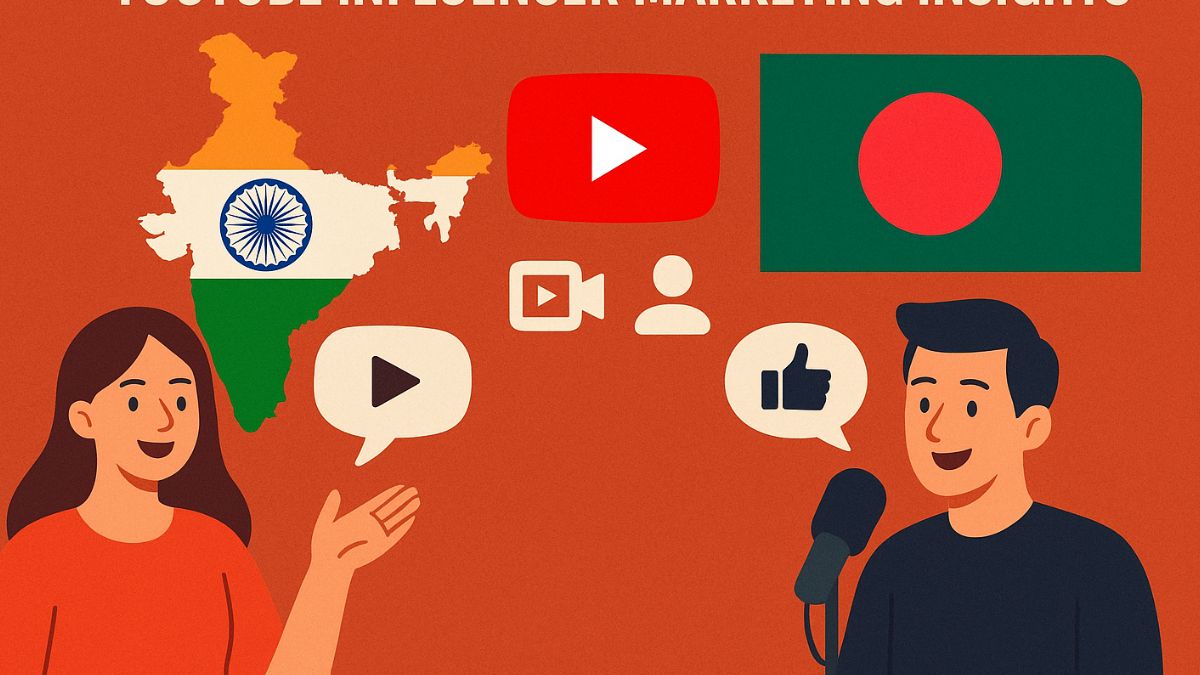
In the last five years, YouTube has turned into one of the most powerful marketing channels in South Asia. With millions of viewers consuming content daily, brands in India and Bangladesh are leveraging creators to build stronger connections with their audience. The competition between these two countries is fascinating because both markets are young, dynamic, and rapidly evolving. According to 2025 figures, India has more than 467 million active YouTube users, while Bangladesh has crossed 54 million active YouTube users, showing a massive opportunity for brands to scale. This rise of creators has given birth to the debate of India vs Bangladesh YouTube influencer marketing effectiveness. Both regions are unique in content style, audience preference, and brand collaborations.
The purpose of this article is to go beyond surface-level comparisons and provide a deep dive into YouTube influencer marketing in India and Bangladesh. We will explore social media marketing trends, regional influencer insights, creator economy shifts in South Asia, and cross-border opportunities. By the end, you will have a complete picture of how brands and influencers can collaborate better in this digital-first era.
- 1. The Rise of YouTube Influencer Marketing in India and Bangladesh
- 2. India vs Bangladesh: Why Compare YouTube Influencer Growth?
- 3. Social Media Marketing Trends Shaping YouTube in South Asia
- 4. The Creator Economy in South Asia: A Shared Journey
- 5. Regional Influencer Insights: What Brands Must Know
- 6. YouTube Brand Collaborations: India vs Bangladesh
- 7. Case Studies: Successful YouTube Influencer Campaigns
- 8. Cross-Border Influencer Marketing: Opportunities and Challenges
- 9. Video Content Marketing Strategies for Maximum Impact
- 10. Actionable Tips for Brands Entering India and Bangladesh
- 11. Conclusion: Learning from India vs Bangladesh YouTube Influencer Marketing
- About Hobo.Video
1. The Rise of YouTube Influencer Marketing in India and Bangladesh
YouTube has transformed from just an entertainment hub into a serious business platform. In India, creators have been collaborating with brands for over a decade, but the real boom happened post-2018 when digital ad spending started rising. In 2025, India’s digital advertising market is valued at over $17 billion, with influencer marketing contributing nearly $650 million. On the other hand, Bangladesh has seen an exponential rise in creator-driven content in the last five years. The influencer marketing sector there is worth nearly $60 million, a huge leap for a smaller economy.
Both markets are unique in their adoption. India’s advantage lies in its large, diverse audience spread across urban and rural areas. Bangladesh, meanwhile, has a more compact audience, but it is highly engaged with creators. This makes YouTube influencer marketing India andYouTube influencermarketing Bangladesh distinct yet equally powerful avenues for brands.
2. India vs Bangladesh: Why Compare YouTube Influencer Growth?
The comparison of India vs Bangladesh YouTube influencer marketing is not about competition but about learning. India is a massive market with thousands of top influencers in India across niches like tech, beauty, travel, and education. Bangladesh, though smaller, has built highly loyal creator-fan communities.
Brands comparing these markets often ask questions like: Which country offers better ROI? Where is audience trust higher? How do brand collaborations differ? The answers depend on several factors, including audience demographics, regional trends, and campaign objectives. For instance, regional influencer insights suggest Indian audiences are price-conscious but open to experimenting with global brands, while Bangladeshi audiences strongly prefer local authenticity.
3. Social Media Marketing Trends Shaping YouTube in South Asia
One of the strongest forces driving growth is the evolution of social media marketing trends. Short-form videos, influencer-led shopping experiences, and authentic storytelling are dominating. In India, YouTube Shorts has become a major driver of new followers. In fact, over 70% of YouTube creators in India actively use Shorts to grow engagement.
Bangladesh follows a similar trend but with a stronger cultural storytelling angle. Religious festivals, regional traditions, and lifestyle vlogs are highly popular in the Bangladeshi creator ecosystem. These video content marketing strategies help brands penetrate deeply into cultural conversations.
In both countries, the rise ofAI influencer marketingand AI UGC is reshaping the ecosystem. AI-powered tools help analyze campaign success, predict engagement, and even co-create content. This is where platforms like Hobo.Video step in with advanced tools for creators and brands.
4. The Creator Economy in South Asia: A Shared Journey
The creator economy in South Asia is expanding faster than any other region. India already has over 100 million creators, including micro, macro, and celebrity influencers. The influencer marketing India sector is structured with agencies, platforms, and brands investing heavily.
Bangladesh is smaller in scale but no less impactful. Over 200,000 creators actively engage in brand collaborations, particularly in sectors like beauty, gaming, food, and education. Interestingly, Bangladesh has a higher percentage of regional-language creators, while India has a mix of English, Hindi, and regional languages.
Both countries are part of a cross-border influencer marketing wave where brands see South Asia as a single opportunity. For example, FMCG brands often run campaigns targeting both Indian and Bangladeshi audiences simultaneously. This merging ecosystem proves the whole truth that digital influence knows no borders.
5. Regional Influencer Insights: What Brands Must Know
When it comes to regional influencer insights, India has a wider influencer spectrum. From famous Instagram influencers to niche YouTube creators, brands can find a perfect match for every campaign. On the other hand, Bangladesh offers fewer creators but with deeply loyal audiences.
For example, Indian tech influencers often influence purchase decisions worth millions in smartphone and gadget sales. In contrast, Bangladeshi food and lifestyle creators dominate cultural influence by shaping local habits and consumption patterns.
Brands must understand that audience loyalty and relatability often matter more than follower numbers. In fact, a recent survey showed that micro-influencers in both India and Bangladesh have 3x higher engagement rates compared to mega influencers. This proves that authenticity beats scale in many campaigns.
6. YouTube Brand Collaborations: India vs Bangladesh
YouTube brand collaborations are the backbone of influencer marketing. In India, collaborations range from product reviews to sponsored travel vlogs and educational tutorials. The diversity is unmatched. Bangladesh, however, has a different strength. Collaborations there often include live sessions, personal storytelling, and family-inclusive vlogs.
Indian brands usually focus on scaling and reaching millions of users. Bangladeshi brands lean towards creating deeper cultural resonance with fewer but highly impactful creators. This difference is crucial for brands planning campaigns across both countries. The influencer, whether in India or Bangladesh, succeeds only when the content feels natural and not forced.
7. Case Studies: Successful YouTube Influencer Campaigns
- India – Smartphone Launch
A top smartphone brand used more than 100 tech influencers in India to promote its 2024 flagship device. Within two weeks, the campaign generated over 45 million views and a 12% increase in pre-orders. - Bangladesh – Food Brand Collaboration
A Bangladeshi food company collaborated with 25 lifestyle vloggers during Ramadan. The campaign achieved more than 15 million organic views and boosted sales by 28% in that month.
These examples highlight how YouTube influencer campaigns 2025 are shaping consumer decisions in very different ways across the two countries.
Want to partner with a Bangladeshi YouTube influencer?Read hereto know the tips for a long-term partnership.
8. Cross-Border Influencer Marketing: Opportunities and Challenges
The concept of cross-border influencer marketing is becoming highly relevant. Many Indian and Bangladeshi brands want to target diaspora communities in South Asia and the Middle East. For example, beauty brands collaborate with influencers from both countries to create campaigns that resonate with cultural similarities.
The challenge, however, lies in understanding regulations, pricing, and content preferences. Payment gateways, contract management, and cultural sensitivity play big roles. Despite these hurdles, the opportunity is massive because the combined population of India and Bangladesh crosses 1.5 billion.
9. Video Content Marketing Strategies for Maximum Impact
Every brand needs solid video content marketing strategies to succeed on YouTube. In India, strategies include using Shorts, engaging in Q&A videos, and doing product tutorials. In Bangladesh, strategies often revolve around storytelling, family moments, and lifestyle hacks.
One critical element is UGC Videos, which add authenticity. According toWisernotify2025 reports, over 79% of consumers trust UGC more than traditional ads. Brands working with creators must therefore encourage natural, user-driven storytelling.
Hobo.Video, as a top influencer marketing company, provides brands with AI-driven insights to design such strategies. This mix of UGC Videos, influencer collaborations, and authentic storytelling maximizes ROI.
10. Actionable Tips for Brands Entering India and Bangladesh
- Understand Audience Behavior
In India, audiences respond strongly to discounts and value-driven campaigns. In Bangladesh, emotions and cultural representation work best. Both need localized strategies to succeed. - Choose the Right Influencers
Don’t just chase top influencers in India. Micro-influencers often give better engagement. In Bangladesh, authenticity should be the first filter when choosing creators. - Use Technology Smartly
AI influencer marketing and AI UGC tools help analyze campaigns deeply. Platforms like Hobo.Video provides AI-driven insights that reduce guesswork and improve targeting. - Experiment with Formats
From YouTube Shorts to long-form tutorials, brands must test different formats. Consistency across content styles ensures higher recall value. - Measure, Learn, and Adapt
Track engagement, conversions, and ROI regularly. The influencer landscape changes fast, so agility is the key to staying ahead.
11. Conclusion: Learning from India vs Bangladesh YouTube Influencer Marketing
The comparison of India vsBangladeshYouTube influencer ecosystems shows that both markets are growing but in different directions. India brings scale and diversity, while Bangladesh offers intimacy and cultural depth. Together, they showcase the full spectrum of the creator economy in South Asia.
Brands must focus on localized strategies, invest in YouTube brand collaborations, and adopt video content marketing strategies that align with cultural context. The whole truth is simple: success in influencer marketing comes from authenticity, not just numbers.
About Hobo.Video
Hobo.Videois India’s leading AI-powered influencer marketing and UGC company. With over 2.25 million creators, it offers end-to-end campaign management designed for brand growth. The platform combines AI and human strategy for maximum ROI.
Services include:
- Influencer marketing
- UGC content creation
- Celebrity endorsements
- Product feedback and testing
- Marketplace and seller reputation management
- Regional and niche influencer campaigns
Trusted by top brands like Himalaya, Wipro, Symphony, Baidyanath, and the Good Glamm Group.
If you’re a brand ready to break the mold and achieve hypergrowth, we’re already on your wavelength.Let’s build something powerful together.
Ready to grow your influence and earn doing what you love?Join the fam.
FAQs on India vs Bangladesh YouTube Influencer Marketing
Q1. What is the main difference between YouTube influencer marketing India and Bangladesh?
India offers larger scale with diverse creators, while Bangladesh focuses on loyal and culturally connected audiences.
TitleQ2. Why is India vs Bangladesh YouTube influencer comparison important?
It helps brands understand two unique but connected markets and design cross-border influencer marketing strategies.
Q3. How big is YouTube influencer marketing India?
In 2025, the Indian influencer market is worth $650 million, with YouTube being a dominant channel.
Q4. How fast is YouTube influencer marketing Bangladesh growing?
Bangladesh’s influencer market is worth $60 million, showing double-digit growth each year.
Q5. What are the top social media marketing trends in both countries?
Short-form videos, storytelling, UGC Videos, and AI influencer marketing dominate the trends.


