
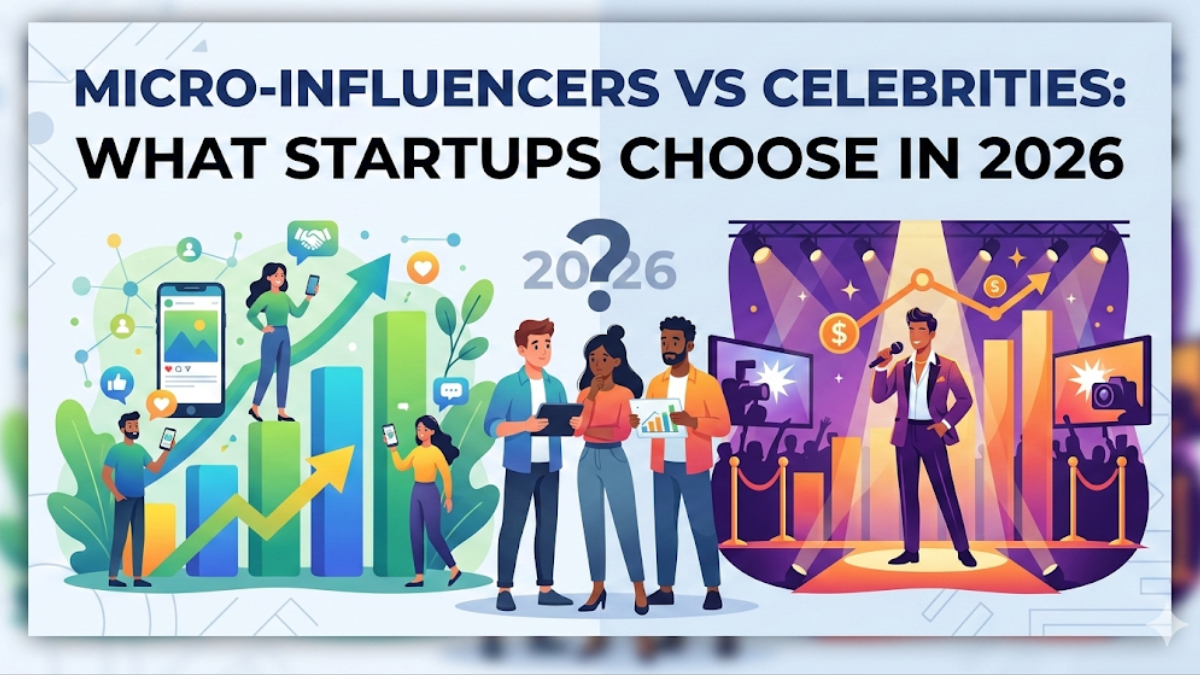
Imagine a startup spending ₹50 lakh on a celebrity campaign and receiving fewer sales than a ₹3 lakh micro-influencer campaign. This situation happens more often than most founders expect. That is why the debate around micro influencers vs celebrities for startups has become one of the most important marketing conversations in India’s startup ecosystem. Founders constantly analyse micro influencers vs celebrities for startups before allocating marketing budgets, because visibility alone is no longer enough. While celebrities can create massive awareness overnight, micro creators often build stronger trust and deeper relationships with audiences.
This shift is rapidly transforming influencer marketing for startups, especially within India’s fast-growing creator economy.According to Statista,the global influencer marketing industry is expected to reach $24 billion by 2025, while India already has over 80 million creators, making influencer marketing India one of the most powerful growth channels for emerging brands. Platforms like Hobo.Video, a top influencer marketing company, are accelerating this change through AI influencer marketing, AI UGC, and creator-driven campaigns, enabling startups to run smarter, data-driven influencer collaborations instead of relying only on celebrity promotions.
- 1. Why Influencer Marketing for Startups Is Growing Rapidly
- 2. Understanding Micro Influencers and Celebrity Influencers
- 3. Micro Influencers vs Celebrities for Startups: Key Differences
- 4. Influencer Marketing Strategies Comparison
- 5. Real Startup Case Studies
- 6. Micro Influencers vs Celebrities for Startups: Decision Framework
- Conclusion
- About Hobo.Video
1. Why Influencer Marketing for Startups Is Growing Rapidly
1.1 Trust Has Become the New Marketing Currency
Traditional advertising is losing effectiveness. Consumers today trust people more than advertisements. This is why influencer marketing for startups has become such a powerful strategy. According to a Nielsen study, 82% of consumers trust recommendations from individuals over brands. This statistic explains the growing benefits of influencer marketing for startups. When creators genuinely recommend a product, audiences feel the recommendation is authentic rather than promotional. Moreover, influencer campaigns also generate UGC Videos. These videos often outperform traditional ads because they show real product experiences. For startups trying to build early trust, influencer partnerships offer a powerful shortcut to credibility.
1.2 The Data Behind Influencer Marketing ROI
Every startup founder wants measurable results. That is why influencer marketing ROI statistics matter when deciding between marketing channels.
According to Influencer Marketing Hub:
• Businesses earn $5.78 for every $1 spent on influencer campaigns
• Micro creators generate 60% more engagement than macro influencers
• UGC content drives 29% higher conversion rates
These numbers explain why founders carefully evaluate micro influencers vs celebrities for startups before choosing a strategy. When campaigns are executed properly, influencer collaborations can become one of the most efficient growth engines for young brands.

Amplify Your Brand,
One Influence at a Time.
2. Understanding Micro Influencers and Celebrity Influencers
2.1 What Are Micro Influencers?
Micro influencers usually have 10,000 to 100,000 followers. However, follower count alone does not define their influence. Their communities tend to be highly engaged. The average micro influencer engagement rate ranges between 3% and 6%. Celebrity accounts often struggle to reach 1% engagement. Because of this difference, many founders build a scalable micro influencer marketing strategy. These creators frequently produce authentic product experiences through UGC Videos. As a result, audiences perceive their recommendations as genuine advice rather than advertising. This authenticity is one of the biggest benefits of influencer marketing for startups.
2.2 Who Are Celebrity Influencers?
Celebrity influencers include actors, athletes, and famous Instagram influencers with millions of followers. Celebrity collaborations usually focus on mass reach. A single celebrity post can expose a brand to millions of viewers instantly. However, when comparing celebrity endorsements vs influencer marketing, startups often notice a major limitation: lack of personal connection. Many celebrities promote multiple brands simultaneously. Consequently, audiences may question authenticity. This is why founders often analyse micro influencers vs celebrity influencers carefully before investing large marketing budgets.
3. Micro Influencers vs Celebrities for Startups: Key Differences
3.1 Trust and Authenticity
Trust is the most important factor in modern digital marketing. This explains why micro influencers vs celebrities for startups has become such a major debate. Micro creators usually build niche communities around specific interests like skincare, fitness, parenting, or technology. Because of this focused audience, their recommendations feel more personal. Meanwhile, celebrity endorsements vs influencer marketing campaigns often focus primarily on visibility rather than engagement. Therefore, when evaluating influencer marketing choices for startups, many founders prioritise authenticity over reach.
3.2 Cost Efficiency
Startup budgets rarely allow unlimited marketing spending. Celebrity endorsements can cost anywhere between ₹5 lakh to ₹1 crore depending on popularity. However, the same budget can fund collaborations with 20 to 40 micro influencers. This difference significantly improves campaign testing. Startups can experiment with multiple creators and identify which audiences respond best. As a result, micro influencers vs celebrities for startups often becomes a question of efficiency versus visibility. A diversified creator campaign also improves influencer marketing roi statistics because risk spreads across several creators.Brands increasingly favor 10-20micro-influencers over a single celebrityfor sustained trust and 2.3x ROI in digital campaigns.
3.3 Engagement and Conversion
Engagement is the bridge between marketing and sales.Research from Socialbakersshows that micro influencers produce 60% higher engagement rates compared with macro influencers. In fact, in 2025, nearly 87% of brands shifted toward micro-influencers because they deliver about 60%higher engagement compared with macro or celebrity influencers.Therefore, when comparing micro influencer vs macro influencer, smaller creators often generate stronger conversations. This engagement becomes even more powerful when brands combine influencer content with UGC Videos. Such content feels authentic and relatable, making audiences more likely to trust the product recommendation.
4. Influencer Marketing Strategies Comparison
4.1 Celebrity-Driven Campaign Strategy
Some startups still choose celebrities for major product launches. Celebrity collaborations generate immediate attention and strong brand recall. However, an influencer marketing strategies comparison often reveals that celebrity campaigns require significant budgets and high production costs. Additionally, the content may feel scripted rather than natural. Without authentic storytelling, these campaigns sometimes struggle to maintain long-term engagement.
4.2 Micro Influencer Network Strategy
A distributed creator network has become one of the most effective growth models. Instead of relying on a single celebrity, brands collaborate with dozens of creators who produce authentic content. This forms the foundation of a scalable micro influencer marketing strategy. Each creator generates unique UGC Videos, allowing the brand to experiment with multiple storytelling formats. Platforms like Hobo.Video, widely recognised as the best influencer platform, help brands discover top influencers in India using data and AI insights. Consequently, startups achieve stronger campaign performance and improved influencer marketing roi statistics.
5. Real Startup Case Studies
5.1 Mamaearth’s Micro Influencer Growth Strategy
One of the most famous Indian startup examples comes from Mamaearth. During its early growth stage, the company collaborated with hundreds of micro influencers instead of focusing solely on celebrities. The brand used parenting bloggers and lifestyle creators to build credibility among young families. This approach dramatically increased brand trust and product adoption. The case demonstrates how micro influencers vs celebrities for startups can influence long-term growth strategies.
5.2 The Whole Truth Community Marketing Model
Another example is The Whole Truth, a nutrition startup that prioritised community engagement over celebrity marketing. Instead of celebrity endorsements, the brand worked with health educators and fitness creators. These creators explained product ingredients and benefits through honest reviews. The result was a loyal customer community and strong organic growth. This campaign highlights the real benefits of influencer marketing for startups.
5.3 Niche Expertise Drives Higher Engagement
Another reason startups increasingly prefer micro creators is their deep niche expertise. Unlike celebrities who promote products across many industries, micro influencers usually focus on a specific category such as skincare, fashion, fitness, parenting, or technology. Because their content consistently revolves around a single niche, their followers see them as trusted voices rather than promotional figures. This credibility plays a huge role in influencer marketing for startups, where building trust quickly can determine whether a campaign succeeds or fails.
Engagement data strongly supports this advantage.Female influencers in beauty and fashion nichesaverage around 5.6% engagement on Instagram, compared to under 1.2% for celebrity accounts in the same categories. This dramatic difference shows how niche creators generate stronger conversations with their audiences. As a result, many founders reconsider the debate around micro influencers vs celebrities for startups when planning campaigns. Instead of relying only on celebrity visibility, they build a targeted micro influencer marketing strategy that focuses on creators whose audiences already care about the product category.
6. Micro Influencers vs Celebrities for Startups: Decision Framework
When deciding between creators and celebrities, founders often consider three key factors.
| Factor | Micro Influencers | Celebrities |
|---|---|---|
| Cost | Low | Very High |
| Engagement | High | Low |
| Trust | High | Medium |
| Reach | Moderate | Massive |
| Conversion Potential | Strong | Uncertain |
Therefore, micro influencers vs celebrities for startups is not about choosing one over the other. The smartest brands combine both strategies.
For example:
• Celebrities create awareness
• Micro creators build trust
• UGC creators drive conversions
This combination produces the most effective influencer marketing strategies comparison results.
Conclusion
Key Takeaways
Here are the most important lessons from the discussion around micro influencers vs celebrities for startups.
- Micro influencers deliver higher engagement and stronger trust
- Celebrity endorsements create massive visibility
- Creator networks improve influencer marketing roi statistics
- Authentic UGC Videos increase conversion rates
- Data-driven AI influencer marketing improves campaign results
Therefore, startups should focus on building long-term creator relationships rather than one-time promotions.
About Hobo.Video
Hobo.Video is India’s leading AI-powered influencer marketing and UGC company. With over 2.25 million creators, the platform offers end-to-end campaign management designed for brand growth. The company combines AI influencer marketing with human strategy to deliver measurable results.
Services include:
• Influencer marketing
• UGC content creation
• Celebrity endorsements
• Product feedback and testing
• Marketplace and seller reputation management
• Regional and niche influencer campaigns
Trusted by brands like Himalaya, Wipro, Symphony, Baidyanath, and the Good Glamm Group.
If you’re a brand ready to break the mold and achieve hypergrowth, we’re already on your wavelength. Let’s build something powerful together.
If you’re an influencer starting out or scaling up, this is your next step. Join in.
FAQs
Why do startups prefer micro influencers?
Micro influencers have closer relationships with their audiences. Their recommendations feel genuine and trustworthy, which improves engagement and conversions.
Are celebrity endorsements still effective?
Yes. Celebrity endorsements can create instant awareness. However, startups often combine celebrities with micro creators to balance reach and authenticity.
What is the average micro influencer engagement rate?
The typical micro influencer engagement rate ranges between 3% and 6%, which is significantly higher than most celebrity accounts.
What are the benefits of influencer marketing for startups?
The biggest benefits of influencer marketing for startups include credibility, social proof, and access to niche communities.
How does influencer marketing improve ROI?
Strong creator partnerships generate authentic recommendations, which improve influencer marketing roi statistics and customer conversions.
What is AI influencer marketing?
AI influencer marketing uses analytics and machine learning to identify the best creators for campaigns.
What are UGC videos?
UGC Videos are creator-generated videos showing real product experiences.
How do brands find top influencers in India?
Brands often use influencer platforms that analyse engagement, audience demographics, and campaign performance.
What is the difference between micro and macro influencers?
Micro influencers have smaller audiences but stronger engagement, while macro influencers have larger reach but lower interaction.
How can someone become an influencer?
Creators can learn how to become an influencer by consistently sharing authentic content and building an engaged community.
