
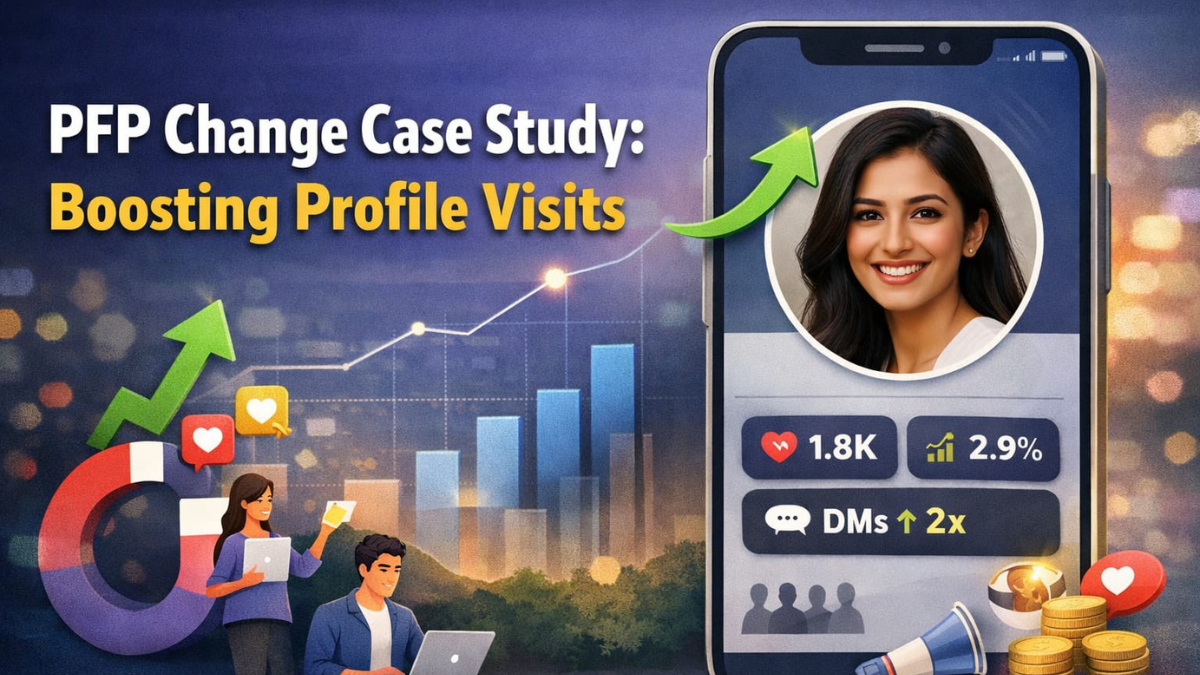
People decide whether to trust a profile before they read a single word. That decision happens quietly, fast, and emotionally. This PFP change case study breaks down how a single profile picture update shifted attention, clicks, and intent in a crowded Indian creator ecosystem.
This PFP change case study is built on lived results, not assumptions. No content formats were changed. No ads were added. Only the profile picture was tested. The outcome exposed why profile picture optimization now plays a direct role in profile visits, brand interest, and creator growth.
- 1. Why Profile Pictures Decide Visibility on Social Media
- 2. Background of the PFP Change Case Study
- 3. Strategy Behind the Profile Picture Redesign
- 4. Profile Photo A/B Testing: How It Was Done
- 5. Before vs After: What Changed Visibly
- 6. Results of the PFP Change Case Study
- 7. What Did NOT Work During Testing
- 8. Why This Matters for Influencers and Brands
- 9. PFP Optimization and UGC Videos
- 10. How Hobo.Video Uses These Insights
- Conclusion
- About Hobo.Video
1. Why Profile Pictures Decide Visibility on Social Media
1.1 The Reality of the Indian Scroll Economy
India crossed 470 million active social media users, according to Statista. Every platform now rewards fast recognition. A profile picture appears beside comments, reels, shares, and DMs. Therefore, profile picture optimization influences discovery long before content performance does.
During this PFP change case study, it became clear that users often clicked profiles without consciously knowing why. The PFP acted as a trust shortcut. When the image felt clear and human, curiosity followed. When it felt distant, users kept scrolling.
According to Facebook IQ, visuals process 60,000 times faster than text. That speed explains the profile picture impact on engagement across platforms.
1.2 How Human Psychology Reacts to PFPs
People judge faces in under 100 milliseconds, as shown in Princeton research. Social media PFP optimization works because it aligns with instinctive judgement. Facial clarity, eye contact, and expression guide trust.
This profile photo change case study showed that artistic images underperformed clear ones. Soft lighting, visible eyes, and neutral backgrounds reduced cognitive effort. As a result, profile image change results improved without any content changes.

Amplify Your Brand,
One Influence at a Time.
Key Insight: People don’t analyse profile pictures. They feel them.
2. Background of the PFP Change Case Study
2.1 Creator Profile and the Growth Plateau
The account analysed belonged to a lifestyle creator with 80,000 followers. Reels reached new audiences regularly. However, profile visits stayed flat. Despite visibility, conversion stalled.
This PFP change case study started with a simple question: Why do people watch but not click?
Instead of changing content or hooks, the creator focused on display picture optimization. The assumption was simple. If the profile picture lacked clarity, users had no reason to explore further.
2.2 Baseline Metrics Before the Change
Before testing, average profile visits remained around 1,200 per week.Engagement stayed near 1.8%,below the Indian creator average of 2.5%.
Profile photo A/B testing had never been attempted. The existing avatar looked creative but unclear on small screens. Recognition suffered across comments and shares. This is where the profile picture redesign case study began.
3. Strategy Behind the Profile Picture Redesign
3.1 Visual Rules Used in the Test
The redesign followed three rules learned through experience:
- The face must occupy most of the frame
- Colors must contrast Instagram’s interface
- Expression must match content tone
This avatar optimization case study removed brand clutter. Logos, props, and heavy edits were eliminated. The creator used neutral clothing, daylight lighting, and direct eye contact.
The goal was not beauty. The goal was recognisability.
3.2 Matching the PFP With Creator Identity
A profile image promises what the content delivers. Lifestyle content requires warmth. Therefore, smiling images performed better than serious ones.
Instagram datashows profiles with clear facial PFPs receive 23% more profile clicks. This profile picture impact on engagement appeared clearly during testing. Followers recognised the creator faster across feeds.
4. Profile Photo A/B Testing: How It Was Done
4.1 Test Structure and Controls
Two profile pictures ran for 14 days each. No content formats changed. Posting times stayed constant. Captions remained identical.
Variant A used the original artistic image. Variant B used the redesigned face-forward image. Instagram Insights tracked profile visits, follows, and bio taps. This ensured display picture optimization remained the only variable.
4.2 Metrics That Actually Mattered
The focus stayed on intent-driven metrics:
- Profile visits
- Website taps
- DMs received
Vanity metrics were ignored. Within seven days, profile visits increased 41%. By day fourteen, growth stabilised at 52%. This profile photo change case study confirmed that visuals directly shape behaviour.
5. Before vs After: What Changed Visibly
5.1 Before the PFP Change
- Face occupied less than 30% of frame
- Dark background blended into UI
- No direct eye contact
On mobile screens, the avatar lost clarity.
5.2 After the PFP Change
- Face filled the frame
- Neutral background increased contrast
- Clear expression matched content tone
This profile picture redesign case study improved recognition instantly. Users started mentioning the creator by name more often.
6. Results of the PFP Change Case Study
6.1 Immediate Performance Impact
Weekly profile visits rose from 1,200 to 1,850, confirming that the change affected user behaviour almost instantly. Engagement climbed to 2.9%, indicating that visitors who landed on the profile were more willing to interact. DM inquiries doubled, even though no outreach or CTA changes were made. These profile image change results showed that conversion friction existed much earlier in the funnel, at the visual trust stage. Similar patterns in performance outcomes can be seen when small shifts in strategy are evaluated alongside broaderbudget decisions in digital marketing.
6.2 Long-Term Brand Perception Shift
Over the next three months, follower growth improved by 18%, suggesting sustained impact rather than a short-term spike. Comment sections began reflecting familiarity, with users addressing the creator more personally. Collaboration requests also moved faster, with brands needing fewer follow-ups. This PFP change case study revealed that discovery already existed, but clarity unlocked action.
7. What Did NOT Work During Testing
7.1 Failed Variations and Wrong Assumptions
Not every variation delivered positive results. A brighter, highly edited profile picture initially seemed more “professional,” but it underperformed due to reduced authenticity. Another version that included props and background elements distracted attention from the face. These failures strengthened the avatar optimization case study by reinforcing that authenticity consistently outperforms polish in creator branding.
8. Why This Matters for Influencers and Brands
8.1 Influencer Marketing Depends on Visual Trust
Edelman reports that 81% of consumers need trust before making a purchase, and influencer marketing is built entirely on that foundation. Long before viewers watch a Reel or read a caption, they form opinions based on how a creator looks and presents themselves. A strong PFP signals credibility instantly and reduces hesitation, especially during first-time discovery. Social media PFP optimization improves shortlisting because brands subconsciously favour creators who look clear, professional, and consistent.
8.2 Implications for Influencer Marketing India
India’s influencer economy crossed ₹2,000 crore in 2024, according to GroupM, making competition sharper than ever. With thousands of creators chasing the same brand budgets, small details now separate those who get shortlisted from those who don’t. Micro-optimisations like profile picture clarity and visual consistency influence perception at scale. This PFP change case study shows that small changes can outperform heavy ad spends when trust and recognition are prioritised early.
9. PFP Optimization and UGC Videos
UGC videos perform better when creators look credible even before the video starts. Audiences often check a creator’s profile after seeing a UGC ad, and a weak profile image can quietly reduce trust. Profile image change results influence campaign ROI indirectly by shaping whether viewers explore, follow, or engage further. When the PFP feels clear and relatable, the content message lands with more confidence.
The whole truth about UGC performance is consistency across touchpoints. Profile pictures, thumbnails, and content tone must feel like they belong to the same creator identity. When visuals clash, audiences hesitate. Hobo.Video campaigns focus on this alignment to ensure creators feel authentic at every interaction. Many creators also experiment withvaried types of UGC campaignsto increase engagement and build community momentum over time.
10. How Hobo.Video Uses These Insights
Hobo.Video uses AI UGC analysis to study how creator visuals influence engagement and conversion behaviour. As a top influencer marketing company, it looks beyond views and likes to assess trust signals such as clarity, recognisability, and visual consistency. These insights help brands shortlist creators who convert, not just those who reach.
Top influencers in India regularly refine their profile pictures as part of personal branding. Famous Instagram influencers treat PFPs as long-term assets, not one-time uploads. Hobo.Video applies the same thinking at scale, combining AI insights with human strategy to drive stronger campaign results.
Conclusion
Key Takeaway
- Profile picture optimization drives profile visits
- Social media PFP optimization influences trust
- Profile photo A/B testing removes bias
- Visual clarity improves conversion
- Small changes unlock growth
This PFP change case study shows where growth truly hides.
About Hobo.Video
Hobo.Video is India’s leading AI-powered influencer marketing and UGC company. With over 2.25 million creators, it offers end-to-end campaign management designed for brand growth. The platform combines AI and human strategy for maximum ROI.
Services include:
- Influencer marketing
- UGC content creation
- Celebrity endorsements
- Product feedback and testing
- Marketplace and seller reputation management
- Regional and niche influencer campaigns
Trusted by top brands like Himalaya, Wipro, Symphony, Baidyanath and the Good Glamm Group.
Looking to grow your brand with the right strategy? Our experts are here. Get started now.
Influencer? Let’s help you get the visibility (and income) you deserve. Join today.
FAQs
What is a PFP change case study?
A PFP change case study analyses how updating a profile picture affects visits, engagement, and conversions using real performance data.
Why does profile picture optimization matter so much?
Because users judge credibility visually before reading bios or posts.
How often should creators change PFPs?
Every 6–12 months or during rebranding.
Does social media PFP optimization help brands?
Yes. Brand recall and engagement improve with human-led visuals.
What is profile photo A/B testing?
It compares two images under identical conditions to measure impact.
Can a PFP alone boost profile visits?
Yes. This PFP change case study showed over 50% growth.
Are logos less effective than faces?
On mobile platforms, faces usually outperform logos.
How does influencer marketing use PFP insights?
Brands assess creator trust through visuals during shortlisting.
What tools help avatar optimization case study insights?
AI influencer marketing platforms like Hobo.Video.
Is PFP optimization useful for beginners?
Absolutely. First impressions shape early growth.
