
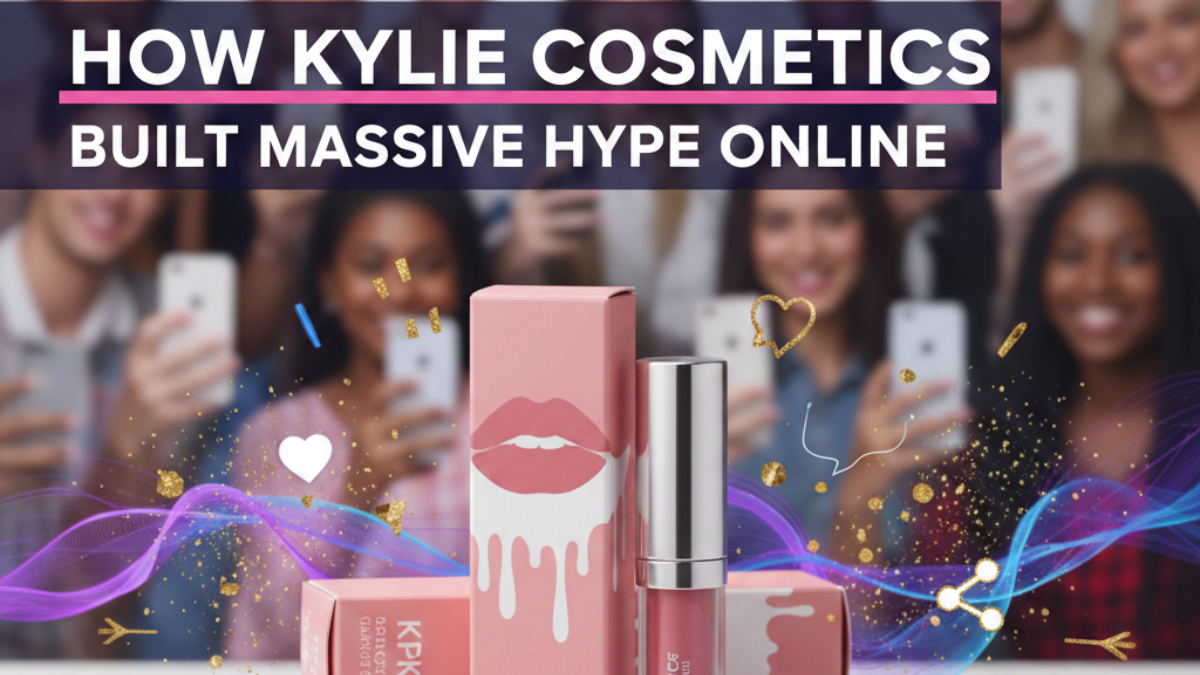
In 2015, 15,000 Kylie Lip Kits disappeared from the internet in less than 10 minutes. There were no television commercials, no billboards, and no retail counters backing the launch. Instead, the entire momentum was driven by Instagram teasers, a simple countdown, and millions of followers refreshing their screens at the same time. This moment perfectly captured the power of the Kylie Cosmetics marketing strategy, which relied on digital anticipation rather than expensive advertising. It showed that attention, when directed correctly, can outperform traditional media budgets. Almost overnight, beauty marketing began shifting toward social-first, drop-driven campaigns.
The Kylie Cosmetics marketing strategy did not depend on luck or celebrity status alone. It combined tight control over social media communication, limited inventory to spark urgency, and carefully chosen influencer collaborations to amplify reach. Over time, this structured approach turned a personal brand into a billion-dollar beauty business. More importantly, it proved that direct-to-consumer brands could build massive hype without relying on retail giants. Even today, founders and marketers continue to analyse this model as one of the most influential digital growth playbooks in modern beauty.
- 1. The Foundation: A Direct-to-Consumer Beauty Brand
- 2. Kylie Cosmetics Marketing Strategy: The Core System
- 3. Breaking Down the Funnel Behind the Hype
- 4. Personal Branding as a Marketing Engine
- 5. Competitive Context: Kylie vs Fenty
- 6. Challenges and Evolution
- 7. Lessons for Indian D2C Brands
- 8. Practical Drop Strategy Checklist
- Conclusion
- About Hobo.Video
1. The Foundation: A Direct-to-Consumer Beauty Brand
1.1 Launching Without Retail Dependency
Most beauty brands begin with retail partnerships. Kylie chose a different path. She launched Kylie Cosmetics exclusively online. That decision gave her complete control over pricing, inventory, and customer data.According to Forbes,Kylie Cosmetics generated $360 million in revenue in 2018, just three years after its launch. In 2019, Coty acquired a 51% stake for $600 million, valuing the company at $1.2 billion. These numbers validated the strength of the Kylie Cosmetics business model. Because she owned the sales channel, she could adjust stock levels instantly. This flexibility later became central to Kylie Cosmetics scarcity marketing.
2. Kylie Cosmetics Marketing Strategy: The Core System
At its heart, the Kylie Cosmetics marketing strategy relied on three pillars: anticipation, scarcity, and influence.
2.1 Anticipation Through Social Media Teasing
Weeks before every product launch, Kylie began posting hints. Swatches appeared on Instagram Stories. Close-up product shots surfaced. Shade names leaked slowly. This steady stream of content built emotional tension. The Kylie Cosmetics social media strategy treated Instagram as both a showroom and a storytelling space. Instead of pushing hard sales messages, Kylie invited followers into the process. Fans felt involved, not targeted. This method is now widely copied in influencer marketing India campaigns, especially during festive drops or limited launches.
2.2 Scarcity Marketing That Created Urgency
One of the most talked-about elements of the Kylie Cosmetics marketing strategy is controlled scarcity. Products often sold out within minutes. Restocks were unpredictable. That unpredictability increased desire. This is a textbook example of Kylie Cosmetics scarcity marketing. When people fear missing out, they act faster. Early Lip Kit drops reportedly sold out in under 10 minutes. Those sell-outs generated headlines and organic buzz across beauty blogs. The Kylie Cosmetics product drop strategy worked much like sneaker culture. Limited access created prestige. Buyers shared screenshots of successful purchases, which added social proof. Each launch became an event. As explained inHarvard Business Review’s analysis of scarcity psychology,consumers assign higher value to products that appear limited or exclusive.
2.3 Influencer Collaborations Beyond Celebrity Power
Many assume Kylie’s fame alone drove sales. However, Kylie Cosmetics influencer marketing extended beyond her personal following. Beauty YouTubers received PR packages. Makeup artists posted tutorials. Micro creators shared honest reviews. This layered approach built trust. The Kylie Cosmetics digital marketing case study shows how influencer tiers matter. Celebrity visibility creates awareness, while smaller creators drive credibility. In the landscape of modern digital launches, examining howUS influencers are shaping social media trendshelps contextualise the role of influencer engagement in campaigns like Kylie’s product drops.

Amplify Your Brand,
One Influence at a Time.
3. Breaking Down the Funnel Behind the Hype
Hype alone does not guarantee revenue. The system behind the scenes was just as important.
3.1 Traffic Generation
The primary traffic sources included:
- Kylie’s Instagram account
- Influencer collaborations
- Email waitlists
- Earned media coverage
With over 380 million Instagram followers, even a small percentage converting during launch days meant significant revenue. The Kylie Cosmetics marketing strategy ensured that every post led users toward a clear action. Links were direct. Messaging was simple. No unnecessary steps slowed the purchase journey.
3.2 Conversion Tactics
On launch day, urgency peaked. The website displayed:
- Countdown timers
- Limited stock alerts
- Clear product visuals
- Simple checkout flow
These elements reduced hesitation. When combined with scarcity messaging, they pushed customers to complete purchases quickly. This approach demonstrates how the Kylie Cosmetics marketing strategy balanced emotional excitement with technical precision.
3.3 Retention and Repeat Purchases
Retention rarely gets attention in viral growth stories. Yet Kylie Cosmetics built strong repeat demand. Email alerts notified subscribers about restocks. SMS updates announced new collections. Consistent product themes reinforced loyalty. The Kylie Cosmetics brand positioning strategy stayed focused on youth, trend awareness, and digital intimacy. Over time, repeat buyers formed a community rather than a one-time customer base.
4. Personal Branding as a Marketing Engine
Kylie did not separate her identity from the brand. She integrated personal life updates with product promotion. Pregnancy announcements, birthday collections, and behind-the-scenes videos blurred the line between influencer and entrepreneur. This made Kylie Jenner beauty brand marketing deeply personal. Consumers felt connected to Kylie herself. Therefore, purchasing from Kylie Cosmetics felt emotional rather than transactional.
5. Competitive Context: Kylie vs Fenty
Rihanna’s Fenty Beauty launched in 2017 with inclusivity as its key promise. Fenty focused on wide shade ranges and retail partnerships like Sephora. In contrast, the Kylie Cosmetics marketing strategy leaned heavily on direct-to-consumer sales and limited drops. While Fenty emphasized accessibility, Kylie emphasized exclusivity. Both approaches succeeded, but Kylie’s scarcity-driven model generated faster early sell-outs. This comparison helps marketers understand how positioning shapes growth paths. According toreports from Business of Fashion,the global beauty industry continues to expand despite saturation in some segments, making differentiation through positioning even more critical. Comparing Kylie Cosmetics with other celebrity-founded beauty lines reveals how differences in brand positioning influence long-term growth trajectories, especially when consideringmodels like Rare Beauty by Selena Gomez.
6. Challenges and Evolution
Growth was not always smooth. After the Coty acquisition, analysts noted slower engagement rates and increased competition in the clean beauty segment. Consumer preferences shifted toward transparency and ingredient awareness. Therefore, the Kylie Cosmetics digital marketing case study also includes adaptation lessons. Brands must evolve or risk saturation. Acknowledging these challenges strengthens the credibility of the Kylie Cosmetics marketing strategy. No system remains static.
7. Lessons for Indian D2C Brands
India’s influencer ecosystem is expanding rapidly. Reports suggest the influencer marketing India industry could cross ₹2,200 crore by 2025.
Indian brands can adapt key elements of the Kylie Cosmetics marketing strategy:
- Build anticipation weeks before launch
- Use limited inventory strategically
- Combine macro and regional influencers
- Leverage AI UGC for campaign tracking
Platforms such as Hobo.Video support brands in executing structured influencer campaigns while maintaining measurable ROI. Across the beauty industry,partnerships between cosmetic brands and digital creatorshave become a defining growth lever, particularly among top beauty brands partnering with influencers.
8. Practical Drop Strategy Checklist
8.1 Before Launch
- Tease visuals and product details
- Build email waitlists
- Partner with trusted creators
8.2 Launch Day
- Highlight limited stock
- Use countdown timers
- Promote across all social channels
8.3 After Launch
- Share user-generated content
- Announce future drops
- Collect feedback for improvement
This framework shows that the Kylie Cosmetics marketing strategy is not magic. It is structured execution.
Conclusion
The rise of Kylie Cosmetics proves that hype can be engineered. Scarcity, influencer layering, and direct customer control formed a powerful combination. More importantly, the Kylie Cosmetics marketing strategy teaches brands to own their audience. When distribution, messaging, and timing align, demand grows naturally. For marketers, founders, and creators, the lesson is clear: build anticipation, create a sense of urgency, and maintain consistency. Digital attention is temporary. Strategic execution turns it into revenue. If you want to execute influencer-driven campaigns with structure and clarity, explore how data-backed platforms can simplify the process. Because in today’s market, hype fades quickly. Strategy lasts.
About Hobo.Video
Hobo.Video is India’s leading AI-powered influencer marketing and UGC company. With over 2.25 million creators, it offers end-to-end campaign management designed for brand growth. The platform combines AI and human strategy for maximum ROI.
Services include:
- Influencer marketing
- UGC content creation
- Celebrity endorsements
- Product feedback and testing
- Marketplace and seller reputation management
- Regional and niche influencer campaigns
Trusted by top brands like Himalaya, Wipro, Symphony, Baidyanath and the Good Glamm Group.
Ready to grow your brand in a way that stands out? Register now and team up with top creators.
Your reach deserves rewards. Let’s make that happen. Tap to sign up.
FAQs
What is the Kylie Cosmetics marketing strategy?
It is a digital-first strategy built on social media hype, scarcity marketing, and influencer collaborations.
How did Kylie Cosmetics create massive hype online?
The brand used limited product drops, Instagram teasers, and countdown launches to build anticipation.
Why did Kylie Lip Kits sell out so quickly?
They sold out fast due to controlled inventory, strong fan loyalty, and high social media engagement.
What role did Instagram play in the brand’s growth?
Instagram acted as the primary sales and communication channel driving direct traffic to launches.
How important was scarcity marketing for Kylie Cosmetics?
Scarcity marketing created urgency and increased perceived product value.
Did influencer marketing help Kylie Cosmetics grow?
Yes, layered influencer collaborations boosted credibility and expanded reach beyond Kylie’s audience.
What makes the Kylie Cosmetics marketing strategy different?
It combined personal branding with direct-to-consumer control and timed product drops.
Can Indian brands replicate this strategy?
Yes, Indian brands can adapt the model using regional influencers and limited edition launches.
How did Kylie Cosmetics maintain repeat customers?
The brand used email alerts, restock notifications, and consistent product storytelling.
Is the Kylie Cosmetics marketing strategy still relevant today?
Yes, its focus on anticipation, exclusivity, and digital engagement remains effective in modern marketing.

 Rohit Thapa