
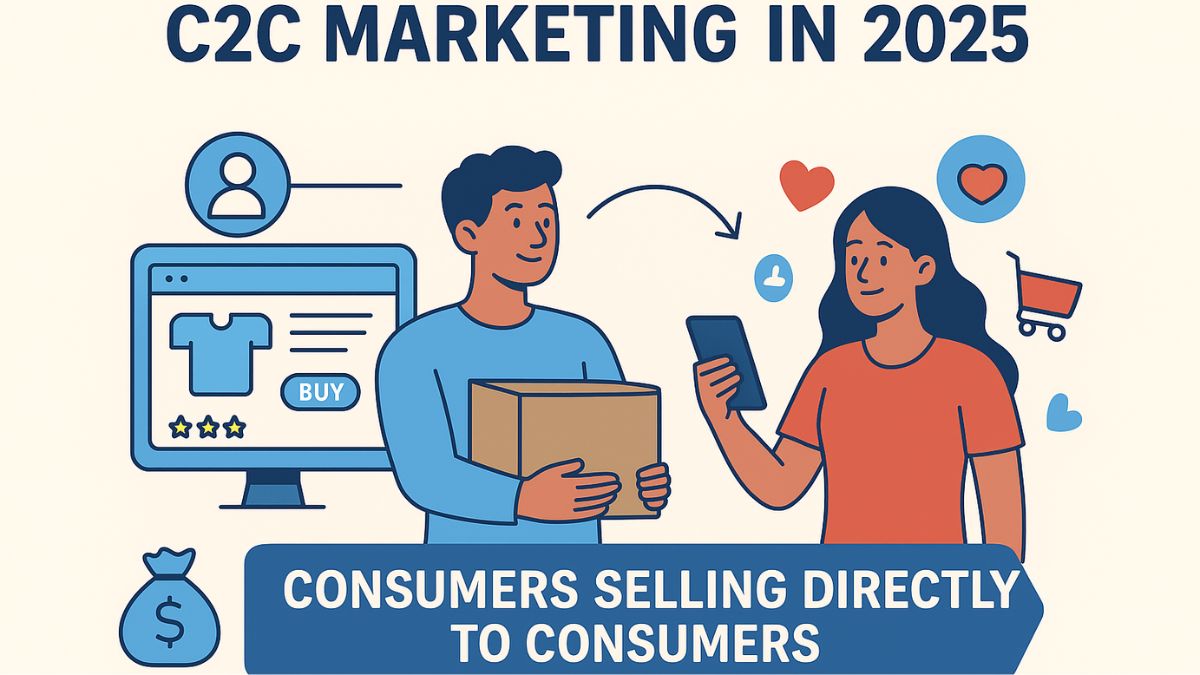
In 2025, the landscape of commerce is undergoing a significant transformation. Traditional business models are being challenged by a new paradigm: C2C marketing. This approach empowers consumers to sell directly to other consumers, bypassing traditional retail channels. Globally, the C2C e-commerce market is projected to grow from $2.49 trillion in 2024 to $3.09 trillion in 2025, reflecting a robust 24% year-over-year growth (Research and Market Reports). This shift is particularly pronounced in India, where digital adoption is accelerating, and platforms like Meesho, Trell, and SimSim are reshaping the e-commerce ecosystem.
1. Understanding C2C Marketing
Consumer-to-consumer (C2C) marketing refers to the process where individuals sell products or services directly to other individuals, often facilitated by online platforms. Unlike traditional business-to-consumer (B2C) models, C2C marketing leverages peer relationships and trust to drive sales.
1.1 The Rise of Peer-to-Peer Selling Platforms
Platforms such as Facebook Marketplace, OLX, and Tradly have become popular avenues for peer-to-peer selling. These platforms allow users to list items for sale, negotiate prices, and complete transactions within their communities. In India, such platforms are gaining traction, especially in tier-2 and tier-3 cities, where access to traditional retail stores may be limited.
1.2 The Role of Online Marketplaces for Consumers
Online marketplaces like Flipkart, Amazon, and Snapdeal continue to dominate the Indian e-commerce landscape. However, the emergence of C2C platforms is diversifying the market. These marketplaces enable consumers to reach a broader audience, often at lower costs compared to traditional retail channels.
2. The Mechanics of C2C Marketing
2.1 Direct Consumer Transactions
In C2C marketing, transactions occur directly between consumers, often without the involvement of intermediaries. This direct interaction fosters a sense of community and trust, which can be pivotal in influencing purchasing decisions.
2.2 The Influence of Social Commerce Trends
Social commerce, the integration of social media and e-commerce, plays a crucial role in C2C marketing. Platforms like Instagram and WhatsApp are increasingly being used by individuals to promote and sell products, leveraging their social networks to reach potential buyers.
3. C2C Marketing Strategies for 2025
3.1 Leveraging User-Generated Content (UGC)
User-generated content has become a powerful tool in C2C marketing.Consumers trustcontent created by their peers more than traditional advertising. Encouraging customers to share their experiences and reviews can enhance credibility and attract new buyers.

Amplify Your Brand,
One Influence at a Time.
3.2 Building Trust Through Transparency
Transparency in product descriptions, pricing, and shipping policies is essential in C2C transactions. Providing clear and honest information helps build trust between buyers and sellers, leading to higher conversion rates.
3.3 Utilizing Influencer Marketing
Influencers, especially micro-influencers, can play a significant role in promoting C2C products. Their authentic endorsements can reach targeted audiences, driving interest and sales.
4. Challenges in C2C Marketing
4.1 Ensuring Product Quality
One of the primary concerns in C2C transactions is the assurance of product quality. Without standardized quality checks, buyers may be hesitant to make purchases.
4.2 Managing Payments and Logistics
Handling payments securely and ensuring timely delivery can be challenging in C2C marketing. Platforms need to provide reliable payment gateways and logistics support to facilitate smooth transactions.
4.3 Building a Sustainable Business Model
While C2C marketing offers opportunities, building a sustainable business model requires continuous engagement, customer support, and adaptation to market trends.
5. The Future of C2C Marketing in India
The Indian market is poised for significant growth in C2C marketing. With increasing internet penetration, smartphone usage, and digital literacy, more consumers are engaging in online buying and selling. According to a report by Future Market Insights, the customer-to-customer community marketing software market is projected to grow from USD 1.9 billion in 2025 to USD 3.5 billion by 2035, at a CAGR of 6.2%.
5.1 Government Initiatives
The Indian government’s push towards a digital economy, including initiatives like Digital India, is creating a conducive environment for C2C marketing. These initiatives aim to enhance internet connectivity and digital infrastructure, facilitating easier access to online platforms for consumers.
5.2 Evolving Consumer Behavior
Indian consumers are becoming more tech-savvy and are increasingly comfortable with online transactions. This shift in behavior is driving the adoption of C2C platforms, as consumers seek convenience and personalized shopping experiences.
Conclusion
C2C marketing is redefining the way commerce operates in 2025. In India, the convergence of digital platforms, social media, and changing consumer behaviors is creating a fertile ground for C2C transactions. While challenges exist, the potential for growth and innovation in this space is immense.
Before you go, explore the common mistakes to avoid in B2C marketing campaigns.Read here.
Summary of Key Insights
- C2C Marketing: Empowers consumers to sell directly to other consumers, fostering peer relationships and trust.
- Online Marketplaces: Platforms like Flipkart and Amazon continue to dominate, but C2C platforms are diversifying the market.
- User-Generated Content: Encourages customers to share experiences, enhancing credibility and attracting new buyers.
- Social Commerce: Integrates social media and e-commerce, allowing individuals to promote and sell products within their networks.
- Challenges
About Hobo.Video
Hobo.Videois India’s leading AI-powered influencer marketing and UGC company. With over 2.25 million creators, it offers end-to-end campaign management designed for brand growth. The platform combines AI and human strategy for maximum ROI.
Services include:
- Influencer marketing: Partnering with influencers to promote products and services.
- UGC content creation: Generating authentic content created by users.
- Celebrity endorsements: Leveraging celebrity influence to enhance brand visibility.
- Product feedback and testing: Gathering insights from users to improve products.
- Marketplace and seller reputation management: Managing online reputation to build trust.
- Regional and niche influencer campaigns: Targeting specific demographics for tailored campaigns.
Trusted by top brands like Himalaya, Wipro, Symphony, Baidyanath, and the Good Glamm Group.
Good ideas deserve a stronger brand presence. Let’s make it happen.Talk to us.
If you’re an influencer ready to level up, this is your platform.Let’s build.
Frequently Asked Questions (FAQs)
What is C2C marketing?
C2C marketing refers to the process where individuals sell products or services directly to other individuals, often facilitated by online platforms.
How does C2C marketing differ from B2C marketing?
In B2C marketing, businesses sell products to consumers, whereas in C2C marketing, consumers sell directly to other consumers.
What are some popular C2C platforms in India?
Platforms like Meesho, Trell, and SimSim are gaining popularity in India for C2C transactions.
How can I start selling on C2C platforms?
To start selling, create an account on a C2C platform, list your products with clear descriptions and images, and engage with potential buyers.
Is it safe to buy from C2C platforms?
While many C2C platforms implement safety measures, it’s essential to exercise caution, check seller ratings, and use secure payment methods.

 Vishnumaya