
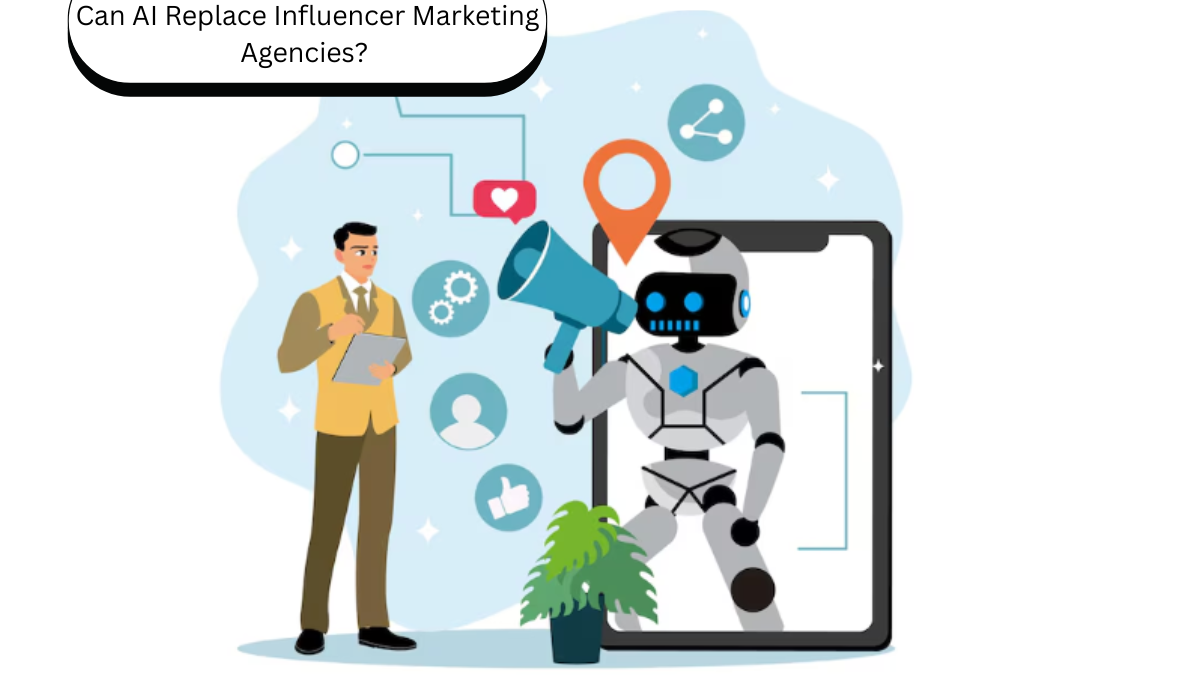
Influencer marketing agencies have always been the backbone of how brands connect with creators. They handle strategy, creator sourcing, brief writing, negotiation, campaign execution, and performance tracking. But in 2026, a growing number of tools promise to do all of that without a single human account manager involved. So the question that every brand and every agency head is quietly asking right now is this: can AI actually replace influencer marketing agencies, or is this just another wave of hype? The reality, as it usually turns out, sits somewhere far more nuanced than either side wants to admit. And understanding that nuance could save your marketing budget considerably.
The influencer marketing industry crossed $32.55 billion in global value in 2025, up from $24 billion just a year earlier. That scale of growth, growing more than 35% year-on-year, has attracted enormous investment into AI-powered tools that claim to handle what influencer marketing agencies used to do manually. Platforms offering AI influencer discovery, automated influencer campaign management, and real-time analytics are no longer fringe experiments. New categories of ai influencer marketing agencies have emerged that run entirely on machine learning systems with minimal human involvement. According to a 2025 benchmark report by Influencer Marketing Hub, 60.2% of marketers now actively use artificial intelligence for influencer identification and campaign optimization. However, more AI adoption does not automatically mean agencies disappear. It means the nature of the work is changing fast.
- 1. What AI Can Actually Do Inside Influencer Marketing Agencies
- 2. Where AI Influencer Agencies Fall Short in India
- 3. How AI Influencer Marketing Tools Are Changing Agency Operations
- 4. Can AI Replace the Strategic Value of Influencer Marketing Agencies?
- 5. How to Evaluate Influencer Marketing Agencies in an AI-Driven World
- 6. AI Influencer Marketing in Practice: Numbers That Actually Matter
- 7. What This Means for Brands and the Influencer, and How to Become an Influencer in This New Landscape
- Conclusion
- About Hobo.Video
1. What AI Can Actually Do Inside Influencer Marketing Agencies
1.1 AI-Powered Influencer Selection Is Getting Genuinely Good
AI influencer discovery platforms have come a long way from basic keyword filters. Modern AI-powered influencer selection tools now analyze audience psychographics, content sentiment, engagement velocity, brand safety signals, and even the authenticity of follower growth patterns. Platforms like Upfluence, Grin, and Modash use machine learning to match brands with creators whose audience demographics and content tone align with campaign goals. This kind of precision was genuinely difficult to achieve manually. A human researcher could spend days building a shortlist; AI completes the same task in minutes with far more data points considered. For top influencer marketing agencies handling high-volume campaigns, this kind of AI influencer marketing automation removes a significant operational bottleneck. However, a list of names is not a campaign strategy. Knowing which creators to approach is the beginning of the work, not the end.
1.2 Automated Influencer Campaign Management and Its Real Limits
Automated influencer campaign management tools can now handle brief delivery, content approval workflows, payment processing, link tracking, and performance dashboards with minimal human intervention. Some platforms even use AI to generate creator briefs based on brand input and historical campaign data. Brands using AI-driven analytics report a 60-70% reduction in the time spent on manual campaign coordination, according to data from Stormy AI. That efficiency gain is real. But here is where the limits start appearing. Automation handles the mechanics of a campaign well. It does not handle the unexpected. When a creator goes off-brief, when a campaign lands poorly due to a cultural misstep, or when a client changes direction mid-flight, a human account manager at one of the top influencer marketing agencies is the one who makes the call. Automated systems escalate; they do not resolve.
2. Where AI Influencer Agencies Fall Short in India
2.1 India’s Creator Economy Is Too Regional for Pure AI
Influencer marketing India operates in a landscape that is deeply fragmented by language, culture, and platform preference. A creator who performs brilliantly in Maharashtra for a personal care brand may be entirely wrong for a campaign targeting Tamil Nadu’s young professionals. AI influencer marketing tools generally train on aggregated datasets that skew toward English-language, metro-based content. Regional nuance, particularly for vernacular creators across Kerala, Bengal, or Rajasthan, is something current AI influencer management systems struggle to accurately evaluate. A brief written for a Marathi food creator or a Bhojpuri lifestyle influencer requires cultural intelligence that no current model consistently delivers. The top influencer marketing agencies in India, especially those with on-ground relationships and regional creator networks, provide something that an AI influencer discovery platform cannot replicate yet. Relationship capital and cultural reading take years to build.
2.2 UGC Videos and Creative Strategy Need Human Thinking
UGC videos are one of the fastest-growing content formats in influencer marketing right now. Brands want authentic, platform-native content that does not look produced. Creating the right brief for UGC Videos, selecting creators who can deliver it, and then reviewing the output for quality and brand alignment is a judgment-heavy process. AI UGC generation tools have improved considerably but they still produce content that audiences can identify as artificial.
The authenticity that makes UGC videos perform well on Instagram Reels or YouTube Shorts comes from real people sharing real experiences. Agencies that know how to brief creators for maximum authenticity are doing something that AI cannot fully automate. There is also the matter of creative direction. A campaign that tells a brand story across multiple creator touchpoints requires a strategic architecture that still benefits enormously from human thinking. If you want to understand how always-on creator programs are built, this breakdown of how leading brands structure year-round video creator programs offers a useful reference.

Amplify Your Brand,
One Influence at a Time.
3. How AI Influencer Marketing Tools Are Changing Agency Operations
3.1 The Best Influencer Marketing Agencies Are Now AI-Hybrid
The most competitive influencer marketing agencies in 2026 are not the ones resisting AI. They are the ones embedding AI influencer marketing tools into every layer of their workflow while keeping human strategy at the center. This means using AI influencer discovery platforms to build creator shortlists at speed, then applying human judgment to evaluate creator-brand fit for softer signals like tone, audience trust, and content storytelling quality. It means using automated influencer campaign management dashboards to track real-time performance, then having a human strategist interpret the data and make mid-campaign adjustments.
The 66.4% of marketers who report improved outcomes after adopting AI tools for creator marketing, as cited in the Influencer Marketing Hub Benchmark Report 2025, are largely agencies and brand teams who integrated AI as a co-pilot, not as a replacement. AI social media marketing agencies that tried to remove humans entirely from the loop have generally seen creator quality drop. The nuance of what makes a campaign feel trustworthy is still a human skill.
3.2 AI Influencer Marketing Automation Is Best at Scale
Where automated influencer marketing genuinely shines is in high-volume campaigns where consistency, speed, and data processing matter more than bespoke creative strategy. A D2C brand running seasonal campaigns with 200 nano-influencers simultaneously needs efficient brief delivery, content collection, performance tracking, and payment management. AI influencer marketing automation handles that volume without the overhead of a large team. The AI influencer agencies that position themselves as technology-led fulfillment engines for exactly this use case are genuinely disrupting the lower-middle segment of the agency market. Virtual influencer agencies, which manage CGI creator personas for brands, also represent an AI-native model that operates outside the traditional agency structure entirely.
The virtual influencer segment alone reached $11.74 billion in 2026 according to The Business Research Company. Virtual influencer agencies are increasingly popular with global FMCG brands that want 24/7 content availability without creator availability constraints. However, this market exists alongside human creator marketing, not instead of it. Top influencers in India, particularly famous Instagram influencers with loyal regional audiences, still deliver trust signals that CGI personas cannot replicate at the same depth. Automated influencer marketing, when applied to campaigns involving top influencers in India, works best as a support layer rather than a primary strategy.
4. Can AI Replace the Strategic Value of Influencer Marketing Agencies?
4.1 What Agencies Do That Influencer Marketing AI Tools Cannot
The strategic conversation between an agency and a brand is built on trust, context, and accumulated knowledge. When a brand is planning a product launch in a new category, the top influencer marketing agencies bring campaign references, creator relationships, platform insights, and benchmarking data that shape a strategy from the very beginning. AI influencer management systems work reactively on the data they are given. They optimize inside the parameters set for them. They do not proactively challenge a brief, suggest a pivot when the category is shifting, or bring in a creator relationship that a client would never have thought to ask for.
The decision framework for choosing between a human agency and an AI influencer marketing platform depends almost entirely on the complexity of what you are trying to do. For campaigns that need to become famous, that need cultural credibility, or that are navigating a sensitive brand moment, human strategic oversight remains critical. This is also why brands that are trying to understand how AI shapes broader marketing decisions will find the question relevant beyond just the creator economy. The broader debate about which business cases AI solves best applies directly here.
4.2 The Question Is Not Replacement, It Is Reconfiguration
Thirty-five percent of brands and 51% of industry leaders say they strongly agree with fully automating influencer marketing through AI, according to CreatorIQ’s State of Creator Marketing 2025-2026 report. That is a significant number. But it also means the majority, on both sides, are still not ready to remove human judgment from the equation. What is happening instead is that the role of influencer marketing agencies is being reconfigured. The agencies handling influencer marketing India that were once occupied with spreadsheet-based creator research and manual reporting are now freed up to focus on strategy, relationship building, and creative direction.
The agencies that refuse to adopt AI influencer marketing tools are getting slower and more expensive relative to the market. Many ai influencer marketing agencies that launched between 2023 and 2025 built their entire model on automated influencer marketing workflows. Some have grown fast; others have discovered that automated influencer marketing without human creative oversight loses brand clients quickly. But the agencies treating AI as the complete solution are winning fast execution at the cost of creative depth. The brands performing best are those working with influencer marketing agencies that have adopted AI tools aggressively while retaining the human judgment that makes campaigns feel real.
5. How to Evaluate Influencer Marketing Agencies in an AI-Driven World
5.1 Key Questions to Ask Before Choosing a Partner
- Does the agency use an AI influencer discovery platform? Agencies that still rely entirely on manual creator research are slower and less data-rich than those using AI-powered influencer selection tools.
- How do they handle regional influencer marketing for India? Ask specifically how they evaluate vernacular creators. Pure AI systems struggle here; human-plus-AI teams do not.
- What AI influencer marketing automation tools power their campaign management? Look for agencies with clear tech stacks, not vague promises.
- How do they evaluate AI influencer agencies versus UGC campaigns? The ability to distinguish the right tool for the right campaign type reflects genuine strategic maturity.
- Do they offer AI UGC capabilities? In 2026, the best influencer platform options offer both human-creator UGC videos and AI-enhanced content creation depending on the use case. A best influencer platform should combine data-driven matching with human creative review.
- How do they measure ROI? Influencer marketing generates an average return of $5.78 for every $1 invested according to industry benchmarks. A top influencer marketing company should be able to explain exactly how they track toward that number for your specific campaigns.
- What happens when a campaign hits a problem? Push on this. Automated influencer campaign management handles smooth execution; human teams handle the difficult calls.
- Do they have access to top influencers in India across multiple tiers? A top influencer marketing company with only mega-influencer relationships is not the same as one with access to nano, micro, and mid-tier creators across regions. Access to famous Instagram influencers and regional vernacular creators both matter.
One additional consideration for any brand evaluating AI social media marketing agencies: the quality of your creator relationships depends on the quality of the briefing process. Understanding how AI is transforming influencer marketing at the industry level can help brands ask sharper questions when they evaluate agencies.
6. AI Influencer Marketing in Practice: Numbers That Actually Matter
The numbers across 2025 and into 2026 paint a clear picture of where AI sits in the influencer marketing workflow right now:
- $32.55 billion was the global influencer marketing industry value in 2025. AI-powered tools contributed to the acceleration of this growth by reducing friction in creator discovery and campaign management.
- 60.2% of marketers now actively use artificial intelligence for influencer identification and campaign optimization, according to Influencer Marketing Hub’s 2025 Benchmark Report. That is mainstream adoption, not early-stage experimentation.
- 66.4% of marketers who adopted AI tools for creator marketing reported improved campaign outcomes. Better tools produced better results.
- $5.78 return for every $1 spent on influencer marketing remains the industry average. Campaigns using AI-powered influencer selection tools and automated campaign management report stronger attribution clarity.
- Only 10.56% of marketers report zero AI use in their influencer programs, per the Influencer Marketing Hub 2026 report. AI integration has become the norm, not the exception.
- 91% of industry specialists identify AI and technology as the primary driver of change in influencer marketing. This signals where the center of gravity in the industry is moving.
- 60-70% reduction in manual coordination time for brands using AI-driven analytics in their creator programs. The operational efficiency gain is the most immediate and measurable benefit.
7. What This Means for Brands and the Influencer, and How to Become an Influencer in This New Landscape
The shift toward AI influencer marketing automation changes what it means to work with influencer marketing agencies on both sides of the equation. For brands, it means you now have more data, faster execution, and clearer attribution than ever before. But it also means your competitors have access to the same tools. The advantage goes to the brands working with influencer marketing agencies that use AI intelligently, not indiscriminately.
For creators wondering how to become an influencer in a world increasingly mediated by AI matchmaking, the answer is that authentic, consistent, and platform-native content becomes more valuable, not less. AI influencer management systems can surface you faster. But they can only surface you if your content quality and engagement metrics are real. Famous Instagram influencers in the current landscape are building deep audience trust that no algorithm can manufacture. The AI influencer discovery platform finds you. What you do with your audience is still entirely your own work.
Conclusion
- AI improves efficiency, not strategy: Top agencies use AI tools to automate logistics and reduce coordination time by 60–70%, but human oversight remains essential for creative direction and relationship management.
- Human judgment is vital for India’s market: Due to regional fragmentation, diverse languages, and vernacular content, current AI platforms cannot match the local nuance and cultural execution provided by on-ground human teams.
- The industry is expanding rapidly: Heading toward a $40 billion valuation in 2026, the market is seeing traditional models, virtual influencer agencies, and AI-driven platforms grow simultaneously rather than replacing one another.
- Authenticity still drives creator success: AI influencer discovery tools surface talent based on hard data metrics, meaning organic content quality and real audience trust remain the true foundation for any individual looking to scale.
- Hybrid models deliver the best results: The most competitive brands choose a hybrid framework, leveraging AI platforms as an operational backbone while relying on human strategists to protect brand safety and lead campaign execution.
About Hobo.Video
Hobo.Video is India’s leading AI-powered influencer marketing and UGC company. With over 2.25 million creators, it offers end-to-end campaign management designed for brand growth. The platform combines AI and human strategy for maximum ROI.
Services include:
- Influencer marketing
- UGC content creation
- Celebrity endorsements
- Product feedback and testing
- Marketplace and seller reputation management
- Regional and niche influencer campaigns
Trusted by top brands like Himalaya, Wipro, Symphony, Baidyanath, and the Good Glamm Group.
Great brands don’t grow by playing safe. They grow by choosing the right partners. Ready to scale? We’re just a click away.
Your content has power — let’s put it to work. Register today.
FAQs
Can AI fully automate influencer marketing campaigns?
AI can fully automate backend logistics like creator discovery, tracking, and payments, but it cannot replace human strategy. Purely automated campaigns often feel mechanical and lack the cultural judgment needed for creative pivots.
What are AI influencer marketing tools used for?
These tools streamline processes like creator matching, fraud detection, audience authentication, and real-time performance analytics. They eliminate hours of manual vetting, allowing marketing teams to focus entirely on building real relationships.
How do AI influencer agencies differ from traditional ones?
Traditional agencies rely on manual outreach and network intuition, whereas AI agencies leverage machine learning to execute large-scale campaigns rapidly. However, traditional models still hold a clear advantage when campaigns require deep creative nuance.
What is AI-powered influencer selection?
It uses machine learning algorithms to scan thousands of creator profiles, evaluating audience demographics, engagement authenticity, and brand safety signals in seconds. The output is a data-backed shortlist that still requires human review for the final selection.
Will AI replace influencer marketing agencies in India?
A complete takeover is highly unlikely due to India’s fragmented creator ecosystem, which spans dozens of languages and highly localized cultural contexts. While AI handles pan-India logistics well, it struggles with the regional nuances and vernacular content evaluation that human teams master.
What is the average ROI of AI influencer marketing tools?
Brands utilizing AI tools report a 60–70% reduction in manual coordination time alongside much clearer campaign attribution data. The highest financial returns happen when AI handles operational speed while human strategists guide the creative direction.
How is AI changing user-generated content (UGC) for brands?
AI helps brands source and manage real UGC creators at scale, though some companies also use it to generate completely synthetic virtual assets. Despite this, organic content produced by real people consistently outperforms synthetic alternatives in audience trust scores.
What should brands look for when choosing an AI social media agency?
Look for full transparency regarding where their automation ends and human strategic oversight begins. The ideal agency uses AI as its operational backbone but relies on experienced human strategists for creative depth and brand safety.

 Jyoti Pandey