
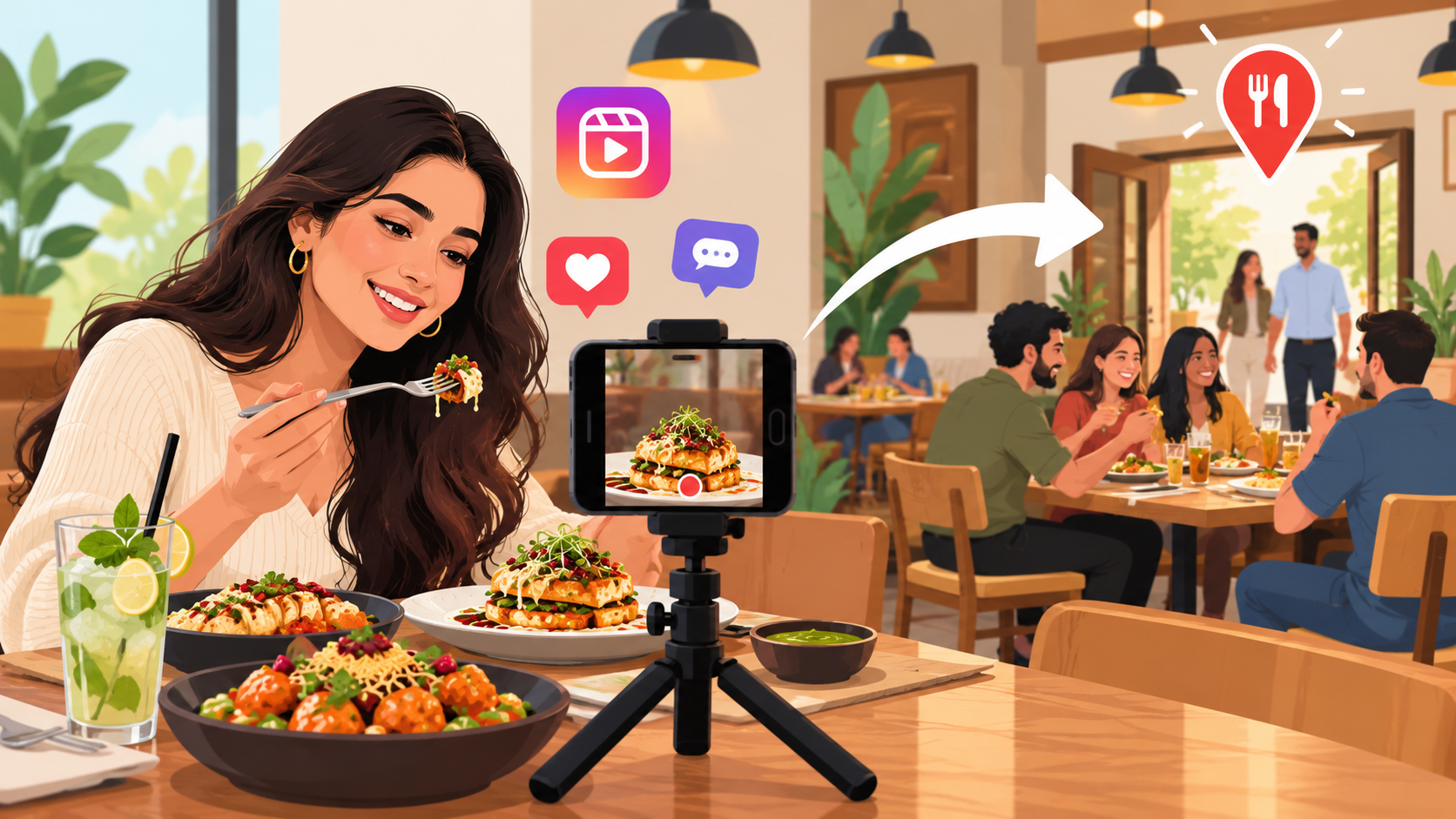
Food micro-influencers for restaurants can help local diners discover new places to eat through Instagram Reels, honest food reviews and menu recommendations. A tempting dish, a useful location tag and a relatable creator can turn a casual scroll into a restaurant visit. However, views alone do not guarantee customers. Restaurants need relevant creators, clear calls to action and reliable ways to measure visits and sales.
- 1. From Scrolling to Dining Out
- 2. How to Choose the Right Food Micro-Influencers for Restaurants
- 3. Five Reel Ideas for Food Micro-Influencers for Restaurants
- 4. How to Brief Food Creators Without Making Reels Feel Scripted
- 5. How Restaurants Can Turn Reels Into Measurable Visits
- 6. How to Calculate the Return on a Restaurant Influencer Campaign
- 7. Common Mistakes Restaurants Should Avoid
- 8. How Hobo.Video Can Support Restaurant Influencer Campaigns
- Conclusion: Make Every Reel Work Towards a Business Goal
- About Hobo.Video
1. From Scrolling to Dining Out
A person scrolling through Instagram notices a cheese-loaded burger, a colourful bowl of chaat or a cosy café tucked away in their neighbourhood. The video looks tempting, the creator explains what they ordered, and the location is only a short drive away. Suddenly, watching a Reel becomes a reason to plan the next meal out.
This is where food micro-influencers for restaurants can make a difference. Instead of relying only on broad advertising, restaurants can work with local creators who introduce their menus, dining experiences and signature dishes to relevant audiences.
However, views alone do not fill tables. A successful campaign must help people move from discovering a restaurant to considering a visit and eventually becoming paying customers.
That requires the right creator, an appealing food story, a clear local offer and a reliable way to measure results.
In this guide, we explore how restaurants can use food micro-influencers to attract nearby diners, create effective Reels, track restaurant visits and build lasting customer relationships.
1.1 Why Food Micro-Influencers for Restaurants Matter
Food micro-influencers generally have smaller, focused audiences compared with celebrity creators. Their content often centers on restaurant reviews, street food, regional dishes, cafés or neighborhood discoveries.

Amplify Your Brand,
One Influence at a Time.
For a local restaurant, audience relevance can matter more than a creator’s total follower count.
Imagine a café in Jaipur. A creator with a highly relevant audience in Jaipur may offer more value than a much larger account whose followers are spread across India. The local creator can show the café’s atmosphere, explain what to order and help nearby viewers decide whether to visit.
Food content also offers a natural visual advantage. Close-up shots, cooking sounds, menu reveals and first-bite reactions can help viewers imagine the dining experience.
Restaurants should still assess audience location, content quality, engagement patterns and creator credibility before choosing a partner. A small following does not automatically guarantee strong conversions.
1.2 How Food Micro-Influencers Help Restaurants Get Discovered
Instagram Reels can introduce restaurants to people who have never visited their profiles or heard of their businesses.
A creator might publish a video about a newly opened café, a regional speciality or an affordable lunch menu. Viewers may save the video, share it with friends or search for the restaurant later.
Each action represents a different stage of discovery.
For example:
- Discovery: A viewer sees a Reel featuring the restaurant.
- Interest: The viewer checks the menu, prices or location.
- Consideration: The viewer compares the restaurant with other options.
- Action: The viewer books a table, visits the restaurant or places an order.
- Retention: The diner returns or recommends the restaurant to others.
Not every viewer will follow this journey, and some customers may discover a restaurant through several channels. Nevertheless, mapping these stages helps restaurants identify where their campaigns need improvement.
1.3 Why Local Relevance Matters More Than Views Alone
A restaurant typically serves customers within a practical travel distance. Therefore, a Reel reaching thousands of people outside the restaurant’s service area may generate attention without producing many visits.
Food micro-influencers for restaurants can be especially useful when their followers live, work or regularly dine near the business. Local relevance changes the equation.
Restaurants should consider creators who regularly cover the neighbourhood, city or dining category they want to target. Regional-language content can also help creators communicate naturally with local audiences.
For instance, a restaurant in Lucknow might collaborate with creators who review local food spots and explain dishes in Hindi. A café in Bengaluru might prioritise creators whose audiences enjoy discovering cafés around specific neighbourhoods.
The goal is not simply to reach more people. It is to reach people who can realistically become customers.
2. How to Choose the Right Food Micro-Influencers for Restaurants
Choosing the right creator begins with the restaurant’s objective. A new restaurant may need awareness, while an established outlet might want more weekday lunch visits or bookings for a new menu.
The creator shortlist should reflect that goal.
2.1 Check Audience Location and Relevance
Start by asking whether the creator reaches people who could realistically visit your restaurant.
Review available audience-location insights, recent content, comment quality and the locations featured in previous collaborations.
A creator who consistently reviews restaurants in your city may be a stronger fit than someone whose content attracts a broad but geographically dispersed audience.
Also consider the audience’s interests. A fine-dining restaurant may need a different creator profile from a budget-friendly street-food outlet.
2.2 Evaluate Content Quality and Credibility
Food content depends heavily on presentation, but polished visuals are only one part of the decision.
Look for creators who can describe dishes clearly, show realistic portions and communicate useful details. Their reviews should feel natural rather than like scripted sales pitches.
Review several recent posts instead of judging a creator by one viral video.
Check whether the creator explains prices, location, ambience and menu highlights. These details help potential diners make practical decisions.
2.3 Compare Engagement With Business Potential
Likes and follower counts offer limited information about a creator’s ability to generate visits.
Review comments, saves, shares and audience questions. Do viewers ask where a restaurant is located? Do they request menu prices or opening hours? Does the creator regularly receive meaningful local recommendations requests?
These signals can help assess relevance, although they cannot prove that a campaign will generate sales.
Restaurants should also consider the creator’s fee, production requirements, expected deliverables and the rights needed to reuse the content.
2.4 Start With a Small, Measurable Test
Restaurants can evaluate food micro-influencers for restaurants by tracking campaign-specific bookings, offer redemptions and attributable sales.
A small pilot campaign can test two or three creators with different audiences or content styles. Each creator should receive a distinct tracking method, such as a unique offer code or booking link.
After the campaign, compare attributable visits, redemptions, customer spending and campaign costs.
This approach gives restaurants practical evidence to guide future partnerships rather than relying entirely on follower counts or predictions. For a broader overview of creator selection, explore Hobo.Video’s guide to niche influencer discovery.
3. Five Reel Ideas for Food Micro-Influencers for Restaurants
The best restaurant Reels do more than make food look delicious. They give viewers a reason to visit, explain what makes the experience different and make the next step easy.
3.1 The Signature Dish Reveal
Feature one dish that represents the restaurant.
The creator can show the preparation, final plating, texture and first bite. They should also mention the dish’s name and price, where appropriate.
For example, a local café could feature its signature sandwich alongside a short explanation of the ingredients and portion size.
The video should end with a clear location tag and a simple invitation to check the menu or visit.
Best for: New restaurants, cafés, bakeries and outlets launching signature dishes.
3.2 The Complete Meal Under a Budget
Price-conscious diners often want to know what they can order within a particular budget.
A creator could showcase a lunch combination, a meal for two or a group-friendly menu. The video should state the actual price and clarify whether taxes or other charges apply.
This format gives viewers practical information rather than relying only on attractive visuals.
Restaurants should ensure that the featured offer is available during the campaign period and that the stated price matches the actual menu.
Best for: Casual dining outlets, student cafés, quick-service restaurants and family restaurants.
3.3 The Hidden Gem in Your Neighbourhood
A neighbourhood-focused Reel can introduce a restaurant to people who live, study or work nearby.
The creator might explain how to find the outlet, show its entrance and highlight the dishes worth trying.
For example, a small restaurant located inside a busy market could benefit from a video showing the nearest landmark and the dining experience.
The restaurant should provide accurate location details and current opening hours to avoid frustrating potential visitors.
Best for: Independent restaurants, local cafés, street-food outlets and new neighbourhood businesses.
3.4 The First-Bite Reaction
A first-bite video captures the creator’s immediate response to a dish.
This format works best when the reaction is genuine and the creator explains what they liked or found distinctive. Instead of simply saying that everything tastes amazing, they can describe the flavour, texture, spice level or portion size.
Honest details make the content more useful to viewers.
Restaurants should avoid requiring creators to give positive reviews regardless of their actual experience. Sponsored content should remain transparent and comply with applicable advertising requirements.
Best for: Restaurants launching new dishes, dessert shops, regional cuisine outlets and speciality food businesses.
3.5 The Group Dining Experience
Many restaurant visits are social occasions. People meet friends, celebrate birthdays or organise family meals.
A Reel can show how the restaurant accommodates these occasions, including seating, ambience, shareable dishes and group menus.
The creator might explain which dishes work well for sharing or whether advance booking is recommended.
This gives viewers information they can use when planning a visit with others.
Best for: Family restaurants, casual dining outlets, celebration venues and restaurants with group menus.
4. How to Brief Food Creators Without Making Reels Feel Scripted
A campaign brief should protect important business information while giving creators room to communicate naturally.
Overly rigid scripts can make restaurant promotions feel like traditional advertisements. However, a completely unstructured brief may leave out details that help customers visit.
The solution is to define the essential information and let the creator develop the story.
4.1 Set One Clear Campaign Objective
Start by deciding what the restaurant wants to achieve.
Possible objectives include:
- Introducing a new restaurant to local diners.
- Promoting a seasonal menu.
- Increasing weekday lunch visits.
- Encouraging reservations for weekend dining.
- Introducing a new delivery or takeaway offer.
Choose one primary objective for each campaign. This makes it easier to select creators, design the content and measure results.
4.2 Share Essential Restaurant Information
Provide creators with accurate details before filming.
The brief should include the restaurant address, menu, current prices, opening hours, booking information and any campaign-specific offer.
Identify the dish or experience the restaurant wants to highlight. Explain what makes it distinctive, but avoid demanding exaggerated claims.
If an offer has restrictions, such as selected days or minimum spending, communicate them clearly.
4.3 Give Creators Creative Freedom
Instead of writing every line of dialogue, provide a few talking points.
For example, a restaurant promoting a new thali could ask the creator to show the dishes, mention the price and explain the dining experience in their own words.
The creator can then choose the hook, filming style and narrative that suit their audience.
Before publication, review the content for factual accuracy, required disclosures, brand safety and agreed deliverables.
4.4 Include a Clear Call to Action
A Reel should make the next step obvious.
Depending on the campaign, the creator might encourage viewers to:
- Check the menu through a tracked link.
- Book a table.
- Visit the restaurant using a location tag.
- Use a campaign-specific offer code.
- Save the Reel for their next dining plan.
Avoid adding too many calls to action to one short video. One clear action is usually easier for viewers to follow and easier for the restaurant to measure.
5. How Restaurants Can Turn Reels Into Measurable Visits
This is where many restaurant campaigns need more structure. A Reel may generate views and comments, but restaurants still need to understand whether it contributed to actual business.
A practical tracking plan connects creator activity with customer actions.
5.1 Use Unique Promo Codes
Give each creator a unique code that customers can mention when ordering or booking.
For example, a restaurant could assign FOODCREATOR1 to one creator and a different code to another.
At the end of the campaign, count the redemptions and calculate the revenue associated with them.
Promo codes are useful because they create a direct connection between a campaign and a recorded transaction. However, some customers may forget to use a code, while others may redeem it after discovering the restaurant through another channel.
Therefore, code redemptions are useful attribution signals, not a perfect record of every influence on a purchase.
5.2 Create Tracked Booking and Menu Links
Restaurants that accept online reservations or orders can give each creator a distinct tracking link.
The link can lead to a booking page, menu or ordering platform. Using campaign-specific tracking parameters can help the restaurant identify visits originating from each creator’s content.
Track more than clicks. Review whether visitors completed a booking, placed an order or took another valuable action.
If the restaurant uses an external booking or delivery platform, confirm which conversion data it can access.
5.3 Use QR Codes for In-Store Campaigns
QR codes can connect offline visits with a specific offer or campaign.
For example, a restaurant might distribute a creator-specific QR code through a campaign landing page. Customers can scan it to claim an offer or view a featured menu.
The restaurant can then compare scans, offer claims and completed transactions.
A QR scan alone does not establish that someone became a paying customer. Connect the scan to a redemption or transaction wherever possible.
5.4 Ask Customers How They Discovered the Restaurant
A simple question at the point of booking or payment can provide additional attribution information.
For example: “How did you hear about us?”
Offer options such as Instagram, a creator recommendation, a friend, a search engine or another source.
Restaurants can compare responses before and after the campaign to identify changes in discovery patterns.
This method is inexpensive, although customer recall may be imperfect and multiple channels may influence the same visit.
5.5 Compare Results With Restaurant Sales Data
The strongest measurement approach combines creator-level tracking with the restaurant’s own business records.
Compare the campaign period with a suitable baseline. Look at transactions, average order value, table bookings and footfall where reliable records exist.
Also consider weekends, festivals, weather, discounts and other promotions that may affect demand.
For a more structured approach to influencer attribution, read Hobo.Video’s guide to tracking influencer campaign metrics.
6. How to Calculate the Return on a Restaurant Influencer Campaign
A campaign should be assessed against its full cost, not only the creator’s fee.
Include creator payments, complimentary meals, production costs, discounts, paid amplification and any other relevant expenses.
For example, imagine a restaurant spends ₹15,000 on a creator campaign. The restaurant records ₹30,000 in sales from tracked offer redemptions. Those figures indicate a 2:1 attributed revenue-to-campaign-cost ratio.
However, this is not the same as a 100% profit return. Food costs, staff expenses, discounts and other operating costs still affect profitability. The tracked sales may also include customers who would have visited without the campaign.
6.1 Track the Metrics That Match Your Objective
| Objective | Recommended metric |
|---|---|
| Local awareness | Reach among the target location or audience |
| Menu discovery | Menu views and tracked link clicks |
| Reservations | Bookings attributed to campaign links |
| In-store visits | Recorded visits, redemptions and customer surveys |
| Sales | Attributed revenue and order count |
| Efficiency | Cost per booking, redemption or acquired customer |
| Profitability | Contribution margin after relevant campaign costs |
6.2 Use a Simple ROI Formula
A standard campaign ROI calculation is:
ROI = (Incremental profit − campaign cost) ÷ campaign cost × 100
Use incremental profit rather than simply substituting all attributed revenue into the formula.
If a restaurant cannot reliably estimate incremental profit, it should report tracked revenue, campaign costs and attribution limitations separately. This provides a more honest picture than claiming a precise ROI without adequate evidence.
6.3 Learn From Each Campaign
Compare creator performance by audience relevance, content quality, bookings, redemptions and customer spending.
A creator with fewer views may generate more bookings than another creator with a larger reach. A different creator might be more effective at introducing the restaurant to new audiences.
Use these findings to improve the next campaign’s creator selection, content brief and offer.
7. Common Mistakes Restaurants Should Avoid
Even appealing food content can fail to generate meaningful business results when the campaign is poorly planned.
7.1 Choosing Creators Only by Follower Count
A large audience is not automatically a local audience.
Restaurants should prioritise location, relevance, content quality and audience trust over follower numbers alone.
7.2 Focusing on Views Instead of Customer Actions
Views indicate exposure, not confirmed visits or sales.
Define the intended customer action before launching and use appropriate tracking methods to measure it.
7.3 Giving Every Creator the Same Generic Brief
Different creators may connect with their audiences through different styles.
Provide consistent business information and campaign requirements, but allow creators to adapt the storytelling to their own voices.
7.4 Offering Discounts Without Checking Profitability
Discounts may encourage trial, but they can also reduce margins or attract customers who would have purchased anyway.
Calculate the offer’s cost and set clear redemption conditions before promoting it.
7.5 Forgetting to Update Menu and Location Details
A Reel can generate interest and still lose potential customers if the menu is outdated, the location tag is incorrect or the restaurant is closed when viewers arrive.
Check business information before the campaign goes live and keep it accurate throughout the promotion.
7.6 Ignoring Disclosure Requirements
When creators receive payment, complimentary meals or other benefits in exchange for promotion, appropriate advertising disclosures may be required.
Restaurants and creators should review the ASCI influencer advertising resources and ensure disclosures are clear and appropriate for the campaign.
8. How Hobo.Video Can Support Restaurant Influencer Campaigns
Restaurants need more than attractive content to run an effective creator campaign. They need suitable creators, clear briefs, consistent communication and a way to evaluate results.
Hobo.Video supports influencer marketing and user-generated content campaigns, helping brands organise creator collaborations around their marketing objectives.
8.1 Find Creators Relevant to Your Audience
A restaurant campaign may benefit from local food reviewers, regional creators, café explorers or lifestyle influencers who regularly feature dining experiences.
Choosing food micro-influencers for restaurants starts with audience location, relevant food content and a clear campaign objective.
Explore Hobo.Video’s food and beverage influencer marketing guide for more context on creator-led food campaigns.
8.2 Develop Authentic Food Content
Food creators can help restaurants present signature dishes, menu launches and dining experiences through original content.
A well-defined brief should communicate the restaurant’s objective and essential details while allowing creators to maintain their natural presentation style.
This balance can make the content useful to viewers without turning it into a rigid advertisement.
8.3 Connect Campaign Planning With Measurement
Before launching, restaurants should define the outcomes they want to track, such as reservations, menu visits, offer redemptions or orders.
The campaign should use appropriate links, codes or other available tracking methods to connect activity with customer actions.
Hobo.Video’s broader influencer marketing resources also cover the relationship between creator campaigns and measurable outcomes. See Do Influencers Really Drive Sales?.
Restaurants should confirm which specific services and reporting capabilities are available for their campaign requirements.
Ready to Explore Creator Marketing for Your Restaurant?
Visit Hobo.Video to explore influencer marketing and UGC campaign opportunities. Start with a clear local audience, a compelling food story and a measurement plan that connects content with business goals.
Conclusion: Make Every Reel Work Towards a Business Goal
Food Reels can help restaurants become part of a local customer’s next dining plan. A creator might introduce a signature dish, reveal an affordable meal or uncover a neighbourhood favourite. However, turning that attention into customer visits requires more than attractive food photography.
Restaurants need creators who reach relevant audiences, content that answers practical questions and a clear next step for viewers. They also need tracking methods that connect campaign activity with bookings, visits, orders or redemptions.
The key takeaways are straightforward:
- Choose creators based on local relevance, not just follower count.
- Show dishes, prices and location details accurately.
- Give creators a clear brief without over-scripting their content.
- Track customer actions through codes, links, QR codes and sales records.
- Measure profitability carefully and account for attribution limitations.
- Use campaign results to improve future creator partnerships.
Food micro-influencers for restaurants can be a valuable part of local marketing when campaigns connect authentic storytelling with measurable business goals.
Ready to explore creator-led campaigns for your restaurant? Visit Hobo.Video to learn more about influencer marketing and UGC opportunities.
About Hobo.Video
Hobo.Video is India’s leading AI-powered influencer marketing and UGC company, with 2.25 million creators. Services include:
- Influencer marketing
- UGC content creation
- Celebrity endorsements
- Product testing
- Marketplace reputation management
- Regional campaigns
Trusted by brands like Himalaya, Wipro, Symphony, Baidyanath, and the Good Glamm Group.
Smart brands choose creators who break the mold. Join us and run your next campaign.
Influencer life is different when you’re backed by the right crew. Let’s grow.
Frequently Asked Questions
How Do Food Micro-Influencers Help Restaurants Attract Customers?
Food micro-influencers introduce restaurants to audiences interested in local dining, food discoveries and new menu items. Their Reels can showcase dishes, prices, ambience and location information. When the creator’s audience matches the restaurant’s service area, the content may encourage viewers to check the menu, book a table or visit. Actual results depend on creator relevance, campaign execution and the restaurant’s offer.
How Many Followers Should a Food Micro-Influencer Have?
There is no universal follower-count threshold that guarantees success. Restaurants should assess audience location, engagement quality, content style and the creator’s relevance to the target customer. A smaller creator with a concentrated local audience may be a better fit than a larger account with followers spread across many cities. The best choice depends on the campaign objective and available budget.
How Much Should Restaurants Spend on Food Influencers?
Costs depend on the creator’s audience, location, deliverables, production requirements, usage rights and campaign scope. Restaurants should compare the complete cost of each collaboration rather than creator fees alone. A small pilot can help establish whether the campaign produces useful results before the restaurant increases its investment. Complimentary meals and discount offers should also be included when assessing campaign costs.
Do Food Reels Guarantee More Restaurant Visits?
No. Reels can introduce restaurants to potential diners, but views do not guarantee visits or sales. Results depend on location, audience relevance, menu appeal, price, availability, customer experience and the strength of the call to action. Restaurants should define measurable objectives and compare campaign results with appropriate business records.
Are Micro-Influencers Better Than Celebrity Influencers for Restaurants?
Neither option is automatically better. Local micro-influencers may be particularly suitable when the goal is to attract diners from a specific neighbourhood. Celebrity creators may be useful for broader awareness or a major launch. Restaurants should choose based on audience relevance, budget, campaign objectives and the ability to measure the desired outcomes.

 Anooshka Pandey