We stood in our messy Bangalore office back in mid-2025, staring at a screen full of zero replies. Our startup was burning cash fast, yet our main sales pipeline was completely dry. We sent out hundreds of pitches to top consumer brands every single week. However, we received nothing but absolute silence in return. Every single cold email felt like a voice crying out in a vast, empty desert. It became incredibly clear that our massive, untargeted outreach methods were entirely dead. Then, we changed our fundamental process and built a highly unique cold email framework that changed everything.
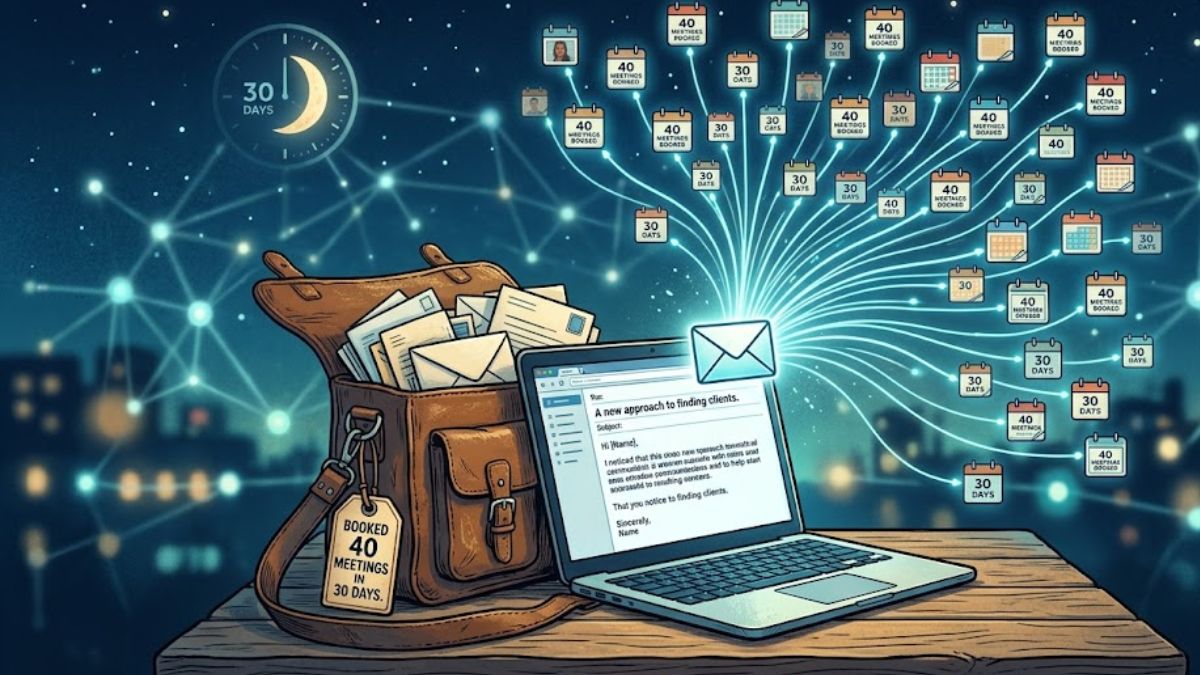
That single system did not just land a few scattered exploratory phone calls across Gurgaon and Mumbai. It actually booked forty confirmed enterprise meetings within thirty hectic calendar days. Consequently, that small strategic pivot helped us partner with three major consumer goods giants within a single quarter. For an expanding Indian enterprise, a broken sales pipeline means swift, silent corporate death. Today, we break down the exact tactical mechanics that saved our company from operational failure.
- 1. Why Traditional Corporate Outbound Is Dead
- 2. The Psychology of the Indian Corporate Inbox
- 3. The Blueprint: Breaking Down the Winning Template
- 4. Setting the Gold Standard for Outreach Execution
- 5. Bringing Creator Channels Into Enterprise Outreach
- 6. The Shift Toward Localized Digital Commerce
- About Hobo.Video
1. Why Traditional Corporate Outbound Is Dead
Most brands fail at outbound sales for a pretty simple reason: they write like a corporate robot filling out a form. The messages are long, stuffed with internal metrics nobody outside the company cares about, and they read like a resume trying to impress rather than an actual proposal trying to help. A marketing director in Mumbai isn’t going to read three hundred words of buildup. They want to know, in the first five seconds, what this does for their revenue.
1.1 The Structural Failure of Mass Blasts
We started out copying a cold email template we found on some Western growth blog, because it had good reviews and looked professional. It fell apart almost immediately once we tried it in the Indian startup world. Those rigid, script-heavy frameworks feel clinical here too transactional, too obviously copy-pasted. Indian founders respond to actual context and rapport, not a sales script that could’ve been sent to anyone in any country. The moment your email smells like a mass blast, it gets marked spam, and that’s it, you’re done with that contact forever.
1.2 The Tragic Science of Low Open Rates
Our early subject lines were bad in a specific way they were all about us. Things like “Synergy Collaboration Proposal” or “Exclusive Growth Marketing Insights for 2026.” Nobody’s curious about that. Nobody has a pain point that line addresses. And here’s the actual math working against you: a brand executive gets something like three hundred outbound pitches a day. If your subject line reads like a broadcast rather than a message meant for them specifically, it’s gone before it’s even opened.
2. The Psychology of the Indian Corporate Inbox
Fixing this meant actually sitting with why executives ignore pitches in the first place. It’s not rudeness. It’s that they’re buried in low-effort messages every single morning, and their attention has become the most protected resource they have. So the pitch has to offer something immediately useful, not ask for something. We had to stop framing our outreach as a favor we were requesting and start framing it as a solution we were handing over.
2.1 What Real Personalization Actually Looks Like
Personalization isn’t a first-name merge tag. That’s the bare minimum and everyone can tell. Real personalization means you’ve actually looked at a brand’s recent ad campaigns, understood who their regional audience is, and noticed a specific gap in what they’re putting out. We’d start by going through a target brand’s Instagram feed and finding the exact creative weak spot maybe a video they posted two days earlier that didn’t quite land. Pointing that out, specifically, is what proves a real person looked at their work instead of running a script.

Amplify Your Brand,
One Influence at a Time.
2.2 Rebuilding the Prospecting Framework
A cold email that actually works treats the first message like the opening of a conversation, not a contract negotiation. You’re not closing anything in that first email you’re trying to get someone to say yes to a ten-minute call. The tone should stay light and conversational, focused entirely on their biggest bottleneck rather than your pitch. What consistently got replies for us was giving away a small piece of free creative work upfront, before asking for anything at all.
3. The Blueprint: Breaking Down the Winning Template
Once we dropped the scripted approach, we rebuilt outreach around something visual actual finished work, not a description of what we could theoretically do. We picked a fast-growing Indian consumer brand, filmed a raw, unedited product review for them without being asked, and dropped that video link straight into the outbound message. That one change moved our numbers more than anything else we’d tried.
3.1 The Template That Landed Forty Meetings in a Month
Here’s the exact structure:
Subject: Quick concept video for your regional campaign
Hi [Name],
I noticed your recent Instagram campaign for your new skincare line, but didn’t see many regional video reviews out there.
We filmed this raw forty-second user-generated video targeting your South Indian audience specifically: [Insert Video Link]
If this style works for you, we can put together fifteen more like it this month. Do you have five minutes this Thursday at 3 PM?
3.2 Why It Works
The structure holds up because every line respects that the person reading it is busy. Line one shows you actually looked at what they’re running right now. Line two hands them proof instead of a promise a real video made for their real audience, not a pitch deck. The close removes the guesswork entirely by naming an exact day and time instead of asking an open-ended “let me know when works.” That’s the part most people get wrong: making someone think about scheduling is often the difference between a reply and silence. Once we tightened this, reply rates went up across every industry we tested it in.
4. Setting the Gold Standard for Outreach Execution
A question we hear a lot from early-stage founders is how you keep up this level of customization when you’re pitching hundreds of companies. You don’t reinvent the creative from scratch every single time that’s not sustainable and it’s not how this actually scales. What works is building flexible regional video templates that can be customized with local details in minutes, not hours. That’s how you get outbound volume up without losing the thing that made it work in the first place: it still feels like a person made it for them specifically.
4.1 Follow-Up That Actually Adds Something
Most people won’t reply to your first message. Not because they don’t care, but because they’re busy and your email is one of dozens sitting unread. So we built a follow-up sequence where every touchpoint brings something new instead of just repeating the ask. The second message, for example, shares a recent case study with actual regional revenue numbers attached to it real proof, not a nudge. Keeping that rhythm going over weeks is what kept our reply rates holding steady instead of dropping off after the first send.
4.2 The Technical Stuff That Keeps You Out of Spam
None of this matters if your emails land in spam, so the boring technical setup has to be right. Get your domain authentication sorted SPF, DKIM, DMARC through whatever platform you’re sending from. Warm up new sending accounts gradually over a few weeks before you go all-in on outreach; sending high volume from a brand new domain is the fastest way to get flagged. Keep the daily volume per mailbox reasonable so you’re not tripping spam filters. Get this part wrong and it doesn’t matter how good your pitch is, because nobody sees it.
5. Bringing Creator Channels Into Enterprise Outreach
Plain text sales pitches are running out of road. Brands across India are looking for ways to connect with regional audiences that feel real, not corporate, and the traditional cold pitch is losing ground fast as everything shifts toward video and visual platforms. If you want your outbound to actually land, it needs to borrow from creator strategy instead of ignoring it.
5.1 Where Influencer Marketing Actually Helps
Whether you’re figuring out how to launch a car rental business or scale a cosmetics brand, creator distribution matters more than most founders initially expect. Influencer marketing today isn’t about paying a Bollywood actor to hold your product in a photo that model is fading. It’s about a wide network of everyday people who genuinely use and like what you’re selling, talking about it in their own voice. Brands running authentic micro-influencer networks consistently convert better than brands running standard display ads, because people trust a person over a banner.
6. The Shift Toward Localized Digital Commerce
India’s consumer growth right now is happening in Tier 2, Tier 3, and Tier 4 cities, and the people there want content in their own language, from creators who actually feel like their own community rather than a national ad campaign parachuted in. That shift alone has created real demand for hyper-local content that speaks the way people in those markets actually talk. Brands that don’t adjust their outreach for this are going to feel increasingly out of step with where their actual growth is coming from.
6.1 Why UGC Videos Work Better Than Polished Ads
People can tell the difference between a real product experience and a staged commercial almost instantly now. Raw, unedited user-generated content the kind without heavy filters or a script reads as honest in a way polished ads simply don’t anymore. It feels like a recommendation from someone you’d actually trust, not a brand talking at you. That’s the entire reason UGC keeps outperforming traditional creative: it doesn’t ask for trust, it already looks like something you’d trust.
Where This Is Heading
Outbound sales is moving toward video and visual content, full stop. Plain text pitches will keep losing ground, because attention has shifted and it’s not shifting back. The brands that survive this are the ones packing real value into the very first message instead of saving it for a follow-up call. Whether you’re a two-person startup or an established company trying to reach a new segment, trust is still what closes deals and right now, the fastest way to build it is through creators and content that actually looks like it came from a real person, not a corporate template.
Frequently Asked Questions
What are the absolute best cold email examples for B2B brands?
The highest performing examples are incredibly short, conversational, and focused entirely on solving a specific corporate problem. They never include long, boring paragraphs detailing company history or abstract platform features. Instead, they provide an immediate link to a relevant visual asset or a localized case study.
How do I choose high-converting email subject lines?
Short DescriptionKeep your headers under five simple words and write them in a casual, lowercase style. Avoid using loud sales words like “exclusive,” “guaranteed,” or “ROI,” as these hit spam filters instantly. Focus instead on triggering genuine curiosity around an active regional project or campaign.Short Description
What is the most effective way to increase cold email reply rate metrics?
The fastest path to higher response rates is adding real, unedited visual value to your opening pitch. Instead of asking for a meeting to explain your services, show them a custom concept asset right away. This immediate proof commands attention and separates you from automated spammers.
How many times should I send an email follow-up note?
An optimal outreach sequence includes three to four well-spaced follow-up steps over a two-week period. Never send a low-effort note that simply asks if they saw your previous message. Always introduce a fresh data point, a regional consumer insight, or a new piece of creative inspiration.
Why should our company implement a structured cold email template framework?
A structured framework provides a predictable, repeatable baseline that your sales team can measure and optimize scientifically. It ensures your brand voice stays consistent across different territories while allowing individual reps to add localized personal touches. This balance balances speed with high-quality execution.
About Hobo.Video
Hobo.Video is India’s leading AI-powered influencer marketing and UGC company. With over 2.25 million creators, it offers end-to-end campaign management designed for brand growth. The platform combines AI and human strategy for maximum ROI.
Services include:
- Influencer marketing
- UGC content creation
- Celebrity endorsements
- Product feedback and testing
- Marketplace and seller reputation management
- Regional and niche influencer campaigns
Trusted by top brands like Himalaya, Wipro, Symphony, Baidyanath and the Good Glamm Group.
Ready to grow your brand in a way that stands out? Register now and team up with top creators.
Your reach deserves rewards. Let’s make that happen. Tap to sign up.

 Anooshka Pandey