
- 1. When Celebrity Controversies Become a Brand Risk
- 2. When Should Brands Pause an Influencer Partnership?
- 3. A Practical Framework for Assessing Influencer Controversies
- 4. What Should Brands Do in the First 24 Hours?
- 5. How Contract Clauses Help Protect Brand Partnerships
- 6. How Should Brands Communicate During a Controversy?
- 7. Common Mistakes Brands Should Avoid
- 8. How Hobo.Video Can Support More Responsible Influencer Campaigns
- Conclusion: Protect Brand Trust With a Consistent Decision Process
- About Hobo.Video
1. When Celebrity Controversies Become a Brand Risk
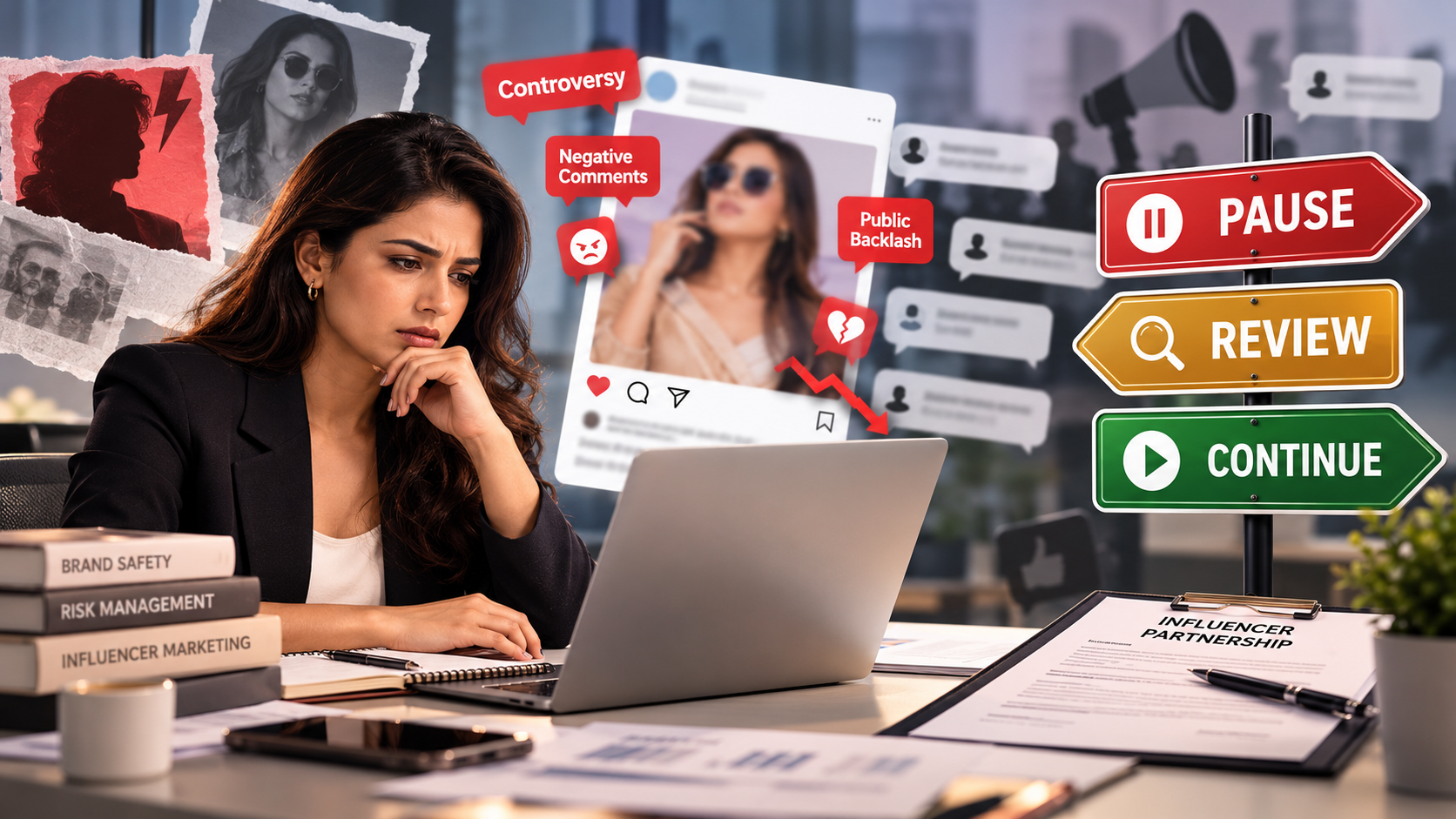
A celebrity controversy can quickly change the conversation around a brand. One day, an influencer is promoting a product through a sponsored Reel. The next, social media discussions raise questions about the creator’s conduct, public statements or past behaviour. Suddenly, the brand must decide whether to continue the campaign, pause upcoming content or end the partnership.
Knowing when to pause an influencer partnership is an important part of modern brand management. The challenge is not simply reacting to negative comments. Brands must understand what happened, assess the evidence and determine whether the incident affects their values, customers or advertising commitments.
Reacting too quickly can create problems. However, ignoring credible concerns can damage consumer trust and make the brand appear disconnected from its audience.
The right response depends on several factors, including the seriousness of the incident, the creator’s involvement, the campaign’s message and the creator’s response.
This guide explains how brands can assess influencer controversies, decide when to pause a partnership and manage the situation without making rushed or unsupported judgments.
1.1 Why Influencer Controversies Matter to Brands
Influencer partnerships rely on credibility. Audiences often follow creators because they find their opinions, personalities or experiences relatable. When a controversy challenges that perception, the brands associated with the creator may also face questions.
For example, an audience might question why a company continues promoting a creator after credible allegations of misconduct. In another situation, a creator might make an unrelated personal statement that has little connection to the brand’s product or values.

Amplify Your Brand,
One Influence at a Time.
These situations require different responses.
A controversy does not automatically mean a creator has done something wrong. Online discussions can include incomplete information, misleading claims and unverified allegations. Brands should distinguish confirmed facts from speculation before taking action.
However, they should also recognise that a campaign can become inappropriate even when the controversy is unrelated to the product itself.
The goal is to assess the actual risk rather than make decisions based only on the volume of online criticism.
1.2 How a Creator’s Reputation Affects Brand Safety
Brand safety involves protecting a company’s reputation and ensuring that its marketing appears in appropriate contexts.
In influencer marketing, brand safety extends beyond where an advertisement appears. It also includes the creator’s public conduct, campaign claims, audience relationship and association with the brand.
Consider three situations:
- A minor, unrelated controversy: A creator faces criticism over an old, harmless opinion. The brand may need to monitor the discussion without suspending the campaign immediately.
- A credible allegation of serious misconduct: The brand may pause scheduled content while it verifies relevant information and reviews contractual obligations.
- A confirmed violation of campaign terms: If the creator has breached a material contractual requirement, the brand may need to suspend or terminate the partnership according to the agreement.
These examples illustrate why brands need a defined process. A consistent approach helps marketing teams respond proportionately rather than treating every controversy as equally serious.
1.3 Why Brands Need a Clear Response Policy
Without a documented policy, teams may disagree about who can pause a campaign, what evidence is sufficient or when legal advisers should become involved.
A response policy should establish:
- Who evaluates the incident and approves a pause.
- Which types of incidents require immediate escalation.
- How evidence and public statements are verified.
- How the brand communicates with the creator.
- Which contractual clauses apply.
- What conditions allow the campaign to resume.
This process helps teams act consistently while preserving the opportunity to correct an initial assessment when new information emerges.
2. When Should Brands Pause an Influencer Partnership?
There is no universal rule that requires brands to end every partnership involving controversy. Instead, marketing teams should assess the incident, the available evidence and the potential consequences of continuing the campaign.
Research published in Business Horizons, titled Brand Responses to Influencer Scandals: An Action Plan for Managers, examines how brands can evaluate influencer transgressions. Its framework highlights factors such as responsibility, the seriousness of the incident, the nature of the endorsement and the influencer’s response.
These factors provide a useful starting point for practical decision-making.
2.1 Pause When Credible Information Raises Serious Concerns
A temporary pause may be appropriate when credible information raises significant questions about a creator’s conduct or the suitability of an active campaign.
For example, a brand promoting a family-oriented product might temporarily suspend scheduled content while investigating credible allegations of serious misconduct involving its spokesperson.
A pause does not establish guilt. It creates time for the brand to verify information, assess exposure and consult the relevant teams.
During this period, brands should review scheduled posts, paid media placements, affiliate promotions and any content that could continue circulating under the campaign.
The response should be proportionate to the evidence and potential risk.
2.2 Pause When the Incident Conflicts With Brand Values
A creator’s behaviour may create a direct conflict with the values a company communicates publicly.
For instance, a brand that promotes inclusion may need to review a creator’s verified discriminatory statements. Similarly, a company that emphasises consumer safety should investigate credible evidence that a campaign partner has promoted dangerous misinformation.
The assessment should consider the brand’s actual commitments and the creator’s conduct. It should not rely on vague claims that the creator is simply controversial.
Brands should also apply consistent standards across partnerships. Selectively enforcing values only when an incident attracts widespread attention can undermine the credibility of the policy itself.
2.3 Pause When the Campaign Could Mislead Consumers
Some controversies directly affect the accuracy of a sponsored message.
A creator might make unsupported health claims, misrepresent product performance or promote a service using information that the brand cannot substantiate.
In these situations, the brand should review the content and stop misleading material from continuing to circulate where it has the authority to do so.
In India, the Advertising Standards Council of India’s Code addresses truthful and honest advertising. Its influencer advertising resources also explain disclosure responsibilities for paid collaborations and other material connections.
Brands should assess their specific obligations rather than assume that a controversy is only a public relations issue.
2.4 Pause When the Creator’s Response Creates Additional Risk
How a creator responds can influence the brand’s next decision.
A creator who acknowledges a verified mistake, corrects misleading information and cooperates with the brand may present a different risk from someone who repeats harmful claims or publishes further misleading statements.
However, an apology alone does not resolve every concern. The brand should consider whether corrective action has occurred and whether the creator can continue representing the product responsibly.
Teams should evaluate the response alongside the original incident, available evidence and contractual requirements.
3. A Practical Framework for Assessing Influencer Controversies
Before deciding whether to pause, continue or terminate a partnership, brands should review the incident systematically.
3.1 Assess the Creator’s Responsibility
Start by establishing what the creator actually did or said.
Did the creator personally make the statement? Is the content authentic? Has it been edited or taken out of context? Does reliable reporting support the allegation?
A viral post alone is not sufficient evidence of wrongdoing.
Document the available information and distinguish verified facts from claims that remain unconfirmed. If the incident is serious, consult legal or compliance advisers before making public statements about responsibility.
3.2 Evaluate the Severity of the Incident
Not every controversy presents the same level of risk.
A minor disagreement about a cultural trend may require monitoring. A credible allegation involving serious harm, fraud or discriminatory conduct may require immediate escalation.
Brands can use a simple internal assessment:
| Risk level | Typical situation | Possible response |
|---|---|---|
| Low | Minor criticism with no clear campaign impact | Monitor and document |
| Moderate | Repeated criticism that may affect audience trust | Review content and consult the creator |
| High | Credible serious allegations or a direct brand-values conflict | Pause scheduled campaign activity while assessing |
| Critical | Confirmed serious misconduct or a material contractual or compliance breach | Consider termination and corrective action |
This table is an illustrative decision aid, not a universal legal standard. Each organisation should define its own thresholds and escalation process.
3.3 Examine the Connection Between the Controversy and the Product
The same incident can create different risks for different brands.
A creator’s unrelated public disagreement may have little effect on a technical product campaign. By contrast, a controversy involving deceptive health claims could directly undermine a supplement or healthcare-related endorsement.
Ask three questions:
- Does the incident contradict the campaign’s central message?
- Could continuing the promotion mislead or distress the intended audience?
- Does the association undermine a value the brand has explicitly promised customers?
The answers help determine whether the campaign can continue safely, needs changes or should remain paused.
3.4 Consider the Creator’s Response and Corrective Action
Brands should examine whether the creator has addressed the issue responsibly.
Relevant considerations include whether the creator has acknowledged verified facts, corrected inaccurate statements, removed problematic promotional content where appropriate and cooperated with the brand’s review.
Teams should avoid treating public apologies as automatic proof of improvement. Equally, they should not assume that a creator’s silence establishes guilt.
The objective is to assess the available evidence and the likely suitability of the ongoing partnership.
4. What Should Brands Do in the First 24 Hours?
The first day of a controversy can be confusing. Social media discussions move quickly, and different teams may receive conflicting information.
A structured response helps the brand avoid rushed public statements while protecting its campaign assets.
4.1 Step One: Verify the Information
Identify the original source of the claim and check whether reliable reporting or direct evidence supports it.
Save relevant links, screenshots and timestamps according to the company’s evidence-handling policy. Record what is confirmed, what remains disputed and what additional information is needed.
Avoid circulating unverified allegations internally as established facts.
4.2 Step Two: Review Active Campaigns
Create an inventory of the creator’s current brand commitments.
Check scheduled posts, published advertisements, paid amplification, affiliate links, product landing pages and upcoming events. Determine which assets the company can pause, edit or remove.
If the risk is serious, suspend the affected promotional activity where contractually and operationally possible while the review continues.
4.3 Step Three: Contact the Creator Privately
A brand should normally seek clarification directly rather than rely entirely on public speculation.
Ask the creator for relevant context, their response to the allegations and any evidence that can help establish the facts.
Keep the communication professional and factual. Avoid threats or public accusations before the assessment is complete.
Document the discussion and set a reasonable timeline for the next review.
4.4 Step Four: Involve the Right Teams
The appropriate response may require marketing, public relations, legal, compliance and senior management.
Marketing can assess campaign exposure. Public relations can prepare communications. Legal advisers can review contractual rights and potential liabilities. Senior decision-makers can approve suspension or termination when necessary.
For serious incidents, establish one authorised spokesperson and avoid inconsistent public statements from different teams.
4.5 Step Five: Decide Whether to Continue, Pause or Terminate
Once the initial assessment is complete, choose the most proportionate response.
The brand may continue the partnership with monitoring, pause the campaign pending further information, modify the campaign or terminate the agreement where justified.
Record the decision, its supporting evidence and the conditions for review. This creates a clearer audit trail if new information changes the situation.
5. How Contract Clauses Help Protect Brand Partnerships
Contract terms should be reviewed before a controversy occurs. A clear agreement gives both parties a shared understanding of expectations and available remedies.
5.1 Morality and Conduct Clauses
A morality clause, sometimes called a conduct clause, may permit a brand to suspend or terminate a partnership under specified circumstances.
The wording matters. A broad clause may create uncertainty, while a carefully drafted provision can define relevant conduct, procedures and remedies.
Brands should work with qualified legal advisers to establish language appropriate to the jurisdiction, creator relationship and campaign risk.
5.2 Suspension and Termination Rights
Suspension and termination are different actions.
A suspension temporarily pauses specified campaign activities while the parties assess an issue. Termination ends the relationship according to the contract’s terms.
The agreement should clarify who can authorise a suspension, how notice must be given, whether the creator can respond and what happens to pending payments or deliverables.
Brands should not assume that they can remove content, withhold payment or terminate a contract without considering the applicable agreement and law.
5.3 Content Removal and Usage Rights
Influencer agreements should address what happens to campaign content when a partnership ends.
Consider whether the brand can stop paid amplification, request edits, discontinue future use of licensed assets or remove content from channels it controls.
The contract should also explain the duration and scope of usage rights, including any applicable restrictions after termination.
These details are especially important when creator content has been reused in paid advertising or distributed across several platforms.
6. How Should Brands Communicate During a Controversy?
A brand’s response can affect how customers interpret the situation. Communication should be timely, accurate and proportionate.
6.1 When a Public Statement Is Necessary
Not every online controversy requires a public statement. If the issue is minor, unverified or unrelated to an active campaign, a public response may amplify it unnecessarily.
A statement may be appropriate when the brand is directly implicated, customers need clarification or the company has paused a prominent campaign.
The statement should explain what the brand can confirm, what action it has taken and whether the matter remains under review.
6.2 Example of a Neutral Holding Statement
The following is an illustrative template, not a statement about any real celebrity or incident.
We are aware of the concerns being raised regarding our campaign partner. We take these matters seriously and are reviewing the available information. While this review is ongoing, we have paused the relevant promotional activity. We will take appropriate next steps based on the facts and our contractual obligations.
This wording acknowledges the situation without presenting unverified allegations as facts or prematurely declaring a final outcome.
Brands should adapt any statement to the circumstances and obtain appropriate internal approval before publication.
6.3 Avoid Defensive or Speculative Responses
Brands should avoid attacking critics, speculating about motives or dismissing legitimate concerns.
They should also avoid using vague statements that suggest a final decision has been made when the review is incomplete.
A measured response demonstrates that the company has a process. It also leaves room to update the decision as reliable information becomes available.
7. Common Mistakes Brands Should Avoid
Even experienced marketing teams can mishandle influencer controversies when decisions are driven by pressure rather than evidence.
7.1 Ending a Partnership Based Only on Viral Criticism
High engagement does not prove that an allegation is accurate. Brands should verify the facts and consider the creator’s response before taking a final decision.
7.2 Ignoring Serious Concerns to Protect a Campaign Budget
The opposite mistake is continuing a campaign simply because money has already been spent.
Sunk costs should not determine whether a partnership remains appropriate. The brand should assess current risks and contractual options.
7.3 Applying Rules Inconsistently
If one creator faces strict action while another receives special treatment for a comparable incident, the brand may appear inconsistent.
Documented criteria help teams apply similar standards across partnerships.
7.4 Making Public Claims Before Verification
Publicly accusing a creator without sufficient evidence can create legal and reputational risks. Statements should be factual, carefully worded and reviewed by the appropriate team.
7.5 Forgetting the Audience and Customers
A response should address the concerns that matter to customers. Internal discussions about contracts and campaign budgets are important, but they should not replace clear communication where consumers need it.
8. How Hobo.Video Can Support More Responsible Influencer Campaigns
Managing brand safety starts before a controversy occurs. Brands need clear creator-selection criteria, campaign briefs, communication processes and performance measures.
Hobo.Video supports influencer marketing and user-generated content campaign workflows, helping brands connect with creators and organise campaign activity.
8.1 Evaluate Creator Fit Before Launch
Brands should consider audience relevance, content quality, communication style and the creator’s suitability for the product.
Reviewing publicly available content and setting clear campaign expectations can help teams identify potential concerns before committing to a partnership. Explore how Hobo.Video helps brands find niche influencers.
8.2 Set Clear Expectations in Campaign Briefs
A strong brief should define the campaign objective, required deliverables, approved product claims, advertising disclosures and escalation contacts.
It should also identify the process for handling inaccurate content, unexpected public incidents and requests to pause promotional activity.
These steps help creators understand their responsibilities before publication.
8.3 Track Campaign Performance and Risk Signals
Brands should monitor campaign performance alongside compliance and content quality.
Relevant measures may include reach, engagement, audience sentiment, disclosure compliance and the accuracy of sponsored claims. Unusual negative feedback can trigger a review, but it should not automatically be treated as proof of misconduct.
For performance measurement guidance, read Hobo.Video’s article on tracking influencer campaign metrics.
8.4 Build a Repeatable Review Process
A written escalation process can help marketing teams respond consistently when concerns arise.
It should specify who reviews incidents, how evidence is recorded, who approves campaign pauses and how decisions are communicated to creators.
Brands should confirm the specific platform tools and services available for their campaign rather than assume that every monitoring or risk-management function is automated. Planning your next influencer campaign? Visit Hobo.Video to explore creator partnerships and campaign support.
Conclusion: Protect Brand Trust With a Consistent Decision Process
Celebrity controversies can put influencer partnerships under pressure, but brands do not need to choose between reacting immediately and ignoring the situation.
A clear process helps teams establish the facts, evaluate the seriousness of an incident and determine whether a campaign should continue, pause or end. Contractual provisions, creator communication and accurate public statements can support that process.
The key takeaways are straightforward:
- Verify information before making public judgments.
- Assess the creator’s responsibility and the seriousness of the incident.
- Consider how the controversy relates to the product and brand values.
- Review contracts and consult appropriate advisers.
- Apply consistent standards across partnerships.
- Document decisions and define conditions for resuming a campaign.
Ultimately, knowing when to pause an influencer partnership is about protecting brand trust while making fair, evidence-based decisions. A consistent response policy helps brands manage uncertainty without allowing social media pressure alone to dictate the outcome.
About Hobo.Video
Hobo.Video is India’s leading AI-powered influencer marketing and UGC company. With more than 2.25 million creators, it offers end-to-end campaign management built for brand growth. The platform blends AI with human strategy to deliver strong ROI. Its services include:
- Influencer marketing
- UGC content creation
- Celebrity endorsements
- Product feedback and testing
- Marketplace and seller reputation management
- Regional and niche influencer campaigns
Top brands such as Himalaya, Wipro, Symphony, Baidyanath and the Good Glamm Group trust Hobo.Video.
Don’t guess your way to brand growth. Let’s do it right. Talk to us.
This is where creators find brand deals that make sense. Join us.
Frequently Asked Questions
When Should a Brand Pause an Influencer Partnership?
A brand should consider a pause when credible information raises serious concerns about a creator’s conduct, the campaign’s accuracy, contractual compliance or the suitability of the endorsement. A temporary suspension allows the brand to investigate without treating allegations as proven. The decision should consider the incident’s severity, its connection to the product, the available evidence and the creator’s response.
Should Brands End Every Partnership Involving Controversy?
No. Controversies vary in severity, credibility and relevance to the brand. Some situations require monitoring or clarification, while others justify a temporary pause or termination. Brands should use consistent criteria, verify information and consult legal advisers when necessary. A final decision should reflect the facts, the campaign’s risks and the applicable contract rather than online criticism alone.
What Is a Morality Clause in an Influencer Contract?
A morality clause is a contractual provision that may allow a brand to suspend or terminate a partnership under specified circumstances involving a creator’s conduct. Its scope depends on the wording and applicable law. Brands should define the relevant triggers, procedures and remedies with qualified legal advice instead of relying on vague or overly broad language.
How Can Brands Check Whether a Celebrity Controversy Is Credible?
Brands should identify the original source, review reliable reporting and distinguish verified information from speculation. They can request clarification from the creator and document the evidence available at the time. Serious incidents may require legal or compliance review. A viral post, anonymous claim or large number of negative comments should not be treated as conclusive evidence on its own.
Should Brands Issue a Public Statement During an Influencer Scandal?
A public statement is not necessary in every case. It may be appropriate when the brand is directly implicated, customers need clarification or the campaign has been visibly suspended. Statements should explain confirmed facts and relevant actions without repeating unverified allegations. The company should also establish who can speak publicly and obtain appropriate approval before publication.
What Should an Influencer Brand-Safety Policy Include?
A useful policy should define risk categories, verification procedures, escalation contacts, decision-making authority and communication protocols. It should also cover contract reviews, campaign suspension, content removal, disclosure compliance and conditions for resuming a partnership. Teams should document decisions and review the policy periodically to keep it relevant to current campaign practices.

 Anooshka Pandey
 Neeti Katyal