
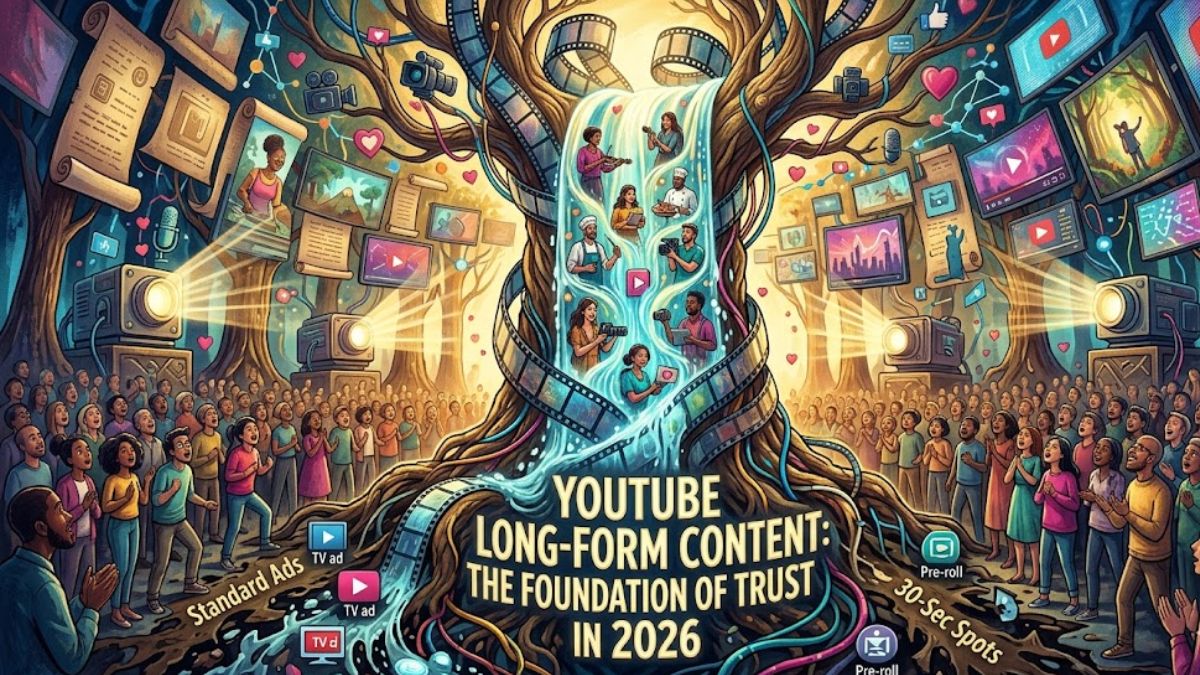
In 2026, the advertising problem isn’t reach. Brands can get in front of people. The problem is that people have learned to ignore them. Thousands of ads a day will do that. Audiences have developed a natural filter for anything that feels overly promotional. Traditional campaigns still generate impressions, but impressions no longer guarantee influence. This shift is one reason Creator Content has become so effective. Unlike conventional advertising, Creator Content is built on trust, authenticity, and real experiences. People are more likely to listen to creators they follow regularly than to brands talking about themselves. As a result, Creator Content has become one of the most trusted ways for brands to connect with consumers and drive meaningful engagement.
Creator Content has filled that gap, not because it’s a clever format, but because it’s structurally different from advertising. When someone watches a creator they’ve followed for two years talk about a product, that’s not an ad experience. It’s closer to a recommendation from someone they trust. The emotional register is different, and so is the response. YouTube’s long-form format matters specifically because depth is what builds that trust. A ten-minute honest walkthrough of how something works, what the creator actually thinks, and where it falls short is more persuasive than any thirty-second spot. You can’t fake that kind of detail, and audiences know it.
- 1. The Rise of Trust-Based Marketing
- 2. Why YouTube Remains the Ultimate Trust Platform
- 3. What Makes Creator Content Different from Traditional Advertising?
- 4. The Psychology Behind Long-Form Creator Influence
- 5. Why Brands Are Investing More in Creator Content
- 6. How YouTube Creators Build Trust Over Time
- 7. The Role of UGC Videos in Long-Form Content
- 8. Technology Is Transforming Creator Production
- 9. Music and Production Quality Influence Trust
- 10. Why Educational Content Outperforms Direct Advertising
- 11. The Creator Economy in India
- 12. Long-Form Content Supports Better Brand Recall
- 13. Why Creator Content Will Dominate Beyond 2026
- About Hobo.Video
1. The Rise of Trust-Based Marketing
1.1 Why Trust Has Become the New Currency
Buying decisions have always run on trust. What’s changed is where people go to find it. Edelman’s Trust Barometer has tracked this shift for years: peer recommendations and creator opinions consistently outrank traditional advertising as purchase influences. People want to see how a product actually works. They want an honest take from someone who has used it, not a brand’s best framing of its own product. This isn’t cynicism about advertising. It’s a rational response to being advertised at constantly. When everything is selling something, the only thing that cuts through is the perception of honesty. That’s what Creator Content offers. And it’s why brands that used to see influencer marketing as a secondary channel are now treating it as a primary one.
1.2 Trust Creates Long-Term Business Growth
Trust doesn’t just help at the moment of purchase. It shapes the entire relationship a customer has with a brand, from how they first hear about it to whether they come back. Long-form YouTube content is particularly good at building this because the timeline is different. A creator who posts consistently about a category for two or three years develops the kind of credibility that no campaign can manufacture quickly. Their audience has watched them be right, and wrong, and honest about both. That track record is what makes a recommendation land. Brands are starting to allocate budget accordingly.
2. Why YouTube Remains the Ultimate Trust Platform
2.1 Longer Attention Spans Create Better Connections
The difference between YouTube and short-form platforms isn’t just video length. It’s intent. Someone opening TikTok is browsing. Someone opening YouTube and searching for a review or tutorial has a specific reason to be there. They’ve decided to spend time with the content before they’ve seen a single frame of it. That intentionality changes how the viewing experience works. Spending fifteen minutes with a creator builds familiarity in a way that a thirty-second Reel can’t. By the end of a long video, the viewer has heard someone’s voice, followed their reasoning, watched how they think. That’s not just exposure. That’s relationship-building. A creator who’s good at this can discuss a product in a way that feels like advice rather than a pitch. The audience doesn’t feel sold to, which is exactly why they’re more likely to buy.
2.2 Data Supports YouTube’s Dominance
YouTube viewers watch billions of hours of content daily. Google’s own research shows that people are substantially more likely to trust creators they follow regularly than brands that advertise to them. That trust gap is the whole game. Brands running influencer marketing India campaigns have increasingly figured this out, which is why YouTube partnerships have moved up the priority list.
3. What Makes Creator Content Different from Traditional Advertising?
3.1 Storytelling Over Selling
Traditional ads are about products. Creator videos are about people who happen to use products. That difference in framing changes everything about how the message lands. A creator doesn’t open a video with a feature list. They start with something real: a problem they had, a thing they were trying to figure out, a situation the audience recognizes. The product enters the story as a solution, not as the point of the video. By the time the creator gets to talking about it, the viewer has already bought into the narrative. That structure makes the promotion feel earned rather than inserted. It’s educational and entertaining first. The commercial element is almost incidental, which paradoxically makes it more effective.

Amplify Your Brand,
One Influence at a Time.
3.2 Authenticity Drives Performance
Audiences are good at detecting when someone is reading off a brief. The cadence is different, the specificity is different, the enthusiasm reads differently. Creators who have genuinely used something and have actual opinions about it are noticeably different to watch. They’ll mention the thing that annoyed them. They’ll qualify the claim. Say it’s not for everyone. That kind of texture is what makes a recommendation believable, and believable recommendations convert better than polished ones.
4. The Psychology Behind Long-Form Creator Influence
4.1 Familiarity Builds Credibility
There’s a well-documented psychological effect where repeated exposure to someone increases how much we trust them. It’s not complicated: the more time you spend with a person, the more familiar they feel, and familiarity reads as safety. Long-form YouTube content accelerates this. A subscriber who watches a creator weekly is spending real time with them over months and years. The creator becomes a familiar voice, almost like someone they know. When that person recommends something, it doesn’t feel like advertising. It feels like a tip from someone whose judgment they’ve come to rely on.
This is how top influencers in India have built communities that respond to recommendations at rates traditional media can’t touch.
4.2 Parasocial Relationships Matter
Viewers develop genuine feelings of connection with creators they’ve never met. It sounds strange, but the behavioral effect is real and well-studied. These one-sided relationships influence purchasing decisions in ways that celebrity endorsements rarely can, because the connection feels personal rather than aspirational. A creator with 300,000 loyal subscribers can move product more effectively than a celebrity with ten million followers who their audience doesn’t feel they actually know. Brands that understand this stop chasing reach and start looking at depth of relationship.
5. Why Brands Are Investing More in Creator Content
5.1 Higher Return on Marketing Investment
Influencer Marketing Hub’s data consistently shows returns above five dollars for every dollar invested in influencer marketing, though the range is wide and depends heavily on execution. What’s clear is that strong creator partnerships, particularly those built around long-form content, regularly outperform equivalent spending on traditional advertising. The reason isn’t mysterious. Longer videos give creators space to actually educate their audience. A viewer who finishes a thorough product walkthrough understands what they’re buying and why it fits their situation. That clarity drives conversion and reduces returns.
5.2 Better Audience Targeting
A creator who has built an audience around a specific topic knows that audience in a way no targeting algorithm fully replicates. They know what their viewers struggle with, what they’ve tried before, what they care about. That contextual knowledge makes creator-integrated campaigns more relevant by default. Brands working with a top influencer marketing company increasingly use this as a selection criterion, looking for creators whose audience profile matches their actual customer, not just their demographic target.
6. How YouTube Creators Build Trust Over Time
6.1 Consistency Creates Reliability
Trust is built through repeated experiences that confirm someone’s judgment. Creators who publish consistently, maintain a clear perspective, and don’t dramatically change what they’re about give their audience the repeated positive experiences that accumulate into credibility. The creators who hold the most influence aren’t necessarily the most entertaining or the most polished. They’re the ones whose audience knows what to expect and has learned they can rely on that expectation. Credibility built that way is worth more, long-term, than any spike in views from a viral moment.
6.2 Honest Reviews Matter
Counterintuitively, creators who point out a product’s weaknesses are often more persuasive than those who don’t. A review that acknowledges limitations reads as trustworthy precisely because it doesn’t feel like it’s trying to sell you something. Audiences have seen enough sponsored content to know when someone is being careful with their words. When a creator volunteers a downside, that signals they’re not just running through a brief. It makes everything else they say more credible, and it makes the next recommendation they give land harder. That’s the compounding logic of Creator Content: honest reviews today make future recommendations more influential. The brands that understand this give creators room to be honest, and the results reflect it.
7. The Role of UGC Videos in Long-Form Content
7.1 User-Generated Content Adds Credibility
Creator Content and UGC aren’t competing formats. They solve different parts of the same problem. A creator brings reach and storytelling. They can explain a product, demonstrate it, and build a narrative around it. What they can’t fully provide is the feeling of hearing from someone with no stake in the outcome. That’s what UGC delivers. Real customers talking about real experiences don’t read like marketing, which is exactly why they’re persuasive at the moments when polished content stops working. Run them together and you get something neither produces alone: education from the creator, reinforcement from the customer. AI UGC platforms have made scaling that second layer more practical, helping brands build out content libraries without coordinating dozens of individual customers every time.
8. Technology Is Transforming Creator Production
AI tools have genuinely changed what’s operationally manageable for a solo creator or a small team. Editing workflows that used to take a full day can move faster. Scripting assistance helps with structure. Distribution and performance tracking are more automated than they were even two years ago. But the ceiling on what these tools can do is real and worth being clear-eyed about. They’re production tools, not storytelling tools. The part that makes a YouTube video actually work, the voice, the perspective, the honesty, the specific detail that makes an audience feel like a creator is talking to them rather than at them, none of that gets automated.
Creators who use AI to reduce the grind while protecting the creative core tend to do better than those who let it hollow out the thing that made the content worth watching in the first place. The same logic applies on the brand side. AI influencer marketing platforms have made creator discovery and campaign analysis faster and more accurate. That’s a genuine operational improvement. The relationship still has to be human.
9. Music and Production Quality Influence Trust
Bad audio ends videos. Viewers will tolerate a lot in terms of visual quality, lower resolution, inconsistent lighting, imperfect framing, but audio problems are different. They create friction that makes watching feel like work, and audiences don’t push through it the way they might for a creator they’re invested in. Creators who’ve figured this out invest in audio early. A decent microphone and clean sound design make everything else feel more professional, and professional perception affects how seriously an audience takes what you’re saying.
Copyright-safe music has become a practical necessity rather than a nice-to-have. Creators who build libraries of reliable, licensable tracks, through YouTube’s own audio resources or third-party platforms, avoid the scramble of re-editing content because a claim came through after the fact. It’s a logistical issue more than a creative one, but getting it wrong wastes time that should be going toward actual content.
10. Why Educational Content Outperforms Direct Advertising
People don’t mind being sold to when they feel they’ve learned something first. That’s the core insight behind why tutorial and review formats consistently outperform straight promotional content on YouTube. When someone searches “how to” something, they’re in problem-solving mode. A creator who answers that question well, actually answers it, doesn’t stretch a thirty-second answer into ten minutes, earns something more durable than a view. They earn the audience’s trust that they know what they’re talking about. That trust is what makes the product recommendation at the end of the video land differently than an ad would.
The conversion comes as a byproduct of genuine usefulness. Audiences that come away having actually learned something associate that feeling with the creator and, by extension, with what the creator endorses. Brands that understand this give creators room to actually educate rather than pushing them toward faster product mentions.
11. The Creator Economy in India
India’s creator economy has expanded fast enough that it’s stopped being useful to describe it as emerging. It has emerged. Millions of people now use creators as their primary source of recommendations across technology, finance, beauty, education, and lifestyle, and that behavior is increasingly stable rather than experimental. What’s happening with regional-language creators is particularly worth attention. Creators building audiences in Hindi, Tamil, Telugu, Marathi, and other languages are pulling engagement numbers that English-first content rarely matches in those markets. The audiences are highly specific, highly trusting, and largely underserved by national brands that still default to metro-centric campaigns.
Creators who started on Instagram have moved to YouTube in significant numbers to deepen the relationship with their audience. Long-form content does something short-form can’t: it gives the audience enough time with a creator to develop genuine trust. For brands running influencer marketing India campaigns, this migration matters because it changes what the creator relationship can actually deliver.
12. Long-Form Content Supports Better Brand Recall
Humans remember stories. That’s not a marketing insight, it’s just how memory works. Narrative structure, character, tension, resolution, these are the things that make information stick. A product feature list doesn’t have any of those. A creator talking about a problem they actually had, walking through how they solved it, showing the results, does. Long-form YouTube videos have enough time to actually build a story. That investment in narrative pays off in recall. Someone who watched a fifteen-minute video about a product will remember it differently, and longer, than someone who saw a banner ad for it twelve times.
The other thing that works in long-form’s favor is that integrating a product into a story doesn’t feel repetitive the way traditional advertising does. Viewers don’t skip creator sponsorship segments at the same rate they skip ads, especially when they trust the creator and the integration feels honest rather than dropped in. That’s a significant advantage when recall and positive association are what you’re building toward.
13. Why Creator Content Will Dominate Beyond 2026
Online trust is getting harder to come by, not easier. The volume of content is higher, the skepticism is higher, and the average person’s ability to detect inauthenticity has been sharpened by years of exposure to influencer marketing that ranged from genuine to obviously transactional. In that environment, the creators who’ve built real relationships with real audiences become more valuable, not less. Their credibility is harder to manufacture and therefore harder to compete with through conventional advertising.
The AI question comes up a lot here. The tools will keep improving. AI-generated content will get more convincing. But audiences connect with people, with specific voices, specific perspectives, specific histories of being right about things. That’s not a technical problem that better generation solves. The human element in Creator Content isn’t a limitation waiting to be engineered around. It’s the actual product. That’s why the format has the staying power it does, and why brands that figured out how to build genuine creator partnerships early will continue to see returns that purely automated alternatives won’t match.
Frequently Asked Questions
What is Creator Content?
Creator Content refers to videos, posts, reviews, tutorials, and other content produced by creators who have built audiences around specific interests or expertise.
Why is YouTube considered the most trusted creator platform?
YouTube allows longer content formats that help creators build deeper relationships with audiences through storytelling, education, and authentic experiences.
How does Creator Content improve conversions?
Short DescriptionCreator Content provides social proof, education, and trust. These factors reduce consumer hesitation and increase purchase confidence.Short Description
What is the role of UGC Videos in creator marketing?
UGC Videos provide authentic customer experiences that reinforce creator recommendations and strengthen campaign credibility.
What is an AI YouTube Video Creator?
An ai youtube video creator is a tool that assists with editing, scripting, production workflows, or video generation using artificial intelligence technologies.
About Hobo.Video
Hobo.Video is India’s leading AI-powered influencer marketing and UGC company. With over 2.25 million creators, it offers end-to-end campaign management designed for brand growth. The platform combines AI and human strategy for maximum ROI.
Services include:
- Influencer marketing
- UGC content creation
- Celebrity endorsements
- Product feedback and testing
- Marketplace and seller reputation management
- Regional and niche influencer campaigns
Trusted by top brands like Himalaya, Wipro, Symphony, Baidyanath and the Good Glamm Group.
Together, we’ll make your brand growth feel natural and doable. Let’s begin.
Your reach deserves rewards. Let’s make that happen. Tap to sign up.

 Jyoti Pandey
 Neeti Katyal