
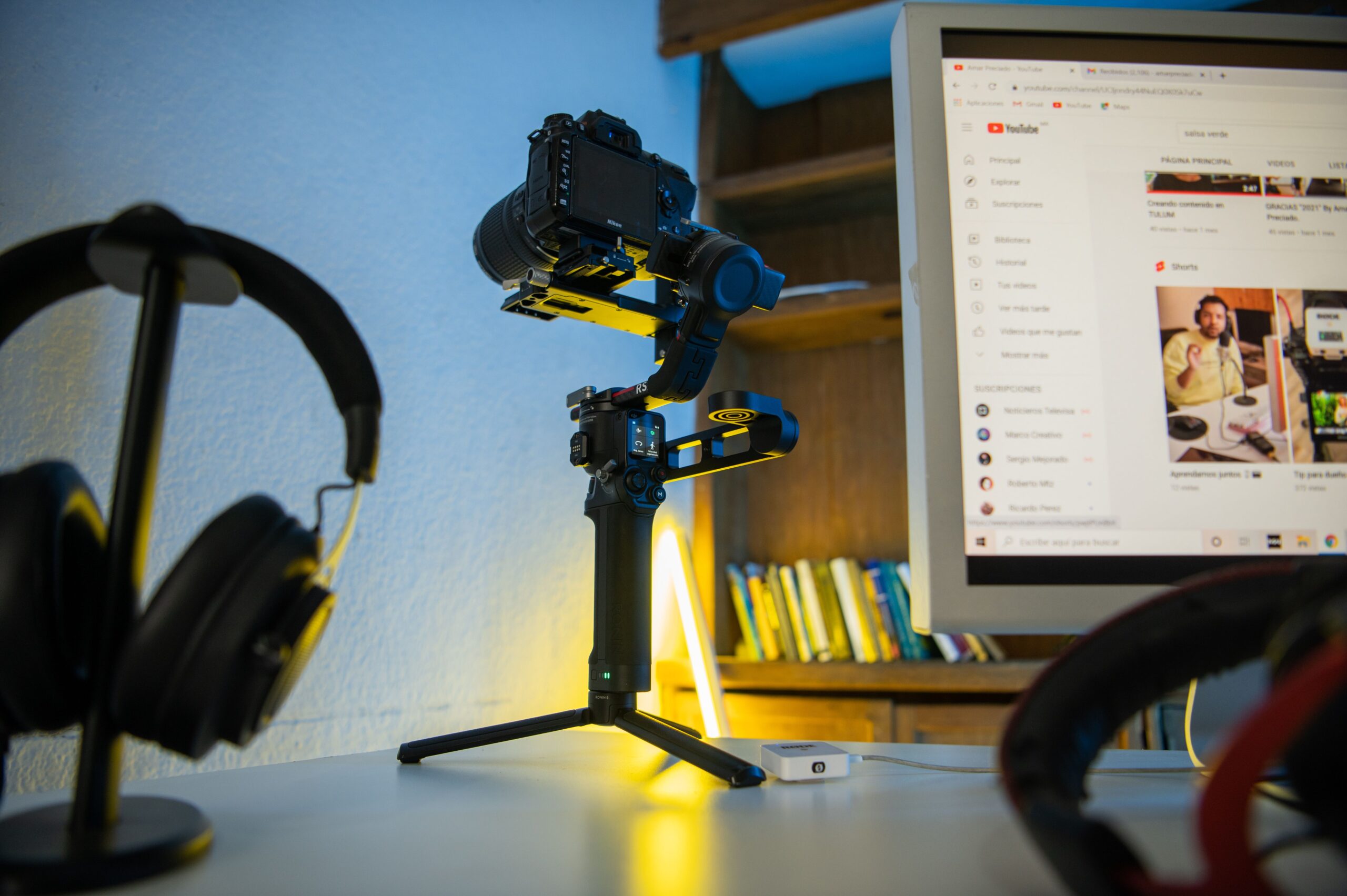
YouTube research tools are changing how influencers and brands plan, create, and optimise video content. Creators once relied heavily on personal experience, trending topics, and guesswork. Today, they can use audience insights, content discovery features, and AI-powered feedback to make more informed decisions. These developments are also helping brands build stronger influencer marketing strategies and connect with the right audiences.
1. YouTube Research Tools: Why Content Strategy Is Changing
YouTube content strategy has changed considerably over the past few years. Creators once relied heavily on personal experience, trending topics, and guesswork. Brands often followed similar methods when planning influencer campaigns. However, audience behaviour is becoming more complex. Viewers now expect relevant content, useful information, and entertaining storytelling.
This shift makes research essential before recording a video.
YouTube is also introducing tools that help creators understand their channels, explore content opportunities, and improve videos before publishing. At its Made on YouTube event on September 23, 2026, the platform announced new research destinations, improved Insights, AI-powered draft feedback, thumbnail support, and video testing capabilities. These updates aim to support creators throughout the content creation process.
The important change is not simply that YouTube is adding more tools. Instead, it is bringing research closer to everyday content creation.
Creators can explore audience behaviour before choosing a topic. They can review their drafts before publishing. They can also learn from performance patterns instead of relying on isolated viral moments.
For brands, these developments create new opportunities. Marketing teams can identify creators whose content connects with specific audiences. They can also improve campaign briefs, evaluate video concepts, and develop better partnerships.

Amplify Your Brand,
One Influence at a Time.
However, technology alone cannot create a successful content strategy. Research must still support a clear objective, authentic storytelling, and audience understanding.
1.1 Why content research matters more than ever
YouTube’s scale explains why content discovery has become increasingly competitive. YouTube CEO Neal Mohan stated in September 2026 that creators upload more than 20 million videos to the platform every day. That volume makes audience attention difficult to secure.
Creators cannot simply publish frequently and expect consistent growth. They need to understand what their audience wants to watch and why.
Research helps creators answer practical questions:
- Which topics are attracting interest?
- What questions are viewers asking?
- Which videos perform better than expected?
- What do viewers repeatedly discuss in comments?
- Which formats suit the channel’s audience?
- What should the creator improve before publishing?
- Which subjects have enough potential for a series?
These questions also matter to brands. A campaign may receive views without creating meaningful engagement or sales. Therefore, brands need to understand the audience and content context before investing.
YouTube research tools can support this process. They help creators and marketers make better-informed decisions while leaving room for creative judgement.
2. What YouTube’s New Research and Insights Features Offer
YouTube’s 2026 announcements introduced several developments across research, analytics, creative feedback, and video testing. Not every announced feature is available to every creator immediately. Rollouts, eligibility, and availability can vary.
Creators should check the official Made on YouTube overview and YouTube Studio for current access.
2.1 Research destinations and outlier video discovery
Research is becoming a more visible part of YouTube Studio.
The new Research destination helps creators discover content opportunities. YouTube also announced features that identify outlier videos. These are videos that perform unusually well compared with other content or expected channel performance.
Outlier discovery is useful because it can reveal audience interest that creators may not have noticed.
Imagine a fitness creator who regularly uploads workout videos. Most videos receive similar views. However, a short video explaining common mistakes during squats performs significantly better.
That result could indicate a useful content opportunity.
The creator might explore related topics:
- Squat mistakes beginners make
- Correct squat posture
- Squat variations for different fitness levels
- How to avoid knee discomfort during exercise
- A beginner’s lower-body workout routine
The goal is not to copy the successful video. It is to understand the underlying audience interest.
An outlier video may succeed because of its topic, timing, storytelling, thumbnail, or audience need. Creators should investigate those factors before repeating the format.
Outlier research is especially useful for small and growing channels. They may not have enough data to identify long-term patterns independently. A discovery tool can help them find promising subjects and test their own creative approaches.
Still, an outlier is not a guaranteed formula for future success. A video may perform unusually well because of a temporary trend. Creators should validate the opportunity before building an entire content calendar around it.
2.2 Ask Studio: A conversational research assistant
YouTube’s Ask Studio is designed to help creators explore channel insights, brainstorm content, and understand performance through conversational questions.
Instead of navigating several analytics screens, creators can ask questions in everyday language. For example:
- Which topics performed well during the past three months?
- What do viewers frequently mention in my comments?
- Which videos attracted new viewers?
- What could explain the performance of my latest upload?
- Which subjects might suit my existing audience?
- What content should I consider developing next?
YouTube’s official Ask Studio help page explains that the feature can help creators brainstorm ideas, review channel performance, and explore audience trends.
The usefulness of Ask Studio depends on the quality of the question. A vague prompt such as “How can I grow?” may produce general suggestions. A specific question gives the tool a clearer direction.
For example, a creator could ask:
“What patterns appear in my last ten videos about skincare, particularly in comments from viewers who are new to my channel?”
This question identifies the subject, content range, and audience group.
Ask Studio can support decision-making, but creators should review its recommendations carefully. AI-generated feedback may overlook context, cultural references, or a creator’s personal style. It should support creative thinking rather than replace it.
2.3 Insights and performance interpretation
Traditional analytics show creators what happened. Improved insights can help them understand possible reasons behind performance.
A video may receive fewer views than expected. However, that does not automatically mean the content was poor.
Several factors may influence performance:
- The topic attracted limited interest.
- The thumbnail did not communicate the video’s value.
- The title created an inaccurate expectation.
- The opening was too slow.
- The video reached an audience outside its intended niche.
- The subject was highly seasonal.
- The audience preferred a different format.
Creators need to consider multiple signals before making changes.
For instance, a video with strong audience retention but limited impressions may have a packaging or discovery problem. A video with many impressions but low click-through rate may need a more compelling title or thumbnail. A video with strong clicks but early audience drop-off may need a better opening.
These interpretations are not automatic rules. Analytics should be reviewed alongside the video’s topic, audience, and distribution context.
2.4 Draft feedback before publishing
One of the most interesting announced developments is personalised feedback on unpublished videos.
YouTube described draft feedback that can provide suggestions about pacing, structure, storytelling, and other creative elements. The feature may help creators identify issues before a video reaches their audience.
Consider a creator preparing a product review.
The draft may include a long introduction, several unrelated points, and a product demonstration that appears too late. Feedback could encourage a clearer structure.
The creator might then:
- Introduce the product and its purpose.
- Explain the problem it solves.
- Demonstrate the product.
- Share personal observations.
- Discuss limitations.
- Provide a final recommendation.
This structure can make the video easier to follow.
However, creators should not accept every suggestion automatically. A slow introduction may work for a documentary-style channel. A conversational pause may be part of a creator’s personality. A storytelling choice may deliberately build suspense.
The best use of draft feedback is to identify weaknesses while protecting the creator’s voice.
2.5 Thumbnail generation and testing
Thumbnails influence whether viewers consider clicking a video. YouTube announced channel-matched thumbnail generation and dynamic thumbnail capabilities as part of its 2026 creator updates.
The platform also reported that creators had conducted more than 40 million title and thumbnail experiments since its A/B testing feature officially launched in 2024. This figure shows how frequently creators are experimenting with video packaging.
A thumbnail should communicate the video’s subject quickly. It should not mislead viewers or promise something the video does not deliver.
For example, a finance creator could test:
- A thumbnail showing a simple savings comparison
- A thumbnail highlighting a common financial mistake
- A thumbnail featuring the creator with a clear visual question
The objective is to identify which presentation connects with viewers while accurately representing the content.
Brands can also benefit from thumbnail research. A campaign video may include product visuals, creator expressions, demonstrations, or lifestyle settings. Testing different approaches can reveal which presentation attracts the intended audience.
However, thumbnail testing should not be treated as a replacement for video quality. Strong packaging may attract clicks, but the video must fulfil the promise.
2.6 Video A/B testing and opening hooks
YouTube announced video A/B testing capabilities that would allow creators to compare different video cuts and identify which opening hook performs best. The feature was described as coming soon, so creators should verify its current availability before planning around it.
This development could be particularly useful for Shorts and short-form storytelling.
A creator might test three openings for the same topic:
- “Three mistakes beginners make while choosing skincare.”
- “I tested this skincare routine for seven days.”
- “Before buying another skincare product, watch this.”
Each opening approaches the topic differently.
One focuses on mistakes. Another introduces personal experience. The third creates curiosity.
The best opening depends on the audience and content. A dramatic hook may attract attention but feel unsuitable for a professional educational channel.
Testing should help creators discover what works without encouraging exaggerated claims.
3. How Influencers Can Use YouTube Research Tools to Build Better Content
YouTube research tools are valuable when creators use them as part of a repeatable workflow. Research should influence topic selection, scripting, production, and evaluation.
3.1 Discover content ideas from audience questions
Creators often struggle with one major problem: deciding what to publish next.
Research tools can help uncover questions that viewers already want answered.
For example, an Indian personal finance creator may notice repeated questions about:
- UPI spending habits
- Saving money on a monthly salary
- Credit card fees
- First-time investments
- Emergency funds
- Budgeting for rent and groceries
These questions can become individual videos or a larger series.
A useful content idea should meet three conditions:
- The audience has a genuine interest.
- The creator can provide relevant knowledge or experience.
- The topic supports the channel’s broader positioning.
A creator should avoid chasing every trending subject. A viral celebrity story may generate temporary views, but it may not attract the right audience for a finance channel.
Instead, creators should look for topics that connect audience demand with their expertise.
3.2 Identify outlier videos without copying them
Outlier research can reveal what makes a topic attractive. However, creators must understand the difference between inspiration and imitation.
Suppose a travel creator finds a video about a hidden hill station that receives unusually high engagement.
Copying the exact title, thumbnail, and itinerary would offer little original value. The creator could instead explore a different angle:
- A budget itinerary for the same destination
- A local food guide
- A family travel experience
- A monsoon travel checklist
- A comparison with another nearby destination
The original video provides a signal. The creator develops a new idea.
This approach helps maintain originality while using research intelligently.
Creators should also examine the context behind an outlier. Was the video published during a holiday? Did a celebrity mention the destination? Did the creator have an unusually large audience? Was the topic linked to breaking news?
Without context, the result may be misleading.
3.3 Build a content calendar around patterns
A content calendar should not depend entirely on trending topics.
Research can help creators combine different content categories:
| Content type | Purpose | Example |
|---|---|---|
| Search-led content | Answer specific questions | How to edit YouTube Shorts |
| Trend-led content | Join relevant conversations | New creator features explained |
| Community-led content | Respond to audience interests | Viewer questions answered |
| Evergreen content | Attract long-term discovery | Beginner’s guide to video lighting |
| Experiment-led content | Test a new format | A 30-day challenge |
This mix helps creators balance immediate opportunities with long-term growth.
For Indian creators, seasonal planning can also matter. Topics may change around Diwali, Holi, wedding season, summer travel, exam periods, and major shopping events.
However, seasonal content should be published early enough to reach viewers before demand peaks.
Research tools can help creators identify relevant themes and compare them with their own channel history.
3.4 Improve video hooks and storytelling
The first few seconds can influence whether viewers continue watching.
Research tools may help creators identify successful patterns, but the opening must still fit the content.
A tutorial could begin with the final result. A personal story might start with a surprising moment. A product review could show the product in action.
For example, instead of opening a video with:
“Hello everyone, welcome back to my channel. Today I am going to discuss a product.”
The creator could say:
“I used this product for seven days. Here is what changed—and what did not.”
This opening introduces a clear reason to watch.
However, hooks should remain honest. A creator should not promise a dramatic transformation when the video contains only a routine review.
Audience retention data can help creators understand whether the opening works. Research tools can support the analysis, but the creator must connect the numbers with the actual storytelling.
3.5 Use research to improve Shorts and long-form videos
Shorts and long-form videos serve different purposes.
Shorts may help creators introduce ideas, reach new viewers, and test formats. Long-form videos can provide deeper explanations, detailed storytelling, or comprehensive reviews.
Creators can use research to connect these formats.
For example:
- A Short introduces three common mistakes.
- A long-form video explains each mistake in detail.
- A follow-up Short answers a viewer question.
- A community post asks viewers which topic needs further explanation.
This creates a connected content ecosystem.
The creator can also observe which topics attract viewers across formats. A successful Short may reveal interest in a longer tutorial. However, short-form popularity does not guarantee long-form performance.
The audience may enjoy quick entertainment but have limited interest in a detailed explanation. Creators should test the connection instead of assuming it.
3.6 Turn research into a repeatable creator workflow
Research becomes more useful when creators follow a consistent process.
A simple weekly workflow could look like this:
Monday: Research
Review audience questions, channel performance, and relevant content trends.
Tuesday: Topic selection
Choose ideas based on relevance, audience interest, and creative potential.
Wednesday: Script and outline
Create the structure, hook, key points, and call to action.
Thursday: Production
Record and edit the video.
Friday: Review
Check pacing, clarity, thumbnail, title, and audience expectations.
Publishing day: Measure
Track performance and document useful observations.
This process does not need to be rigid. Creators can adapt it to their schedules.
The key is to avoid making every decision at the last minute.
3.7 Protect the creator’s personality
Research can help creators understand what audiences respond to. Yet creators should not become copies of the channels they study.
A creator’s personality is part of their value.
Viewers may follow someone because of their humour, honesty, storytelling, expertise, or cultural perspective. If research pushes the creator to remove these qualities, the channel may lose its identity.
The strongest strategy combines audience insights with original expression.
Creators should ask:
- Does this topic fit my channel?
- Can I contribute something different?
- Would I genuinely enjoy making this video?
- Does this idea help my audience?
- Am I copying a format without understanding why it works?
These questions protect creativity while making research more purposeful.
4. How Brands Can Turn YouTube Research into Influencer Marketing Strategy
YouTube research tools are not only useful for individual creators. They can also influence how brands plan creator partnerships, UGC campaigns, and video marketing.
4.1 Find creators based on audience relevance
Brands often begin influencer selection with follower counts. However, follower numbers alone cannot explain whether a creator suits a campaign.
Research should consider:
- Audience demographics
- Audience interests
- Content themes
- Engagement quality
- Video consistency
- Comment sentiment
- Previous brand partnerships
- Geographic relevance
- Creator credibility
- Content production style
For example, a skincare brand targeting young adults in India may benefit from creators who explain skincare routines in Hindi, Tamil, Bengali, Marathi, or other regional languages.
A creator with a smaller but highly relevant audience may be more useful than a larger creator whose viewers have little interest in the product.
This is where brands can combine YouTube research with a broader AI and ML approach to influencer campaigns.
AI can help organise creator data, identify patterns, and shortlist potential partners. Human review remains important because cultural understanding, authenticity, and communication style cannot be reduced to a single score.
4.2 Understand content context before selecting influencers
Brands should review more than a creator’s top-performing video.
A channel may have millions of views on entertainment content but limited relevance to a product category. Another creator may consistently attract viewers interested in cooking, home improvement, beauty, fitness, or personal finance.
Research can help brands understand the channel’s content environment.
Consider a kitchen appliance campaign.
A brand could shortlist creators who regularly publish:
- Recipe tutorials
- Kitchen organisation videos
- Home cooking routines
- Product demonstrations
- Budget meal preparation
- Family cooking content
The creator’s audience already has a natural connection with the product.
This approach makes campaign integration feel more relevant.
Brands should also inspect recent videos. A channel’s audience or content direction may change over time. Historical performance should not automatically determine current suitability.
4.3 Improve campaign briefs with research
A weak influencer brief often begins with a product description and a list of mandatory talking points.
A research-led brief starts with the audience’s problem.
For example, a home appliance brand might identify common viewer questions about cleaning, storage, electricity consumption, or product durability.
The brief could then ask creators to demonstrate how the product addresses one relevant problem.
A useful brief should include:
- Campaign objective
- Target audience
- Product information
- Key message
- Required disclosure
- Deliverables
- Platform and format
- Timeline
- Usage rights
- Approval process
- Measurement criteria
- Creative freedom
The brand should avoid scripting every sentence.
Creators understand their audience’s language and storytelling style. Research should inform the brief, not remove the creator’s individuality.
4.4 Build campaigns around audience intent
Different YouTube audiences have different motivations.
A viewer searching for “best budget smartphone under ₹20,000” may be close to a purchase. Someone watching a general smartphone comparison may still be exploring options.
Brands should consider these differences when selecting creators and content formats.
A campaign could include:
- Awareness videos introducing a product category
- Comparison videos explaining differences
- Tutorials demonstrating product use
- Reviews sharing real experiences
- Shorts highlighting one feature
- Long-form videos answering detailed questions
These formats serve different stages of the customer journey.
Brands should not expect every creator video to generate immediate sales. Some content builds awareness, while other content supports evaluation or conversion.
A campaign becomes stronger when each creator has a clear role.
4.5 Use creator research to plan regional campaigns
India’s linguistic and cultural diversity creates significant opportunities for YouTube influencer marketing.
A single national campaign may not connect equally with every audience. Regional creators can explain products through familiar language, examples, and cultural references.
For example, a festive campaign may need different storytelling approaches for audiences in Maharashtra, Tamil Nadu, Punjab, West Bengal, and Kerala.
Regional research can help brands identify creators who understand local audiences.
Brands can explore how regional influencers support pan-India campaigns.
A regional creator may offer more than language translation. They can adapt the context, humour, setting, and cultural relevance of a campaign.
Research can help brands identify these differences before production begins.
4.6 Use YouTube data alongside broader campaign measurement
YouTube analytics can provide useful signals, but brands should avoid treating one metric as the complete measure of success.
A campaign may generate views but little meaningful engagement. Another may receive fewer views but attract highly relevant viewers.
Brands should connect YouTube metrics with campaign objectives.
For example:
| Campaign objective | Useful indicators |
|---|---|
| Awareness | Reach, views, impressions, brand recall |
| Engagement | Comments, likes, shares, meaningful interactions |
| Consideration | Watch time, clicks, product-page visits |
| Conversion | Sales, leads, sign-ups, tracked actions |
| Content production | Video quality, usage rights, asset performance |
| Community trust | Comment sentiment, questions, audience response |
Brands should also consider attribution limitations. A viewer may watch a creator video and purchase later through another channel. That journey may not appear fully in one analytics report.
For better evaluation, brands should establish tracking and measurement methods before the campaign begins.
This includes UTM links, affiliate codes, landing pages, conversion tracking, and brand-lift studies where appropriate.
For a broader framework, explore Hobo.Video’s guide to measuring influencer marketing success.
4.7 Connect YouTube research with global influencer marketing
Brands operating across markets need to understand both shared audience behaviour and local differences.
A global campaign may use a common product message. However, creators should adapt the storytelling to their local audiences.
For example, a global beauty brand may promote the same product in India, the United States, and Southeast Asia. The creators may discuss different routines, climate conditions, beauty preferences, or product concerns.
YouTube research can help teams discover local content patterns and audience questions.
This approach supports a more informed strategy for global brands scaling with influencer marketing.
The goal is not to make every market identical. It is to preserve brand consistency while allowing cultural relevance.
4.8 Research can support UGC and creator-led advertising
Brands can also use YouTube research to identify content formats that work well for user-generated content and creator-led ads.
A creator’s video may reveal an effective demonstration style, problem-solving angle, or storytelling approach.
For example, a home-care brand could study videos where creators demonstrate cleaning routines. A beauty brand could examine tutorials that explain product application. A food brand could identify recipe formats that encourage viewers to save or share videos.
These observations can inform UGC briefs.
However, brands should obtain proper permission before repurposing creator content. Usage rights, paid media permissions, duration, territory, and platform scope should be agreed upon clearly.
Research can help identify promising creative approaches. It does not grant rights to use someone else’s video.
5. A Practical YouTube Research Workflow for Influencers and Brands
A practical workflow helps teams turn research into content decisions.
Step 1: Define the objective
Start with one clear goal.
For creators, the goal may be to attract new viewers, improve retention, increase returning viewers, or build authority in a niche.
For brands, the goal may be awareness, product consideration, content production, or sales.
Avoid researching without a defined purpose. Too much information can create confusion.
Step 2: Identify the audience
Describe the intended audience clearly.
Consider:
- Age group
- Location
- Language
- Interests
- Knowledge level
- Challenges
- Purchase intent
- Content preferences
For an Indian audience, language and region can influence how people discover and understand content.
A video aimed at first-time investors may need a different approach from a video aimed at experienced professionals.
Step 3: Explore audience questions and topic demand
Use YouTube research destinations, channel analytics, Ask Studio, comments, and other relevant sources.
Look for repeated questions and unresolved problems.
Create a list of potential topics. Then evaluate each topic against audience relevance and channel fit.
Do not assume that every popular topic deserves a video.
Step 4: Study successful and outlier content
Review videos that perform unusually well.
Look at:
- Topic
- Video length
- Hook
- Thumbnail
- Title
- Structure
- Creator style
- Audience comments
- Timing
- Call to action
Ask what made the video valuable.
Avoid copying the exact execution. Use the research to develop a fresh angle.
Step 5: Build the content outline
Before recording, prepare a clear structure.
A useful outline includes:
- Opening hook
- Main problem or question
- Key information
- Demonstration or examples
- Summary
- Relevant call to action
The structure should match the format.
A tutorial may require step-by-step instructions. A review may need personal experience and limitations. A brand integration should include product information without disrupting the video.
Step 6: Review the draft
Use available draft feedback and manual review.
Check:
- Is the opening clear?
- Does the video deliver its promise?
- Is the pacing appropriate?
- Are any sections repetitive?
- Does the creator explain unfamiliar terms?
- Is the product integration natural?
- Are claims accurate?
- Does the video respect audience expectations?
AI feedback can identify possible improvements. The creator should make the final decision.
Step 7: Test packaging
Review the title and thumbnail before publishing.
The title should describe the video accurately. The thumbnail should communicate the subject quickly.
If testing features are available, compare meaningful variations.
Do not change several elements without understanding what the experiment is intended to measure.
Step 8: Publish and review performance
After publishing, review performance at appropriate intervals.
Avoid judging a video solely from its first few hours. Different topics and audiences may follow different viewing patterns.
Track relevant metrics and compare them with similar videos.
Ask:
- Did the video reach the intended audience?
- Did viewers click?
- Did they continue watching?
- Did they engage?
- Did the video attract returning viewers?
- Did it support the campaign objective?
Step 9: Record learnings
Keep a research log.
| Video or campaign | Hypothesis | Result | Learning | Next action |
|---|---|---|---|---|
| Tutorial | A direct hook improves retention | Review analytics | Opening may need adjustment | Test a shorter intro |
| Product review | Demonstration builds trust | Review comments and clicks | Viewers want practical details | Add a comparison |
| Regional campaign | Local language improves relevance | Compare audience response | Local examples may help | Expand regional testing |
This record prevents teams from repeating the same mistakes.
Step 10: Turn insights into the next experiment
Research should create the next question.
If a video performs well, explore why. If it underperforms, investigate the possible causes.
The next experiment should be specific.
For example:
“Will a product demonstration in the first 10 seconds improve retention compared with a verbal introduction?”
This is more useful than simply deciding to “make better videos.”
6. Common Mistakes
YouTube research tools can improve content planning. However, they can also create problems when creators or brands misunderstand their purpose.
Mistake 1: Treating AI recommendations as instructions
AI tools can offer useful suggestions, but they do not understand every creative decision.
A creator should not change their entire channel because an AI assistant recommends a different topic.
Recommendations should be checked against audience feedback, channel goals, and personal experience.
Mistake 2: Copying viral videos
A viral video may reflect timing, personality, audience loyalty, or a unique event.
Copying its title and format does not guarantee similar results.
Creators should identify the underlying audience interest and create original content.
Mistake 3: Focusing only on views
Views are important, but they do not explain every campaign outcome.
Brands should also consider audience relevance, engagement quality, brand recall, conversions, and long-term creator relationships.
Creators should look at retention, returning viewers, and community response alongside views.
Mistake 4: Ignoring rollout and eligibility
YouTube announces features at different stages.
Some features may be available to selected creators, while others may roll out gradually or later. Video A/B testing, draft feedback, and thumbnail capabilities should not be assumed available to every account.
Mistake 5: Over-optimizing content
Research can help improve content. Excessive optimization can make videos feel repetitive or unnatural. Creators should protect their voice, storytelling, and audience relationship. A successful channel needs both useful information and a recognizable identity.
What the future could look like
YouTube research tools point towards a more integrated content creation process. Creators may increasingly move from research to ideation, drafting, feedback, packaging, and testing within one environment. This could reduce repetitive work and help creators spend more time on storytelling. For brands, the opportunity is equally significant. Research-led influencer campaigns can become more structured, with clearer briefs, better creator selection, and more consistent measurement. AI may help teams analyse large amounts of information. However, human judgement will remain important. Creators understand their communities. Brands understand their business goals. Marketing teams understand campaign requirements. These perspectives should work together. The strongest content strategies will combine data, creative instinct, and audience empathy.
Key takeaways
- YouTube research tools help creators identify content opportunities and understand audience behaviour.
- Research destinations and outlier discovery can reveal promising video topics.
- Ask Studio can support brainstorming and channel-performance analysis.
- Draft feedback may help creators improve pacing, structure, and storytelling.
- Thumbnail and video testing can support experimentation when features are available.
- Creators should use AI recommendations as guidance, not instructions.
- Brands can use research to shortlist relevant influencers and improve campaign briefs.
- Regional creator research can help brands connect with Indian audiences.
- YouTube metrics should be connected to clear campaign objectives.
- Originality, trust, and creative judgement remain essential.
Conclusion
YouTube research tools are changing how influencers and brands plan content. Creators can now explore audience interests, review performance, and improve videos with more support from YouTube Studio.
Brands can use these insights to select relevant creators, develop stronger briefs, and improve campaign measurement.
However, research should never replace creativity. AI recommendations, analytics, and testing tools work best when creators understand their audience and maintain their individual voice.
For brands, the opportunity is to combine data with authentic creator partnerships. For influencers, the opportunity is to create content that answers real questions and builds long-term trust.
The future of YouTube content strategy will belong to creators and brands that use research thoughtfully, experiment consistently, and put their audiences first.
About Hobo.Video
Hobo.Video is India’s leading AI-powered influencer marketing and UGC company, with a network of over 2.25 million creators. The company combines AI-powered insights with human strategy to support brands throughout their influencer marketing journey.
Hobo.Video offers influencer marketing, UGC content creation, celebrity endorsements, product feedback and testing, marketplace and seller reputation management, and regional or niche influencer campaigns.
The company works with brands including Himalaya, Wipro, Symphony, Baidyanath, and Good Glamm Group. Its approach combines technology, creator expertise, and campaign management to help brands build meaningful connections with audiences.
Stop wondering what’s next. Let’s unlock your true brand growth potential. We’re just a click away.
If you’re an influencer creating awesome content, brands should see it. Let’s make that happen.
Frequently Asked Questions
What are YouTube research tools?
YouTube research tools help creators understand audience interests, identify content opportunities, and review video performance. They can support topic discovery, content planning, and strategy development. Newer features announced in 2026 include Research destinations, improved Insights, outlier discovery, and AI-assisted feedback. Availability may vary by account and rollout stage. Creators should use research tools alongside their own audience knowledge and creative judgement.
How can YouTube research tools help influencers?
Influencers can use research tools to discover audience questions, explore trending topics, and identify videos that perform unusually well. They can also review analytics, improve video outlines, and test content ideas. Research helps creators make more informed decisions about what to publish. However, it does not guarantee views or engagement. Consistency, originality, storytelling, and audience trust remain important for long-term growth.
What is Ask Studio on YouTube?
Ask Studio is an AI-powered assistant within YouTube Studio. It can help creators brainstorm video ideas, explore channel insights, and analyze performance. Creators can ask specific questions about their content and audience. YouTube also describes draft feedback capabilities that can help creators review unpublished videos. The tool’s responses should be treated as suggestions, not guaranteed conclusions.
How do brands use YouTube research for influencer marketing?
Brands can use YouTube research to understand creator audiences, evaluate content relevance, and improve campaign briefs. They can examine video themes, audience questions, engagement, and creator storytelling styles. This helps them select creators based on relevance rather than follower count alone. Research can also inform campaign formats, regional strategies, and performance measurement.
Can YouTube research tools help small creators?
Yes. Small creators can use research to identify specific audience needs and avoid publishing content without a clear purpose. Outlier discovery may reveal promising topics, while analytics can help creators understand their existing audience. Small channels should focus on relevant topics and consistent improvement instead of comparing every result with large creators.

 Anooshka Pandey
 Vishnumaya