
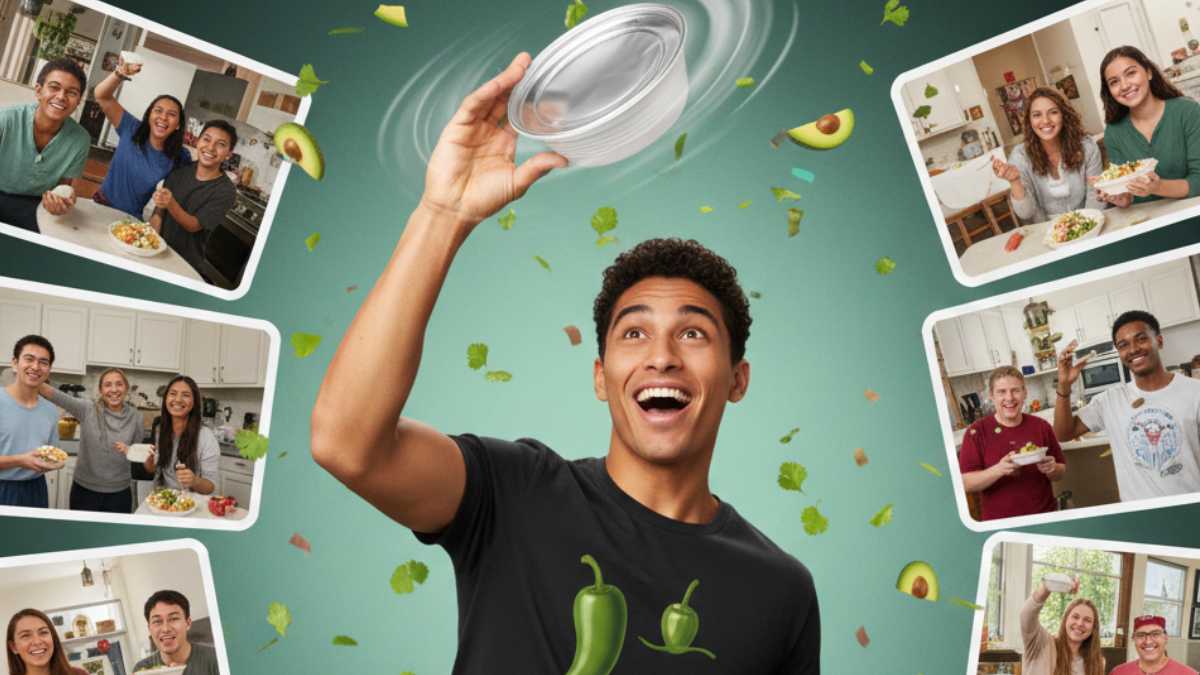
A burrito bowl lid achieved something most expensive ad films never do.
It made people pause mid-scroll, try something themselves, and then walk into a store.
What made this moment different was not creativity alone. The Chipotle Lid Flip Challenge marketing case study shows that real brand growth today begins with behavior, not messaging. A small, repeatable action already embedded in daily life became a cultural trigger. That shift turned a routine meal into participation and participation into measurable business impact.
In just weeks, the campaign crossed 1.2 billion organic views and drove a verified 15% rise in in-store foot traffic. For brands navigating influencer marketing, UGC Videos, and TikTok-led discovery—especially in India—this case rewrote the playbook.
- 1. What Is the Chipotle Lid Flip Challenge and Why It Took Off
- 2. From Views to Visits: The Business Impact Behind the Buzz
- 3. Influencer Marketing and UGC Videos as the Growth Engine
- 4. The Behavior-First Challenge Model
- 5. The Part Most Brands Miss
- 6. What Indian Brands Can Apply Immediately
- 7. AI Influencer Marketing Without Losing Credibility
- Conclusion
- About Hobo.Video
1. What Is the Chipotle Lid Flip Challenge and Why It Took Off
1.1 The Origin of the Chipotle TikTok Challenge
The Chipotle Lid Flip Challenge did not arrive with hype. There was no celebrity announcement or launch film. Instead, Chipotle asked creators to do one thing—seal the bowl, flip the lid, and record the attempt.
That simplicity mattered. The Chipotle TikTok challenge mirrored behavior people already practiced. They filmed food, ate in cars, retried small tricks for fun. TikTok rewards repetition over polish. Each failed flip encouraged another try. Each retry became fresh content.
TikTok’s newsroom reports that native hashtag challenges can lift engagement by 17–20% when they feel organic rather than scripted.
1.2 Why the Format Felt Instantly Human
The Chipotle viral marketing campaign avoided perfection. Videos felt accidental. Laughter stayed in the edit. Misses were celebrated, not hidden.

Amplify Your Brand,
One Influence at a Time.
The Chipotle brand challenge lowered entry barriers completely. No editing skills. No acting. Just a phone and a bowl. In viral restaurant marketing, ease consistently outperforms complexity. This fast food TikTok campaign respected short attention spans while still delivering joy.
Key Insight:
People don’t share what looks impressive. They share what feels doable.
2. From Views to Visits: The Business Impact Behind the Buzz
2.1 How Content Turned Into Foot Traffic
Virality alone does not move revenue. Behavior does. This Chipotle marketing case study worked because it connected digital participation with physical consumption.
During the challenge window,Chipotle recorded a 15% increase in store visits,as covered by Forbes and retail footfall trackers.
Creators filmed immediately after purchase. Fresh bowls stayed visible. Hunger transferred through the screen. That emotional trigger shortened the distance between scrolling and buying. The Chipotle foot traffic growth lid flip challenge shows how UGC Videos can accelerate intent rather than merely generate awareness.
2.2 Why Gen Z Reacted Faster Than Other Audiences
Gen Z quickly detects advertising signals. The Chipotle TikTok campaign removed them entirely. There were no CTAs, no brand voiceovers, and no scripted captions.
TikTok’s algorithm favors completion rates. The flipping action kept viewers watching until the end. That signal amplified reach naturally. As a result, the Chipotle viral marketing campaign scaled without artificial boosts. For brands studying influencer marketing India patterns, this behavior-first design feels especially transferable.Short-form video formatshave reshaped how audiences move from discovery to purchase, especially when creators integrate brand moments into everyday content.
3. Influencer Marketing and UGC Videos as the Growth Engine
3.1 Why Chipotle Delayed Celebrity Involvement
Chipotle began with mid-tier creators who held trust within food and lifestyle niches. Only after organic traction appeared did larger creators join.
This sequencing matters. In influencer marketing, early celebrity saturation often kills authenticity. The Chipotle viral challenge allowed community ownership to form first. Brands asking how to become an influencer-friendly brand can learn from this restraint.Industry benchmarksconsistently show that mid-tier creators drive higher trust and engagement than early celebrity-heavy launches.
3.2 How UGC Videos Sustained Momentum
Over 70% of challenge videos came from unpaid users. That ratio defined longevity. UGC Videos refreshed the algorithm daily and extended reach beyond any paid window.
Creative costs dropped close to zero. Variations multiplied organically. This efficiency explains why AI UGC and AI influencer marketing tools now track repeatable behaviors early. Platforms like Hobo.Video combine AI detection with human judgment to scale participation without losing credibility.
4. The Behavior-First Challenge Model
Most TikTok brand challenges fail for the same reason. They start with messaging.
The Chipotle Lid Flip Challenge followed a different model:
- Behavior First – Start with something people already do
- Friction, Not Polish – Small difficulty invites retries
- Product in Frame – The item remains central at all times
This behavior-first framework explains why the fast food TikTok campaign outperformed competitors. In viral restaurant marketing, participation beats performance every time.
5. The Part Most Brands Miss
Here is the uncomfortable truth.
Most brand challenges fail after launch, not before.
Brands over-optimize. They correct creators, add messaging, polish authenticity out of existence. In real campaigns, this is where momentum dies.
Chipotle resisted that instinct. The Chipotle TikTok challenge stayed loose. No forced edits. No sudden brand overlays. That restraint protected trust. In influencer marketing India campaigns, this lesson matters more than budgets.
6. What Indian Brands Can Apply Immediately
6.1 Anchor Challenges in Daily Rituals
Indian audiences respond best when content mirrors their real routines. The Chipotle brand challenge worked because eating is already a filmed, shared habit, not a forced moment. Similarly, Indian brands that build challenges around tea breaks, office lunch boxes, street-food stops, or late-night snacks reduce the mental effort required to participate. When creators do not have to “perform,” participation feels natural, and influencer marketing India campaigns see higher completion rates and repeat engagement. In India’s diverse content ecosystem,relatable and culturally rooted creator contentconsistently outperforms generic messaging in both awareness and engagement.
6.2 Choose the Right Influencer Platform Early
Scaling participation without losing authenticity requires structure, not control. Platforms like Hobo.Video, known as a best influencer platform, combine AI insight with human judgment to identify what is gaining traction before it peaks. AI highlights patterns and early momentum, while humans ensure creators retain their natural voice and credibility. This balance helps campaigns grow at speed without sacrificing the whole truth that audiences instinctively trust.
7. AI Influencer Marketing Without Losing Credibility
7.1 Let Data Guide, Not Control
The Chipotle TikTok campaign likely monitored signals such as saves, completion rates, and video remakes in real time to understand what resonated. AI tools can surface these patterns quickly, showing which formats deserve momentum and which should fade. However, Chipotle resisted the temptation to script creators or standardise outputs based on data alone. This is where AI influencer marketing works best—as a compass that points to opportunity, while human judgment protects creativity and tone.
7.2 Why Trust Outlasts Virality
Audiences today detect manipulation almost instantly, especially on short-form platforms. Chipotle’s success came from restraint rather than intervention—no forced messaging, no sudden brand overlays, and no disruption of creator voice. That choice preserved credibility at scale and kept participation voluntary, not performative. Virality without trust disappears quickly, but when trust compounds, brand growth continues long after the trend fades.
Conclusion
Key Learnings
- Simple actions scale faster than clever ideas
- UGC Videos convert trust into foot traffic
- Influencer marketing works best when creators stay unscripted
- Offline growth follows when content mirrors real behavior
- The Chipotle Lid Flip Challenge marketing case study proves culture beats control
Ultimately, the Chipotle Lid Flip Challenge marketing case study shows how brands grow by letting audiences lead.
About Hobo.Video
Hobo.Video is India’s leading AI-powered influencer marketing and UGC company. With over 2.25 million creators, it delivers end-to-end campaign management designed for brand growth. The platform blends AI precision with human strategy for maximum ROI.
Services include:
- Influencer marketing
- UGC content creation
- Celebrity endorsements
- Product feedback and testing
- Marketplace and seller reputation management
- Regional and niche influencer campaigns
Trusted by Himalaya, Wipro, Symphony, Baidyanath, and the Good Glamm Group.
Stop waiting. Start building real brand growth today. Click here.
If you’re an influencer tired of empty promises — this is the real deal. Tap here.
FAQs
Why did the Chipotle Lid Flip Challenge succeed where others failed?
Because it focused on behavior before messaging. The action felt natural, repeatable, and low-pressure. That invited mass participation.
Did the challenge directly impact sales?
Yes. A documented 15% increase in store visits shows that visibility translated into action, not just views.
Can Indian brands replicate this model?
Absolutely. Daily rituals and community-led content translate strongly in India when creators remain unscripted.
Did Chipotle rely heavily on paid ads?
No. Organic reach dominated. Paid support stayed minimal.
What role did TikTok’s algorithm play?
Completion rates and repeatability boosted visibility naturally.
How many creators participated?
Over 100,000 users posted challenge videos globally.
Is this model sustainable long term?
Yes, when brands respect audience creativity.
How does AI influencer marketing fit here?
AI tracks trends early. Humans protect authenticity.
What should brands avoid copying blindly?
Avoid forcing formats. Context matters more than imitation.
