
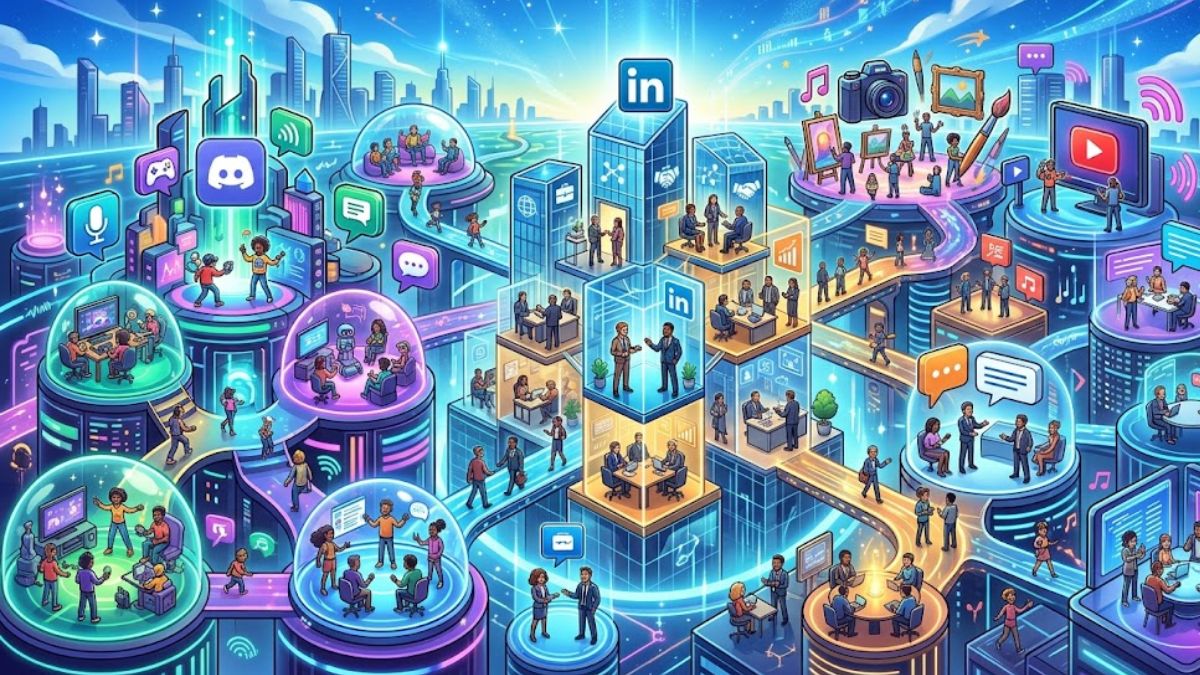
Introduction: Why Choosing the Right Platform Matters
Building a Social Media Community in 2026 feels very different from what it was even a few years ago. Earlier, simply posting consistently was enough to grow an audience. Today, that approach feels incomplete, almost naive. The real shift has happened underneath the surface. It is no longer about “being active online,” it is about choosing the right digital environment where your voice actually has a chance to be heard and remembered.
Most founders don’t fail because they lack content ideas. They fail because they build in the wrong place. They pick a platform based on trends, not behavior. And over time, they realize something painful. Their content is not the problem, the ecosystem is. A strong Social Media Community doesn’t grow equally everywhere. It grows where attention already flows in the right format, tone, and intent. That is why platform selection has become one of the most underestimated decisions in modern digital strategy.
There is also a deeper emotional layer to this. When founders or creators post content for months and see little response, it slowly affects their confidence. They start questioning their ideas, their voice, even their consistency. But in reality, many of them are simply speaking in the wrong room. Studies around digital engagement patterns show that brands choosing aligned social media community platforms experience up to 2.3x higher engagement rates. That is not a small optimization. That is the difference between silence and momentum.
Today, audiences are fragmented across ecosystems that behave very differently. Some platforms reward authority, some reward speed, and others reward emotion or entertainment. Because of this, the question is no longer “how do I grow online?” but something much more fundamental: where should I build an online community that actually feels alive, responsive, and sustainable? That is the real starting point of modern community building.
- Introduction: Why Choosing the Right Platform Matters
- 1. Understanding Platform-First Community Building
- 2. Discord vs LinkedIn Community Growth
- 3. Beyond Discord & LinkedIn: Other Key Platforms
- 4. Role of Influencer Marketing in Platform Growth
- 5. Choosing the Best Platforms for Social Media Community 2026
- 6. Common Mistakes in Platform Selection
- 7. Long-Term Community Building Vision
- 8. Summary & Key Learnings
- About Hobo.Video
1. Understanding Platform-First Community Building
1.1 What is Platform-Led Community Growth?
A Social Media Community is often misunderstood as a group of followers. But in reality, it is a living system of interaction. It is not just about how many people are present, but how they behave, respond, and connect with each other over time. And this behavior is not random. It is heavily shaped by the platform itself.
Every platform quietly teaches users how to behave. LinkedIn teaches them to think before speaking. Discord teaches them to stay present and engaged in real time. Instagram trains them to react visually and emotionally within seconds. These behavioral patterns are not surface-level features, they are deep cultural structures built into each ecosystem. And they directly influence how your community grows, or fails to grow.
This is why digital community growth strategies cannot start with content alone. They must start with understanding context. A message that performs well in one environment can completely fail in another, not because it is bad, but because the audience mindset is different. For example, a thoughtful long-form insight may be appreciated on LinkedIn but ignored on Instagram where attention is faster and more visual.

Amplify Your Brand,
One Influence at a Time.
What this really means is simple but powerful. You are not just building content, you are entering a culture. And every culture has its own language, pace, and expectations. Founders who understand this early stop fighting the platform and start working with it. That shift alone often decides whether a community feels forced or naturally growing.
1.2 Data Insight
India’s digital landscape in 2026 is massive, but what matters more than size is behavior. With over 600 million social media users, the country is one of the most active online populations in the world. People are not just scrolling occasionally anymore. They are spending an average of 2.7 hours daily across platforms. But what looks like one big audience is actually thousands of micro-audiences with very different intent patterns.
This is where many strategies quietly fail. A founder assumes that posting everywhere means reaching everyone equally. But engagement does not distribute evenly. It clusters. Some platforms generate depth, others generate reach, and some generate quick bursts of attention that disappear within hours. Without understanding this, growth feels unpredictable even when effort is high.
This is also why choosing the right community engagement platforms is no longer a marketing decision. It is a structural decision. It affects how trust is built, how conversations evolve, and how long people stay connected to your brand. A mismatched platform doesn’t just reduce engagement, it creates emotional distance between the brand and its audience. When you look closely at successful communities, a pattern becomes clear. They are not present everywhere equally. They are deeply rooted in one or two platforms where their audience naturally belongs. That focus creates familiarity. And familiarity creates trust. Without that, even high-quality content struggles to convert attention into real community.
2. Discord vs LinkedIn Community Growth
2.1 Discord: The Power of Real-Time Connection
When you look at Discord vs LinkedIn community growth, Discord feels almost like a different world entirely. It is not built for broadcasting. It is built for staying. People don’t just consume content there. They live inside conversations. That shift changes everything about how community feels. On Discord, engagement is not measured in likes or impressions. It is measured in presence. Users join channels, stay active in discussions, jump into voice calls, and build ongoing relationships with others in the same space. This creates something powerful that most platforms struggle to replicate: a sense of belonging that feels immediate and real.
In startup ecosystems, especially in gaming, crypto, and developer communities, Discord often becomes the emotional core of the product. Users don’t feel like outsiders. They feel like participants. That psychological shift is what turns casual users into loyal advocates over time. But this depth comes with responsibility. Discord communities do not run themselves. They require constant moderation, active engagement, and thoughtful digital community management. Without that, they can become noisy or inactive very quickly.
There is also a subtle truth here that founders only learn after experience. Discord growth feels slower at the beginning because it prioritizes depth over visibility. But over time, that depth becomes an advantage. A smaller but deeply engaged community often outperforms a large but passive one when it comes to retention, feedback, and long-term product loyalty.
2.2 LinkedIn: Authority and Professional Reach
LinkedIn represents the opposite end of the spectrum. It is structured, professional, and intentionally slower in tone. But within that structure lies its strength. Unlike other platforms that rely heavily on entertainment or speed, LinkedIn rewards clarity of thought and consistency of insight. That is why it has become one of the strongest social media community strategy platforms for B2B growth.
What makes LinkedIn powerful is trust. When someone engages with content there, it carries a different weight. It feels closer to professional credibility than casual interaction. This is why founders, operators, and professionals often use LinkedIn not just to post updates, but to build reputation over time. And unlike many platforms today, LinkedIn still offers strong organic reach if content resonates with the right audience.
In practice, many Indian creators and startup founders report significantly higher visibility on LinkedIn compared to platforms like Instagram, especially when sharing thought leadership or industry insights. Posts can travel far beyond immediate followers, reaching decision-makers, investors, and peers without paid amplification. That kind of reach is rare in today’s algorithm-heavy ecosystem. For startups, LinkedIn works best as a discovery layer. It is where people first encounter your ideas, your brand, and your thinking. It is not always where deep conversations happen, but it is often where first impressions are formed. And in business, first impressions often determine whether deeper engagement will even happen later.
2.3 Discord vs LinkedIn: Which One Should You Choose?
The real answer is not about which platform is better. It is about what kind of relationship you want to build with your audience. If your goal is depth, loyalty, and continuous interaction, Discord naturally becomes the stronger environment. It allows communities to grow inward, building strong emotional and functional bonds over time. But if your goal is visibility, authority, and external reach, LinkedIn is far more effective. It helps you shape perception at scale, build credibility in public, and attract opportunities that come from outside your immediate network. Both are powerful, but they solve different problems in very different ways.
The most successful brands don’t choose one and ignore the other. They create a system where both work together. LinkedIn becomes the front door where people discover the brand. Discord becomes the inside space where they stay, engage, and evolve into long-term community members. This combination creates both reach and retention, which is extremely rare when relying on a single platform. Over time, this hybrid approach becomes more than a strategy. It becomes a structure. And once that structure is in place, the Social Media Community stops feeling like something you are constantly trying to grow. It starts behaving like something that grows naturally on its own.
3. Beyond Discord & LinkedIn: Other Key Platforms
3.1 Instagram: Visual Community Building
If Discord is about depth and LinkedIn is about authority, Instagram sits somewhere in between, but with a completely different emotional energy. It is visual, fast, and highly expressive. In India, with more than 350 million users, Instagram is not just a platform anymore, it is a daily habit. People don’t log in with intention, they drift into it. And that behavior matters a lot when you are trying to build a community.
What makes Instagram powerful is not just reach, but relatability. Through reels, stories, and live sessions, creators can show moments instead of just ideas. And moments create connection faster than polished thoughts ever can. A founder sharing behind-the-scenes struggles, a creator showing real-life routines, or a brand posting raw user-generated content, these feel human, not corporate. That is why UGC videos perform so strongly here. They don’t feel like marketing, they feel like lived experience.
But Instagram also has its own emotional challenge. It rewards consistency and creativity at a relentless pace. If you disappear for weeks, the algorithm forgets you. If your content feels repetitive, people scroll past without thinking. So building a Social Media Community here is not about occasional brilliance, it is about sustained presence. Brands that collaborate with strong Instagram influencers often accelerate faster because they borrow trust that has already been built over time. And once that trust is transferred, growth becomes less of a struggle and more of a momentum game.
3.2 YouTube: Long-Term Trust Engine
YouTube operates on a completely different time scale compared to most social platforms. While Instagram and LinkedIn are driven by daily visibility, YouTube is driven by long-term value. A single well-made video can continue attracting viewers months or even years after it is published. That kind of compounding effect is rare, and it is what makes YouTube one of the most powerful platforms for building trust.
What happens on YouTube is deeper than engagement. It is attention with intention. People don’t casually scroll through YouTube the same way they scroll Instagram. They come with a purpose. To learn something, to understand something, or to follow someone they trust. That is why creators who invest in long-form content often build stronger relationships with their audience. Viewers spend 10, 15, sometimes even 30 minutes with a single creator. That level of attention changes how trust is formed.
But this also means YouTube demands patience. Growth is rarely instant. Videos might perform slowly in the beginning, and that can feel discouraging. But over time, consistency compounds. A library of valuable content starts working silently in the background, bringing in new audiences without constant effort. For founders and creators, this creates a different kind of stability. Instead of chasing daily engagement, they build an asset that grows quietly and steadily. That is why YouTube is not just a platform. It is a long-term trust engine.
3.3 WhatsApp & Telegram: Private Communities
There is something very different about private communities. They don’t feel like public spaces where everyone is watching. They feel closer, more personal, and often more honest. Platforms like WhatsApp and Telegram have quietly become some of the most powerful tools for community retention, especially in India. The numbers themselves are telling. WhatsApp message open rates can go as high as 98%, compared to around 20% for emails. But beyond numbers, the real value lies in intimacy. When someone joins a WhatsApp group or a Telegram channel, they are not just following you. They are allowing you into their daily communication space. That is a very different level of trust.
In these private environments, conversations feel more direct. Feedback is faster. Engagement is more meaningful. For niche community building, this is extremely powerful. A small but active WhatsApp group can often generate more real interaction than a large but passive public audience. But there is also responsibility here. Over-communication or irrelevant messages can quickly push people away. In private communities, value has to be consistent, otherwise people leave quietly. Founders who use these platforms well treat them not as broadcast channels, but as conversation spaces. They listen as much as they speak. And over time, that creates something rare, a community that feels less like an audience and more like a circle.
4. Role of Influencer Marketing in Platform Growth
4.1 Why Influencers Matter
In today’s digital ecosystem, attention is not evenly distributed. It is concentrated around people, not just platforms. This is why influencers have become such a critical part of community growth. They don’t just bring visibility, they bring borrowed trust. And trust is the hardest thing to build from scratch. In India, the influencer marketing industry is expected to reach around ₹3,500 crore by 2026. But what makes this growth meaningful is not the money, it is the shift in behavior. Audiences are increasingly trusting individuals more than brands. They listen to creators who feel relatable, consistent, and real. So when a brand collaborates with the right influencer, it doesn’t just gain exposure. It gains credibility that would otherwise take years to build.
However, not all influencer collaborations work equally well. The real impact comes from alignment. When the influencer’s voice matches the brand’s identity, the content feels natural. When it doesn’t, it feels forced, and audiences can sense that immediately. Founders who understand this focus less on follower count and more on audience relevance. And that shift often decides whether a campaign performs or fades.
4.2 UGC and AI in Community Building
User-generated content has quietly become one of the strongest forces in community building. People trust people. That simple truth has reshaped how brands communicate. Instead of polished advertisements, audiences respond better to real experiences shared by real users. UGC videos bring authenticity that traditional marketing struggles to replicate. They feel unscripted, relatable, and human. When someone sees another person using a product naturally, it creates a different kind of confidence. It doesn’t feel like persuasion. It feels like proof.
Now with AI entering this space, things are evolving even faster. AI influencer marketing tools can analyze creator performance, audience behavior, and engagement patterns to identify the right collaborations. This removes a lot of guesswork. Brands can scale campaigns more efficiently without losing relevance. AI UGC tools also help generate content variations quickly, allowing teams to experiment and adapt faster. But even here, the emotional layer matters. AI can optimize, but it cannot replace authenticity. The most successful strategies use AI as a support system, not a replacement for human storytelling. Because in the end, people still connect with stories, not systems.
4.3 How to Become an Influencer in 2026
The idea of becoming an influencer has changed a lot over time. Earlier, it was often associated with large follower counts and viral content. Today, it is more about clarity and consistency. Many strong community builders are also creators, but what sets them apart is not how many people follow them, it is how deeply people trust them.
The rise of top influencers in India shows a clear pattern. Most of them did not grow by trying to appeal to everyone. They grew by focusing on a specific niche and showing up consistently over time. Whether it is finance, fitness, education, or storytelling, depth matters more than breadth. For founders, understanding this is powerful. You don’t need to become a full-time influencer to build authority. You just need to communicate your thinking clearly and regularly. Over time, that builds recognition. And recognition builds trust. That trust then flows into your community, making growth feel more natural instead of forced.
5. Choosing the Best Platforms for Social Media Community 2026
5.1 Factors to Consider
Choosing the right platform is not a technical decision. It is a behavioral one. It starts with understanding your audience, not your content. Where do they spend time? How do they interact? What kind of content do they naturally engage with? These questions matter more than any trend report.
Different platforms attract different mindsets. Some users are looking to learn. Others are looking to relax. Some want quick entertainment, while others want deeper conversations. If your platform choice does not match your audience’s intent, even great content will struggle to connect.
There is also the question of format. Some platforms reward short-form visuals. Others reward long-form insights. Some prioritize real-time interaction, while others favor evergreen content. Matching your strength with the platform’s nature creates alignment. And alignment reduces friction in growth.
5.2 Platform Strategy
The most effective community-building strategies are rarely scattered. They are structured. Instead of trying to be everywhere, successful founders build a layered approach where each platform serves a specific role. One primary platform becomes the growth engine. This is where discovery happens and new people enter your ecosystem. A secondary platform supports engagement, allowing deeper interaction and stronger connection. And finally, a private channel like WhatsApp or Telegram handles retention, keeping your core community close and active.
This layered approach creates balance. You are not dependent on one algorithm or one format. You build visibility, connection, and loyalty across different environments. Over time, this system becomes self-sustaining. New people enter through one platform, engage on another, and stay connected through a private space. And when that happens, your Social Media Community stops feeling like something fragile that depends on constant effort. It starts behaving like something stable, something that grows not just because you push it, but because it has the right foundation underneath.
6. Common Mistakes in Platform Selection
Most startups don’t fail because of weak ideas. They fail because they choose the wrong platforms or spread themselves too thin. Platform selection looks simple, but it quietly decides whether your Social Media Community grows with clarity or gets lost in noise. One major mistake is using too many platforms at once. Founders often feel they are increasing reach, but what actually happens is dilution. Every platform needs a different tone, format, and attention style. When you try to manage all of them together, consistency breaks. Content becomes irregular, engagement drops, and no single platform develops real depth.
Another common mistake is ignoring how users behave on each platform. People don’t consume content the same way everywhere. LinkedIn users expect clarity and thought. Instagram users want speed and emotion. YouTube users want time and depth. When content doesn’t match behavior, even good ideas fail to connect. The biggest trap, though, is chasing reach over engagement. Reach looks impressive on dashboards, but it doesn’t build trust. Engagement is what creates memory and connection. A real Social Media Community is not built on how many people see you once, but how many people keep coming back.
7. Long-Term Community Building Vision
A Social Media Community is not built in weeks or months. It is built slowly through repetition, trust, and emotional consistency. At the start, growth feels uncertain. Some posts work, others don’t. That unpredictability is normal, not failure. Over time, something changes. If you stay consistent on the right platforms, people start recognizing your voice. They don’t just consume your content, they expect it. That expectation is the beginning of real community. It means you are no longer just posting, you are being followed with intent.
Brands that invest in the right community engagement platforms eventually see a shift. Growth becomes more organic. Conversations continue without push. People start bringing others in naturally. That is when a community stops feeling like an audience and starts behaving like a living network.
8. Summary & Key Learnings
Platform choice matters more than volume. Go where your audience naturally behaves, not where trends are loudest. LinkedIn and Discord together create a strong balance of reach and depth, while Instagram and YouTube build visibility and trust in different ways. Influencers and UGC reduce the time needed to build credibility because people trust real experiences more than brand messaging. But the most important point is simple: engagement matters more than numbers. A strong Social Media Community is defined by participation, not just presence. In the end, it is not about being everywhere. It is about being meaningful where it actually counts.
FAQs
What is a Social Media Community?
A Social Media Community is a group of users who actively engage with a brand and each other around shared interests.
Which is better: Discord or LinkedIn?
Both serve different purposes. Discord builds deep engagement, while LinkedIn offers reach and authority.
What are the best platforms for social media community 2026?
LinkedIn, Discord, Instagram, and YouTube are among the top choices.
How to build and grow social media community online?
Focus on value-driven content, consistent engagement, and platform-specific strategies.
Why is niche community building important?
Niche communities create stronger connections and higher engagement rates.
About Hobo.Video
Hobo.Video is India’s leading AI-powered influencer marketing and UGC company. With over 2.25 million creators, it offers end-to-end campaign management designed for brand growth. The platform combines AI and human strategy for maximum ROI.
Services include:
- Influencer marketing
- UGC content creation
- Celebrity endorsements
- Product feedback and testing
- Marketplace and seller reputation management
- Regional and niche influencer campaigns
Trusted by top brands like Himalaya, Wipro, Symphony, Baidyanath and the Good Glamm Group.
Let’s create a growth roadmap built just for your brand. We’re listening – register now.
Your reach deserves rewards. Let’s make that happen. Tap to sign up.

 Neeti Katyal
 Ankita Saha