
Introduction
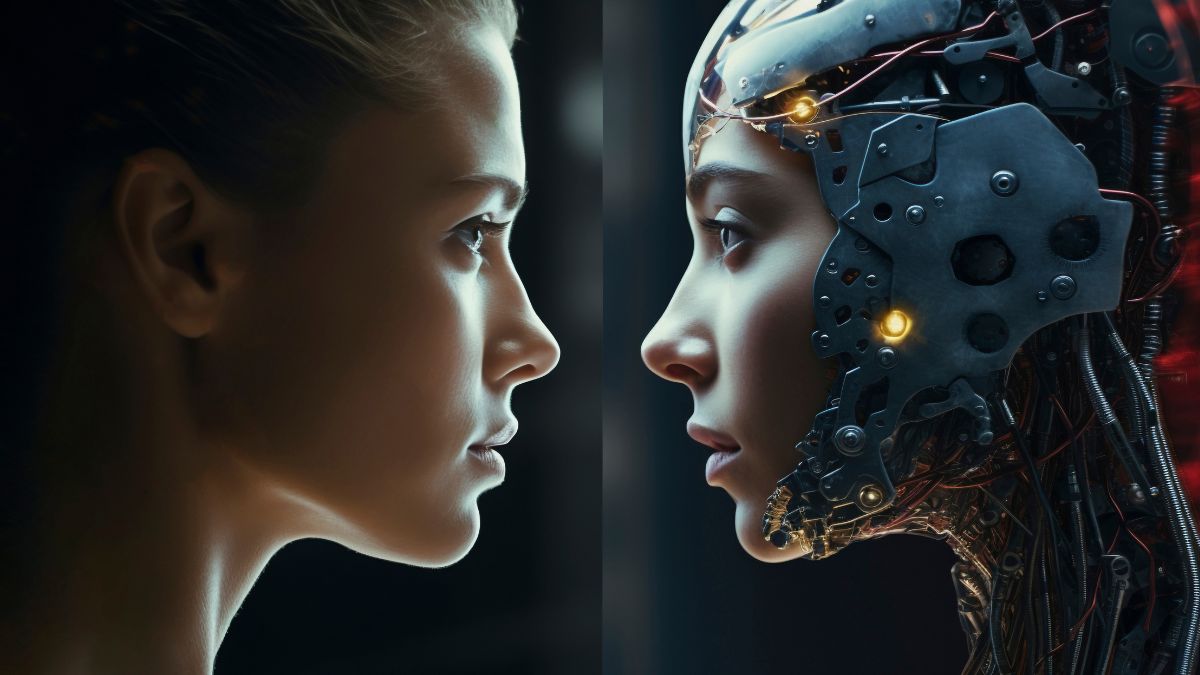
The tug-of-war between Artificial Intelligence and Human Intelligence is easily one of the hottest debates of our time. Technology has sprinted forward at an almost dizzying pace, yet the human mind continues to hold its ground in areas that no machine can truly replicate—creativity, emotional depth, and adaptability. As we step into 2025, this comparison feels more urgent than ever. People everywhere—business leaders, educators, even parents—are asking: Can AI really measure up to the human brain? Or will human intelligence always remain irreplaceable?
This piece dives into the real differences between AI and human intelligence, drawing from facts, lived examples, and practical applications. We’ll explore how AI compares with the human brain, where it falls short, and most importantly, how the two can work together instead of standing on opposite sides of the battlefield.
- Introduction
- 1. What is Artificial Intelligence vs Human Intelligence?
- 2. AI vs Human Brain: How They Work
- 3. Artificial Intelligence Applications vs Human Skills
- 4. Artificial Intelligence vs Human Intelligence Comparison Table
- 5. Key Differences Between AI and Human Intelligence
- 6. AI vs Human Intelligence Examples
- 7. Artificial vs Natural Intelligence in Everyday Life
- 8. Limitations of Artificial Intelligence vs Human Mind
- 9. Future of AI and Human Collaboration
- 10. Conclusion: Lessons from the AI vs Human Intelligence Debate
- About Hobo.Video
1. What is Artificial Intelligence vs Human Intelligence?
1.1 Artificial Intelligence (AI)
AI is, at its core, a human-made attempt to replicate certain elements of thought. Think of it as software that recognizes patterns, crunches massive amounts of data, and executes tasks at lightning speed. From self-driving cars to AI-driven influencer marketing platforms like Hobo.Video, these systems show us glimpses of what machines can do when trained with data.
1.2 Human Intelligence
Human intelligence, on the other hand, is not programmed—it’s lived. It thrives on context, feelings, morality, and culture. We don’t just compute answers; we interpret meaning, adapt to unpredictable situations, and innovate in ways machines can’t imagine.
Key takeaway: AI is built on algorithms; humans are built on consciousness and lived experience.
2. AI vs Human Brain: How They Work
2.1 The Human Brain
- Holds around 86 billion neurons.
- Processes an estimated 11 million bits of information per second (Harvard study).
- Learns not just through data, but through emotions, social interactions, and culture.
2.2 Artificial Intelligence Systems
- Large AI models process trillions of data points.
- Excel at repetitive, calculation-heavy work.
- Cannot create true meaning—no morality, no originality, no ethical compass.
The AI vs human brain question isn’t really about who’s “better.” It’s about how their strengths complement each other.
3. Artificial Intelligence Applications vs Human Skills
3.1 Where AI Excels
- Data analysis: Sorting millions of records in minutes.
- Healthcare: AI models identifying tumors with 95% accuracy in clinical trials.
- E-commerce: Hyper-personalized recommendations driven by algorithms.
- Influencer marketing India: Platforms such as Hobo.Video leverage AI-powered UGC to match brands with ideal creators at scale.
3.2 Where Humans Excel
- Empathy: Doctors, teachers, and counselors bring comfort and understanding that no code can replicate.
- Judgment: Ethical decisions in law, governance, or crisis management remain human territory.
- Creativity: From painting to music to strategy, human imagination connects abstract ideas in ways machines can’t.
In short: AI automates; humans innovate.

Amplify Your Brand,
One Influence at a Time.
4. Artificial Intelligence vs Human Intelligence Comparison Table
| Feature | Artificial Intelligence | Human Intelligence |
|---|---|---|
| Learning | From data and algorithms | From lived experience & environment |
| Speed | Blazing fast | Slower in raw computation |
| Creativity | Derivative, data-driven | Original and limitless |
| Emotions | Absent | Central to thought & decision-making |
| Adaptability | Restricted to training | Boundless, flexible |
| Ethics | Programmed rules only | Complex moral reasoning |
This quick snapshot makes it clear: machines are built for precision, while humans are built for nuance.
5. Key Differences Between AI and Human Intelligence
5.1 Adaptability
Humans walk into uncertainty and still manage. AI, however, is confined to its training data. Humans can easily adjust to new environments and unexpected changes, while AI depends on pre-fed data and programming. Humans can easily adjust to new environments, unexpected challenges, and unfamiliar situations. AI, however, relies on pre-fed data and algorithms, making it less flexible when conditions change suddenly.
5.2 Decision-Making
AI decisions are data-driven, sometimes brilliantly so. Humans add a messy but invaluable mix of empathy, morality, and context. AI makes fast, data-driven decisions, but humans factor in experience, ethics, and intuition when choosing. Human decision-making often combines logic, ethics, and intuition, shaped by emotions and experiences. AI makes decisions based on data patterns and programmed logic, which can be faster but lacks moral judgment.
5.3 Creativity
AI can remix. Humans can invent. That difference is enormous. Humans excel in imagination and original thought, whereas AI generates outputs based on patterns and existing data. Creativity is a uniquely human trait, fueled by imagination, emotions, and cultural influences. AI can generate designs, music, or ideas based on existing data, but it cannot truly “innovate” beyond learned patterns.
5.4 Emotional Quotient
AI might simulate compassion in text or tone, but it doesn’t feel. Humans run on emotions, and those emotions shape every choice we make. They understand, express, and empathize with emotions, while AI lacks genuine emotional intelligence. Humans understand, express, and respond to emotions, building empathy and strong social connections. AI lacks genuine emotional intelligence—it can simulate responses but does not truly “feel” or empathize.
6. AI vs Human Intelligence Examples
- Chess: Deep Blue famously beat Kasparov. But let’s not forget—humans invented chess in the first place.
- Medicine: AI pinpoints disease from scans. Doctors, meanwhile, address not just the disease but the fear, the hope, the story of the patient.
- Influencer marketing: AI-powered UGC tools can automate creator-brand matching. Still, authentic storytelling only happens when human creators bring their lived experiences into the mix.
7. Artificial vs Natural Intelligence in Everyday Life
- Education: Adaptive learning apps guide students. Teachers inspire them.
- Workplace: AI automates schedules and workflows. Humans lead teams, manage conflict, and spark innovation.
- Marketing: AI predicts consumer behavior. Human creators give it a relatable, emotional voice.
Everyday life shows the same truth: machines handle efficiency, humans handle meaning.
8. Limitations of Artificial Intelligence vs Human Mind
- No common sense.
- Struggles with abstract or philosophical ideas.
- Dependency on electricity, hardware, and massive datasets.
Human intelligence, on the other hand, is self-sustaining, resilient, and endlessly adaptable. Even the best AI influencer platform can’t guarantee success without human judgment guiding campaigns.
9. Future of AI and Human Collaboration
PwC projects that by 2030, AI could contribute $15.7 trillion to the global economy. That’s massive. Yet, oversight and creativity will stay human. Indian WordPress experts, creators, and influencers in 2025 will certainly lean on AI tools—but the spark of originality, the ethical compass, and the emotional storytelling will remain in human hands.
The future isn’t AI vs humans—it’s AI with humans.
10. Conclusion: Lessons from the AI vs Human Intelligence Debate
- AI dominates in automation and scale.
- Human intelligence is unrivaled in creativity and ethics.
- Businesses should embrace AI tools like Hobo.Video, but always keep human creators at the heart of campaigns.
The lesson? Stop pitting machines against people. The real magic happens when they work together.
About Hobo.Video
Hobo.Video is India’s leading AI-powered influencer marketing and UGC platform, with a community of 2.25 million+ creators.
Services include:
- Influencer marketing
- UGC content creation
- Celebrity endorsements
- Product testing & feedback
- Marketplace reputation management
- Regional & niche influencer campaigns
Trusted by Himalaya, Wipro, Symphony, Baidyanath, and the Good Glamm Group, Hobo.Video combines AI technology with authentic creators to help brands run campaigns that truly resonate.
If you’re a creator who wants real brand collabs, this is where it starts. Sign up now.
Inspired by what you read? Let’s turn ideas into impact. Connect with us and unlock your brand’s next growth chapter 👉 Start here
FAQs
What is the difference between Artificial Intelligence and Human Intelligence?
AI is algorithmic and data-driven. Human intelligence is emotional, creative, and context-aware.
Can AI replace human intelligence?
No. It can replace tasks but not holistic human thought.
What are some examples of AI vs human intelligence?
AI in medical imaging vs doctors giving emotional care; AI in chess vs humans inventing strategy.
What is artificial vs natural intelligence?
Artificial = machine logic. Natural = the human brain.
What are the limitations of AI?
No emotions, no abstract reasoning, total dependency on structured data.
Is AI better than humans in data processing?
Yes. But humans read meaning into context better.
Why is human intelligence unique?
Because it blends creativity, ethics, and emotions.
How does AI support influencer marketing?
Platforms like Hobo.Video use AI UGC to connect brands with relevant creators.
Can AI develop emotions?
No. It can mimic empathy, but not experience it.
What is the future of AI vs human intelligence?
Collaboration. AI will handle efficiency; humans will lead with vision and ethics.

 Vishnumaya