
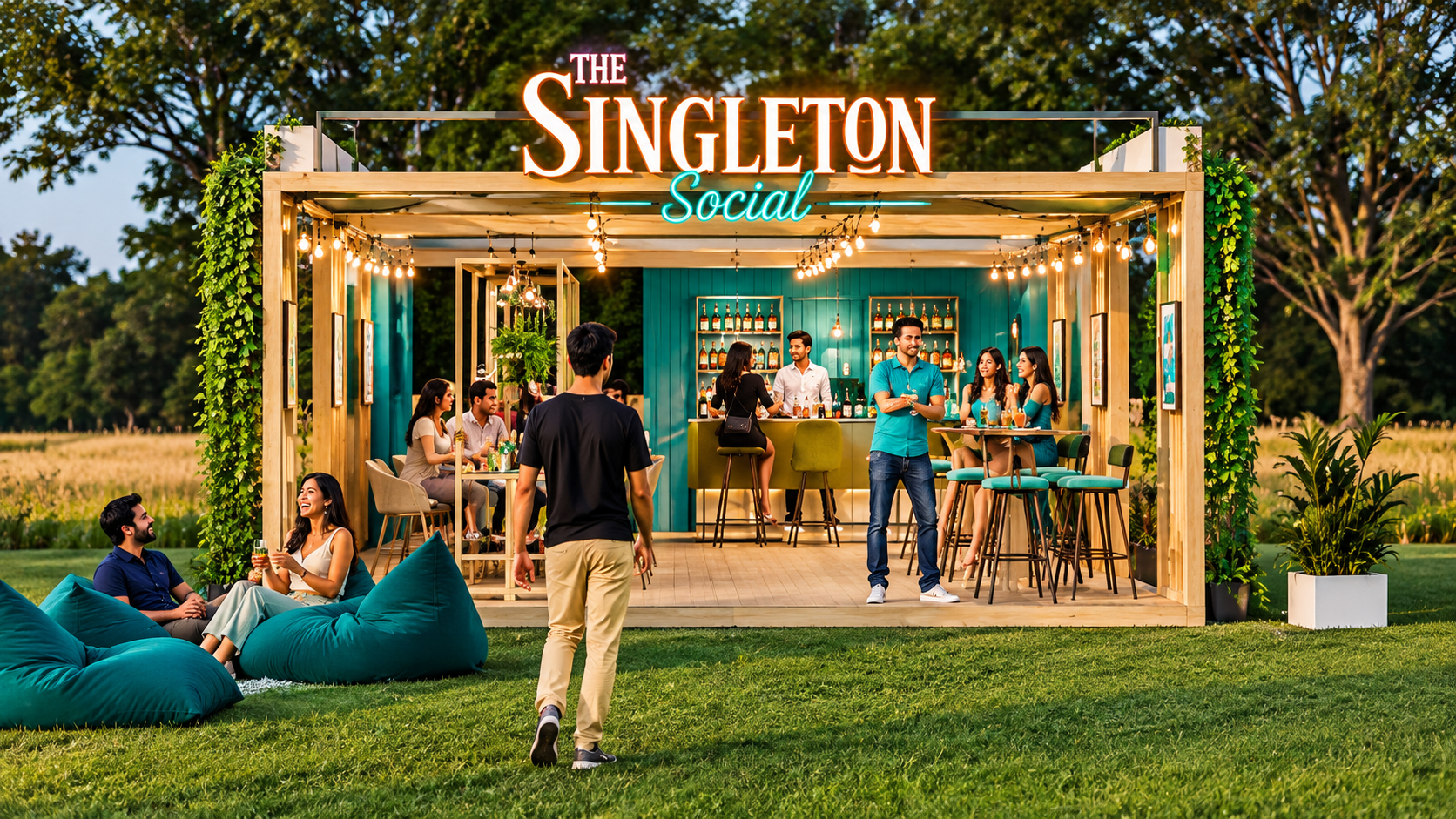
The Shruti Haasan Singleton campaign offers an interesting example of celebrity-led premium brand positioning. It brings together an established actor, a music-focused cultural platform, and a lifestyle brand. More importantly, the Shruti Haasan Singleton campaign does not rely only on celebrity visibility. Instead, it connects her creative identity with ideas around music, thoughtful gifting, hosting, and meaningful experiences.
Announced by Diageo India in November 2026, the association introduces Shruti Haasan as the new face of The Singleton Social. The announcement also coincides with the return of The Singleton Social x Nicobar festive gifting collaboration. The collection features three curated gift boxes named Celeste, Aurelia, and Solenne.
This partnership deserves attention because premium brands rarely sell only through product features. They also build meaning around experiences, identity, culture, and personal taste. Consequently, the personality representing a brand becomes an important part of its communication.
Shruti Haasan brings an identity shaped by acting, music, and creative expression. Meanwhile, The Singleton Social focuses on music, art, culture, hosting, and shared experiences. Their association creates a connection between celebrity personality and brand philosophy.
- 1. Understanding the Shruti Haasan x The Singleton Social Collaboration
- 2. How Celebrity Personalities Shape Premium Brand Positioning
- 3. The Marketing Strategy Behind the Singleton Social x Nicobar Campaign
- 4. What the Campaign Reveals About Premium Brand Positioning in India
- 5. Celebrity Marketing, Influencer Marketing and UGC: Lessons for Brands
- 6. Compliance, Measurement and Long-Term Lessons for Premium Brand Campaigns
- Key takeaways: What marketers can learn from the collaboration
- About Hobo.Video
However, this is not simply another celebrity endorsement story. It offers a wider lesson about how brands build premium identities through cultural associations. It also raises important questions about celebrity fit, brand storytelling, experiential marketing, and advertising responsibility in India.
1. Understanding the Shruti Haasan x The Singleton Social Collaboration
The announcement of Shruti Haasan as the new face of The Singleton Social provides the starting point for understanding this collaboration. Diageo India introduced the association on 5 November 2026. The announcement also highlighted the festive gifting partnership with lifestyle brand Nicobar.
The campaign focuses on thoughtful gestures, hosting, and experiences worth remembering. Rather than placing the entire communication around product features, it explores the emotional meaning behind choosing a gift. It also connects personal relationships with music, conversations, and shared moments.

Amplify Your Brand,
One Influence at a Time.
This approach reflects a wider shift in premium brand marketing. Brands increasingly explore cultural platforms that can create meaningful associations beyond conventional product communication. For marketers, the important question is how a celebrity’s existing identity supports that platform.
1.1 Who is Shruti Haasan in this brand collaboration?
Shruti Haasan has built a public identity across Indian cinema and music. Her career includes acting, singing, and other creative pursuits. Therefore, audiences may recognise her through different parts of her professional journey.
This multifaceted identity gives the collaboration several possible communication angles. Her association with music connects naturally with The Singleton Social’s music-led initiatives. Her screen presence also gives the campaign a recognisable personality.
However, celebrity selection should not depend only on recognition. A brand must consider whether the person’s public identity supports its intended message. A celebrity may attract attention, but attention alone cannot establish a meaningful brand connection.
In this case, Diageo India’s announcement specifically highlights Shruti’s creative individuality and relationship with music and culture. The company describes these qualities as aligned with The Singleton’s philosophy of “Luxuriating in the Single Moment”.
That alignment provides a clear basis for analysing the partnership. The campaign uses her creative identity to communicate a broader lifestyle and cultural idea.
1.2 What is The Singleton Social?
The Singleton Social is presented as a culture-led platform by Diageo India. Its activities span music, art, culture, hosting, and meaningful connections.
The platform aims to bring people together through experiences. These include music-led gatherings and other intimate cultural interactions. One of its initiatives is Analogue Jams, a listening-led experience centred on music.
This positioning gives The Singleton Social a wider identity than a conventional product campaign. It creates opportunities to connect with people through cultural experiences.
For premium brands, such platforms can help develop a recognisable personality. They provide spaces where audiences encounter brand values through events, conversations, and creative partnerships.
However, a culture-led platform must deliver experiences that support its stated philosophy. A campaign film can introduce an idea, but consistent events and meaningful participation help sustain it.
The Singleton Social’s association with Nicobar extends this approach into festive gifting and hosting. It connects the platform’s cultural positioning with a lifestyle brand’s design-led presentation.
1.3 Why the Nicobar partnership matters
The Nicobar collaboration adds another dimension to the campaign. It brings together The Singleton Social’s cultural platform and a lifestyle brand associated with design and gifting.
The festive collection includes three gift boxes:
- Celeste: One of the three curated festive gifting boxes.
- Aurelia: Part of the collection introduced through the collaboration.
- Solenne: The third offering in the festive collection.
The campaign presents these boxes through the wider themes of thoughtful gifting and hosting. This approach makes the collaboration relevant to festive occasions and social gatherings.
The partnership also demonstrates how brands can work across different categories. A lifestyle brand can contribute design and gifting context. Meanwhile, a cultural platform can provide the experience-led narrative.
For marketers, this is a useful example of partnership-based brand storytelling. The collaboration does not need to make every participating brand communicate the same product message. Instead, each partner can contribute a distinct part of the experience.
The central question remains whether the partnership feels coherent. In this case, gifting, design, hosting, and meaningful connections provide a shared narrative.
1.4 The idea behind “Luxuriating in the Single Moment”
The Singleton’s stated philosophy centres on appreciating the present moment. Its communication encourages people to give their attention to experiences that matter.
This idea becomes important when analysing the campaign. Premium positioning often depends on more than visible symbols of wealth. It can also involve time, attention, craft, personal taste, and meaningful experiences.
The campaign connects these ideas with music and thoughtful gifting. Shruti’s comments in the announcement also refer to the importance of being present. She describes music and conversations as meaningful parts of personal experience.
This creates a narrative bridge between the celebrity and the platform. Her public identity as an actor and singer supports the campaign’s focus on creative expression.
Nevertheless, brand philosophy becomes credible through consistency. A slogan cannot create a premium identity by itself. Brands need to reflect their philosophy across experiences, communication, partnerships, and customer interactions.
2. How Celebrity Personalities Shape Premium Brand Positioning
Celebrity endorsements have long played an important role in Indian marketing. Film actors, musicians, athletes, and digital creators help brands reach audiences through familiar personalities.
However, premium positioning requires a more considered approach. Brands must select people who support the identity they want to communicate. A celebrity’s popularity may generate attention, but their personality can influence how audiences interpret the brand.
This is why celebrity brand positioning needs more than a famous face. It requires a clear connection between the person’s public identity and the brand’s intended values.
2.1 Celebrity personality creates an emotional association
Consumers do not always remember every product feature in an advertisement. However, they may remember the personality, setting, music, or emotion associated with the campaign.
A celebrity can help a brand create that association. For example, a musician may bring creative credibility to a music-focused platform. An actor known for fashion may help communicate a design-led campaign.
The association becomes stronger when it feels natural. Audiences should be able to understand why the brand selected that personality.
In the Singleton Social collaboration, Shruti’s connection with music provides an identifiable link. Her professional work across acting and music supports the platform’s cultural focus.
This does not prove that every audience member will interpret the campaign in the same way. Brand perception depends on individual preferences and prior associations.
Still, the collaboration illustrates an important marketing principle. Celebrity personality can provide context for a brand’s values.
2.2 Popularity and brand fit are not the same thing
A celebrity with a large following can create broad awareness. Yet broad awareness does not automatically translate into premium positioning.
Brands should evaluate several factors before choosing an ambassador:
- Professional identity: Does the celebrity have a connection with the brand’s category or campaign theme?
- Public personality: Do their known interests support the brand’s intended identity?
- Audience relevance: Does their audience overlap with the platform’s intended community?
- Creative credibility: Can they participate naturally in the campaign?
- Brand consistency: Does the partnership support the brand’s existing positioning?
- Reputation considerations: Could public controversies create risks for the brand?
These factors matter because premium positioning depends on coherence. A partnership should feel like a natural extension of the brand rather than an unrelated publicity arrangement.
For example, a music-focused platform may benefit from a personality with an established creative relationship with music. Similarly, a design-focused campaign may benefit from someone with a visible interest in art, fashion, or culture.
2.3 Celebrity identity can make a brand more distinctive
Premium markets often contain several products competing within similar price and quality ranges. Therefore, brands need ways to communicate a distinct identity.
Celebrity associations can contribute to that difference. They can connect a brand with particular interests, cultural spaces, or lifestyle values.
Consider two brands communicating similar product features. One focuses entirely on technical specifications. Another builds a broader story around design, creativity, and shared experiences.
The second brand may create a more recognisable emotional identity. A celebrity can help make that identity visible through campaign storytelling.
However, the celebrity should not overshadow the brand. Audiences must remember the platform or product alongside the personality.
This balance requires clear creative direction. The campaign should show why the celebrity belongs in the story and what the partnership communicates about the brand.
2.4 Why creative individuality matters in premium campaigns
Premium brands often seek associations with individuality and personal expression. Their campaigns may focus on design, music, art, craftsmanship, or culture.
A celebrity with a distinct creative identity can support this communication. Such a personality offers more than a recognisable face. They bring a professional journey and interests that can shape the campaign narrative.
Shruti Haasan’s association with acting and music gives The Singleton Social a connection to creative expression. This is relevant because the platform itself includes music and cultural experiences.
The campaign therefore uses a personality-based association rather than relying only on celebrity reach.
For brands, the lesson is straightforward. They should understand what makes a celebrity distinctive before building a campaign around them. Otherwise, the partnership may become another generic endorsement.
2.5 The difference between celebrity endorsement and cultural association
A traditional celebrity endorsement often places a personality beside a product. The celebrity introduces the product, communicates a message, and encourages audience awareness.
A cultural association can work differently. It connects a personality with an ongoing platform, event series, or community.
The Singleton Social partnership is presented as an association with the platform. It also includes a festive gifting campaign with Nicobar.
This gives the collaboration more than one communication layer. The celebrity represents the platform’s cultural identity, while the campaign introduces a specific gifting collection.
Such partnerships can create opportunities for future experiences. These may include music-led events, creative conversations, or other cultural initiatives.
However, future activities should not be assumed without confirmation. The current announcement establishes the association and its festive campaign. Further developments would need separate verification.
3. The Marketing Strategy Behind the Singleton Social x Nicobar Campaign
The campaign combines celebrity storytelling, lifestyle presentation, festive gifting, and cultural positioning. Each element contributes to a broader narrative.
The announcement does not provide public campaign performance figures. Therefore, any discussion of its effectiveness must remain an analysis of the strategy rather than a claim about results.
For marketers, this distinction is important. A campaign’s creative approach can be evaluated without inventing reach, sales, engagement, or return-on-investment numbers.
3.1 Festive gifting creates a familiar cultural setting
Festivals and celebrations often involve gifting, hosting, and meeting loved ones. These occasions provide familiar settings for lifestyle campaigns.
Brands can use such moments to communicate ideas around thoughtfulness and personal connection. A gift becomes more than an object. It can represent attention, appreciation, and the relationship between people.
The Singleton Social x Nicobar collection uses this context. Its campaign focuses on the thought behind choosing a gift and the meaning of shared experiences.
This approach gives the collection a clear narrative. It connects the boxes with festive hosting rather than presenting them as isolated products.
For premium brand marketing, context can influence perception. The setting, presentation, and story help communicate the intended experience.
Nevertheless, the story must remain credible. A festive campaign should not rely only on decorative visuals. It should offer a clear reason for the partnership and the collection.
3.2 Product presentation becomes part of the experience
In premium categories, presentation can influence how people interpret a product. Packaging, design, materials, and the setting can all contribute to brand perception.
The three Nicobar gift boxes provide a visual and physical element within the campaign. Their names and curated presentation help establish a collection rather than a single promotional item.
A gifting collection also allows a brand to communicate through details. The design can become part of the story, while the campaign explains the thinking behind the gesture.
This approach is common across premium lifestyle categories. Brands often focus on the complete experience surrounding an item.
However, marketers should avoid making unsupported claims about the collection’s materials, price, or craftsmanship. The public announcement identifies the boxes and their gifting purpose. Additional product details require confirmation from the brand.
3.3 Music gives the platform a cultural identity
Music is a major part of The Singleton Social’s stated positioning. The platform’s initiatives include Analogue Jams, a listening-led experience.
Music can create a setting for shared attention and conversation. It also offers brands a way to build experiences beyond conventional advertising.
For example, a listening event can bring people together around a shared cultural interest. A music-led conversation can introduce artists and creative perspectives. A carefully designed event can make the platform more tangible.
Shruti’s professional association with music supports this narrative. Her presence gives the platform a recognisable creative connection.
However, brands should ensure that cultural programming offers genuine value. An event should not exist only as a backdrop for celebrity photographs.
The strongest experiential brand marketing creates an experience people can understand and remember independently of the campaign film.
3.4 Hosting and shared moments expand the brand story
Hosting gives the campaign another lifestyle context. It connects the gifting collection with the experience of bringing people together.
For many premium brands, hosting can communicate personal taste and attention to detail. It can also create opportunities to discuss design, presentation, and social connection.
The Singleton Social x Nicobar collaboration uses these ideas to extend its campaign beyond music. It brings the philosophy of meaningful experiences into festive settings.
This creates a broader lifestyle narrative. The brand platform can speak about music, art, hosting, and thoughtful gestures.
However, the campaign should not suggest that meaningful social experiences depend on expensive purchases. Thoughtfulness can exist at different price levels.
That distinction matters for responsible premium communication. A brand can celebrate design and gifting without implying that status or spending determines the value of a relationship.
3.5 Instagram and digital storytelling extend campaign visibility
The campaign was introduced through a festive film featuring Shruti Haasan. Media coverage reported that the film was rolled out on Instagram.
Digital platforms can help campaigns reach audiences through video, posts, creator conversations, and shared content. They also allow brands to communicate visual details quickly.
A campaign film can introduce the central idea. Short clips can highlight individual moments. Meanwhile, editorial coverage can explain the partnership and its context.
Brands can also study audience responses to understand which parts of the story attract attention. However, views and likes should not be treated as proof of sales or long-term brand value.
For a premium campaign, useful measures may include brand recall, message association, quality of engagement, and audience understanding.
The Singleton Social announcement does not publish these results. Therefore, the campaign’s actual commercial impact cannot be established from the announcement alone.
3.6 Partnership storytelling creates value for multiple brands
The campaign connects The Singleton Social, Nicobar, and Shruti Haasan. Each participant contributes a different element.
The Singleton Social provides the cultural platform. Nicobar contributes the lifestyle and gifting context. Shruti brings a recognisable creative identity.
This structure can make a collaboration more interesting than a single-brand endorsement. It gives audiences several points of connection.
However, partnership storytelling requires coordination. The participating brands must agree on the campaign’s message, visual direction, audience, and responsibilities.
They should also define how each brand appears across campaign assets. Otherwise, one participant may receive most of the attention while others become difficult to recognise.
A successful collaboration needs a clear shared idea. In this case, thoughtful gifting and meaningful experiences provide that common thread.
4. What the Campaign Reveals About Premium Brand Positioning in India
India’s premium consumer market has become an important strategic focus for several established companies. Brands are investing in product portfolios, experiences, and more differentiated communication.
United Spirits Limited’s Annual Report 2024–25 provides useful context. It reported that Prestige and Above products contributed 89% of net sales value in FY 2024–25. The report also highlighted the company’s focus on premiumisation across its portfolio.
The annual report describes Singleton as positioned as an accessible single malt for young legal drinking age and affluent consumers. This is a company-reported positioning statement, not an independent assessment of consumer preference.
These details help explain why premium brand positioning matters to the company. However, they do not establish the performance of the Shruti Haasan campaign.
4.1 Premiumization is about more than higher prices
Premiumisation is often associated with higher-priced products. However, the strategy can involve several other factors.
Brands may focus on quality, packaging, design, customer experience, cultural relevance, and differentiated communication.
They may also develop new ways for audiences to encounter the brand. This can include events, collaborations, curated collections, and lifestyle storytelling.
The objective is to build a stronger value perception. Customers should understand what makes the brand distinct beyond its price.
The Singleton Social platform provides an example of experience-led communication. Its public positioning connects the brand with music, art, culture, and meaningful social experiences.
Nevertheless, premiumisation requires consistency. If the customer experience does not support the brand promise, communication alone cannot sustain the positioning.
4.2 Why premium brands invest in experiences
Traditional advertising communicates a message to an audience. Experiential marketing creates opportunities for people to engage with a brand through an activity or event.
For example, a music-led gathering gives participants a shared experience. A design collaboration allows audiences to explore a collection in a physical or digital setting.
These experiences can create stronger associations when they align with the brand’s identity.
The Singleton Social’s Analogue Jams initiative reflects this approach. It provides a music-focused format within the platform’s wider cultural positioning.
However, event attendance does not automatically create brand loyalty. Brands must consider the quality of the experience and how it connects with their intended audience.
They should also measure outcomes carefully. Useful indicators may include event participation, audience feedback, brand recall, and continued interest in future programming.
4.3 The role of design in premium perception
Design helps brands communicate their identity before customers examine detailed product information.
Packaging, typography, photography, materials, and presentation can influence how an offering appears. In gifting categories, these details become especially visible.
The Nicobar collaboration places curated gift boxes within the campaign narrative. Their names and presentation give the collection a distinct identity.
However, design should support usability as well as appearance. A premium product still needs practical value and clear information.
Brands should also ensure that product photography accurately represents the actual collection. Digital presentation should not create expectations that the delivered product cannot meet.
For marketers, the wider lesson is that design and storytelling should work together. Visual appeal can attract attention, while clear information helps audiences understand the offering.
4.4 Cultural relevance can help premium brands feel less distant
Some premium brands risk appearing inaccessible when their communication focuses only on status or exclusivity.
Cultural experiences can create a more approachable connection. Music, art, conversation, and gifting offer familiar entry points.
The Singleton Social uses these themes to communicate a lifestyle philosophy. The Nicobar collaboration brings the same narrative into festive hosting.
This approach can make the brand’s public identity more varied. It can also create opportunities to engage audiences who connect with culture and design.
However, cultural relevance should not become a superficial marketing label. Brands need to invest in experiences that genuinely reflect the themes they promote.
A music event should offer a meaningful music experience. A design collaboration should provide a considered design perspective.
4.5 Premium positioning needs a consistent voice
A brand’s personality should remain recognisable across different campaigns. Otherwise, audiences may struggle to understand what the brand represents.
The Singleton Social’s stated themes include being present, enjoying music, and appreciating meaningful experiences.
The Shruti Haasan association connects these themes with a public creative personality. The Nicobar collaboration then carries them into gifting and hosting.
This creates a consistent narrative across the partnership.
Brands should apply the same principle when planning future campaigns. Every new collaboration should add something to the existing identity.
A celebrity partnership should not introduce a completely unrelated message. Instead, it should deepen the brand’s established story.
5. Celebrity Marketing, Influencer Marketing and UGC: Lessons for Brands
Celebrity endorsements and influencer marketing often appear together in modern campaigns. However, they serve different roles.
A celebrity can create broad recognition and support a brand’s public identity. Influencers can introduce products through focused communities and everyday content. Meanwhile, user-generated content can show how people interact with a product or service.
Brands should understand these differences before planning a campaign.
The Shruti Haasan collaboration offers a useful example of celebrity-led cultural positioning. Other brands can apply similar thinking across different categories without copying the creative execution.
5.1 Celebrity endorsements create broad brand associations
A celebrity endorsement can help a brand reach audiences beyond its existing customer base.
The celebrity’s professional identity and public recognition can become part of the campaign’s meaning.
However, the relationship needs a clear purpose. Brands should identify the specific association they want audiences to remember.
For example, a music platform may choose an artist with an established connection to music. A fashion brand may select a personality whose public style supports its design direction.
The campaign should also preserve the brand’s own identity. The celebrity should strengthen the message rather than replace it.
5.2 Influencer marketing can deepen audience conversations
Influencer marketing can help brands communicate through creators with focused communities.
A celebrity campaign may introduce a broad idea. Smaller creators can then discuss the relevant cultural, design, or lifestyle themes with their own audiences.
For example, a premium home brand might collaborate with interior creators to discuss hosting and design. A music platform might work with independent musicians and cultural commentators.
These partnerships can create more specific conversations. They also allow brands to explore different formats and audience groups.
However, brands should not assume that influencer marketing automatically produces trust. Creator relevance, disclosure, content quality, and genuine audience engagement all matter.
5.3 UGC Videos can show real product experiences
UGC Videos can provide a different perspective from celebrity-led advertising. They may include customer reviews, product demonstrations, unboxing experiences, or personal feedback.
For premium lifestyle products, UGC can help audiences understand practical details. For example, creators may discuss packaging, design, delivery, or gifting presentation.
Brands should ensure that testimonials represent genuine experiences. They must not create fake customer reviews or present paid scripts as independent opinions.
The same principle applies to AI UGC. Synthetic content should not mislead audiences about who created a testimonial or whether a real customer used the product.
5.4 Combine celebrity visibility with creator-led storytelling
A multi-layered campaign can use different voices for different objectives.
- Celebrity campaign: Introduces the central brand identity.
- Creator content: Explores specific themes and audience interests.
- Editorial coverage: Provides background and context.
- UGC: Shows genuine product experiences where applicable.
- Brand events: Creates opportunities for participation.
- Community content: Keeps conversations active between campaigns.
This approach can make a campaign more complete. However, every layer should support the same brand positioning.
The content should also follow relevant legal and advertising requirements. This is especially important for restricted categories and brand extensions.
5.5 What brands can learn from the celebrity selection process
Brands should start with the identity they want to build. Then, they can identify personalities who naturally support that identity.
A practical selection process includes:
- Define the brand’s positioning.
- Identify the values the campaign should communicate.
- Research the celebrity’s public professional identity.
- Evaluate audience relevance.
- Review potential reputation risks.
- Develop a clear campaign narrative.
- Define usage rights and partnership terms.
- Measure brand outcomes after launch.
This process can help brands avoid selecting celebrities only because they are popular.
The most useful partnership is one that gives audiences a clear reason to understand the connection.
6. Compliance, Measurement and Long-Term Lessons for Premium Brand Campaigns
Celebrity-led campaigns require careful planning. This becomes particularly important when the brand belongs to a category with advertising restrictions.
The Singleton is a whisky brand. Therefore, any discussion of its Indian marketing strategy must consider the rules governing alcohol advertising and indirect brand promotion.
The Singleton Social’s public communication focuses on culture, music, gifting, and shared experiences. However, brands should not assume that using a lifestyle platform automatically removes advertising restrictions.
The legality of a specific execution depends on the actual content, product connection, brand-extension status, media placement, and applicable law.
6.1 Understand India’s restrictions on alcohol advertising
India’s advertising environment places restrictions on direct and indirect advertising of alcoholic beverages.
The Cable Television Networks Rules and other applicable laws restrict advertisements for liquor. The Consumer Protection Act and the 2022 Guidelines for Prevention of Misleading Advertisements and Endorsements also matter.
The Ministry of Consumer Affairs has specifically cautioned advertising agencies about surrogate and indirect advertisements. Its 2022 announcement discussed examples involving music CDs, club soda, and packaged drinking water used to promote restricted categories.
ASCI also provides criteria for evaluating genuine brand extensions. These criteria cover registration, turnover, advertising expenditure, and supporting documentation. The ASCI brand-extension guidelines are important for marketers working with restricted categories. A campaign team should obtain specialist legal advice before approving a celebrity-led execution. This article offers marketing analysis, not legal clearance.
6.2 Celebrity endorsement does not remove advertiser responsibility
Celebrity partnerships involve more than the celebrity’s public appearance.
Advertisers, agencies, and endorsers must consider the accuracy and legality of advertising claims. The ASCI Code states that responsibility for advertising content rests with those involved in commissioning, creating, placing, or publishing it.
The Code also addresses products whose advertising is restricted or prohibited. It warns against using another product or service to circumvent those restrictions.
This means brands should not treat a celebrity’s participation as a substitute for compliance review.
Before publishing, teams should check:
- The advertised product or service.
- The connection with the restricted category.
- The brand-extension documentation.
- The creative execution.
- The intended audience.
- The media and placement.
- The celebrity’s role.
- The applicable legal requirements.
The review should happen before production and media booking. Correcting a campaign after publication can create reputational and financial problems.
6.3 Influencer disclosure remains important
When influencers have a material connection with a brand, they need clear advertising disclosures under ASCI’s influencer guidelines.
Material connections may include payment, gifts, free services, discounts, trips, or other benefits.
Permitted disclosure labels include Advertisement, Ad, Sponsored, Collaboration, Partnership, and other accepted labels.
The disclosure should be prominent and easy to understand. It should also appear in the language of the advertisement or in English.
For premium brands, transparency protects both audiences and campaign credibility. A paid partnership should not appear to be an independent recommendation.
6.4 Measure brand outcomes, not only social media reach
A celebrity campaign can generate significant attention. However, attention alone does not show whether the campaign strengthened brand positioning.
Brands should define the outcomes they want to evaluate.
Useful measures include:
- Brand awareness.
- Brand recall.
- Association with intended values.
- Audience understanding of the campaign.
- Quality of media coverage.
- Event participation.
- Social conversation.
- Sentiment and feedback.
- Consistency of brand message.
For example, if a campaign aims to associate a platform with music and culture, the brand should examine whether audiences remember those themes.
A large number of views may indicate visibility. However, it does not prove that people understand the intended positioning.
Brands should also distinguish between campaign exposure and long-term brand value. The latter requires consistent communication and experience.
6.5 Evaluate the celebrity partnership beyond launch week
A celebrity partnership can create an initial burst of attention. Yet brand positioning develops over time.
Brands should examine whether the association remains relevant across future campaigns and experiences.
They can ask:
- Does the celebrity continue to fit the platform’s identity?
- Are audiences engaging with the brand beyond the announcement?
- Do the associated experiences reflect the campaign philosophy?
- Does the partnership create useful cultural conversations?
- Are customers receiving consistent brand experiences?
- Does the collaboration strengthen recognition of the brand itself?
These questions help teams evaluate long-term value.
The Singleton Social announcement establishes Shruti Haasan as the platform’s new face. It also introduces the festive Nicobar collection. Future results will depend on how the association develops and how audiences respond.
6.6 What other premium brands can learn
The collaboration offers several lessons for brands planning celebrity partnerships.
First, celebrity fit should come before follower count. Second, cultural experiences can create a broader brand story. Third, partnerships should give every participant a clear role.
Moreover, product presentation and storytelling should support each other. A premium campaign needs consistency across its film, social communication, events, and customer experience.
Finally, compliance should guide the creative process from the beginning. This is especially important when a campaign relates to a restricted category.
The Shruti Haasan Singleton campaign illustrates how a celebrity’s creative identity can support a platform’s cultural positioning. It also shows how a lifestyle partnership can extend that narrative into festive gifting.
Key takeaways: What marketers can learn from the collaboration
- Choose personalities for relevance: A celebrity’s professional identity should connect with the brand’s values.
- Build a clear story: Audiences should understand why the partnership exists.
- Use cultural experiences meaningfully: Music, art, and hosting can create a wider brand identity.
- Make collaborations coherent: Each partner should contribute a distinct and recognisable role.
- Treat design as communication: Packaging and presentation can support premium perception.
- Avoid relying only on celebrity reach: Brand recall and message association matter too.
- Use creators for deeper conversations: Influencer marketing can extend the campaign into focused communities.
- Keep UGC genuine: Real customer experiences should remain distinct from paid celebrity content.
- Review compliance early: Restricted categories require careful legal and advertising checks.
- Build consistency over time: A premium identity needs more than one campaign film.
About Hobo.Video
Hobo.Video is India’s leading AI-powered influencer marketing and UGC company. With over 2.25 million creators, it offers end-to-end campaign management designed to support brand growth. The platform combines AI capabilities with human strategy to help brands work towards maximum ROI.
Its services include:
- Influencer marketing.
- UGC content creation.
- Celebrity endorsements.
- Product feedback and testing.
- Marketplace and seller reputation management.
- Regional and niche influencer campaigns.
Hobo.Video is trusted by leading brands such as Himalaya, Wipro, Symphony, Baidyanath, and the Good Glamm Group. Its approach combines technology, creator relationships, and human campaign strategy.
Explore Hobo.Video to learn how creator-led campaigns, UGC Videos, and influencer partnerships can support your next stage of growth.
If you’re ready to grow your brand smartly, we’re right here. Let’s connect.
We’re a growing community of creators doing big things you in? Join now.
Frequently Asked Questions
What is the Shruti Haasan x The Singleton Social campaign about?
The campaign introduces Shruti Haasan as the new face of The Singleton Social. Announced in November 2026, it coincides with the return of the platform’s festive gifting collaboration with Nicobar. The campaign focuses on thoughtful gifting, hosting, music, culture, and meaningful connections. It features three curated gift boxes named Celeste, Aurelia, and Solenne.
Why did The Singleton Social choose Shruti Haasan?
Diageo India’s announcement highlights Shruti Haasan’s work across cinema and music. It also points to her creative individuality and cultural sensibility. These qualities align with The Singleton Social’s focus on music, art, culture, and shared experiences. The brand describes her association as a natural extension of its philosophy around being present and appreciating meaningful moments.
What is The Singleton Social?
The Singleton Social is a culture-led platform by Diageo India. It brings together experiences across music, art, culture, hosting, and meaningful connections. One of its initiatives is Analogue Jams, a listening-led music experience. The platform uses cultural activities to create opportunities for shared experiences and conversations.
What is the Singleton Social x Nicobar gifting collection?
The collaboration introduces three curated festive gift boxes named Celeste, Aurelia, and Solenne. The collection focuses on thoughtful gifting and hosting. It forms part of the wider partnership between The Singleton Social and lifestyle brand Nicobar. Shruti Haasan features in the campaign film accompanying the collaboration.
How do celebrities influence premium brand positioning?
Celebrities can connect brands with familiar personalities, professional identities, and cultural interests. A relevant celebrity partnership can help audiences understand a brand’s values. However, popularity alone does not guarantee stronger positioning. Brands need to select personalities whose public identities support the campaign’s message and intended audience.

 Sahil Singh