
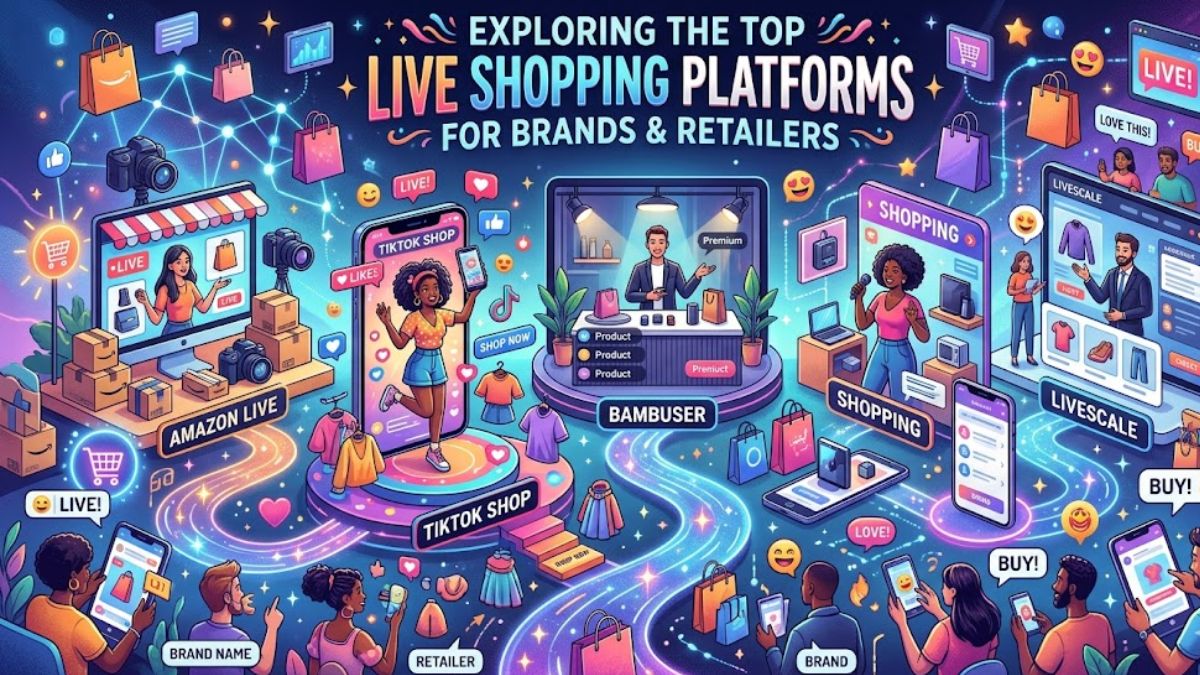
Live shopping has been quietly reshaping how brands actually reach people. What began as a Chinese internet phenomenon has turned into something global retailers are now scrambling to figure out. The core shift is pretty simple: static product pages don’t cut it anymore. People want to see things working, ask someone a real question, and get an answer before they hand over their money. That’s what live commerce delivers, and it’s why platforms built around interactive video selling are drawing serious attention from brands across fashion, beauty, electronics, and packaged goods.
Grand View Research puts the global live commerce market above USD 55 billion by 2030
Grand View Research puts the global live commerce market above USD 55 billion by 2030. China crossed that threshold long ago domestically. India is moving in the same direction, pushed along by smartphone penetration and a creator economy that keeps producing people audiences actually trust. For brands, picking the right platform has stopped being a technical checkbox and started feeling more like a growth bet. This guide covers the leading live shopping platforms, what separates them, and how to match one to what you’re actually trying to build.
- 1. What Are Live Shopping Platforms?
- 2. Why Live Commerce Is Growing So Fast
- 3. Key Features Every Live Stream Shopping Platform Should Offer
- 4. Shopify Live
- 5. Bambuser
- 6. Firework
- 7. Livescale
- 8. CommentSold
- 9. NTWRK
- 10. Amazon Live
- 11. TalkShopLive
- 12. Facebook Live Shopping
- 13. Instagram Live Shopping
- 14. YouTube Shopping and Live Commerce
- 15. Shopify Live Shopping: Why It Matters
- 16. Shopify Live Streaming and Brand Growth
- 17. Benefits of Live Selling Platforms
- 18. How Influencer Marketing Drives Live Commerce Success
- 19. The Power of UGC Videos in Live Shopping
- 20. AI Is Reshaping Live Commerce
- 21. How to Choose the Best Live Shopping Platforms
- 22. Real Market Insights Every Brand Should Know
- 23. The Future of Livestream Commerce in India
- About Hobo.Video
1. What Are Live Shopping Platforms?
They’re exactly what the name suggests: tools that layer shopping onto live video. A brand or creator goes live, shows products, takes questions from viewers, and those viewers can buy without ever leaving the stream. That last part matters. Traditional e-commerce sends someone through multiple pages before a purchase. Live shopping collapses that into a single experience.
What a decent platform typically handles:
- Live video streaming
- Product tagging
- Real-time chat
- Instant checkout
- Audience analytics
- Influencer integrations
- Mobile optimization
The result is that customers feel like they’ve seen the product work before they buy it.
2. Why Live Commerce Is Growing So Fast
A few things are colliding here. People trust people, not ads. Watching someone actually use a product in a real setting is more convincing than any campaign a brand can run. This is why influencer-led live sessions convert so well. Video holds attention. Live video especially. There’s an urgency to it that a product image can’t replicate, and viewers stick around longer than they do on standard product pages. India has 750 million smartphone users. Most of them discover products on their phones. A shopping experience that isn’t designed for mobile is already losing. The creator economy keeps expanding. Creators bring audiences that trust them. That trust transfers to what they’re selling. Brands that figure out how to work with the right creators inside these platforms have a real advantage.
3. Key Features Every Live Stream Shopping Platform Should Offer
Before committing to anything, evaluate these.

Amplify Your Brand,
One Influence at a Time.
- Product Integration
Products need to appear during the broadcast itself. If the viewer has to leave the stream to find the item, you’ve broken the experience. - Real-Time Interaction
Live comments, polls, Q&A, reactions. These aren’t extras. Participation is what separates live commerce from just posting a video. - Analytics Dashboard
Viewer counts, conversion rates, revenue, watch time, drop-off points. Without this data, you’re running blind on what to improve. - Influencer Collaboration
The platform should make it easy to bring in creators. Creator-led sessions consistently outperform brand-only broadcasts.
Scalability
A campaign that catches fire needs to keep running. The platform needs to handle audience growth without degrading the stream. Top Live Shopping Platforms for Brands and Retailers
4. Shopify Live
Shopify’s live shopping capability gets attention largely because it fits naturally into what Shopify merchants already do. If you’re already running a Shopify store, the product integration is straightforward, the checkout flows through the same system, and the analytics are familiar.
What draws brands to it:
- Easy product integration
- Clean checkout experience
- Mobile-friendly
- Strong analytics
- Large app ecosystem
It’s not flashy, but for D2C brands, fashion retailers, beauty companies, and startups already in the Shopify ecosystem, it’s often the cleanest starting point. Best For: D2C brands, fashion retailers, beauty companies, emerging startups
5. Bambuser
Bambuser has been around long enough to have built out serious infrastructure. Enterprise brands and luxury retailers use it when they want a premium live experience with the reliability to match.
What it offers:
- Interactive video
- Instant purchasing
- Multi-host streaming
- Deep audience analytics
- CRM integration
It’s not the simplest platform in the market. It doesn’t need to be. It’s built for brands that need the feature depth and don’t want to patch together multiple tools. Best For: Enterprise brands, luxury retailers, international businesses
6. Firework
Firework sits at an interesting intersection: it handles both live commerce and shoppable video, so brands aren’t limited to just live broadcasts. The AI-driven product recommendations and omnichannel distribution are what set it apart.
What it delivers:
- AI-powered recommendations
- Omnichannel reach
- Interactive shopping
- Video personalization across live and recorded content
Retailers who want to build a content engine around commerce, not just run occasional live sessions, tend to find Firework’s architecture useful. Best For: Retailers building long-term shoppable content strategies
7. Livescale
Livescale focuses on letting brands run live commerce without losing control over how the experience looks and feels. The branded environment matters here, and the integrations with major e-commerce systems make setup less painful than it could be.
What it brings:
- Advanced analytics
- Fully branded experiences
- Audience engagement tools
- Cross-channel promotion support
It’s positioned as one of the more complete solutions in the mid-to-enterprise range, particularly for brands that already have a strong identity and want the platform to reflect it.
Best For: Brands prioritizing a premium, tightly controlled live shopping experience
8. CommentSold
CommentSold built its reputation in social selling, which is a narrower niche than most platforms on this list but one it knows well. It connects to Facebook, Instagram, and standalone mobile apps, and handles order processing automatically once a sale goes through. Inventory management and customer notifications are baked in, which matters when you’re running frequent drops and can’t afford to track everything manually. Small businesses like it because the learning curve isn’t steep. You’re not configuring a lot before your first live session. Best For: Small businesses selling through social channels
9. NTWRK
NTWRK is less a shopping platform and more a cultural event machine. It’s built around product drops, limited releases, and celebrity collabs, and the audience it’s cultivated reflects that. If you’re launching something exclusive and want the scarcity and hype to do the work, this is where that plays well. It’s not a fit for everyday retail, but for brands chasing Gen Z buyers who respond to drops the way others respond to traditional promotions, it’s worth looking at. Best For: Brands built around exclusivity, hype, and limited-edition culture
10. Amazon Live
The obvious advantage here is the audience. Amazon already has millions of active shoppers. Going live on Amazon Live puts your products in front of people who came to buy something, not just browse. Sellers use it for product demonstrations, influencer-hosted sessions, and real-time shopping. Amazon reports growing adoption as sellers look for ways to stand out in a crowded marketplace. It’s not the most flexible or customizable option. But sheer reach is hard to argue with. Best For: Amazon sellers wanting higher visibility and direct conversions
11. TalkShopLive
TalkShopLive attracts a mix of brands, celebrities, and independent creators. Its multi-channel broadcasting means a session can run across platforms simultaneously, which helps with reach without multiplying effort. Affiliate partnerships and revenue tracking make it practical for creator-led businesses where multiple parties are sharing in the outcome. Best For: Creator-led brands and celebrity commerce partnerships
12. Facebook Live Shopping
Facebook is enormous and already has businesses’ existing audiences sitting on it. Live shopping on Facebook doesn’t require building something from scratch. You go live to people who already follow you. It’s not fancy, but for smaller businesses that want a cost-effective entry into live commerce without committing to a dedicated platform, it’s a reasonable first step. Best For: Small businesses wanting low-barrier entry into live selling
13. Instagram Live Shopping
Instagram Live Shopping works best where Instagram already works best: fashion, beauty, and anything visual. The creator ecosystem here is deep. Influencer collaborations slot naturally into live sessions, and the audience is already primed to discover and buy products through the feed. Brands that already run Instagram campaigns often find extending into live shopping a natural next move. Best For: Fashion and beauty brands with an active Instagram presence
14. YouTube Shopping and Live Commerce
YouTube’s search visibility is what sets it apart. A live session on YouTube doesn’t disappear after it ends. It becomes a discoverable video asset that keeps pulling in views. Creators use it for long-form product demonstrations, and the audiences tend to be more invested than on shorter-form platforms. For brands where showing how something works is part of the sale, YouTube gives you the time and reach to do that properly. Best For: Brands that rely on detailed product education before purchase
15. Shopify Live Shopping: Why It Matters
Consumer expectations have shifted, and Shopify merchants are responding. Live video is becoming part of how D2C brands run their stores, not an occasional experiment. The results bear this out. Brands using Shopify’s live shopping tools consistently report higher engagement, stronger customer trust, faster purchase decisions, and fewer returns. When someone has watched a product being used and had their questions answered before buying, they’re less likely to send it back.
16. Shopify Live Streaming and Brand Growth
The ways Shopify merchants use live streaming have expanded considerably. It’s no longer just product launches, though those still work well. Brands now run flash sales, seasonal promotions, influencer collabs, and even educational sessions through live video. Each of these builds something a static store page can’t: an ongoing relationship with customers. That’s what live streaming keeps delivering as video commerce becomes less of a differentiator and more of a baseline expectation.
17. Benefits of Live Selling Platforms
The numbers brands report from live commerce consistently point in the same direction. Conversion rates are higher. Seeing a product demonstrated reduces the uncertainty that kills purchase decisions in traditional e-commerce. Customer relationships get stronger. Talking directly to a host, having a question answered in real time, makes the interaction feel less transactional. Product understanding improves. Customers who’ve watched something work in a real situation are more confident about what they’re buying. Brand recall goes up. An interactive live session is more memorable than a product page. People come back.
18. How Influencer Marketing Drives Live Commerce Success
Influencers work in live commerce for the same reason they work anywhere else: they’ve already done the trust-building. Their audiences show up to watch them, not just to shop. That trust carries into product recommendations. When a creator demonstrates something during a live session, it doesn’t read like advertising. It reads like a recommendation from someone you follow. This is why campaigns featuring Indian creators demonstrating products in real time have seen stronger results than equivalent brand-only sessions. The audience is already there, and it’s already engaged.
19. The Power of UGC Videos in Live Shopping
Polished brand content has a ceiling on how believable it feels. UGC doesn’t have that problem. When real customers show up in a live stream, whether through integrated clips or direct participation, it adds credibility that brand-produced content can’t fully replicate. Engagement goes up. Trust goes up. Conversions tend to follow. As consumers get better at recognizing and tuning out manufactured authenticity, UGC’s role in live commerce will grow, not shrink.
20. AI Is Reshaping Live Commerce
Two developments here are worth watching. AI-generated UGC is helping brands produce content at a scale that would be impractical to source manually. It fills content libraries faster and keeps channels active between major campaigns. AI influencer marketing tools are changing how brands find and evaluate creators. Identifying the right fit, predicting campaign performance, and optimizing budget allocation used to involve a lot of guesswork. These tools reduce that. Neither replaces the human element that makes live commerce effective. But they reduce the operational drag that holds brands back from doing more of it.
21. How to Choose the Best Live Shopping Platforms
There’s no universal right answer here. The platform that makes sense depends on what you’re actually trying to do. Start with your goals. Are you driving awareness, direct sales, or long-term customer relationships? A platform optimized for one doesn’t necessarily serve the others well. Check your integrations. The platform needs to connect cleanly with your e-commerce stack, CRM, marketing tools, and analytics. A friction point in any of those creates downstream problems. Think about the customer experience. A complicated checkout or clunky interface kills conversions regardless of how good the live session is. Test this before committing. Look at total cost, not just the subscription. Implementation, support, and creator fees add up. Get the full picture before comparing options.
22. Real Market Insights Every Brand Should Know
A few numbers worth keeping in mind: Video viewers retain roughly 95% of a message versus around 10% through text. That gap alone explains a lot about why live commerce converts. Livestream audiences watch longer than standard video viewers on average. Mobile commerce now makes up the majority of global e-commerce traffic. Influencer recommendations meaningfully influence Gen Z purchase decisions. Brands running interactive commerce consistently report stronger engagement than those relying on static channels. None of this is surprising once you see live commerce working. But it helps to have the numbers when making the case internally.
23. The Future of Livestream Commerce in India
India is early in a shift that isn’t going to reverse. Affordable smartphones, faster mobile internet, digital payments infrastructure, regional creators building real audiences in local languages, and a young consumer base that’s comfortable buying online are all pointing the same direction.As video commerce becomes the norm rather than the exception, the brands that built their live commerce capabilities early will have an advantage that’s harder to close than it looks. The technology isn’t the barrier anymore. The question is whether brands move quickly enough to build the audience relationships that eventually become the moat.
FAQs
What are Live Shopping Platforms?
Live Shopping Platforms are digital solutions that combine video streaming and online purchasing. Customers watch live product demonstrations and buy products instantly during broadcasts.
Which are the best live shopping platforms for brands?
Popular options include Shopify Live, Bambuser, Firework, Livescale, Amazon Live, TalkShopLive, Facebook Live Shopping, and Instagram Live Shopping.
What is a live stream shopping platform?Title
A live stream shopping platform allows brands to sell products during live broadcasts while interacting with viewers in real time.
How does livestream commerce work?
Brands host live sessions where products are showcased. Customers ask questions, receive responses, and complete purchases during the event.
Is Shopify suitable for live commerce?
Yes. Many merchants use shopify live shopping tools because Shopify integrates well with several commerce and streaming solutions.
About Hobo.Video
Hobo.Video is India’s leading AI-powered influencer marketing and UGC company. With over 2.25 million creators, it offers end-to-end campaign management designed for brand growth. The platform combines AI and human strategy for maximum ROI.
Services include:
- Influencer marketing
- UGC content creation
- Celebrity endorsements
- Product feedback and testing
- Marketplace and seller reputation management
- Regional and niche influencer campaigns
Trusted by top brands like Himalaya, Wipro, Symphony, Baidyanath and the Good Glamm Group.
Together, we’ll make your brand growth feel natural and doable. Let’s begin.
Your reach deserves rewards. Let’s make that happen. Tap to sign up.

 Ankita Saha