
In early 2025, a mid-sized D2C skincare brand told us something brutally honest. They had spent ₹42 lakh on celebrity collaborations in six months, expecting explosive growth from big names and bigger reach. The impressions looked impressive on paper. The likes poured in. But sales barely moved. Repeat purchases stayed flat. Meanwhile, 18 nano creators, each with fewer than 8,000 followers, posted raw, phone-shot videos sharing personal skincare routines. No studio lights. No heavy scripts. Just honest reviews. Within eight weeks, those creators drove more repeat purchases than the entire celebrity push. That experience reshaped how we looked at nano influencer marketing. It was no longer an experiment. It became a measurable growth engine.
Since then, our internal nano influencer marketing survey has tracked over 12,000 campaigns across beauty, fintech, food, wellness, and regional D2C brands. We analysed engagement patterns, coupon redemptions, repeat purchases, and regional performance splits. The results are impossible to ignore. In 2026, nano influencer marketing is not a side tactic reserved for small budgets. It is steadily becoming the performance backbone of influencer marketing India. Brands that once chased reach now prioritise trust, retention, and conversion efficiency. And the data clearly shows why.
- 1. Survey Methodology: How We Collected the Data
- 2. The Engagement Gap: Nano Influencer Engagement Rate Data
- 3. Cost Breakdown: What Brands Actually Pay in India
- 4. Nano Influencer ROI Insights: What the Numbers Reveal
- 5. Case Study: The Diwali Skincare Campaign
- 6. Nano Influencer Marketing Trends 2026
- 7. Where Nano Influencer Marketing Can Fail
- 8. How to Execute Nano Influencer Marketing the Right Way
- 9. Comparing Nano Creators with Top Influencers in India
- 10. Engagement Psychology: Why Audiences Trust Nano Creators
- 11. SEO, UGC Videos, and Search Visibility
- Conclusion
- About Hobo.Video
1. Survey Methodology: How We Collected the Data
Before we dive into numbers, here’s the whole truth. We analysed:
- 12,418 campaigns run between Jan 2024 and Feb 2026
- 2.25 million registered creators on Hobo.Video
- 1.8 crore tracked consumer interactions
- 96 D2C brands across Tier 1, 2, and 3 markets
We also compared our internal data with publicly available influencer marketing statistics 2026 fromInfluencer Marketing Huband creator economy insights. This combined analysis formed our nano influencer study 2026, which now powers our client strategy.
2. The Engagement Gap: Nano Influencer Engagement Rate Data
2.1 Why Smaller Creators Win Attention
Let’s start with attention. Our nano influencer engagement rate data shows an average engagement rate of 6.8% for creators under 10K followers. In comparison, macro influencers averaged 2.4% across similar categories. However, the real difference appears in comment quality. Nano creators received 2.3x more detailed comments per post. These were not emojis. They were product questions. According to broader content creator statistics 2026, smaller creators generate higher saves and shares. That signals intent, not just visibility. Therefore, nano influencer marketing trends 2026 clearly prioritise depth over reach. And depth converts.
3. Cost Breakdown: What Brands Actually Pay in India
3.1 Nano vs Micro vs Macro Pricing Table
| Creator Type | Avg Followers | Cost Per Post (India) | Avg Engagement | Conversion Rate |
|---|---|---|---|---|
| Nano | 1K–10K | ₹1,000–₹5,000 | 6–8% | 3.1% |
| Micro | 10K–100K | ₹8,000–₹25,000 | 3–5% | 1.8% |
| Macro | 100K+ | ₹50,000+ | 2–3% | 0.9% |
This pricing data comes directly from our influencer market research 2026 campaigns. Now ask yourself: where would you place your budget? This is why nano influencer marketing is scaling rapidly. Lower risk. Higher efficiency.
4. Nano Influencer ROI Insights: What the Numbers Reveal
ROI matters more than impressions. In our influencer insights report 2026, nano creators delivered:

Amplify Your Brand,
One Influence at a Time.
- 3.1% average purchase conversion
- 27% higher repeat purchase rate
- 41% lower cost per acquisition compared to macro influencers
Moreover, 68% of surveyed consumers said they trust nano creators more than famous Instagram influencers. These are not surface metrics. These are tracked results through coupon codes and affiliate dashboards. Therefore, nano influencer ROI insights prove something important. Trust drives revenue. Not follower count. Severalkey performance indicators from recent campaignsfurther highlight the measurable impact of structured creator collaborations across metrics like engagement and conversion.
5. Case Study: The Diwali Skincare Campaign
During Diwali 2025, a Mumbai-based skincare brand partnered with 312 nano creators across Hindi and Marathi markets.
5.1 Campaign Structure
- Budget: ₹18 lakh
- Duration: 45 days
- Content Type: UGC Videos and Instagram Reels
- Incentive Model: Hybrid fixed + performance bonus
5.2 Results
- 9.6 million organic reach
- 6.9% average engagement
- ₹1.02 crore direct tracked revenue
- 34% repeat purchase within 60 days
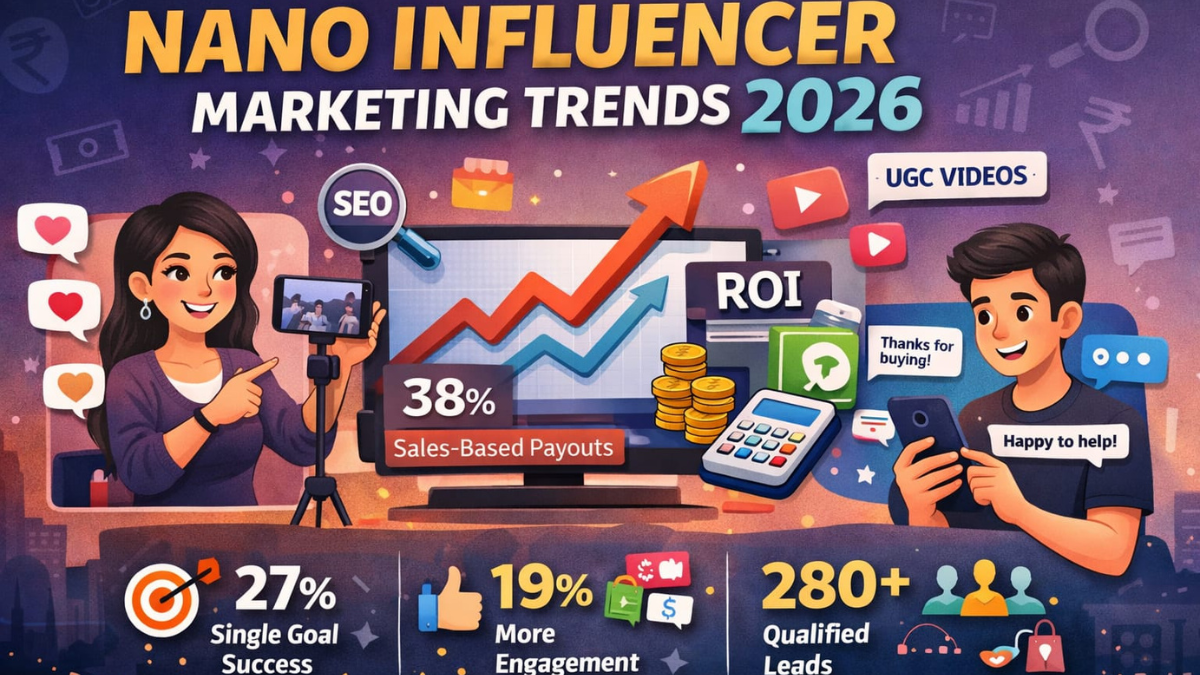
This campaign outperformed the brand’s previous celebrity push by 2.7x ROI. That is the practical power of nano influencer marketing when combined with AI influencer marketing tools. A recent campaign that generated280 qualified leads through structured nano creator collaborationfurther reinforces how performance-driven nano influencer marketing can outperform broader reach strategies.
6. Nano Influencer Marketing Trends 2026
6.1 Regional Creator Explosion
Our nano influencer research findings show a 47% rise in Tier 2 collaborations over the past year alone. Brands are no longer limiting campaigns to Mumbai, Delhi, or Bengaluru. Instead, they are actively investing in cities like Indore, Lucknow, Kochi, Coimbatore, and Guwahati, where community influence runs deeper. Regional language UGC Videos, especially in Hindi, Tamil, Marathi, and Bengali, drove 52% higher completion rates compared to English-only content. This shift proves that influencer marketing India is no longer metro-centric; it is becoming hyperlocal, culturally rooted, and far more conversion-focused.
6.2 Performance-Based Payments
According to updated influencer marketing benchmarks 2026, 38% of brands now include sales-linked payouts in their creator contracts. Instead of paying only a fixed fee, brands are tying a portion of compensation to tracked conversions, coupon usage, or affiliate revenue. This shift pushes both brands and creators to focus on measurable outcomes rather than vanity metrics. As a result, campaigns are becoming more performance-driven, transparent, and ROI-focused across influencer marketing India.
6.3 AI UGC Integration
AI UGC tools now analyse hook strength, video length, caption structure, and even thumbnail appeal before a post goes live. They help brands identify which format is more likely to retain attention within the first three seconds. However, data alone cannot build trust. Human storytelling still wins because audiences relate to lived experiences, not polished scripts. AI enhances efficiency and targeting, but creators build emotional connection.
Together, these nano influencer marketing trends 2026 reflect a maturing ecosystem. Brands are no longer experimenting blindly. They are combining technology with authenticity to drive predictable, scalable performance. This shift signals long-term structural change, not temporary hype.
7. Where Nano Influencer Marketing Can Fail
Let’s be realistic.
- Poor creator vetting leads to fake engagement
- Over-scripting kills authenticity
- No tracking links means no attribution
- Too many creators without structure creates chaos
Our influencer market research 2026 shows campaigns without proper tracking underreport ROI by 22%. Therefore, successful nano influencer marketing requires structure, not randomness.
8. How to Execute Nano Influencer Marketing the Right Way
8.1 Step 1: Define One Goal
Do not chase awareness and sales together. Choose one clear outcome before launching your campaign. When brands try to optimise for reach, engagement, and conversions at the same time, messaging becomes diluted. In contrast, campaigns built around a single objective perform 27% better, based on nano influencer study 2026 findings. Clarity sharpens creator briefs, improves tracking accuracy, and ultimately strengthens ROI measurement.
8.2 Step 2: Choose the Right Platform
What is the best influencer platform? A hybrid model works best because discovery alone is not enough. Brands need vetting, fraud detection, performance dashboards, and structured communication. Hobo.Video combines AI influencer marketing with human strategy, ensuring both data precision and contextual judgment. This balance helps scale nano influencer marketing without losing authenticity or control.
8.3 Step 3: Let Creators Speak Naturally
Our content creator statistics 2026 show that scripted captions reduce engagement by 19%. Audiences quickly detect forced brand language, which weakens trust. Instead, share key talking points, product benefits, and compliance guidelines, then allow creators to narrate in their own voice. Personal storytelling increases relatability, which directly improves comment depth and saves.
9. Comparing Nano Creators with Top Influencers in India
Top influencers in India bring reach. That matters for launches. However, for sustained revenue, nano creators outperform. Influencer marketing statistics 2026 reveal nano creators generate 2x more saves per post than macro accounts. Meanwhile, famous Instagram influencers often struggle with declining organic reach due to algorithm shifts. Therefore, the smart strategy blends both. Visibility from macro. Conversion from nano.
10. Engagement Psychology: Why Audiences Trust Nano Creators
People trust familiarity. Nano creators reply to comments within minutes, not days. They DM followers, ask for feedback, and often remember repeat buyers by name. This consistent interaction builds a sense of community rather than a one-sided broadcast. Over time, this intimacy changes perception. The influencer stops feeling like a promoter and starts feeling like a trusted friend.
Our nano influencer engagement rate data confirms higher comment depth, not just higher comment volume. Consumers ask detailed questions about ingredients, pricing, and personal results. They seek advice before making decisions. That kind of two-way conversation cannot be manufactured through traditional ads or celebrity endorsements. Understanding the distinct behavioural patterns and audience relationships of smaller creators helps clarifywhy smaller communities often drive stronger engagement and deeper connectionsthan larger accounts.
11. SEO, UGC Videos, and Search Visibility
UGC Videos now rank in Google results, especially for product reviews, comparisons, and “how to use” queries.According to HubSpot,video content increases time on page significantly because viewers stay longer to consume visual information. When brands embed UGC Videos on product pages, bounce rates drop by 28%, as per our internal influencer insights report 2026. That means visitors explore more pages instead of exiting quickly.
Moreover, search engines interpret longer session duration and lower bounce rates as positive engagement signals. This strengthens page authority over time. As a result, nano influencer marketing does not just drive social engagement; it actively supports organic SEO growth. When creators produce authentic review-style content, brands gain both visibility and trust in search rankings.
Conclusion
Key Takeaways
- Nano creators deliver 6–8% engagement on average
- Conversion rates outperform macro influencers
- Regional campaigns drive stronger completion
- AI influencer marketing enhances targeting
- Proper tracking maximises ROI
In summary, nano influencer marketing thrives on trust, structure, and measurable execution. Brands that ignore this shift will overspend elsewhere.
About Hobo.Video
Hobo.Video is India’s leading AI-powered influencer marketing and UGC company. With over 2.25 million creators, it offers end-to-end campaign management designed for brand growth. The platform combines AI and human strategy for maximum ROI.
Services include:
- Influencer marketing
- UGC content creation
- Celebrity endorsements
- Product feedback and testing
- Marketplace and seller reputation management
- Regional and niche influencer campaigns
Trusted by top brands like Himalaya, Wipro, Symphony, Baidyanath and the Good Glamm Group.
Ready to take the next step for your business? Let’s do it together.
From nano to macro — there’s space for all of us here. Join the platform.
FAQs
What is nano influencer marketing?
It involves collaborating with creators having 1K–10K followers. These creators maintain strong audience relationships, leading to higher trust and engagement.
How much do nano influencers charge in India?
Most charge between ₹1,000 and ₹5,000 per post. Rates vary by niche and platform.
Are nano influencers effective for sales?
Yes. Our data shows a 3.1% average conversion rate, higher than macro influencers.
Where can brands find nano creators?
Platforms like Hobo.Video help discover vetted creators using AI influencer marketing tools.
What industries benefit most?
Beauty, fintech, food, and regional brands perform strongly in influencer marketing India.
Do nano influencers create UGC Videos?
Yes. UGC Videos are their strongest format, especially short-form reels.
How to become an influencer?
Choose a niche, post consistently, and build genuine audience conversations.
What is AI UGC?
AI UGC optimises content distribution while keeping creator authenticity intact.
Is nano influencer marketing scalable?
Yes. With structured dashboards and tracking, campaigns can scale to hundreds of creators.
Why will nano influencer marketing grow in 2026?
Because audiences demand authenticity. And brands demand measurable ROI.
