
Introduction: The Exhaustion of the Modern Creator
Every single day, thousands of Indian startup founders and digital marketers wake up with the same anxiety. They feel they must create endless reels, write daily LinkedIn posts, and publish massive blog articles. Yet, after months of nonstop effort, their Google Analytics dashboard barely moves. Traffic stays flat, and lead generation feels like a distant dream. This happens because many businesses treat Content Marketing as a numbers game instead of focusing on how people actually discover, consume, and engage with content today.
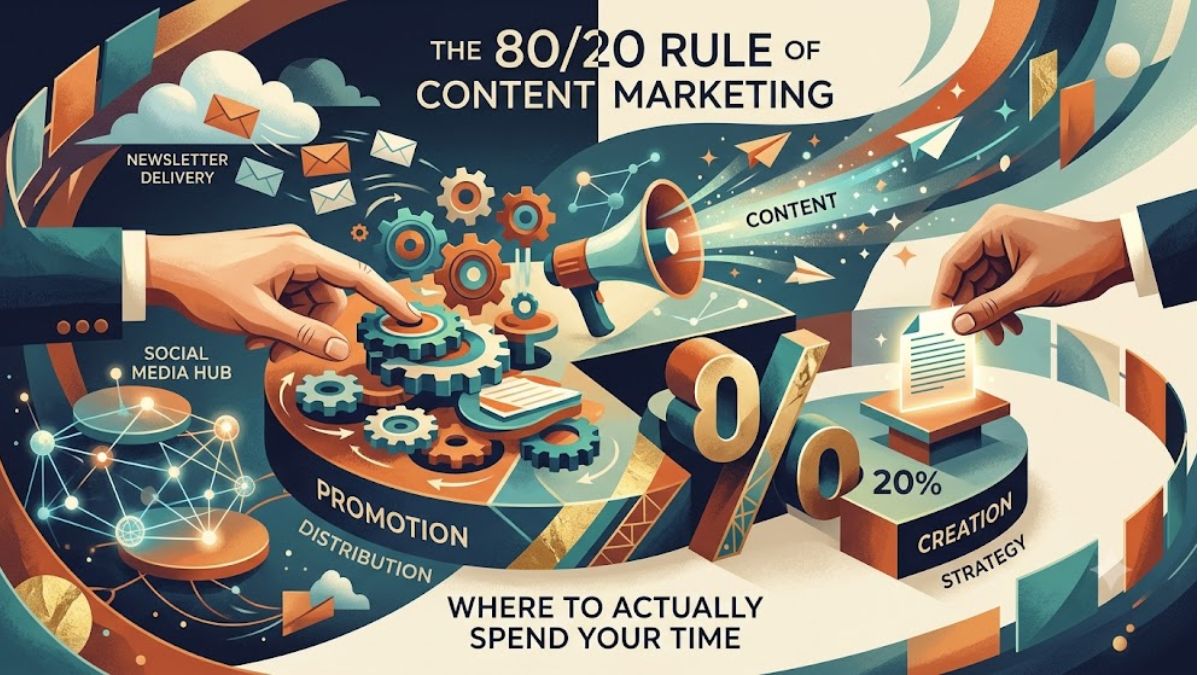
If you build it, they will not come. This is the hardest truth of modern digital content marketing. You can write the most brilliant 5,000-word guide on financial freedom, but it means nothing if zero eyes see it. Most brands spend 90% of their energy creating assets and only 10% distributing them. To fix this broken system, you need a radical shift in your content marketing strategy. You must embrace a framework that prioritizes eyeballs over mere production.
This is exactly where the famous Pareto Principle completely transforms your digital business growth. By applying the 80/20 rule to your content marketing workflow, you stop spinning your wheels on useless tasks. Instead, you learn how to improve content marketing by doing less but promoting much more. Let us dive deep into how this mathematical reality can save your brand from creative burnout and drive massive ROI.
- Introduction: The Exhaustion of the Modern Creator
- 1. Deciphering the 80/20 Rule for Digital Growth
- 2. The Broken State of Content Marketing in India
- 3. The 20% Framework: High-Impact Content Creation
- 4. The 80% Framework: Masterclass in Content Distribution
- 5. The Power of Influencer Marketing in Distribution
- 6. Maximizing ROI with UGC and Platform Algorithms
- 7. Real-World Case Studies and Data Insights
- 8. Actionable Guide: Implementing the 80/20 Rule Today
- About Hobo.Video
1. Deciphering the 80/20 Rule for Digital Growth
1.1 What is the Pareto Principle in the Digital Age?
The 80/20 rule states that 80% of your total results will always come from 20% of your total efforts. In the context of a modern content marketing strategy, this means the vast majority of your traffic, leads, and revenue comes from a very small fraction of your published assets. Think about your own favorite websites or favorite Instagram creators. You likely remember them for three or four iconic pieces of work, not for their daily filler posts.
Many businesses waste months writing twenty mediocre blog posts that nobody reads or shares. Instead, an expert content marketing strategy for startups focuses on creating five incredible, deeply researched assets. Once those assets exist, you spend the next few months pushing them across every social channel available. This simple shift saves massive amounts of mental energy while multiplying your overall brand reach exponentially.
1.2 Why Content Creation Only Accounts for 20% of Success
Most teams believe that excellent writing or slick video editing guarantees instant online virality. However, the internet is flooded with millions of new blogs and videos every single minute. Production is just the ticket that gets you into the stadium; it does not win you the trophy. Without aggressive distribution, your beautiful content simply sits in a dark corner of the web.
When analyzing content marketing ROI, data shows that promotion dictates whether a campaign succeeds or fails. True content creation is simply building the vehicle. Distribution is the premium fuel that actually drives that vehicle down the highway toward your target audience. If you do not fund and plan for the fuel, your vehicle remains permanently parked in the garage.

Amplify Your Brand,
One Influence at a Time.
1.3 Why Distribution Consumes 80% of the Results
Distribution is where your target audience actually interacts with your ideas, products, and brand philosophy. When you spend 80% of your time amplifying your assets, you create multiple touchpoints for a single piece of work. A single blog post can become ten tweets, three LinkedIn carousels, two YouTube shorts, and an email newsletter.
This multi-channel amplification ensures that your core message reaches different segments of your audience where they already hang out. By focusing heavily on promotion, you maximize the lifespan of every single asset you produce. This relentless repetition builds deep brand familiarity, authority, and trust across your specific industry niche over time.
2. The Broken State of Content Marketing in India
2.1 The “More is Better” Trap for Indian Startups
Walk into any digital marketing agency in Mumbai or Bangalore, and you will hear the exact same flawed advice. Leaders constantly tell their creative teams that they need to pump out high volumes of daily content to stay relevant. This obsession with high-volume production has turned digital platforms into noisy, low-quality digital dumping grounds. Teams are completely burnt out, and target audiences are experiencing severe content fatigue.
Startups are particularly vulnerable to this trap because they feel a frantic urgency to compete with legacy market leaders. They copy the high-frequency posting schedules of massive corporations without possessing even a fraction of their distribution budgets. This flawed content marketing strategy for startups leads directly to wasted capital, low team morale, and zero customer acquisition. Quality always beats quantity in the modern algorithms.
2.2 The Shift from Text to Visual: UGC Videos and Influencers
The way Indian consumers browse the internet has changed fundamentally over the last three years. Long paragraphs of dry corporate text no longer capture the attention of Gen Z and millennial buyers. Instead, short-form video content has completely taken over platforms like Instagram, YouTube, and various local video sharing applications. Consumers want to see real human faces and hear authentic voices before they trust a brand.
Because of this massive shift, smart brands are pivoting heavily toward high-engagement UGC Videos to drive organic growth. User-generated content feels completely honest, raw, and highly relatable to the everyday shopper. When a real customer shares their unboxing experience on video, it builds immediate social proof that corporate copy cannot match. Integrating authentic human stories into your strategy is one of the most effective content marketing tips for businesses today.
3. The 20% Framework: High-Impact Content Creation
3.1 Defining Your Core Hero Content Assets
To master the 20% creation phase, you must focus entirely on building what experts call “Hero Content.” These are massive, definitive guides, original industry research papers, or deep-dive video documentaries that solve real consumer pain points. A hero asset requires significant time, deep research, and unique insights to produce correctly. It should be so valuable that your competitors feel uncomfortable giving it away for free.
Instead of writing five shallow listicles about digital marketing tips, spend your month building one ultimate industry blueprint. This massive asset acts as the sun in your marketing solar system, holding everything else together. Every other small piece of content you make will revolve around and link back to this single masterpiece. This clean structural hierarchy makes your site highly scannable and builds massive topical authority.
3.2 Building Content for E-E-A-T Standards
Google’s search algorithms heavily reward content that clearly demonstrates Experience, Expertise, Authoritativeness, and Trustworthiness (E-E-A-T). To meet these strict standards, you cannot rely on generic facts that anyone can find via a quick online search. Your articles must include real-world case studies, actual screenshots, proprietary data insights, and quotes from working industry specialists.
If you are writing about financial technology, show exactly how your product solved a real accounting bottleneck for a client. Share the exact percentage numbers, the specific timeline, and the real human challenges your team overcame during the process. This concrete evidence proves to both human readers and search engine crawlers that you are a true authority. Genuine transparency is how you build long-term digital content marketing authority that rivals cannot copy.
3.3 Leveraging AI UGC for Rapid, Scalable Production Basics
Creating high-quality content consistently can place a massive logistical strain on a lean marketing team. Fortunately, modern brands can now utilize advanced tools like AI UGC platforms to streamline their creative production workflows. These clever tools help you brainstorm fresh ideas, script raw concepts, and edit short-form videos at lightning speed. This allows your internal team to focus entirely on high-level brand strategy and deep creative direction.
However, you must always balance automated technology with real human nuance to keep your brand message authentic. Use artificial intelligence to handle repetitive formatting tasks, transcribing, and initial content research variations. But ensure that a skilled human editor always injects your unique brand voice, real emotions, and actual customer experiences. This perfect hybrid approach gives you a massive competitive edge in the crowded digital content marketing space.
4. The 80% Framework: Masterclass in Content Distribution
4.1 Organic Amplification: The Content Repurposing Matrix
Once your hero content asset is live, your real marketing work officially begins. You must systematically break that large asset down into dozens of smaller, highly digestible pieces of social content. Turn a detailed data point from your article into a sharp text post for your LinkedIn followers. Transform a case study section into an engaging three-minute script for a vertical smartphone video.
This structured repurposing framework ensures that your core message is optimized for the unique format of every platform. A consumer scrolling Instagram wants quick visuals, while a professional on LinkedIn wants hard metrics and industry trends. By reshaping your core insights, you maximize your overall reach without needing to write new concepts from scratch. This is the absolute secret to scaling your content creation without burning out your creative team.
4.2 Paid Amplification: Boosting High-Performing Assets
Organic reach is an incredibly powerful tool, but combining it with targeted paid advertising accelerates your growth significantly. Do not waste precious capital boosting every single post you publish on your social media feeds. Instead, monitor your organic analytics closely to identify which specific posts are already getting high engagement. When a particular post performs exceptionally well naturally, run targeted ads behind it to amplify its reach.
Injecting ad spend into an already successful asset acts like throwing premium gasoline onto a bright, burning fire. Use detailed demographic targeting on Facebook, Instagram, and LinkedIn to place your top asset directly in front of ideal decision-makers. This highly strategic approach ensures your marketing budget is spent only on content that has proven to convert readers. Paid amplification transforms your standard content marketing strategy into a highly predictable, scalable engine for direct customer acquisition.
5. The Power of Influencer Marketing in Distribution
5.1 Why Influencers are the Ultimate Distribution Channels
You can build the most spectacular website on earth, but winning the search engine optimization war takes considerable time. Influencers, however, already possess the undivided attention and deep trust of millions of your ideal target consumers. By partnering with the right creators, you instantly plug your brand directly into an active, highly engaged community. This skips the slow process of building an audience entirely from scratch.
Modern influencer marketing is no longer just a luxury vanity metric for massive global fashion and lifestyle brands. It has rapidly evolved into a mandatory distribution pillar for any business serious about growing its digital footprint. When a trusted creator recommends your product, their audience listens with intent because an established human relationship exists. This immediate trust transfer converts casual social media scrollers into paying brand customers much faster than traditional ads.
5.2 Micro vs. Macro Creators: Navigating the Indian Ecosystem
When entering the dynamic Indian market, understanding the local creator ecosystem is vital for optimizing your campaign budgets. Macro influencers boast massive follower counts, but their overall audience engagement rates are often quite shallow and expensive. Conversely, micro-creators possess smaller communities but maintain incredibly close, highly active relationships with their dedicated followers. Their content feels like a genuine recommendation from a close personal friend rather than a paid corporate advertisement.
For an effective content marketing strategy for startups, pooling your budget into multiple micro-influencers often yields superior ROI. These niche creators understand how to communicate authentically with regional Indian audiences in their native local languages. This hyper-local approach is highly effective for building deep consumer trust outside of major tier-one metropolitan areas. Balancing both micro and macro talent creates a highly resilient, well-rounded distribution network for your brand products.
5.3 Working with a Top Influencer Marketing Company
Managing multiple influencer relationships, negotiating contracts, and tracking campaign metrics internally can become an absolute logistical nightmare. Partnering with a professional top influencer marketing company saves your business hundreds of operational hours and protects your budget. These specialized firms possess deep industry relationships, verified historical performance data, and advanced tracking tools to guarantee campaign success.
An experienced partner helps you identify the best influencer platform to track real-time conversions, clicks, and viewer engagement. They ensure your brand collaborates only with creators who have real, authenticated followers and positive community reputations. This professional oversight eliminates guesswork, allowing your internal marketing team to focus entirely on high-level product innovation and messaging.
6. Maximizing ROI with UGC and Platform Algorithms
6.1 How to Improve Content Marketing ROI with UGC Videos
User-generated content is the single most cost-effective tool for boosting your overall conversion rates across all channels. When prospective buyers see real people using and praising your product, their purchasing hesitation completely melts away. You can utilize these high-conversion UGC Videos on your product landing pages, checkout sequences, and paid social advertisements. This authentic social proof provides a massive lift to your customer acquisition costs and boosts revenue.
Furthermore, creating user-generated content requires a fraction of the budget needed for a traditional commercial studio shoot. You do not need expensive actors, high-end cinema cameras, or lavish backdrops to make an impact online today. A passionate customer with a smartphone can create a high-converting video asset that outperforms a million-rupee commercial. Embracing UGC is one of the most practical content marketing best practices for modern budget-conscious businesses.
6.2 Cracking the Code: Famous Instagram Influencers and Algorithms
To win the digital content marketing game, you must understand exactly how modern social media platforms distribute media. Algorithms on Instagram and YouTube prioritize watch time, repeat views, and high shares over simple follower metrics. This means your content must capture a viewer’s attention within the very first two seconds of playback. This initial hook determines whether your video gets amplified to millions or gets completely buried by the system.
Collaborating with famous instagram influencers gives you an inside track into mastering these volatile platform algorithms. These expert creators spend hours every day testing new trends, audio tracks, and visual editing styles to stay relevant. By studying their successful content structures, your brand can learn how to build highly engaging short-form video assets. Aligning your production style with proven algorithmic patterns ensures your distribution efforts yield the absolute maximum reach.
7. Real-World Case Studies and Data Insights
7.1 How Indian Startups Scale Using the 80/20 Rule
Let us look at the incredible growth story of top influencers in india who launched independent direct-to-consumer brands. Instead of spending millions on billboard ads, they invested heavily in high-quality video content and micro-influencer gifting campaigns. They focused 20% of their energy on perfect product formulation and 80% on aggressive community distribution networks. This strategic balance allowed them to capture massive market share from legacy corporate giants in record time.
Consider how major Indian fintech and edtech startups built their massive digital empires over the last decade. They did not just write standard product documentation; they built massive educational blogs and viral YouTube channels. They treated every single educational video as a long-term asset, constantly repurposing it into short social media clips. This data-driven application of the 80/20 rule helped them dominate local search engine rankings and reduce customer acquisition costs.
7.2 Hard Metrics: The Real Cost of Creation vs. Distribution
The latest industry data highlights a massive misalignment in how traditional marketing departments allocate their annual budgets. According to a recent 2025 digital media study, companies that spend over 65% of their budget on distribution see 3x higher customer acquisition rates compared to production-heavy teams. This proof completely shatters the old marketing myth that simply creating more assets leads to business growth.
Additionally, look at the explosive growth of the influencer marketing India ecosystem, which is projected to grow at a CAGR of 25% through 2026. Brands are actively moving funds away from old corporate banner ads and shifting them directly into creator partnerships. This rapid capital migration proves that real human distribution channels deliver far better financial returns than old programmatic advertising. If your business is not actively investing in human amplification, you are losing valuable ground to competitors.
8. Actionable Guide: Implementing the 80/20 Rule Today
8.1 Step 1: Audit Your Current Content Marketing Asset Allocation
Before you write another piece of copy, you must perform a comprehensive audit of your existing marketing operations. Sit down with your team and calculate exactly how many hours are spent on creation versus active distribution. Look closely at your analytics platform to identify your top-performing blog articles and social media posts from the past year. You will likely discover that a tiny handful of assets drove nearly all of your customer sign-ups.
Once you identify these goldmine assets, immediately halt the production of low-performing, generic filler content. Dedicate your newly freed time and mental energy to breathing fresh life into these existing high-performing pieces. Update outdated statistics, add new expert quotes, and inject rich media like video clips to make them even better. This initial optimization phase forms the bedrock of a highly profitable, efficient, data-driven content marketing framework.
8.2 Step 2: Build a High-Efficiency Distribution Calendar
The next step is to create a structured marketing calendar that treats promotion with the same respect as production. For every single blog post or video your team creates, map out a detailed two-week multi-channel distribution plan. Specify exactly when and where each repurposed asset variant will be published across your brand’s social media ecosystem.
This strict operational process ensures that no piece of creative work ever goes to waste after its initial launch. It forces your team to extract every ounce of marketing value from a single creative concept before moving forward. A highly disciplined distribution schedule transforms a chaotic creative workflow into a highly predictable, repeatable brand building machine. This systematic amplification approach is one of the most powerful content marketing tips for businesses looking to scale.
8.3 Step 3: Finding and Vetting the Right Influencer Platform
To successfully scale your distribution engine, you need to select the best influencer platform to power your outreach. Look for a modern system that offers detailed audience demographics, historical campaign ROI tracking, and automated creator communication tools. The right platform acts as an all-in-one control center for launching, managing, and measuring your distribution efforts.
Ensure the platform you choose gives you direct access to a diverse mix of both hyper-local and regional creators. This geographic flexibility allows your brand to run highly customized campaigns that speak directly to local consumer nuances. A data-driven selection process eliminates financial risk, ensuring your influencer spend translates directly into measurable business revenue.
FAQs
What is the 80/20 rule in content marketing?
The 80/20 rule in content marketing states that you should spend 20% of your time and resources creating high-quality assets, and the remaining 80% promoting and distributing them. This approach ensures your work actually reaches your target audience and generates maximum ROI instead of getting lost in the digital noise.
How can a startup improve content marketing with limited budgets?
A startup can drastically improve content marketing by stopping high-volume filler production and focusing on a few high-value assets. Repurpose these core assets into free social media posts, and collaborate with niche micro-creators. This lean approach stretches your limited budget while maximizing organic reach and building brand authority.
What are some content marketing best practices for B2B brands?
B2B brands should focus heavily on creating deep educational pieces, original industry research, and detailed customer case studies. Ensure your content aligns with Google’s E-E-A-T standards by including real-world data and expert insights. Distribute these assets heavily across professional networks like LinkedIn and through targeted email newsletters.
Why is user-generated content (UGC) so effective for Indian brands?
UGC is incredibly effective because modern Indian consumers trust real human faces and authentic peer recommendations far more than corporate ads. UGC Videos feel genuine, relatable, and honest, which helps break down customer buying hesitation. It allows brands to scale their creative video assets quickly without spending massive amounts of capital on studio shoots.
How do I find the best influencer platform for my business?
The best influencer platform should offer deep data insights, verified creator metrics, clear demographic filtering, and transparent ROI tracking tools. Look for a platform that has a large, diverse network of both regional and national creators. This ensures you can scale your campaigns efficiently across different target markets.
About Hobo.Video
Hobo.Video is India’s leading AI-powered influencer marketing and UGC company. With over 2.25 million creators, it offers end-to-end campaign management designed for brand growth. The platform combines AI and human strategy for maximum ROI.
Services include:
- Influencer marketing
- UGC content creation
- Celebrity endorsements
- Product feedback and testing
- Marketplace and seller reputation management
- Regional and niche influencer campaigns
Trusted by top brands like Himalaya, Wipro, Symphony, Baidyanath and the Good Glamm Group.
Ready to grow your brand in a way that stands out? Register now and team up with top creators.
Your reach deserves rewards. Let’s make that happen. Tap to sign up.

 Neeti Katyal
 Ankita Saha