
Introduction: Why UTM Parameters in 2026 Matter More Than Ever
Let me start with something most marketers don’t admit openly. For a long time, a lot of campaigns were driven by gut feeling. You’d run ads, collaborate with influencers, post content… and then just hope something worked. Maybe you’d see traffic go up, maybe sales would spike, but the real question always stayed unanswered. What actually caused it? That uncertainty doesn’t really work anymore. Not in 2026. Today, every rupee spent is questioned, every campaign is expected to justify itself. That’s exactly where UTM Parameters in 2026 quietly become one of the most important tools in your entire marketing stack. They don’t just give you data, they give you clarity. You stop guessing. You start knowing. Which platform brought the traffic, which influencer actually converted, which campaign was just noise.
Influencer marketing India
And if you’re working in influencer marketing India, this becomes even more critical. Budgets are growing, expectations are higher, and the competition is intense. Reports already suggest the industry is crossing massive numbers, and brands are becoming sharper with their spending. No one wants “maybe it worked” anymore. They want proof. That’s why understanding UTM tracking explained concepts is no longer a technical skill reserved for analysts. It’s something every marketer, creator, and even startup founder needs to get comfortable with.
- Introduction: Why UTM Parameters in 2026 Matter More Than Ever
- 1. What is UTM Tracking Explained in Simple Terms
- 2. How UTM Parameters Work in 2026
- 3. Why UTM Parameters in 2026 Are a Game-Changer
- 4. How to Create UTM Links (Step-by-Step)
- 5. Google Analytics 4 UTM Setup Explained
- 6. UTM Best Practices 2026 You Must Follow
- 7. Instagram UTM Tracking Links for Influencers
- 8. UTM Parameters in Influencer Marketing and AI UGC
- 9. Common Mistakes to Avoid in UTM Tracking
- 10. Real Data Insights You Should Know
- 11. Advanced Use Cases of UTM Parameters
- 12. UTM Parameters and Personal Branding
- 13. The Whole Truth About Campaign Tracking
- 14. Conclusion: Key Learnings and Summary
- About Hobo.Video
1. What is UTM Tracking Explained in Simple Terms
1.1 What Are UTM Parameters?
At first glance, UTM parameters look a bit… messy. Long links filled with random words and symbols. Easy to ignore. But behind that slightly ugly URL is something incredibly useful. UTM parameters are simply small bits of text added to your links. That’s it. But those small bits tell a detailed story. When someone clicks your link, tools like Google Analytics campaign tracking don’t just see a visitor. They see where that person came from, how they got there, and why they clicked. For example, instead of just knowing that someone visited your website, you’ll know they came from Instagram, through an influencer post, as part of your summer campaign. That level of clarity changes how you think about marketing. Suddenly, every click has context. And that context is what helps you improve.
1.2 Why They Exist
Imagine running five campaigns at the same time. Instagram ads, YouTube collaborations, email campaigns, influencer shoutouts… all driving traffic to the same page. Now imagine trying to figure out which one actually worked without any tracking. It’s chaos. Without UTMs, everything blends together. Traffic looks the same, and you’re left making assumptions. But once you start using campaign URL tracking tags, things become clearer. You can track marketing campaigns online with precision. You can measure influencer ROI instead of guessing it. You can see where your money is actually making an impact. And once you experience that clarity, it’s hard to go back. Because now you’re not just running campaigns, you’re learning from them.
2. How UTM Parameters Work in 2026
2.1 Breaking Down the Structure
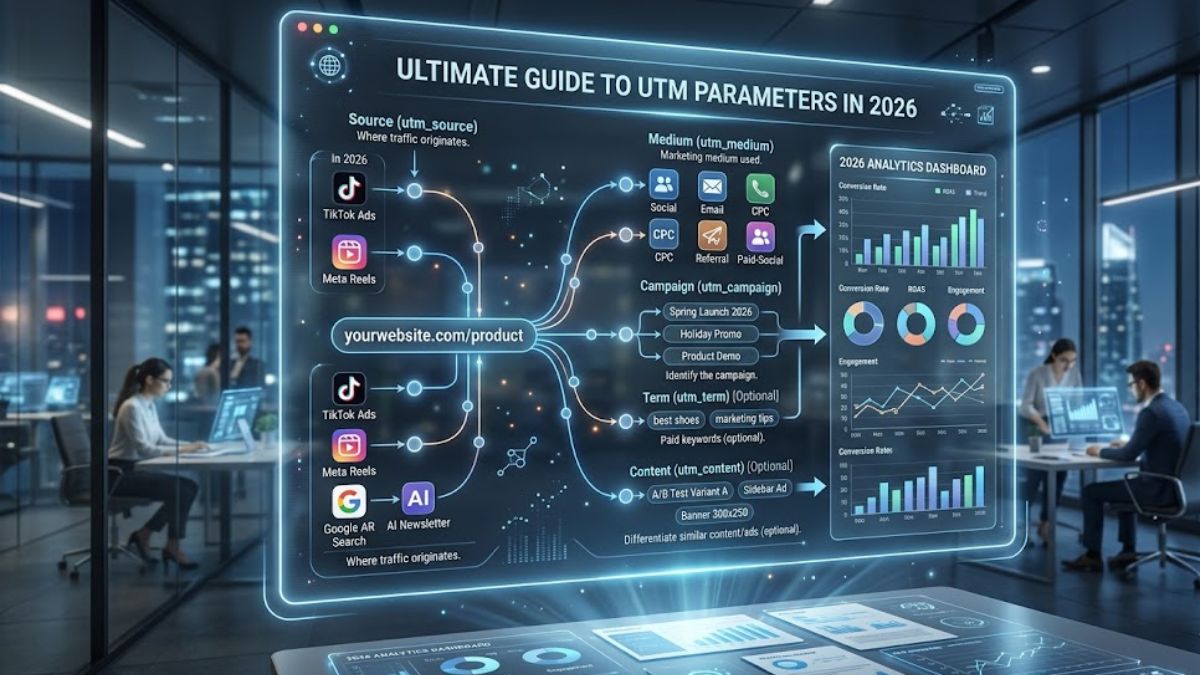
Now let’s break this down in a way that actually sticks. Every UTM link has a structure, and once you understand it, it’s surprisingly simple. You’ve got utm_source, which tells you where the traffic is coming from. Instagram, Google, YouTube, whatever platform you’re using. Then there’s utm_medium, which explains the type of traffic. Maybe it’s social, maybe it’s email, maybe it’s an influencer collaboration.
Then comes utm_campaign, which is where you name your campaign. This is where things get interesting, because this is how you group your efforts. Running a festive sale? Launching a new product? This is where you track it. And if you want to go deeper, you’ve got utm_content for variations and utm_term for keywords. At first, it might feel like a lot. But once you use it a few times, it becomes second nature. And the insights you get from Google Analytics campaign tracking make the effort worth it.
2.2 Real Example
Let’s make this real. Say you’re running an influencer campaign on Instagram. You’ve partnered with a creator, and they’re promoting your product through stories or posts. Now, instead of giving them a plain link, you give them something like:

Amplify Your Brand,
One Influence at a Time.
example.com?utm_source=instagram&utm_medium=influencer&utm_campaign=summer_sale
Now when someone clicks that link, you don’t just see traffic. You see Instagram traffic, coming through an influencer, tied to your summer sale campaign. That’s powerful. And here’s where it gets even better. If you’re working with multiple influencers, you can tweak the links slightly for each one. Now you’re not just tracking a campaign, you’re tracking individual performance. Who’s driving clicks, who’s driving conversions, who’s just bringing views. That’s the kind of insight campaign URL tracking tags were built for.
3. Why UTM Parameters in 2026 Are a Game-Changer
3.1 Data-Driven Marketing Growth
There’s a noticeable shift happening in marketing. Decisions are no longer based on assumptions or trends alone. They’re backed by data. And not vague data, but specific, actionable insights. Studies have shown that brands using campaign tracking tools often see significantly better ROI. And it makes sense. When you know what’s working, you double down on it. When you know what’s not, you stop wasting money on it. Simple. With UTM Parameters in 2026, this becomes easier to execute. You can identify which influencer is actually bringing results, which platform deserves more budget, which campaign should be scaled. It’s not about doing more, it’s about doing what works. And that shift alone can change your entire growth trajectory.
3.2 Influence on UGC and Influencer Marketing
Now let’s talk about something that’s dominating right now, UGC Videos and influencer content. These formats are performing better than traditional ads, and people trust them more. But here’s the catch. Just because something gets engagement doesn’t mean it drives results.
That’s where tracking becomes essential. When you’re working with famous Instagram influencers, every link matters. Every click tells you something. Did the audience just watch, or did they act? Did they engage, or did they convert? Using Instagram UTM tracking links, you can finally connect the dots. You’re not just seeing likes and comments, you’re seeing actual impact. And once you start measuring that, your entire influencer strategy becomes sharper, more intentional, and far more effective.
4. How to Create UTM Links (Step-by-Step)
4.1 Using UTM Builder Tools
If you’re thinking this sounds complicated, it’s really not. You don’t have to build these links manually. There are tools that make the process incredibly simple. The Google Campaign URL Builder is one of the easiest ways to get started. You just enter your details, and it generates the link for you. Tools like Bitly also help by shortening those long URLs, making them cleaner and easier to share. What I like about these tools is that they remove friction. You don’t need to remember formats or worry about mistakes. You just focus on what you want to track, and the tool handles the rest.
4.2 Step-by-Step Process
Here’s how it usually goes in real life. You start with your website link, the page you want people to land on. Then you add your source, maybe Instagram, maybe YouTube. After that, you define your medium, like social or influencer. Then comes your campaign name, something that helps you identify the purpose of the link.
Once you fill in these details, the tool generates a UTM link. That’s it. You share that link in your campaign, whether it’s through ads, influencers, or emails. And from that point on, every click is tracked. Over time, these small actions start building a bigger picture. You begin to see patterns. What works, what doesn’t, where to focus. And that’s when you realize, UTM tracking isn’t just a technical step. It’s one of the smartest habits you can build as a marketer.
5. Google Analytics 4 UTM Setup Explained
5.1 Transition from Universal Analytics
If you’ve been in marketing for a while, you probably remember Universal Analytics. It felt familiar, predictable… almost comfortable. Then GA4 came in and, honestly, a lot of people were confused at first. The interface changed, the logic changed, even the way data was tracked felt different. It wasn’t just an update, it was a complete shift in how we look at user behavior.
At first, it can feel like you’ve lost control. Things you used to find easily now take effort. But once you spend time with it, you start noticing something important. It’s actually closer to how users behave today. People don’t just visit websites anymore, they move between apps, devices, platforms. And that’s exactly what Google Analytics 4 UTM setup is built for. It adapts to that messy, real-world journey instead of forcing everything into a neat, outdated structure.
5.2 Key Features
The biggest change with GA4 is how it thinks. Instead of sessions and pageviews being the center of everything, it focuses on events. Every action, every click, every interaction becomes a piece of the story. And when you combine that with UTM tracking explained concepts, things start getting really interesting.
Then there’s cross-platform tracking. Someone might discover your brand on Instagram, click a link, visit your website, then come back later through a different device. Earlier, this journey would feel broken. Now, GA4 connects those dots more effectively. Add improved attribution into the mix, and you’re no longer guessing which touchpoint mattered most. You’re seeing the journey unfold in a much more realistic way. It’s not perfect, but it’s definitely closer to the truth than what we had before.
5.3 Why It Matters
Here’s the thing. Marketing today is rarely linear. People don’t just click and buy. They explore, compare, leave, come back, get distracted, return again. It’s messy. And if your tracking system can’t handle that complexity, your data will always feel incomplete.
That’s why GA4 matters. It’s built for this kind of behavior. Reports even suggest it improves cross-device tracking accuracy by a noticeable margin, and you can feel that difference when you actually use it. When you’re trying to track marketing campaigns online, especially across multiple platforms, that extra layer of accuracy helps you make better decisions. Not perfect ones, but definitely smarter ones.
6. UTM Best Practices 2026 You Must Follow
6.1 Consistency is Key
This might sound simple, but it’s one of the most common mistakes people make. Inconsistency quietly ruins your data. You might not notice it at first, but over time, it creates confusion that’s hard to fix. For example, using “Instagram” in one campaign and “instagram” in another might seem harmless. But to your tracking system, those are two completely different sources. Suddenly, your data is split, and your reports don’t make sense. That’s why consistency is everything. Once you decide on a format, stick to it. It feels small, but it keeps your campaign URL tracking tags clean and reliable in the long run.
6.2 Keep It Clean
Let’s be honest, UTM links can get ugly. Long strings of text, multiple parameters… not exactly something you’d want to share openly. And if you’re not careful, they can look unprofessional too. That’s why keeping things clean matters. Use link shorteners when needed. Keep your naming simple and meaningful instead of stuffing too many details. A clean link is easier to manage, easier to share, and easier to trust. It doesn’t change the data, but it definitely improves how your campaigns feel on the surface.
6.3 Use Lowercase
This is one of those small habits that saves you from big headaches later. Always stick to lowercase. No exceptions. Because the moment you mix uppercase and lowercase, your data starts splitting again. It’s frustrating because it’s avoidable. And yet, it happens all the time. Following simple UTM best practices 2026 like this might not feel exciting, but they protect the quality of your data. And without clean data, even the best strategies fall apart.
7. Instagram UTM Tracking Links for Influencers
7.1 Why Instagram Needs UTMs
Instagram is great for engagement, but when it comes to link tracking, it’s limited. You can see views, likes, maybe some interactions… but when it comes to understanding what happens after someone clicks your link, things get vague. That’s where Instagram UTM tracking links step in. They fill that gap. Instead of just knowing that someone clicked, you know exactly where that click came from. Which story, which influencer, which campaign. It turns a blurry picture into something much clearer.
7.2 Influencer Campaign Use Case
Now imagine you’re working with multiple creators at the same time. Maybe five influencers are promoting your product. Without UTMs, all you see is traffic. You don’t know who actually delivered results. But once you assign each influencer a unique UTM link, everything changes. You can measure performance individually. You can see who drives clicks, who drives conversions, and who just brings visibility. And that insight is powerful. Especially when you’re working with top influencers in India and managing budgets that need to show results. It helps you make better decisions, not just for one campaign, but for future collaborations too.
8. UTM Parameters in Influencer Marketing and AI UGC
8.1 Rise of AI Influencer Marketing
Things are changing fast. AI influencers, AI-generated content, automated creatives… what once felt experimental is now becoming part of everyday campaigns. And honestly, it’s both exciting and a little overwhelming at the same time. AI influencer marketing is growing because it offers scale and consistency. Brands can create content faster, test more variations, and reach audiences in new ways. But with that speed comes a new challenge. How do you track what’s actually working when everything is moving so quickly?
8.2 Role of UTMs
This is where UTM Parameters in 2026 quietly hold everything together. Whether the content is created by a human or generated through AI UGC, the need for tracking doesn’t change. If anything, it becomes even more important.
UTMs give you that anchor. They ensure accurate attribution, so you know which campaign, which variation, which creator, or even which AI-generated asset is performing. They help you track ROI without relying on assumptions. And most importantly, they allow you to optimize. Because in the end, whether it’s traditional influencer marketing or AI-driven campaigns, the goal is the same. Understand what works, improve what doesn’t, and keep moving forward with clarity instead of guesswork.
9. Common Mistakes to Avoid in UTM Tracking
9.1 Not Using UTMs
You’d be surprised how many campaigns still run without UTMs. Everything looks fine on the surface, traffic is coming in, maybe even sales are happening. But when someone asks the obvious question, “Where exactly did this come from?”… silence. Or worse, guesswork.
Skipping UTMs is like running a race with your eyes half-closed. You might move forward, but you have no idea what’s actually working. I’ve seen brands spend thousands on influencer campaigns and then struggle to prove which creator delivered results. Not because the campaign failed, but because it wasn’t tracked properly. That’s the frustrating part. The opportunity was there, the data was there, but it was never captured.
9.2 Inconsistent Naming
This one is subtle, but it can quietly destroy your data. You think you’re tracking everything properly, but when you open your reports, things don’t add up. Numbers are scattered, sources look duplicated, and suddenly your insights feel unreliable.
Most of the time, the issue is simple. Inconsistent naming. Maybe you used “instagram” in one campaign and “Instagram” in another. Or “influencer_campaign” in one place and “influencer-campaign” somewhere else. These small differences confuse your Google Analytics campaign tracking system. It treats them as separate entries, and your data gets fragmented. It doesn’t break immediately, but over time, it becomes messy enough to affect your decisions.
9.3 Ignoring Data
Tracking without analysis is honestly one of the biggest wasted efforts in marketing. You set up everything correctly, your UTM links are working, data is flowing in… and then you don’t look at it. Or you look at it once and move on. The real value of tracking comes from what you do after the data is collected. Patterns start showing up. Some campaigns consistently perform better. Some influencers bring engagement but no conversions. Some platforms look strong but don’t actually deliver results. If you ignore these signals, you’re basically choosing to stay blind. And in a space as competitive as digital marketing, that’s a risk you can’t afford.
10. Real Data Insights You Should Know
Let’s pause and look at what the numbers are actually saying, because they tell a story most people underestimate. Around 76% of marketers say that proper data tracking improves ROI. That’s not a small margin, that’s a clear shift in how decisions are being made today.
In India, things are moving even faster. Reports suggest that over 60% of brands have increased their influencer marketing budgets. That’s a lot of money flowing into campaigns that need to be measured properly. At the same time, UGC content is driving significantly higher engagement compared to traditional formats. Not just slightly higher, but multiple times more. And with tools like GA4 improving tracking accuracy, the gap between guessing and knowing is getting wider. Add to that the fact that influencer marketing still delivers strong returns per rupee spent, and the picture becomes clear. If you’re not using UTM Parameters in 2026, you’re missing the layer that connects all of this together.
11. Advanced Use Cases of UTM Parameters
11.1 Multi-Channel Campaigns
Modern campaigns rarely live on one platform. You’re running ads on Instagram, collaborating on YouTube, maybe pushing email campaigns at the same time. It’s a mix. And without proper tracking, everything blends into one confusing pool of traffic. UTMs bring structure to that chaos. You can compare Instagram vs YouTube performance directly. You can see how influencer campaigns stack up against paid ads. And sometimes, the results surprise you. Platforms you thought were strong might underperform, while quieter channels deliver better conversions. That’s the kind of insight you only get when everything is tracked properly.
11.2 A/B Testing
Here’s where things start getting a bit more strategic. Instead of running one version of a campaign, you test multiple variations. Different creatives, different captions, different calls to action. By assigning unique UTMs to each version, you’re not guessing which one worked better. You’re seeing it clearly in your data. One variation might bring more clicks, another might bring better conversions. And once you spot that difference, you can adjust quickly. It’s a small shift in approach, but it makes your campaigns feel more controlled and less experimental.
11.3 Funnel Tracking
Not every click leads to a purchase immediately. People explore, compare, leave, and come back later. That journey matters. And UTMs help you track it more clearly. You can see where a user entered your funnel, what campaign brought them in, and how they moved through the process. Maybe an influencer drove the first click, but a retargeting ad closed the sale. Without tracking, you’d miss that connection. With UTMs, you start understanding the full journey, not just isolated moments.
12. UTM Parameters and Personal Branding
If you’re trying to build yourself as a creator or figure out how to become an influencer, UTMs can quietly become your biggest advantage. Most creators focus on content, which is important. But very few focus on proving their impact. When you can show real numbers, clicks, conversions, engagement tied to specific campaigns, you instantly stand out. Brands don’t just see you as a creator anymore. They see you as someone who understands performance. That builds trust. And trust often leads to better deals, long-term collaborations, and higher earnings. It’s not just about growing your audience, it’s about showing your value clearly.
13. The Whole Truth About Campaign Tracking
Let’s strip this down to the basics. Campaign tracking isn’t really about links or parameters. It’s about understanding what’s actually happening behind your efforts. Numbers alone don’t mean much if you don’t interpret them. But when you start connecting the dots, something changes. You begin to see patterns. What works consistently, what fails repeatedly, where your audience responds, where they lose interest. That’s the real power of campaign URL tracking tags. They don’t just give you data, they give you direction. And once you have direction, your decisions become sharper, more confident.
14. Conclusion: Key Learnings and Summary
14.1 Key Takeaways
If you’ve made it this far, you’ve probably realized one thing. UTM Parameters in 2026 are not just a technical detail you can ignore. They’re the foundation of understanding your marketing. They help you track where your traffic comes from, measure campaign performance, and make sense of your efforts across platforms. Tools make it easy to create links, best practices keep your data clean, and systems like GA4 help you see the bigger picture. When you apply this to influencer campaigns using Instagram UTM tracking links, the clarity becomes even more valuable.
But beyond all the tools and techniques, there’s a bigger takeaway. Growth in digital marketing doesn’t come from doing more. It comes from understanding what works and doing more of that. And if you’re not tracking properly, you’re always one step behind that understanding. So if you’re serious about growing, whether as a brand, a marketer, or a creator, mastering UTM Parameters in 2026 isn’t optional anymore. It’s one of those skills that quietly sits in the background… but changes everything once you start using it right.
Frequently Asked Questions
What are UTM parameters?
UTM parameters are tags added to URLs. They help track traffic sources. This improves campaign analysis.
How to create UTM links?
You can use UTM builder tools. Add source, medium, and campaign details.
Why are UTMs important?
They help track marketing campaigns online. This improves ROI and decision-making.
What is GA4 UTM setup?
Google Analytics 4 UTM setup allows better event tracking and attribution.
Can influencers use UTM links?
Yes. Instagram UTM tracking links help measure influencer performance.
About Hobo.Video
Hobo.Video is India’s leading AI-powered influencer marketing and UGC company. With over 2.25 million creators, it offers end-to-end campaign management designed for brand growth. The platform combines AI and human strategy for maximum ROI.
Services include:
- Influencer marketing
- UGC content creation
- Celebrity endorsements
- Product feedback and testing
- Marketplace and seller reputation management
- Regional and niche influencer campaigns
Trusted by top brands like Himalaya, Wipro, Symphony, Baidyanath and the Good Glamm Group.
Great brands don’t grow by playing safe. They grow by choosing the right partners. Ready to scale? We’re just a click away.
If you’re an influencer ready to work with brands that match your vibe, start here.

 Ankita Saha
 Neeti Katyal
 Aqsa Pathan