
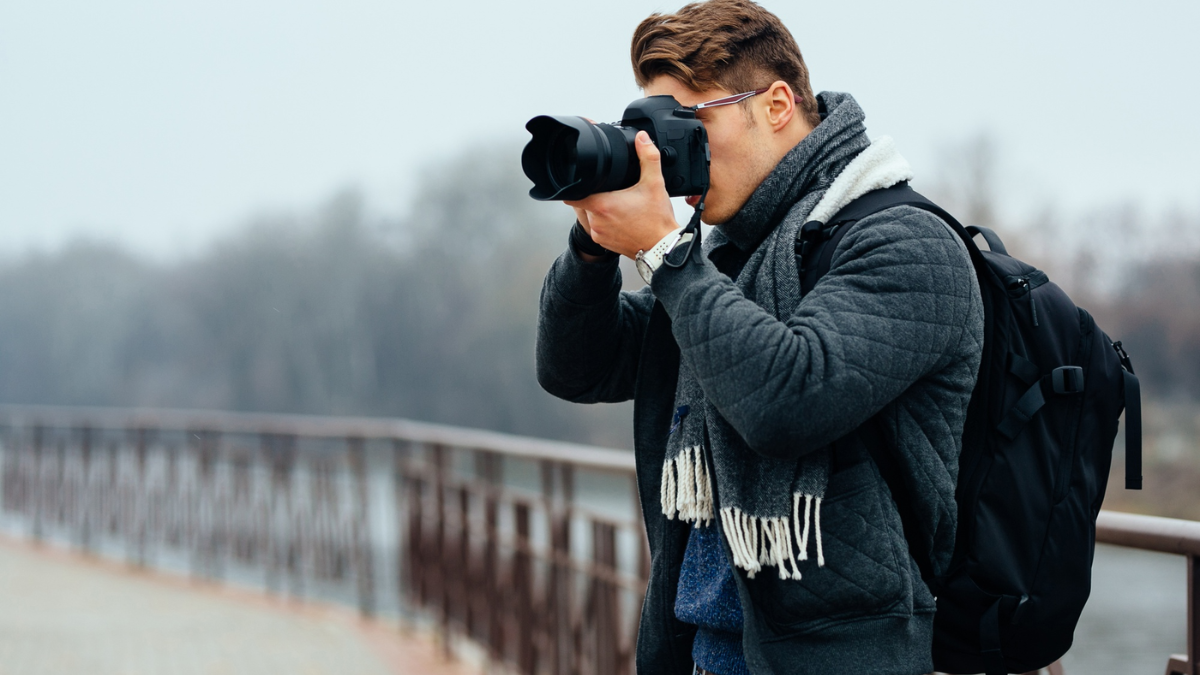
Photography is a rare, visceral medium. A single frame shatters our illusions. For decades, critics obsessed over a personal question. Who is the best photographer in the world? The title is not a fixed metric. The crown shifts with your personal bias. You might favor technical wizardry. Others prefer emotional storytelling or cultural disruption.
What you are reading right now is explicitly not another mindless, clickbait ranking list compiled by a cold algorithm. This is an opinionated dissection of 25 legendary image-makers. We look at ancient titans and modern renegades. This helps you discover who is the best photographer in the world. Soon, you will clearly see the dividing line. You will separate competent camera operators from true masters.
- 1. What Makes the Best Photographer in the World?
- 2. Top 25 Best Photographers in the World: Legendary Masters
- 3. The Best Photographer in the World: Modern Legends of 2026
- 4. Legendary Photographers You Must Know About in 2026
- 5. How to Become an Influencer Through Photography in 2026
- 6. Who Is the Best Photographer in the World? A Final Word
- Conclusion
- About Hobo.Video
1. What Makes the Best Photographer in the World?
1.1 The Criteria Behind This List
Before we start flinging the word “best” around like cheap confetti, we need to strip away the industry fluff and establish some hard, unapologetic ground rules. Excellence isn’t an accident, nor is it a byproduct of owning an expensive piece of glass. How do we actually separate the geniuses from the hobbyists? The individuals who genuinely alter the trajectory of this medium are evaluated through a punishing crucible of five core realities:
Cultural Disruption
Did their frames actually force a society to look at its own ugliness, shift political policies, or completely encapsulate the spirit of an entire generation? Take a second to think about photos that stopped wars or altered elections, that is the level of impact we are talking about here.
Technical Rebellion
Did they pioneer a technical methodology or manipulate light in a way that forced everyone else to rewrite the textbooks? It’s not about memorizing settings; it’s about breaking the camera’s built-in limitations to show something the human eye can’t naturally see.
Creative Lineage
When you talk to the contemporary greats, is this the name they utter with a sense of quiet reverence? True masters create a ripple effect, spawning generations of copycats and disciples who carry their stylistic torch forward.
Institutional Verification
Have their prints stood the test of major global exhibitions, historic archives, and the most unforgiving critical eyes on the planet? Getting a nod from a local gallery is fine, but surviving the scrutiny of the world’s most elite curators is an entirely different beast.

Amplify Your Brand,
One Influence at a Time.
Temporal Hardiness
Does the work still feel urgent, dangerous, or profoundly beautiful decades after the shutter clicked? If an image loses its power the second the news cycle moves on, it isn’t legendary; it’s just old news.
Let’s be real, stumbling into one or two of these achievements happens to anyone with decent timing. But ticking all five? That is where the mortals separate from the myths. The 25 individuals profiled below haven’t just met these standards; they carved them into stone. No single person can sit on the absolute throne without provoking a fierce debate in a dark bar somewhere, but every single soul on this list has earned their right to dictate the terms of that argument.
1.2 How Photography Has Evolved in 2026
This is an opinionated dissection of 25 legendary image-makers. We look at ancient titans and modern renegades. This helps you discover who is the best photographer in the world. Soon, you will clearly see the dividing line. You will separate competent camera operators from true masters.
So, how do you actually make someone stop scrolling? How do you make an image stick to the ribs of a culture when people are exposed to thousands of visual inputs a day? The answer isn’t a higher megapixel count, a more expensive mirrorless body, or a better editing preset. It requires a fiercely unapologetic, distinct human perspective, a point of view so raw, flawed, and intentionally messy that no cold algorithm or predictive AI model can simulate its soul. The photographers who matter right now understand this deeply. They don’t just record light; they inject their own DNA into the frame. That is why they are here, and that is why they survive.
2. Top 25 Best Photographers in the World: Legendary Masters
The titans in this section are the architects of the craft. Their prints aren’t just hung in galleries; they are woven into the very fabric of human history. If you’ve ever picked up a camera, you are operating within a house that these masters built.
2.1 Henri Cartier-Bresson: The Father of Modern Photojournalism
Want raw, unmanipulated street truth? You must start with Henri Cartier-Bresson. Born in France in 1908, he breathed life into photojournalism. He pioneered a brilliant philosophy called “the decisive moment.” This is a fleeting, hyper-specific microsecond. Here, composition, light, and emotion perfectly collide. This core idea permanently altered how we document reality. Cartier-Bresson was never a passive observer. Instead, he hunted split-second truths like a shadow. In 1947, he co-founded Magnum Photos alongside Robert Capa. They built an independent, fierce sanctuary for documentary storytellers. That legendary institution remains completely unparalleled to this day.
Study his iconic masterwork, Behind the Gare Saint-Lazare (1932). You see a man jumping over a puddle. Yet, it is more than that. It is a flawless alignment of geometry and time. People still try to replicate it daily. Have you tried capturing someone in mid-air? It is brutal. You often blur the frame or ruin the background. Cartier-Bresson operated entirely like a ghost. He used a modest 35mm Leica camera. And, he even covered the shiny chrome bits with black tape. He relied purely on available, natural light. His seminal text is called The Decisive Moment. It is not a dusty textbook. Instead, it is a sacred guide to being awake.
2.2 Ansel Adams: Master of Landscape and Light
Ansel Adams did not just photograph mountains. He gave the wilderness an epic, mythic voice. He captured monumental, high-contrast black-and-white exposures. His images focused deeply on Yosemite National Park. These frames did something truly extraordinary. They shook the political conscience of an entire nation. His work directly catalyzed the preservation of those lands. He was awarded the Presidential Medal of Freedom in 1980. This was not a nod to a nice hobby. It recognized that his art altered environmental policy. Think about that achievement for a moment. His eye literally protected millions of acres of land.
Alongside Fred Archer, Adams codified the Zone System. This is a meticulously precise technical framework. It allows photographers to map out exact tonal relationships. You balance the deepest shadows and most brilliant highlights. This happens before the shutter even clicks. His enduring cultural footprint is staggering. A casual Amazon search pulls down over 5,600 results. These items span monographs to technical guides. Adams fought tooth and nail for the medium. He elevated photography out of the shadow of painting. Secondly, he proved a print could be fine art. He was a unique scientist and activist. He was a romantic poet with a view camera.
2.3 Steve McCurry: The Human Face of Photojournalism
Steve McCurry’s lens possesses an almost uncanny, unsettling ability to strip away geopolitical abstractions and force you to look directly into the eyes of our shared humanity. Think about his historic masterwork, Afghan Girl (1984). When that portrait of Sharbat Gula, with her searing, emerald-green eyes, burned through the cover of National Geographic in June 1985, it didn’t just report on a refugee crisis, it broke the heart of the Western world. For over forty relentless years, McCurry has walked through active war zones, collapsing states, and forgotten trade routes across Asia and the Middle East.
As a heavyweight pillar of Magnum Photos, his signature style relies on a lush, unapologetic use of color that somehow makes the bleakest realities feel intimately close. He doesn’t look at a conflict zone and see statistics; he sees a child’s face covered in dust, or a worker pausing amidst chaos. His commitment isn’t just aesthetic, either; in 2004, he founded ImagineAsia, directly funding educational resources for young girls in Afghanistan. His images exist in that beautiful, aching territory where fine art travel photography crashes headfirst into raw, unvarnished war correspondence.
2.4 Annie Leibovitz: Portrait Photographer Extraordinaire
Annie Leibovitz is, without a single shred of hyperbole, the definitive visual chronicler of modern celebrity culture. From her early, wild days capturing the counter-culture explosion at Rolling Stone to her decades orchestrating the theatrical, high-fashion covers of Vanity Fair, she has shaped the iconography of fame. Her devastating portrait of John Lennon, curled naked like an embryo around a fully clothed Yoko Ono, shot mere hours before his brutal murder in December 1980, is an absolute masterpiece of psychological intimacy and tragic timing.
Leibovitz’s trademark style is intensely theatrical, wildly cinematic, and grandly romantic. She treats celebrities not as passive subjects, but as mythic figures in a larger-than-life narrative, yet she always manages to leave a tiny, vulnerable crack in their armor. Her influence shows no signs of slowing down; in 2025, she established a major grant program explicitly designed to fund and mentor the next wave of radical portraitists. The global arts community consistently places her at the absolute top of the food chain because her work doesn’t just reflect culture, it creates it.
2.5 Sebastião Salgado: Photography as Social Conscience
Sebastião Salgado is an absolute force of nature. His epic, operatic black-and-white documentary projects carry monumental weight. He created massive visual trilogies titled Workers, Migrations, and Genesis. These were definitely not quick weekend shoots. Instead, they were brutal, multi-year odysseys. Salgado embedded himself deeply within global migratory patterns. He explored industrial hellscapes and untouched wildernesses across 120 countries. Salgado sadly left this world in May 2025 at age 81. The creative community lost a legendary, irreplaceable eye. We also lost a vital piece of our shared global conscience. His actions away from the viewfinder made him a mythic figure. Salgado routinely put his camera down to make a tangible difference.
He witnessed devastating ecological ruin worldwide. This distress drove him and his wife Lélia to action. Together, they proudly founded the inspiring Instituto Terra. This monumental reforestation project successfully brought Brazil’s decimated Atlantic Forest back from the dead. They painstakingly planted over 2.7 million native trees. Meanwhile, his staggering, historic images remain entirely unforgettable. He captured thousands of mud-soaked gold miners climbing out of Serra Pelada. The frantic, desperate scenes look just like Dante’s Inferno. Salgado never exploited human suffering for a simple gallery wall. He immortalized our collective global struggles with a profound, sacred dignity.
2.6 Dorothea Lange: Photography That Changed Policy
Dorothea Lange understood a fundamental truth. A camera can be a devastatingly effective political weapon. Many modern creators forget this reality. During the 1930s Great Depression, economic collapse ruined lives. The federal Farm Security Administration hired Lange to document this human collateral. Her defining masterpiece is titled Migrant Mother (1936). It depicts Florence Owens Thompson staring blankly into an uncertain future. Her young children huddle tightly against her shoulders.
This single frame moved the political needle. It achieved more than a thousand congressional reports. The visceral outrage sparked by that photo forced a government response. The United States immediately sent emergency food and medical aid. This critical relief went directly to starving migrant camps. Lange’s brilliant methodology was completely rooted in radical empathy. She spent hours talking directly to her vulnerable subjects. She earned their trust before ever unboxing her heavy camera gear. Her stark, unsparing images beautifully humanized the dry statistics of poverty. She left behind an immutable blueprint for social documentary photography. Serious journalism schools across the globe still dissect her historic work today.
2.7 Robert Capa: War Photography at Its Most Courageous
If your images lack teeth, you are simply standing too far away. That was the fierce, uncompromising dogma of Robert Capa, a man who lived and ultimately died by the sword of his own philosophy. Capa redefined the entire genre of conflict photojournalism during the Spanish Civil War and World War II, putting his body on the line to show the world the true, bloody face of fascism. He didn’t shoot from the safety of a press briefing; he crawled through the mud alongside the infantry.
His legendary exposures from the first wave of the 1944 D-Day invasion at Omaha Beach, the “Magnificent Eleven”, are frantically blurred, grain-heavy, and chaotic. They feel dangerously alive precisely because the man holding the camera was dodging machine-gun fire. His meteoric, high-stakes career came to a sudden, tragic end in 1954 when he stepped on a landmine while covering the First Indochina War in Vietnam at age 40. He left behind a legacy of absolute fearlessness that continues to haunt and inspire every combat photographer who dares to pack a bag and head toward the gunfire.
2.8 Richard Avedon: Fashion Photography as Fine Art
Richard Avedon took the stiff, aristocratic world of mid-century fashion photography, smashed its windows, and let the real world scream through. His work for Harper’s Bazaar and Vogue shattered the traditional mold by demanding that models actually move, laugh, show anger, and possess an explicit psychological presence. He stripped away the ornate, distracting backdrops, opting instead for a stark, clinical white seamless paper that forced the viewer to confront the raw essence of the human form.
But if you think he was just a commercial fashion guy, you don’t know his work. His magnum opus, In the American West (1985–1986), is a monumentally powerful documentary project. He spent five years photographing drifters, coal miners, mental patients, and oil field workers against that same unforgiving white background, treating their weathered faces with the exact same mythic grandeur he afforded to heads of state and Hollywood royalty. His career is a masterclass in how to fuse commercial slickness with profound, unsettling fine art depth.
2.9 Yousuf Karsh: Portraits of the 20th Century’s Greatest Figures
Yousuf Karsh didn’t just take portraits of the people who shaped the twentieth century, he defined how history would remember their faces. His legendary 1941 portrait of Winston Churchill is perhaps the most famous example of creative audacity in history: frustrated by Churchill’s stubborn refusal to put down his cigar, Karsh literally walked up, snatched the tobacco straight out of the Prime Minister’s mouth, and stepped back to click the shutter just as Churchill glared at him in a state of absolute, thunderous fury. That frame became the definitive visual symbol of wartime British defiance.
Karsh’s mastery of dramatic, theatrical lighting, often utilizing deep shadows and crisp, focused highlights to emphasize the rugged contours of a hand or the lines of a forehead, allowed him to peel back the public mask of his sitters. From Albert Einstein and Martin Luther King Jr. to Ernest Hemingway, his subjects feel monumentally statuesque, frozen in time not as mere celebrities, but as living monuments of human achievement.
2.10 Diane Arbus: Documenting the Margins
Diane Arbus took her camera and deliberately walked directly into the shadows where respectable mid-century society refused to look. She rejected the sanitized, suburban perfection of post-war America, turning her lens instead toward giants, carnies, nudists, transgender individuals, and marginalized souls living on the fringes of urban existence. There is an absolute lack of pity or cheap sentimentality in her square-format Rolleiflex prints; she didn’t look down on her subjects, nor did she romanticize them.
Her landmark exhibitions at the Museum of Modern Art in New York sent shockwaves through the art establishment, permanently redefining what could be considered a worthy subject for fine art photography. Arbus didn’t seek out easy comfort or conventional beauty; she hunted for the bizarre, haunting truths of the human condition, forcing us to recognize that the line between the “normal” world and the bizarre is terrifyingly thin.
3. The Best Photographer in the World: Modern Legends of 2026
3.1 Citlali Fabián: 2026 Sony World Photography Award Winner
Oaxacan visual storyteller Citlali Fabián has taken the international art world by storm, capturing the top prize as Photographer of the Year at the 2026 Sony World Photography Awards. Her profound, long-term documentary series, Bilha, Stories of my Sisters, defeated an unbelievable field of global entries by exploring identity, resilience, and real-world indigenous activism across southern Mexico.
Fabián relies on a highly collaborative, deeply intimate visual approach that blends traditional film mechanics with modern mixed-media storytelling. She doesn’t just stand behind a lens taking snapshots of an unfamiliar community; she works alongside her subjects to turn personal history into a living testament. Her portraits contain an emotional complexity that cuts straight through the hyper-polished, shallow streams of the digital era, proving that slow, deeply felt human narratives still hold unrivaled artistic power.
3.2 Nick Brandt: Wildlife Photography for the Climate Emergency
Nick Brandt does not make pretty pictures of animals for living room walls. He shoots wildlife through the lens of an activist watching a house burn down. Operating entirely with medium-format film and stubbornly refusing to use telephoto lenses, Brandt embeds himself in the East African landscape for weeks on end, waiting until an elephant or a lion stands mere feet away from his lens. The resulting images aren’t distant nature documentaries, they are intimate, haunting portraits of sentient beings facing structural extinction.
His heartbreaking series, The Day May Break, takes this narrative further by positioning displaced humans and rescued animals inside the same frame, set against landscapes devastated by climate collapse. Through his organization, the Big Life Foundation, Brandt has put his money where his mouth is, actively funding the protection of over two million acres of the East African ecosystem. His recent project, SINK / RISE, which documents South Pacific Islanders standing underwater on the ocean floor to symbolize the existential threat of rising sea levels, was executed entirely in-camera without a single pixel of Photoshop trickery. He is a master of truth in an era of digital fabrication.
3.3 Andreas Gursky: Architecture of the Contemporary World
If you want to see what global capitalism actually looks like from a bird’s-eye view, you look at Andreas Gursky. The German master is legendary for his gargantuan, hyper-detailed prints that capture the dizzying, repetitive structures of our post-industrial reality. He holds an almost mythical status in the art market, his sweeping canvas Rhine II famously fetched a staggering £2.7 million at auction, securing its place as one of the most expensive photographic prints ever sold into private hands.
Gursky looks at the world through a cold, structural lens. Whether he is capturing the chaotic, neon-drenched trading floor of a stock exchange, the infinite rows of an Amazon fulfillment center, or a massive housing block in Hong Kong, he uses digital manipulation not to lie, but to emphasize the terrifying, sublime scale of human organization. His work strips away individual human identity to reveal the massive, overwhelming macro-systems that dictate modern existence.
3.4 Rinko Kawauchi: The Quiet Genius of Everyday Beauty
Modern culture screams for attention with loud colors and shock value. Japanese master Rinko Kawauchi does the exact opposite. She whispers and exploded onto the global stage in 2001. Her seminal photobook is titled Utatane. This single release completely revolutionized contemporary fine art photography. She uses a poetic, fragments-of-life approach. She finds magic in the completely ordinary.
Kawauchi operates almost exclusively with soft, overexposed natural light, delicate color palettes, and a square-format aesthetic that feels less like a document and more like a half-remembered dream. She can point her camera at something completely mundane, a tiny sparrow pecking at a stray grain of rice, the iridescent shimmer of a soap bubble, or a child’s skin, and somehow imbue it with a deep, existential weight. Her work is a vital antidote to our collective digital sensory overload, reminding us that the most profound truths are usually hiding in the quiet spaces between moments.
3.5 Peter Lindbergh: The Anti-Retouching Rebel of Fashion
The late, legendary German fashion photographer Peter Lindbergh (1944–2019) was a radical iconoclast who spent his entire career waging an absolute war against the artificial, plastic perfection of the commercial beauty industry. In an environment completely obsessed with airbrushing, he took an unyielding, historic stand: he openly mandated that major fashion glossies sign legal contracts explicitly forbidding them from digitally altering or retouching a single pixel of his images.
Lindbergh shot the defining faces of the supermodel era for Italian Vogue and Harper’s Bazaar, yet he chose to capture them in stark, high-contrast black-and-white, often under harsh grey skies or inside industrial warehouses. He famously stated that a photographer’s duty is to free women, and all subjects, from the terror of perfection and youth. In 2026, as our social media feeds are completely choked with AI face-filters and hyper-sanitized digital faces, his raw, unvarnished celebrations of laugh lines, stray hairs, and authentic human skin feel less like fashion and more like an act of political resistance.
3.6 James Nachtwey: Five-Time Robert Capa Gold Medal Winner
James Nachtwey is, without a single shred of hyperbole, one of the most decorated and profoundly respected conflict photojournalists to ever pack a camera bag. He has been awarded the coveted Robert Capa Gold Medal an unprecedented five times, a testament to a lifetime spent walking directly into the jaw of human suffering. From the apocalyptic famine zones of Somalia and the genocidal horror of Rwanda to the literal collapse of the World Trade Center towers on 9/11, Nachtwey has dedicated forty years to bearing witness to things most people would close their eyes to.
His images are notoriously difficult to look at; they are raw, graphically uncompromising, and heavy with human grief. Yet, they are never exploitative. Nachtwey operates with a deep, solemn sense of moral purpose, explicitly stating that his images are designed to act as an intervention against human indifference. His recent, exhausting documentation of the American opioid epidemic proves that his camera remains just as sharp, vital, and necessary today as it was at the height of the Cold War.
3.7 Cristina de Middel: Reimagining Documentary Photography
Spanish creative powerhouse and prominent leader within Magnum Photos, Cristina de Middel is currently leading a radical charge to completely tear down and rebuild the traditional boundaries of documentary storytelling. She exploded into the international art consciousness with her groundbreaking 2012 project, The Afronauts, which creatively reconstructed the forgotten, eccentric history of Zambia’s short-lived space program in the 1960s through a mix of staged imagery, archival play, and surreal design.
De Middel openly rejects the myth of absolute photographic objectivity. She understands that the camera can lie just as easily as the pen, so she uses costumes, collaborative street performances, and stylized sets to expose deeper, systemic cultural truths that standard photojournalism often misses. Her work has sparked an essential, highly charged global debate about what a photograph actually represents, securing her status as one of the most innovative visual artists working today.
3.8 Varun Aditya: India’s Most Acclaimed Wildlife Photographer
Varun Aditya has emerged as one of the most electrifying and technically gifted voices in modern nature photography, completely rewriting how the world views the rich biodiversity of the Indian subcontinent. While many international photographers focus exclusively on Africa’s megafauna, Aditya has spent years trailing through the dense, rain-soaked canopies of the Western Ghats, using his lens to elevate macro-level wildlife, rare frogs, camouflaged pit vipers, and shimmering insects, into breathtaking pieces of fine art.
His stunning use of shallow depth-of-field, dramatic backlighting, and moody atmosphere has earned him top-tier recognition across National Geographic and BBC Wildlife. Aditya’s work is an essential reminder that true wildlife mastery doesn’t require jetting off on an expensive safari; it requires the patience to sit in the mud of your own backyard for twelve hours straight until the hidden world decides to reveal its secrets.
4. Legendary Photographers You Must Know About in 2026
4.1 Robert Frank, Diane Arbus, and Walker Evans: The Documentary Trio
If you want to understand the raw, unvarnished roots of American social documentary photography, you have to grapple with the seismic legacy of this trio. Robert Frank’s seminal 1958 masterpiece, The Americans, completely shattered the sanitized, optimistic image of post-war America; his grainy, off-the-cuff, and often melancholic frames captured a nation wrestling with deep racial fractures, systemic loneliness, and consumerist isolation. Before him, Walker Evans spent the Great Depression crafting an entire, enduring visual vocabulary of American life, capturing the weathered faces of sharecroppers and the stark geometry of roadside architecture with an unforgettable clarity.
Together with Diane Arbus, these three iconoclasts fundamentally tore up the rulebook of polite, commercial imagery. They didn’t look for pretty compositions; they looked for raw human truth, no matter how uncomfortable or ugly it might be. Their collective imprint is so profound that you cannot walk through a contemporary art school or browse a major documentary festival without feeling their ghost in the room. They are the foundational bedrock upon which the entire tradition of modern visual storytelling stands.
4.2 Helmut Newton and Man Ray: Fashion and Surrealism
Helmut Newton and Man Ray represent two distinct, brilliant strands of creative rebellion that permanently blurred the lines between high fashion, fine art, and psychological subversion. Newton, a German-Australian titan, brought a dark, cinematic edge to the pages of Vogue and Playboy, using high-contrast lighting and subversive themes to challenge mid-century notions of sexuality and power. His work was dangerous, sleek, and fiercely unapologetic.
Man Ray, operating decades earlier within the Parisian Dada and Surrealist movements, chose to reinvent the physical process of image-making itself. He famously popularized “rayographs”, haunting, dream-like images created by placing physical objects directly onto light-sensitive paper inside the darkroom without ever using a traditional camera lens. These two iconoclasts are a vital reminder that the camera doesn’t have to be a passive recording device; it can be an instrument of absolute psychological distortion.
4.3 Ming Smith and Lee Miller: Breaking Barriers Through the Lens
Ming Smith and Lee Miller are two extraordinarily courageous visionaries who fought tooth and nail against deeply entrenched societal biases to capture some of the most vital historical imagery of the modern era. Smith made history as the first Black woman photographer to have her work acquired by the prestigious permanent collection of the Museum of Modern Art in New York. Her deeply moving street photography utilizes intentional motion blur, rich shadows, and a lyrical, jazz-infused aesthetic to explore the complex, beautiful nuances of Black community life in America.
Lee Miller, meanwhile, transitioned from a high-fashion model into one of the most fearless, uncompromising female combat correspondents of World War II. She marched directly alongside allied troops, documenting the terrors of the London Blitz, the bloody liberation of Paris, and the absolute psychological horror of the Dachau and Buchenwald concentration camps. Both of these women operated in professional spaces that were actively hostile to their presence, leaving behind a body of work that isn’t just historically priceless, it cleared a path for every marginalized storyteller who picks up a camera today.
5. How to Become an Influencer Through Photography in 2026
5.1 What Great Photographers Teach Aspiring Creators
If you trace the origins of any master on this list, you quickly realize that genius is rarely a straight line. Henri Cartier-Bresson spent years studying classical painting before he ever found his voice through a Leica shutter. Ansel Adams was a classically trained concert pianist before he abandoned the keys to lose himself in the high sierra light. Annie Leibovitz was just an art student with a cheap camera when she started pitching raw frames to a fledgling rock magazine. What can we learn from this? The lesson across every generation is unyielding: technical specs are completely useless without a clear, deeply held personal philosophy.
For creators looking to cut through the noise in the massive digital ecosystem, that historical lesson is your lifeline. The modern landscape is shifting fast; look at India, where Instagram’s active user base has surged past 500 million. According to comprehensive market data from Hobo.Video, the broader photography services market across the Indian subcontinent is projected to grow at a steady Compound Annual Growth Rate (CAGR) of 8.1% all the way through 2033. The raw commercial potential is absolutely massive, but the competition is brutal. If you want to build an audience that actually stays, you have to stop copying trends and start studying how the old masters built a visual language that survived centuries.
5.2 Famous Instagram Influencers and Photography as a Career
In 2026, the traditional wall separating elite fine-art photography from the world of digital influencer marketing has completely collapsed. The most successful visual storytellers on social media have realized that a highly engaged feed isn’t just a vanity project, it is a powerful commercial engine. Brands no longer want stiff, corporate stock photography; they are actively hunting for creators who can deliver authentic, lived-in narratives that feel real to a modern audience.
| Metric / Aspect | Market Reality (2026–2033) |
| Market Growth (India) | 8.1% CAGR projection via Custom Market Insights |
| Primary Brand Value | User-Generated Content (UGC) over polished stock shots |
| Core Digital Strategy | Hybrid distribution (Reels + Behind-the-Scenes + AI-matching) |
If you are trying to scale your creative practice into a sustainable career, you have to treat your digital distribution strategy with the exact same respect you give your lighting setups. This means mastering the art of behind-the-scenes video storytelling, leveraging high-fidelity User-Generated Content (UGC), and utilizing advanced platforms to get your portfolio directly in front of the right decision-makers. Top-tier creators aren’t sitting around waiting to be discovered by a traditional gallery; they are actively leveraging ecosystems like Hobo.Video to bridge the gap between pure artistic skill and high-paying brand campaigns.
5.3 Where to Start: Photography Influencer Marketing in India
For any emerging photographer or independent studio looking to turn their passion into a sustainable business, sitting back and waiting for organic reach is a slow death sentence. You need an active growth strategy. Modern brand building relies heavily on building deep, hyper-local community connections through targeted digital campaigns, behind-the-scenes content on YouTube, and authentic creator collaborations. How do you find the right brand without wasting months sending cold emails?
This is exactly where specialized networks like Hobo.Video completely change the game. As India’s premier AI-driven influencer marketing ecosystem, the platform completely removes the friction of old-school talent hunting by using predictive data matching to connect over 2.25 million diverse creators with major brands who need their specific visual aesthetic. Whether you are a macro wildlife specialist trying to find an eco-brand partnership or a high-fashion portraitist looking for a luxury label, navigating this network allows you to focus on what you do best, making images, while the platform handles the commercial matchmaking.
6. Who Is the Best Photographer in the World? A Final Word
6.1 The Case for Cartier-Bresson
If your definition of “best” is anchored in historical disruption, long-term legacy, and the creation of an entirely new creative language, then Henri Cartier-Bresson holds an incredibly powerful claim to the throne. He didn’t just take great pictures; he gifted the global creative community a definitive philosophy of sight that we still use daily. His hand in co-founding Magnum Photos changed the economics of photojournalism forever, ensuring that creators retained the rights to their own vision.
6.2 The Case for Ansel Adams
If you value public recognition, pristine technical perfection, and art that serves a profound, world-altering political purpose, then Ansel Adams makes an equally formidable case. His sweeping vistas are burned deep into the collective cultural identity of a nation. His technical inventions, like the Zone System, gave generations of image-makers the precise scientific tools needed to translate raw light onto paper, and his relentless environmental activism proved that a landscape print could save a forest.
6.3 The Answer Is Plural
Let’s drop the pretense: attempting to pick one single human being as the absolute “best” photographer in the world is a fool’s errand. Photography is a beautifully chaotic, multi-faceted medium that changes its shape depending on what your soul requires at any given moment.
If you need raw, unvarnished truth from the frontlines of human conflict, you look to Capa or Nachtwey. Secondly, if you want a landscape that makes your chest tighten with awe, you stand before an Adams print. If you want a portrait that strips away a celebrity’s armor to reveal their core, you study Karsh or Leibovitz.
Art, at its highest level, is never a monologue, it is a roaring, diverse conversation. The greatest photographers in the world will never be a single person; they are a collective tapestry of human eyes that refused to let the world pass by unnoticed.
Conclusion
- The Decisive Standard: Henri Cartier-Bresson permanently codified modern street documentary work through his “decisive moment” philosophy and the launch of Magnum Photos in 1947.
- The Activist Lens: Ansel Adams fused high-end darkroom science (The Zone System) with environmental advocacy, earning the Presidential Medal of Freedom in 1980.
- The Icon Maker: Steve McCurry’s haunting Afghan Girl (1984) remains a global symbol of human resilience under conflict.
- The Fashion Rebels: Titans like Annie Leibovitz and Peter Lindbergh proved that portraiture can balance grand commercial spectacle with raw, unretouched human vulnerability.
- The Ecological Giants: Modern legends like Sebastião Salgado and Nick Brandt use their massive creative legacies to fund major real-world conservation work, planting millions of trees and protecting ecosystems.
- The Contemporary Guard: 2026 Sony World Photography Award winner Citlali Fabián leads a new wave of indigenous creators bringing deep communal storytelling to the global stage.
- The Digital Shift: In 2026, the Indian photography ecosystem is experiencing an absolute boom, growing at an 8.1% CAGR through 2033, creating massive opportunities for creators blending raw talent with platforms like Hobo.Video.
About Hobo.Video
Hobo.Video is India’s leading AI-powered influencer marketing and UGC company. With over 2.25 million creators, it offers end-to-end campaign management designed for brand growth. The platform combines AI and human strategy for maximum ROI.
Services include:
- Influencer marketing
- UGC content creation
- Celebrity endorsements
- Product feedback and testing
- Marketplace and seller reputation management
- Regional and niche influencer campaigns
Trusted by top brands like Himalaya, Wipro, Symphony, Baidyanath and the Good Glamm Group.
Together, we’ll make your brand growth feel natural and doable. Let’s begin.
Looking for paid collabs that actually match your vibe? Start here.
FAQs
Who is considered the best photographer in the world of all time?
While art is entirely subjective, historical consensus almost always circles back to Henri Cartier-Bresson, Ansel Adams, and Sebastião Salgado. These masters permanently defined the standards of street photojournalism, landscape precision, and documentary storytelling.
Who is the best photographer in the world right now in 2026?
Oaxacan visual storyteller Citlali Fabián is commanding massive global attention following her historic win at the Sony World Photography Awards. For raw environmental impact, Nick Brandt remains a towering figure producing the most vital climate-focused portraiture of our generation.
What makes a photographer’s work stand out from average pictures?
A great photograph transcends technical settings by capturing deep emotional resonance, a clear narrative, or a unique visual signature. As legendary master Steve McCurry notes, a truly world-class image triggers immediate curiosity and forces the viewer to look beneath the surface.
Does high-end camera gear actually matter, or is it just the photographer’s eye?
An artist’s creative vision and understanding of light will always matter more than the camera body they hold. However, specialized gear acts as a necessary pipeline to realize that vision in demanding environments, like choosing a compact body for candid street work versus a high-resolution sensor for massive fine-art prints.
Who is the highest-paid photographer in the world?
Annie Leibovitz consistently commands the highest commercial day rates for her cinematic editorial portraits, while Andreas Gursky dominates the fine-art auction market with single prints fetching millions of pounds.
How do emerging photographers find their own unique visual style?
Style isn’t a destination you arrive at overnight; it naturally evolves through constant experimentation, heavy shooting, and recognizing visual patterns in how you frame the world. True style focuses less on replicating popular online presets and more on carving out an authentic, deeply personal perspective.
Why does photography still matter in 2026 when AI can generate any image?
An AI model can instantly simulate pristine imagery, but it contains zero historical truth or lived experience. A photograph carries an unyielding moral weight because it serves as an undeniable record that a flesh-and-blood human being stood in a specific spot to witness a real moment in time.

 Neeti Katyal
 Anooshka Pandey
 Ankita Saha