
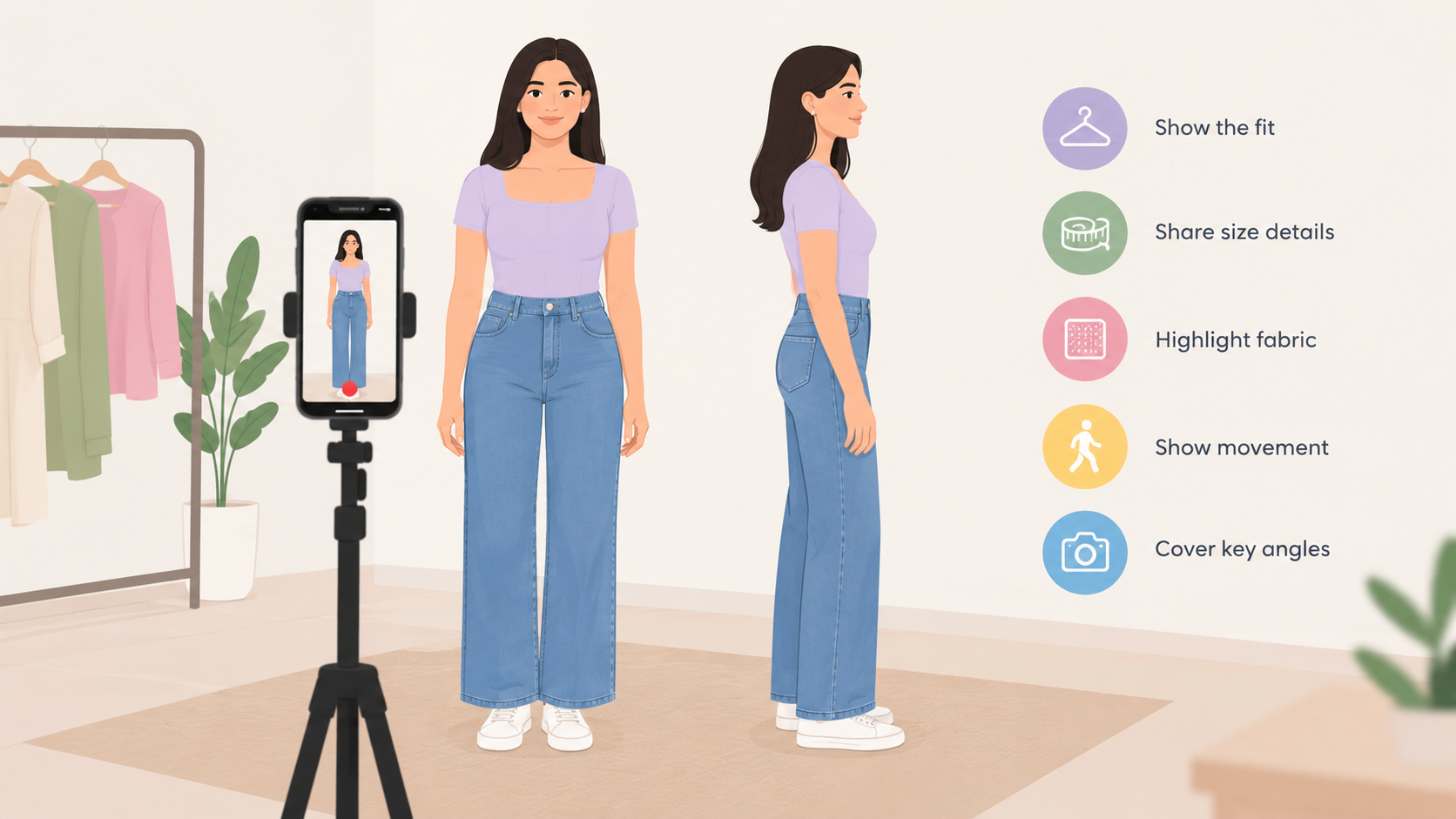
Fashion shoppers want more than attractive product photos. They want to know how a kurta falls, whether jeans feel tight, and how a dress looks while walking. However, online shoppers cannot try clothes before placing an order. This makes product fit and sizing videos valuable for fashion brands.
A clear creator brief helps brands answer these questions through real-life demonstrations. Instead of simply asking creators to showcase an outfit, brands should explain what shoppers need to see. Creators can then show the fit, fabric, length, stretch, and movement honestly.
For Indian fashion brands, this approach works across everyday wear, ethnic clothing, denim, festive collections, and occasion wear. It also helps creators produce useful content without making every video feel like an advertisement. In this guide, you’ll learn how to brief fashion creators for product fit videos, avoid common mistakes, and create content that helps shoppers make confident decisions.
1. Why Fashion Product Fit Videos Matter for Online Shoppers
Product fit videos help shoppers understand how clothing looks on a real person. They can see how a garment moves, where it sits, and how the fabric behaves. As a result, shoppers get more context than static product images alone can provide.
Research from the Baymard Institute highlights the size of this challenge. Its apparel research reports that 82% of apparel websites do not provide sufficient sizing information. It also finds that 48% of apparel shoppers look for size accuracy and fit details in customer reviews. These findings underline the value of clear, practical product information.
For Indian shoppers, the details often matter as much as the design. Someone buying a kurta may want to check its length with leggings. A denim shopper may care about waist comfort while sitting. Meanwhile, someone shopping for festive wear may want to see the outfit from different angles.
Therefore, brands should treat fit videos as useful shopping support, not just promotional content. The goal is simple: help customers understand the product before they buy it.

Amplify Your Brand,
One Influence at a Time.
2. What Every Fashion Creator Brief Should Include
A strong brief gives creators clear instructions without controlling every movement or sentence. First, define the video’s purpose. Decide whether it should explain sizing, demonstrate fabric movement, compare sizes, or showcase the garment’s overall fit. Then, share the product details and audience questions the video must answer.
Your brief should cover these essential points:
- Product information: Include the product name, available sizes, fabric composition, colour, and care instructions.
- Creator measurements: Ask creators to share relevant measurements voluntarily and accurately. Explain how these details will appear in the video.
- Size worn: State the exact size the creator should try and show.
- Fit expectations: Explain whether the garment should appear relaxed, regular, oversized, or fitted.
- Key shots: Request front, side, and back views where relevant. Include movement shots and close-ups of important details.
- Video format: Specify the platform, duration, aspect ratio, deadline, and delivery format.
- Disclosure and usage rights: Clarify paid partnership disclosures, music rights, editing permissions, and content usage terms.
Next, share a simple reference video if the creator needs visual guidance. However, avoid asking them to copy another creator’s personality. Authentic delivery makes the demonstration easier to trust.
2.1 Use This Simple Brief Template
Copy this template and customise it for each campaign.
- Campaign goal: Help shoppers understand the product’s fit and sizing.
- Product: Add the product name, link, colour, and size range.
- Creator details: Include the creator’s relevant measurements and the size they will wear.
- Required shots: Show the front, side, back, fabric close-ups, and natural movement.
- Talking points: Explain fit, length, comfort, stretch, and any useful sizing observations.
- Creative direction: Keep the video natural, clear, and suitable for the intended audience.
- Deliverables: Specify duration, platform, deadline, caption, and file format.
- Approval process: State the review deadline and the number of agreed revision rounds.
Finally, add one reminder: creators must describe their actual experience. They should never claim that a size suits everyone or promise a perfect fit for every body type.
3. How to Guide Creators Through Fit and Sizing Shots
The best fashion product fit videos answer real shopping questions in a clear order. Start with a full-length view so viewers can see the overall silhouette. Next, show the garment from the side and back, where possible. Then, include close-ups of waistbands, sleeves, necklines, seams, pockets, and other important features.
Ask creators to move naturally during filming. For example, they can walk, sit, raise their arms, or turn around when these movements suit the garment. These simple actions reveal details that posed shots may miss. Like jeans, show the waist and leg fit while standing and sitting. For kurtas, demonstrate the length and how the fabric falls during movement. Dresses, show the silhouette and how the material responds while walking.
Also, ask creators to mention the size they are wearing and provide relevant measurements when appropriate. Brands should supply verified garment measurements rather than expect creators to guess them. If a product has limited stretch or a particular cut, include that information clearly. This keeps the content helpful without encouraging unsupported claims.
Above all, make accuracy more important than making every outfit look perfect. Honest demonstrations help shoppers decide whether a product suits their preferences.
4. Common Mistakes, Performance Checks, and Key Learnings
A detailed brief can still fail when it focuses only on appearance. Avoid asking creators to say a garment fits perfectly unless that reflects their real experience. Similarly, do not hide tight areas, fabric transparency, or movement limitations through camera angles. Such choices can create the wrong expectations and disappoint customers.
Another mistake is using the same instructions for every clothing category. A saree, a pair of jeans, and a fitted top need different demonstrations. Therefore, adapt the shot list to the product. Also, avoid making creators recite long scripts. Give them clear points to cover, then let them explain the experience in their own words.
After publishing, track the results to understand which videos help shoppers most. Review these useful signals:
- Video engagement: Check watch time, completion rate, saves, and meaningful comments.
- Shopping activity: Track product-page visits, add-to-cart actions, and conversions where attribution is available.
- Customer questions: Look for repeated questions about length, fabric, stretch, or size selection.
- Returns and exchanges: Monitor fit-related reasons before and after the campaign, while accounting for other changes.
- Content usefulness: Identify which shots or explanations shoppers mention most often.
Baymard’s apparel sizing research also highlights how missing sizing information can make shoppers hesitate. Use your campaign findings to improve future briefs and product pages.
Conclusion: A Practical Checklist for Better Fit Videos
Before sending a brief to any fashion creator, check the following points:
- Define the main shopping question the video must answer.
- Share accurate product and garment measurement details.
- Confirm the creator’s selected size and relevant measurements.
- List the required angles, close-ups, and movement shots.
- Explain the platform, format, deadline, and usage rights.
- Allow creators to speak naturally and share honest observations.
- Review sizing claims and product details before publication.
- Track engagement, shopping activity, and fit-related customer feedback.
Ultimately, fashion product fit videos should help shoppers understand what they are buying. When brands combine accurate information with relatable creator demonstrations, they give customers more reasons to shop with confidence. Start with one product, test a clear brief, and use audience feedback to improve the next video.
5. FAQs About Fashion Product Fit Videos
1. What are fashion product fit videos?
Fashion product fit videos show how clothing looks and behaves when someone wears it. They can include full-length views, close-ups, movement demonstrations, and sizing details. Unlike static product photos, these videos help shoppers understand the garment’s shape and fall. Brands can use them on product pages, social media, and advertising campaigns. The aim is to answer common fit questions before customers make a purchase.
2. What should a fashion creator include in a sizing video?
A useful sizing video should mention the product name, size worn, and relevant creator measurements. It should also show the garment from suitable angles. Depending on the product, creators can demonstrate sleeve length, waist fit, fabric stretch, or overall length. They should describe their real experience rather than make broad claims. Brands should provide verified product measurements so creators can explain the fit accurately.
3. How long should a fashion product fit video be?
There is no single ideal length for every campaign. A short social video may need only a quick fit demonstration, while a detailed product-page video may require more time. Choose a duration that allows the creator to answer the main shopping questions clearly. Avoid adding unnecessary scenes just to make the video longer. Test different lengths and review watch time, completion rates, and customer responses.
4. Should creators share their height and measurements?
Yes, when these details are relevant and the creator agrees to share them. Height, garment size, and selected body measurements can help shoppers interpret how an outfit fits. However, brands should explain why they need this information and how they will use it. Creators should provide accurate details without feeling pressured to disclose private information. Always pair creator measurements with verified garment measurements where possible.
5. Which shots are important for clothing fit videos?
Start with a full-length front view. Then, add side and back views where useful. Close-ups can show waistbands, seams, sleeves, necklines, and fabric texture. Movement shots are also valuable because they reveal how clothing behaves while walking or sitting. The exact shot list should depend on the product. For example, jeans need different demonstrations from sarees or flowing dresses.
6. How can brands keep sizing videos authentic?
Give creators clear facts and key talking points instead of a rigid script. Let them describe their experience in their natural voice. At the same time, explain which product claims require verification. Never ask creators to hide a genuine fit issue or claim that a garment suits everyone. Authentic content balances creative freedom with accurate product information and transparent brand communication.
7. Can micro-influencers create effective fashion fit videos?
Yes. Micro-influencers can produce relatable demonstrations when their content suits the brand’s audience and product. Their follower count alone should not determine selection. Review their presentation style, audience relevance, video quality, and ability to explain product details. Also, consider creators with varied body types and regional perspectives. The right match depends on campaign goals, budget, audience needs, and the content rights required.
8. How can brands measure the success of fit videos?
Track video views alongside more useful signals, such as watch time, saves, product-page visits, add-to-cart actions, and conversions. Where possible, compare fit-related returns and customer questions before and after publishing. Use tracking links or campaign codes when appropriate. However, avoid attributing every sales change to one video. Product pricing, delivery, stock, and promotions can also affect results.
9. Can brands reuse creator sizing videos on product pages?
Yes, if the creator agreement clearly allows that use. Confirm where the brand can publish the content, how long the rights last, and whether paid advertising is included. Also, check music licences, platform restrictions, and permissions for editing or cropping. A video created for a social post may need adjustments for a product page. Always secure the required rights before reusing content.
10. How can fashion creators find brand collaborations in India?
Creators can build a clear portfolio featuring outfit demonstrations, styling videos, and honest product reviews. They should highlight their presentation skills and the types of fashion content they create. A creator platform can also help connect suitable creators with brand campaigns. On Hobo.Video, creators can explore opportunities through the platform’s registration process. Brands can also use Hobo.Video to support influencer and UGC campaigns.
About Hobo.Video
Hobo.Video is India’s leading AI-powered influencer marketing and UGC company. With over 2.25 million creators, it offers end-to-end campaign management designed for brand growth. The platform combines AI and human strategy for maximum ROI.
Services include:
- Influencer marketing
- UGC content creation
- Celebrity endorsements
- Product feedback and testing
- Marketplace and seller reputation management
- Regional and niche influencer campaigns
Trusted by top brands like Himalaya, Wipro, Symphony, Baidyanath and the Good Glamm Group.
Join the movement. Influence the future. Work with Hobo.Video’s creators in Uttar Pradesh and unlock true Bharat potential.
If you’re an influencer who wants to earn without the hassle, tap to register.
Don’t guess your way to brand growth. Let’s do it right. Talk to us.

 Neeti Katyal
 Ankita Saha