The Indian creator economy is currently witnessing a tectonic shift as legacy giants rethink their spending. Historically, brands paid flat fees for Instagram posts, but the HUL Creator CPV Rate Card is now rewriting those rules entirely. This move by Hindustan Unilever Limited aims to bring corporate discipline to the chaotic world of social media content. Consequently, influencers are moving away from vanity metrics like follower counts toward actual performance data. This shift ensures every rupee spent by Hindustan Unilever Limited company translates into measurable consumer attention and engagement. As thehindustan unilever limited share pricereacts to shifting consumer habits, the HUL Creator CPV Rate Card emerges as a definitive move to bring fiscal discipline to influencer spends.
Digital marketing in India is no longer just about viral trends or celebrity selfies. Brands now demand a concrete influencer marketing roi india that matches traditional media buying standards. By introducing a structured influencer pay-per-view structure, the industry is finally embracing accountability at scale. You might wonder how to become an influencer who survives this transition into performance-based models. It requires a deep understanding of how HUL brand deal pricing works and why CPV is becoming the gold standard. This framework doesn’t just change how much you get paid; it changes how you create content for the long term.
- 1. What is the HUL Creator CPV Rate Card?
- 2. The Shift to Performance-Based Influencer Pricing
- 3. Why HUL is Leading the Charge in AI Influencer Marketing
- 4. The Role of UGC Videos in the CPV Era
- 5. How to Calculate Your Earnings Using the CPV Model
- 6. Impact of CPV on the Influencer Marketing ROI India
- 7. Navigating the HUL Content Creator Price List
- Conclusion
- About Hobo.Video
1. What is the HUL Creator CPV Rate Card?
The HUL Creator CPV Rate Card represents a fundamental departure from the “fixed-fee” model that dominated the last decade. Under this new HUL influencer marketing strategy, the brand pays creators based on the number of views their content generates. Specifically, CPV stands for Cost Per View, which treats influencer content like a digital advertisement. Instead of guessing the impact of a post, Hindustan Unilever Limited uses data to track actual reach. This ensures that the hindustan unilever limited share price remains supported by efficient, data-backed marketing spends rather than speculative hype.
Furthermore, this framework establishes clear creator compensation standards that were previously non-existent in the fragmented Indian market. If you are curious about what is the driving force behind this, it is the need for predictable scale. Most top influencers in india now have to align their expectations with these influencer cost per view benchmarks to secure long-term contracts. By doing so, they become partners in the brand’s growth rather than just temporary billboards. This professionalization of the industry is a massive win for those using the best influencer platform systems that prioritize transparency over vanity.
2. The Shift to Performance-Based Influencer Pricing
Transitioning to performance-based influencer pricing is a bold move for a conglomerate like Hindustan Unilever Limited company. In the past, a creator might charge a premium based solely on their aesthetic or “vibe.” However, the new social media influencer pricing model ignores fluff and focuses strictly on delivery. This means a micro-influencer with high engagement might earn more than a celebrity with stagnant reach. Since HUL products need constant visibility across diverse demographics, this model allows for much better budget optimization.
Moreover, this shift directly impacts the creator collaboration rates 2026 projections for the entire Southeast Asian market. As more brands adopt the influencer pay-per-view structure, creators must become experts in hook-based storytelling. You need to learn how to keep an audience engaged long enough to count as a valid view. If the audience skips your video, the brand doesn’t pay, which puts the creative pressure back on the maker. This system rewards quality and relevance, which are the core pillars of successful influencer marketing India today. This transition toward performance-based metrics is part of a broader industry move toward asimplified influencer campaign for a growing brandwhere transparency and execution take precedence over complex traditional structures.
2.1 Understanding CPV Benchmarks by Category
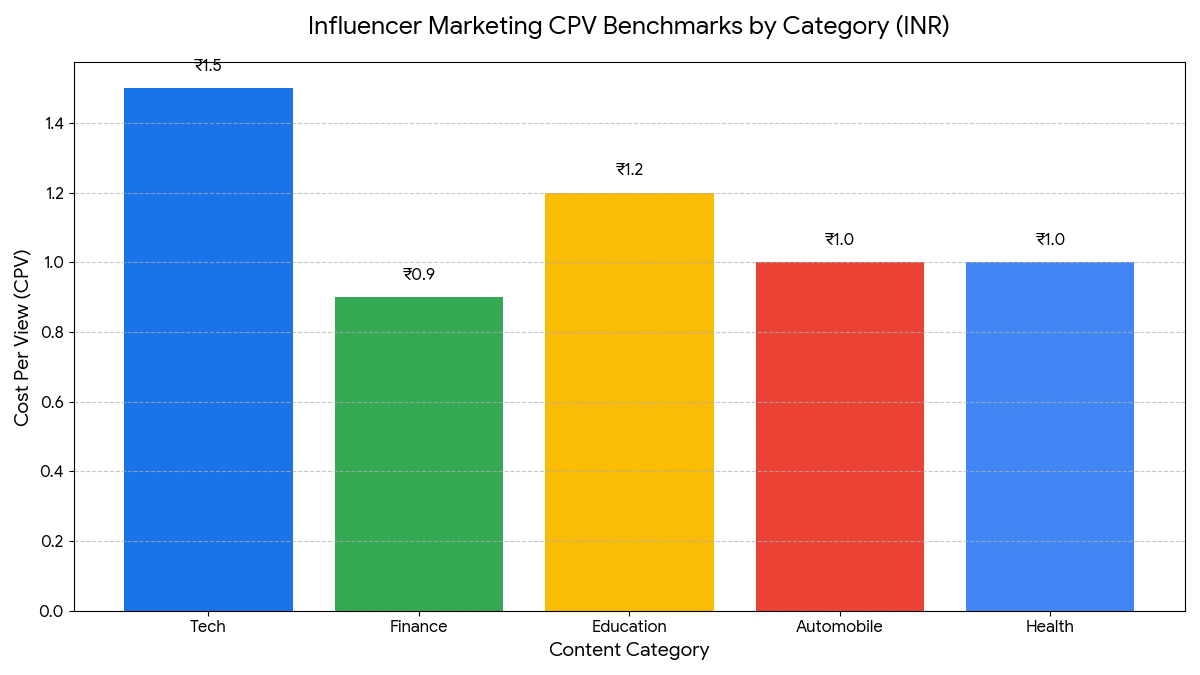
Different niches command different prices within the HUL content creator price list because of audience value. For instance, a finance creator might have a higher CPV than a comedy creator due to high intent.

Amplify Your Brand,
One Influence at a Time.
| Category | CPV Range per view |
| Tech & Gadgets | 1.0 – 1.5 |
| Education | 0.5 – 1.2 |
| Finance & Business | 0.8 – 0.9 |
| Travel | 0.5 – 1.0 |
| Automobile | 0.7 – 1.0 |
| FnB & Health | 0.3 – 1.0 |
| Beauty & Lifestyle | 0.2 – 0.5 |
These influencer cost per view benchmarks provide a roadmap for creators to price their services fairly. If you are the influencer trying to build a sustainable business, you must study these data points carefully. They reflect the actual market value of a view in the current influencer marketing India landscape. Consequently, your goal should be to lower your production costs while maximizing these view-based earnings. Under this newsocial media influencer pricingmodel, the days of paying high premiums for simple vanity metrics are numbered.
3. Why HUL is Leading the Charge in AI Influencer Marketing
The integration of AI influencer marketing is another reason why HUL is ahead of its competitors. By using advanced algorithms, they can predict which creators will deliver the best CPV before a campaign even starts. This data-driven approach allows Hindustan Unilever Limited to manage thousands of creators simultaneously without losing efficiency. It is no longer about who you know, but what your data says about your audience. Using AI UGC tools, brands can now remix creator content for various platforms, further increasing the value of every single view.
Additionally, AI influencer marketing helps in identifying “fake” views, ensuring that the HUL brand deal pricing remains protected from fraud. When a brand pays for views, they must be certain those views come from real humans. Therefore, the best influencer platform choices for HUL are those that offer deep analytical transparency. As a creator, being part of an AI UGC ecosystem means your content gets seen by the right people. This synergy between human creativity and machine precision is the future of influencer marketing.
4. The Role of UGC Videos in the CPV Era
The rise of UGC Videos has been a major catalyst for the implementation of the HUL Creator CPV Rate Card. Unlike high-production ads, user-generated content feels authentic and relatable to the average Indian consumer. Because UGC Videos often have higher completion rates, they are perfect for a CPV-based payout model. Creators who can produce “raw” but effective content are seeing a surge in creator collaboration rates 2026. This trend proves that you don’t need a 4K camera to be successful; you just need a story that resonates.
Furthermore, HUL products like Dove or Lifebuoy thrive on personal testimonials that UGC Videos provide so well. When a mother shares a real tip using an HUL soap, it carries more weight than a scripted celebrity endorsement. Because of this, hindustan unilever limited is heavily investing in “real” people over “perfect” models. This democratization of influence is exactly where the industry is headed. If you can master the art of the 15-second hook, your potential for high social media influencer pricing is limitless.
5. How to Calculate Your Earnings Using the CPV Model
Calculating your potential income under the HUL content creator price list requires basic math and realistic expectations. Suppose your average video gets 100,000 views and your agreed CPV is 0.50 INR. In this scenario, your payout for that single piece of content would be 50,000 INR. This transparency in creator compensation standards eliminates the awkward “price negotiation” phase between agents and brands. You simply deliver the views, and the system delivers the payment based on the influencer pay-per-view structure.
However, you must account for “organic” vs “paid” reach when discussing HUL brand deal pricing. Most brands will pay the full CPV for organic views up to a certain cap. Beyond that, they might use the content as a “dark post” or a paid ad. Understanding these nuances is vital for anyone looking at how to become an influencer with a professional mindset. It helps you set a floor for your earnings while allowing for a high ceiling if your content goes viral. This balance is what makes performance-based influencer pricing so exciting for talented creators. Mastering the nuances of the HUL Creator CPV Rate Card requires a blend of creative output and strategic negotiation, often drawing from foundationalinfluencer rate card tips 2025that prioritize long-term brand equity over short-term viral spikes.
6. Impact of CPV on the Influencer Marketing ROI India
For years, CMOs struggled to justify the massive spends on influencer marketing India to their boards. The influencer marketing roi india was often seen as “soft” or difficult to track compared to Google Ads. With the HUL Creator CPV Rate Card, that excuse has completely vanished into thin air. Marketing teams can now show a direct correlation between money spent and eyeballs grabbed. This level of clarity helps stabilize the hindustan unilever limited share price by proving marketing efficiency.
In addition, this framework allows for much better testing and learning cycles. Brands can distribute a small budget across 50 micro-influencers and see who delivers the best influencer cost per view benchmarks. They then double down on the winners, ensuring the highest possible influencer marketing roi india. This “survival of the fittest” approach ensures that only the most effective creators get the lion’s share of the budget. It encourages a culture of excellence where creators are constantly innovating to stay relevant. This strategic pivot by a market leader is unsurprising, considering that they consistently rank among thosewho has the highest brand value in india in 2025,necessitating a move toward more sustainable and performance-linked marketing investments.
7. Navigating the HUL Content Creator Price List
If you are a creator, getting onto the official HUL content creator price list is like a badge of honor. It signals that you are a reliable partner for one of the world’s largest advertisers. To get there, you must maintain a clean record of engagement and consistent social media influencer pricing. Usually, HUL works with a top influencer marketing company to filter and manage their vast database of talent. These agencies act as the bridge, ensuring that the HUL influencer marketing strategy is executed flawlessly on the ground.
Moreover, the creator compensation standards set by HUL often trickle down to smaller D2C brands. Once a standard is set by the leader, the rest of the market usually follows suit. This is why understanding the HUL Creator CPV Rate Card is essential even if you aren’t working with them yet. It prepares you for the standard contracts of the future. By aligning your rates with these creator collaboration rates 2026, you position yourself as a market-savvy professional. You show that you understand the business side of the creator economy, not just the creative side.
Conclusion
Looking ahead, the creator collaboration rates 2026 will likely become even more granular and data-dependent. We might see “Dynamic CPV,” where the rate fluctuates based on the time of day or viewer demographics. As hindustan unilever limited company expands into deeper rural markets, the value of regional language creators will skyrocket. This will create a new tier in the HUL Creator CPV Rate Card specifically for vernacular content. Diversity is not just a social goal; it is a business necessity for influencer marketing India.
Furthermore, we will see a surge in famous instagram influencers moving toward long-term equity deals. While the influencer pay-per-view structure is great for cash flow, top-tier talent will want a bigger piece of the pie. However, for 90% of the market, the CPV model will remain the primary way of doing business. It provides a stable, fair, and scalable way to grow. Whether you are a brand or a creator, adapting to the HUL Creator CPV Rate Card is the only way to thrive in the coming years.
Key Learnings
- Accountability: The HUL Creator CPV Rate Card brings measurable metrics to influencer marketing.
- Efficiency: Performance-based influencer pricing ensures brands only pay for actual consumer attention.
- Data-Driven: AI influencer marketing tools are now essential for predicting and tracking campaign success.
- Standardization: The HUL brand deal pricing sets a benchmark for the entire Indian creator economy.
- Opportunity: UGC Videos allow authentic creators to compete with high-budget celebrities.
- Growth: Understanding how to navigate CPV models is key to surviving as a creator in 2026.
About Hobo.Video
Hobo.Video is India’s leading AI-powered influencer marketing and UGC company. With over 2.25 million creators, it offers end-to-end campaign management designed for brand growth. The platform combines AI and human strategy for maximum ROI.
Services include:
- Influencer marketing
- UGC content creation
- Celebrity endorsements
- Product feedback and testing
- Marketplace and seller reputation management
- Regional and niche influencer campaigns
Trusted by top brands like Himalaya, Wipro, Symphony, Baidyanath and the Good Glamm Group.
Don’t wait for the perfect time. Let’s start your brand growth now. We’re ready.
The collabs are real. The payouts are real. All that’s missing is you. Let’s go.
FAQs
What exactly is a CPV rate card?
A CPV (Cost Per View) rate card is a pricing document where a brand agrees to pay a creator a specific amount for every view their content receives. In the context of the HUL Creator CPV Rate Card, it replaces the old system of paying a flat fee per post. This ensures that the brand’s budget is used effectively, as they only pay for the actual reach achieved. It is a win-win for creators who have high organic reach and for brands seeking better ROI.
How does HUL track the views for payment?
Hindustan Unilever Limited uses sophisticated third-party tracking tools and platform APIs to verify view counts. They typically count views after a 24-hour or 7-day period to account for the content’s initial “viral” window. By using AI influencer marketing software, they can also filter out bot traffic or inorganic spikes. This ensures that the influencer pay-per-view structure remains fair and transparent for both parties involved in the campaign.
Can micro-influencers benefit from the CPV model?
Absolutely! In many ways, micro-influencers benefit more because their engagement rates are often higher than mega-celebrities. Under the performance-based influencer pricing model, a micro-influencer with a loyal following can earn a very competitive income. If their content consistently hits the influencer cost per view benchmarks, they can secure recurring deals. It levels the playing field, making it less about “fame” and more about “impact” and audience resonance.
Does the HUL Creator CPV Rate Card apply to all platforms?
Currently, the HUL Creator CPV Rate Card is most prominent on platforms like Instagram and YouTube, where video views are a primary metric. However, the logic is expanding to other formats as well. As Hindustan Unilever Limited company explores new social channels, they adapt the framework to suit the specific engagement metrics of those apps. The goal is to have a unified social media influencer pricing strategy that works across the entire digital ecosystem.
How do I get noticed by HUL for a brand deal?
The best way is to consistently produce high-quality UGC Videos that align with their brand values. You should also register with a top influencer marketing company like Hobo.Video, which manages large-scale campaigns for such giants. Focus on your niche and try to hit or exceed the influencer cost per view benchmarks in your category. Once your data shows consistent performance, you are much more likely to be added to the HUL content creator price list.
What is a “good” CPV in the Indian market?
A “good” CPV varies by niche, but generally, anything between 0.30 INR to 0.70 INR is considered standard for mass-market categories like beauty or food. High-intent niches like finance can see rates go up to 1.0 INR or more. These creator compensation standards are influenced by the complexity of the content and the value of the audience.
Why is HUL moving away from fixed-fee payments?
The main reason is to improve the influencer marketing roi india. Fixed fees carry a high risk for the brand if the content fails to reach an audience. By using the HUL Creator CPV Rate Card, the brand shifts the performance risk to the creator but offers higher rewards for viral success. This aligns the interests of both parties, as both want the content to perform as well as possible. It is simply a more mature way to handle large-scale marketing budgets.
Does CPV include production costs for the video?
In most cases, the HUL brand deal pricing under a CPV model is “all-inclusive”. This means the creator is expected to cover their production costs from the total view-based payout. However, for high-production UGC Videos or celebrity-led campaigns, there might be a separate production fee. It is important to clarify these creator compensation standards in your contract before you begin filming to ensure you don’t end up out of pocket.
How will CPV change the way creators make content?
It will make creators much more focused on “hooks” and “retention”. Since you only get paid if people watch, you can’t afford to have a boring intro. This shift is already influencing famous instagram influencers to experiment with faster editing and more engaging storytelling. The HUL Creator CPV Rate Card essentially turns every creator into a mini-media house that must optimize for viewership. It raises the bar for creativity across the entire influencer marketing India landscape.
Is the CPV model the future of all brand collaborations?
While some niche or high-end luxury brands might stick to fixed fees for “prestige,” the mass market is definitely moving toward CPV. The creator collaboration rates 2026 forecasts suggest that performance-linked pay will become the industry standard. Brands want the same accountability from influencers that they get from Facebook or Google Ads. Embracing the influencer pay-per-view structure now will put you ahead of the curve as the market continues to evolve.

 Anooshka Pandey