
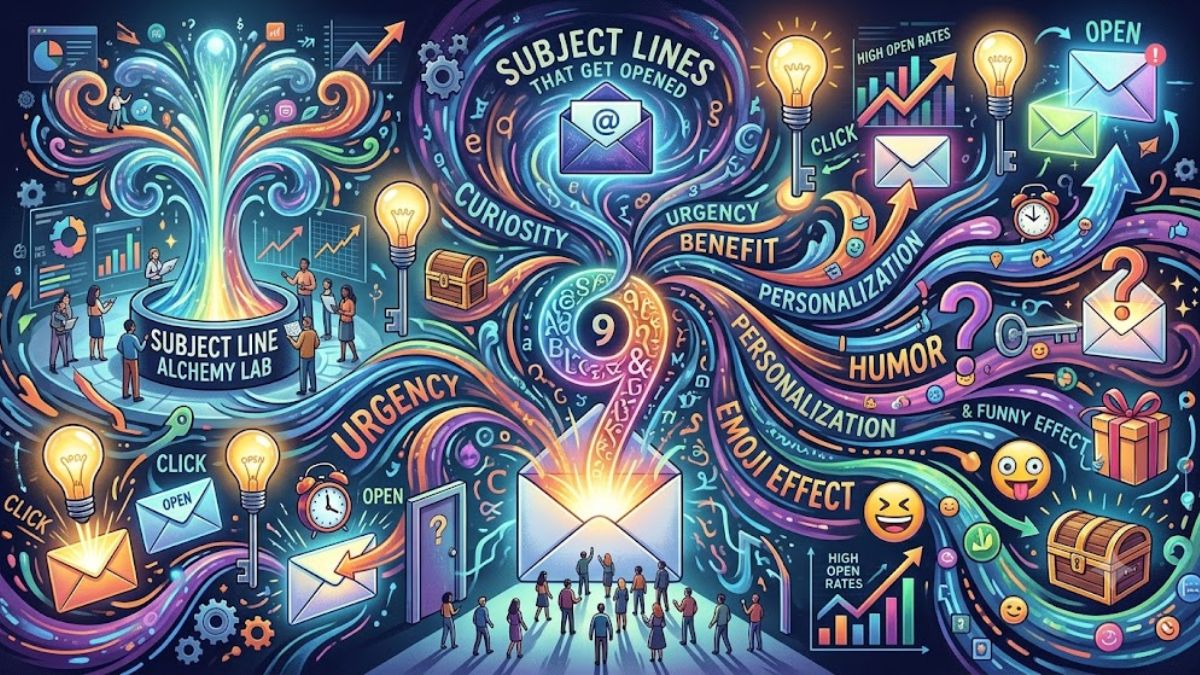
Introduction: The Battle for the Indian Inbox
Every morning, millions of people across Bangalore, Mumbai, and Delhi wake up to a genuinely overwhelming pile of unread work email. Most of it gets deleted without a second thought. For a brand, that’s not just a minor annoyance, it’s real money left on the table: wasted marketing budget, lost customers, connections that never had a chance to form. Getting subject lines right is really the first, and sometimes only, chance a brand gets to fix that.
The uncomfortable truth is that people judge an email entirely by its subject line before they’ve read a word of the body. If that first line doesn’t land, nothing else about the email matters, no matter how good the copy inside is. That’s why so much of email performance actually comes down to a handful of words at the top of an inbox. Brands that treat subject lines as an afterthought are leaving a lot of open rate on the table, and the ones that get it right usually understand a bit of the psychology behind why people click one email and skip past another.
Getting subject lines right changes the whole shape of a campaign’s performance, not just the open rate. Below are nine templates that consistently work well, along with a look at why they actually work, not just as tricks, but as a way of respecting how busy and skeptical most people’s inboxes have made them.
1. The Psychology of Open Rates: Why People Click
1.1 The Neurological Triggers of Human Curiosity
People are genuinely wired to want to close information gaps. When a subject line hints at something without fully explaining it, there’s a real, almost physical pull to find out what’s missing. That’s a big part of why curiosity-driven subject lines perform so consistently well across different audiences, the brain wants resolution, and clicking open is the fastest way to get it.
That said, the email itself has to actually deliver on the promise. If the subject line hints at something big and the body is just a standard sales pitch, people notice, and they notice fast. That gap between promise and delivery is exactly what drives unsubscribes and tanks future open rates. Curiosity gets someone to click once. Following through with something genuinely useful is what gets them to open the next one too.
1.2 Overcoming Modern Digital Filter Fatigue
People have gotten very good at mentally filtering out anything that reads like an obvious sales pitch. Phrases like “Buy Now” or “Special Discount” get filtered almost automatically at this point, they just don’t register as worth opening. Writing subject lines that sound more like a note from a colleague than a broadcast is one of the more reliable ways around that instinctive filtering.
Cultural context matters here too. Indian readers tend to respond well to a warmer, more conversational tone, real examples, direct language about a problem they actually recognize. Stiff, formal corporate phrasing tends to read as exactly what it is, and gets skipped for the same reason a generic sales line does. Writing like an actual person talking to another person, rather than a brand broadcasting to a list, makes a real difference.

Amplify Your Brand,
One Influence at a Time.
1.3 The Mathematical Value of an Open Metric
Open rate sometimes gets dismissed internally as a vanity number, but it’s really the gate everything else has to pass through. If the email doesn’t get opened, none of the links, offers, or landing pages inside it matter at all, they simply never get seen. Improving open rate has a compounding effect on everything downstream in the funnel.
There’s also a longer-term benefit worth knowing about: when more people open and engage with your emails, providers like Gmail read that as a signal that your mail is genuinely wanted, which helps keep future emails out of the promotions tab and in the primary inbox. Getting subject lines right isn’t just about one campaign’s numbers, it actually improves how your emails get delivered going forward.
2. The 9 High-Converting Subject Line Frameworks
2.1. The “FOMO” (Fear Of Missing Out) Framework
Scarcity, real or implied, pushes people to decide faster than they otherwise would. When something feels limited by time or quantity, it automatically feels more valuable. Working a clear deadline or a specific limit into the subject line nudges people to act now instead of telling themselves they’ll get to it later, which usually means never.
- Example 1: Only 3 seats left for our Bangalore creator workshop tonight!
- Example 2: [Closing Tonight] Grab your digital marketing roadmap before it disappears.
- Example 3: Mumbai brands are scaling fast this week. Don’t lag behind.
2.2. The “Curiosity Gap” Framework
This one leans on presenting something intriguing while holding back the actual answer until the email is opened. It creates a small, nagging information gap that people want to resolve. Works especially well for thought leadership pieces, case studies, and origin stories, anything where the payoff inside genuinely matches the tease.
- Example 1: Why 93% of Indian startups fail within month one.
- Example 2: The simple change that doubled our web traffic instantly.
- Example 3: What top Instagram creators know about the new algorithm update.
2.3. The “Direct & No-Nonsense” Framework
Sometimes the best move is just saying exactly what’s inside, no cleverness at all. This lands especially well with busy founders and executives who don’t have patience for marketing flourish and just want to know what they’re opening before they open it. Plain and clear builds a certain kind of trust that a cute subject line never quite manages.
- Example 1: Your monthly digital marketing performance report is ready for download.
- Example 2: Quick video tutorial: How to scale your brand reach today.
- Example 3: Here is the exact checklist we use for influencer campaigns.
2.4. The “Personalized Pain Point” Framework
This one names a real problem the recipient is likely dealing with, using whatever data you actually have on them. Naming a specific struggle right up front signals you understand their situation rather than blasting a generic message to a list. It shifts the whole tone from cold outreach to something closer to a helpful nudge from someone who gets it.
- Example 1: Rohit, are you struggling to get real views on your reels?
- Example 2: Fix this common SEO error before it ruins your ranking.
- Example 3: A simpler way for your brand to source authentic video assets.
2.5. The “Social Proof & Authority” Framework
People trust something more once they see other people have already tried it and it worked. Leading with a specific stat, a recognizable client, or a genuine case study lowers the perceived risk of whatever you’re offering, which makes opening (and eventually converting) feel a lot safer.
- Example 1: How this Delhi fashion brand drove 5x ROI using UGC.
- Example 2: Trusted by over 10,000 forward-thinking Indian brand builders.
- Example 3: The exact strategy that helped a local startup go viral.
2.6. The “Quick Question” Framework
Short, casual, almost like a message from a colleague rather than a brand. Because it doesn’t look polished or promotional, it tends to slip past the mental filter people apply to obvious marketing emails. Works well for sales outreach, booking a call, or just gathering quick feedback from an existing audience.
- Example 1: Quick question regarding your brand scaling plans for this quarter?
- Example 2: Rohit, do you have two minutes for a quick chat today?
- Example 3: A tiny favor to ask about your latest content strategy.
2.7. The “Unexpected Controversial” Framework
This one makes a bold claim that goes against what most people assume is true in the space. It stands out precisely because it contradicts expectations, which pulls people in to see how you’re going to back it up. Worth using carefully, and only when the body copy can actually justify the claim, otherwise it just reads as clickbait.
- Example 1: Why your current content marketing plan is completely wasting capital.
- Example 2: Stop posting daily reels on social media immediately. Here is why.
- Example 3: Most influencer marketing advice you read online is totally wrong.
2.8. The “Gifting & Incentivized” Framework
People respond to a genuine, concrete offer, a free resource, a real discount, something with clear value stated up front. The key here is making sure the incentive actually feels worth claiming and is easy to redeem, not buried behind extra steps.
| Targeted Incentive Strategy | Subject Line Phrase Structure | Intended Audience Action |
|---|---|---|
| Free Educational Resource | Free Guide: Sourcing top influencers in India safely | Download Asset & Read Blog |
| Exclusive Financial Access | Your exclusive 20% partner discount code is inside | Visit Product Marketplace |
| Early Product Testing | Be the first to beta test our new creator platform | Register User Account |
2.9. The “Storytelling Hook” Framework
People are naturally drawn to stories, especially ones with some honesty or vulnerability in them. This framework opens with a personal moment, a failure, a turning point, before getting anywhere near a commercial pitch. It’s what turns a brand from a faceless entity into something people actually want to root for.
- Example 1: I almost quit my marketing career because of this mistake.
- Example 2: The unusual story behind how our brand was born.
- Example 3: From a tiny garage bedroom to serving millions of Indian users.
3. Crafting the Perfect Subject Line: Mechanics & Metrics
3.1 Length, Structure, and Mobile Optimization
One mistake writers make often is crafting a subject line that reads beautifully but is just too long for a phone screen. More than 75% of Indian professionals check email on mobile, and most email clients cut off anything past around fifty characters. A clever curiosity hook that gets truncated mid-sentence loses whatever it was building toward. Keep it short, and front-load whatever’s actually going to grab attention, the strongest word or hook should sit in the first few words, not the end of the line. That way, even a partial glance while scrolling still delivers the point. In a crowded inbox, that first glance is often all you get.
3.2 The Role of Emojis and Special Formatting Characters
A well-placed emoji can genuinely help a subject line stand out in a wall of plain gray text. But it’s easy to overdo, one relevant icon can add a bit of visual pop, while five starts to look like spam. Whatever icon gets used should actually match the content of the email, not just be decoration for its own sake. Odd punctuation, excessive capital letters, and multiple exclamation points are also worth avoiding, not just because they look unprofessional, but because they can actually trigger spam filters and tank deliverability before anyone even sees the email. Clean, natural sentence structure tends to perform better and reads as more credible.
3.3 Setting Up Scientific A/B Split Testing
Rather than settling subject line debates through internal opinion, it’s worth just testing them properly. Send version A to a small slice of the list, version B to another small slice, and watch the actual open rates over a few hours to see what real people respond to, not what sounds clever in a meeting. Once there’s a clear winner, send that version to the rest of the list. That kind of testing takes personal taste out of the equation and, over time, builds a much sharper sense of what actually works for a specific audience rather than what should theoretically work in general.
4. Integrating Influencer Marketing and UGC for Higher Open Rates
4.1 Leveraging Celebrity Endorsements and Influencer Names
One of the fastest ways to lift open rates is putting a recognizable creator’s name right in the subject line. When someone spots a name they already follow and trust paired with your brand, curiosity kicks in almost automatically. That familiarity does real work, it borrows the trust that creator already built with their audience and hands a piece of it to your brand, which cuts through a lot of the usual skepticism people bring to a marketing email.
This works especially well around product launches, regional events, or exclusive collaborations, provided the partnership actually feels genuine rather than bolted on. Featuring a well-known Instagram creator in the subject line, for instance, tends to catch attention with younger, Gen Z audiences in particular. It’s one of the more reliable ways to get noticed in the Indian market specifically, where creator culture already carries a lot of weight.
4.2 Incorporating the Buzz of UGC Videos into Your Emails
User-generated content doesn’t just help engagement inside the email, it can help get the email opened in the first place. Subject lines that hint at raw, unedited customer reactions, an unboxing video, a genuine review, tend to outperform anything that sounds like polished ad copy. There’s something about the promise of seeing a real customer’s honest reaction that pulls people in more than a brand’s own messaging ever quite manages.
When people see that an email is built around real UGC, they tend to open it out of genuine curiosity about what another customer actually experienced. It reads as more transparent, less scripted, and that honesty tends to build loyalty over time in a way polished corporate messaging rarely does.
4.3 Navigating the Indian Creator Ecosystem with the Best Influencer Platform
Coordinating a campaign across dozens of micro-influencers while also managing your regular email schedule gets complicated fast without the right tools. Working with a team that uses a solid influencer platform takes a lot of that operational mess off your plate, these platforms use real engagement data to match your brand with creators who actually have active, genuine local audiences, not just big follower counts.
That kind of support means your campaigns are backed by verified numbers rather than guesswork, and a good influencer marketing partner can also help you navigate India’s regional languages and local trends, something that’s genuinely hard to get right without local expertise. Getting that local nuance right tends to show up directly in how well your subject lines land across different states.
5. Real Data and Industry Case Studies
5.1 Performance Metrics from Top Influencers in India
Recent data on Indian digital communication shows personalized subject lines driving a 22% lift in engagement compared to generic ones. That’s a meaningful enough gap that it’s worth reconsidering any strategy still built around one-size-fits-all broadcast emails. Separately, data from India’s influencer marketing space shows emails featuring a creator’s name seeing about a 30% higher click rate. That gap is a pretty strong signal that human-centered branding just performs better than faceless corporate messaging, and brands still leaning entirely on generic announcements are probably leaving real revenue on the table.
5.2 Hard Insights: Common Errors That Crush Deliverability
Understanding what actually kills deliverability matters just as much as writing a good subject line. One global deliverability study found phrases like “100% Free” or “Earn Money Fast” cut inbox delivery by around 40%, since spam filters flag those phrases automatically and route the email straight into the spam folder before a human ever sees it.
| Dangerous Spam Trigger Phrases | Safe, Conversational Alternatives | Impact on Inbox Delivery |
|---|---|---|
| “100% Free Gift inside!!” | “We put a new resource in your account” | Avoids junk filter entirely |
| “ACT NOW! BUY TODAY!” | “This offer wraps up later this evening” | Maintains professional tone |
| “Earn Lakhs from Home easily” | “A look at how local creators scale up” | Builds long-term authority |
It’s also worth regularly cleaning out inactive contacts from your list. Sending to a large batch of people who never open your emails hurts your sender score over time, since providers track how often your messages get ignored. Keeping the list active and engaged is what actually protects delivery to the people who are still reading.
6. Step-by-Step Guide: Optimizing Your Email Strategy Today
6.1 Step 1: Run a Comprehensive Inbox Metric Audit
Before writing another campaign, it’s worth taking an honest look at how the last few months have actually performed. Pull up the past ninety days of data and figure out which subject line styles genuinely drove opens and which ones fell flat.
Look for patterns around length, emoji use, tone, and send time. Building a real baseline from that data, rather than going on gut feeling, gives future campaigns something solid to test against instead of just guessing what might work better next time.
6.2 Step 2: Set Up a Dynamic Personalization Pipeline
Once there’s a clear baseline, it’s worth setting up proper personalization rather than just inserting a first name at the top of the email. Segmenting subscribers by location, past purchases, or industry lets subject lines speak directly to what each group actually cares about. That kind of segmentation is really what separates a genuinely relevant email from one that just feels like it was blasted to everyone on the list. Done well, it turns email from something people tolerate into something they actually look forward to opening.
6.3 Step 3: Continuously Clean and Refresh Your Data Lists
The last piece is keeping the list clean on a regular schedule, quarterly is reasonable. Removing contacts who haven’t opened anything in six months feels counterintuitive since it shrinks the list, but it’s genuinely worth it for the health of the account.
FAQs
What are the best email subject lines for boosting open metrics?
The best email subject lines are short, conversational, and highly personalized to address the recipient’s current challenges. Frameworks that leverage healthy curiosity gaps, clear social proof, or genuine time urgency consistently outperform generic corporate sales pitches.
How long should an email subject line be for mobile screens?
Short DescriptionTo prevent smartphone clients from cutting off your text, keep your subject lines between thirty and forty-five characters long. Placing your most important keywords and emotional triggers within the first three words ensures maximum visual impact.Short Description
How often should I run A/B tests on my marketing headers?
You should run an A/B split test with every single large-scale campaign you distribute to your subscriber list. Testing variant ideas on small sample groups ensures you deploy only the highest-converting options to the rest of your audience.
Can using emojis harm my technical email deliverability?
Using one or two relevant emojis can boost your visibility in a crowded inbox without causing any deliverability problems. However, stuffing multiple icons into a line looks like low-quality spam and can trigger automated junk filters.
How does personalizing headers improve overall brand trust?
Personalization proves to the recipient that your brand treats them as an individual rather than a random number on a list. Addressing their specific location or pain points shows deep care, which breaks down consumer resistance and builds long-term loyalty.
About Hobo.Video
Hobo.Video is India’s leading AI-powered influencer marketing and UGC company. With over 2.25 million creators, it offers end-to-end campaign management designed for brand growth. The platform combines AI and human strategy for maximum ROI.
Services include:
- Influencer marketing
- UGC content creation
- Celebrity endorsements
- Product feedback and testing
- Marketplace and seller reputation management
- Regional and niche influencer campaigns
Trusted by top brands like Himalaya, Wipro, Symphony, Baidyanath and the Good Glamm Group.
Ready to grow your brand in a way that stands out? Register now and team up with top creators.
Your reach deserves rewards. Let’s make that happen. Tap to sign up.

 Ankita Saha