
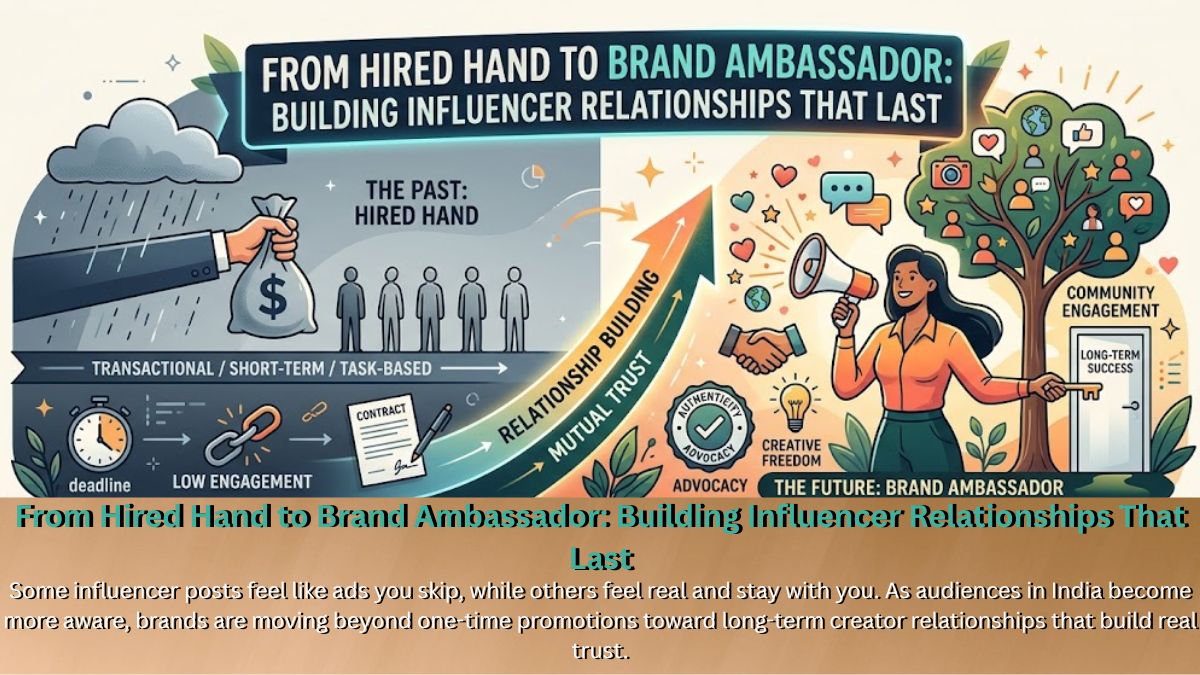
Why Influencer Relationship Feel Different Today
Spend a few minutes scrolling through Instagram and you start to notice a pattern. Some creators post ads that you forget almost instantly. Others talk about products in a way that feels… real, like they’ve actually used them. That small difference is what Influencer Relationship really come down to. In India, people aren’t as easily convinced as before. You can sense when something feels forced, and you can also tell when a creator genuinely likes what they’re sharing. That awareness is quietly changing how brands think about influencer marketing. It’s not just about paying for a post anymore. It’s about building something that doesn’t disappear after one campaign.
A 2024 report by Influencer Marketing Hub
A 2024 report by Influencer Marketing Hub estimated that the industry could reach $24 billion globally. India is a big part of that growth, especially with so many mobile-first users and creators from smaller cities coming into the spotlight. With that kind of scale, quick, surface-level collaborations don’t really hold up. So instead of treating creators like someone you hire for a one-time job, more brands are trying to build long-term partnerships. And honestly, that’s where things start to feel more meaningful.
- Why Influencer Relationship Feel Different Today
- 1. What Are Influencer Relationship Really About?
- 2. The Shift: From Campaigns to Long-Term Thinking in Influencer Relationship
- 3. Building Influencer Relationship Step by Step
- 4. Turning Creators Into Brand Ambassadors
- 5. The Role of UGC and AI in Influencer Relationship
- 6. Influencer Relationships in the Indian Market
- 7. Choosing the Best Influencer Platform
- 8. Influencer Relationship
- 9. The Future of Influencer Relationship
- 10. Summary & Key Learnings
- About Hobo.Video
1. What Are Influencer Relationship Really About?
1.1 Moving Beyond Transactions
At the start, most collaborations are pretty straightforward. A brand pays, a creator posts, and that’s it. It works, but it rarely leaves a lasting impression. Stronger Influencer Relationship take a bit more effort. They’re built on trust, consistency, and a shared understanding of what the brand stands for. When a creator actually gets your story, the content feels more natural. It doesn’t come across like a scripted promotion.
That’s why creator collaboration today looks different. Instead of controlling every word or frame, brands are giving creators some space to shape the message. It makes the content feel less like an ad and more like something you’d actually stop and watch.
1.2 Why Indian Audiences Value Authenticity
If you look at India as a whole, the audience is anything but uniform. What works in a metro city might not connect in a smaller town. Trends shift quickly, tastes vary a lot. But one thing doesn’t really change, people tend to trust other people more than brands.
A Nielsen study found that 92% of consumers trust recommendations from individuals over companies. You can see that play out every day. When a creator talks about the same brand over time, it doesn’t feel random. It starts to build a sense of familiarity. That’s where consistency matters. Repeated, honest mentions create credibility, and over time, that’s what turns a simple collaboration into something closer to a brand ambassador relationship.
2. The Shift: From Campaigns to Long-Term Thinking in Influencer Relationship
2.1 The Problem With One-Off Campaigns
There’s a moment right after a campaign goes live that always feels a bit exciting. You open the post, watch the likes climb, maybe refresh a couple of times without even realizing it. It feels like something is working. Everyone involved kind of pauses there for a second, hoping this one piece of content will carry more weight than it usually does.

Amplify Your Brand,
One Influence at a Time.
But if you’ve seen this play out more than once, you also know what comes next. A day passes, then two. The numbers slow down. The comments stop coming in. A week later, the post is just… there. Pushed down by newer content, almost invisible unless you go looking for it. And that’s the part people don’t always say out loud. For all the effort that goes into one-off campaigns, they rarely stay in people’s minds. They create a moment, not a memory.
On the creator’s side, it can feel a little detached too. They’ll put in the effort, of course. They care about their work. But there’s only so much connection you can build with something that starts and ends in a single post. There’s no time to live with the product, no chance to show how it fits into their daily life in a natural way. So even when the content looks good, it doesn’t always feel real. That’s where long-term partnerships start to feel different. When a creator talks about something over time, in small, unscripted moments, it slowly becomes part of their story. And that’s when people begin to trust it, not because they were told to, but because it started to feel familiar.
2.2 The Power of Consistency
If you think about the last time you actually trusted a recommendation online, it probably didn’t happen instantly. The first time you saw it, you might have noticed it, maybe even felt a bit curious, but that’s where it ended. You moved on, like we all do. Then you saw it again. Not in a loud, “look at this” kind of way, just casually. Maybe in the background of a video, or mentioned without much emphasis. That second or third exposure does something subtle. You start recognizing it without trying. And after a few more times, it begins to feel almost normal, like it belongs there.
That’s what consistency does. It doesn’t push. It stays. It shows up quietly, again and again, until it becomes part of what feels familiar to you. Brands that understand this don’t rush the process. They allow that slow build to happen. And when it does, the response is very different. People don’t just like the post and move on. They pause, they ask questions, they remember. Some reports talk about engagement being three times higher with consistent strategies, but honestly, you can feel the difference even without looking at the numbers. It just feels more real, more believable.
3. Building Influencer Relationship Step by Step
3.1 Start With the Right Creators for Influencer Relationship
This part sounds straightforward until you actually have to make the decision. There’s always that pull toward big numbers. A creator with a massive following feels like a safe choice. It looks good, it feels like you’re covering more ground, and for a moment, it gives you confidence.
But then you start noticing the small things. The comments don’t feel very engaged. The reactions are there, but they’re surface-level. It reaches people, but it doesn’t really connect with them. And that’s when the doubt creeps in. Was it the right fit, or just the obvious one?
When you slow down and really look at creators, beyond their numbers, you start seeing a different picture. You notice how they speak, how their audience responds, the kind of trust they’ve built over time. Sometimes, a smaller creator with a close-knit audience creates a stronger impact because their followers actually listen. There’s a sense of familiarity in their content, something that feels closer to real life. And when that kind of creator aligns with your brand, everything feels easier. The content doesn’t feel forced, the audience responds naturally, and the whole process feels less like a campaign and more like a collaboration that makes sense.
3.2 Communicate Like a Human for Influencer Relationship
There’s a certain tone you see in a lot of brand messages. It’s structured, polished, and technically clear, but it doesn’t feel warm. It feels like it was written to be correct, not to connect. If you’ve ever been on the receiving end of that kind of message, you know the feeling. You understand what’s being asked, but you don’t feel particularly involved. It’s just another task to complete. Now compare that to a message that sounds like it came from an actual person. It explains the idea simply, shares why it matters, maybe even admits a bit of uncertainty or openness to ideas. That kind of communication feels different. It invites a response instead of just expecting execution.
When creators feel like they’re part of the conversation, their approach changes. They think more carefully about what they’re creating. They bring in their own perspective. And that’s where better content comes from. Not from perfect instructions, but from genuine collaboration where both sides feel comfortable enough to contribute.
3.3 Give Creative Freedom
Every creator you follow has a certain way of expressing themselves. It’s in their tone, their timing, the small details in how they present things. That’s what people connect with. It’s not just what they say, it’s how they say it. When that gets restricted, even a little, the difference is noticeable. The content might still be good, but it doesn’t feel quite like them. There’s a slight disconnect, and even if viewers can’t explain it, they can feel it.
Giving creators space to create in their own way changes that completely. It allows the product to fit into their content naturally instead of interrupting it. It feels less like a sponsored post and more like part of their regular flow. And that’s where the real value lies. People don’t follow creators for perfect ads. They follow them for authenticity. When that stays intact, the brand benefits from it in a way that feels organic and lasting.
4. Turning Creators Into Brand Ambassadors
4.1 What Makes a Brand Ambassador Different?
You can usually sense it without overthinking. There’s a difference between a creator who mentions a product once and one who keeps coming back to it over time. With one-time promotions, it feels temporary. Clear, defined, and easy to forget. But with a brand ambassador, the connection feels ongoing. You see the product appear in different moments, sometimes casually, sometimes intentionally. It becomes part of their routine, at least from what you can see.
That kind of relationship isn’t built overnight. It grows slowly, through repeated interactions and a certain level of comfort on both sides. And once that connection settles in, the audience responds differently. They don’t question it as much. It feels natural. It feels chosen, not assigned. That’s what makes brand ambassador relationships so effective. They don’t just promote, they represent.
4.2 Build Emotional Connection
Not everything that matters can be measured. Some of the strongest parts of a relationship come from small, human moments that don’t show up in reports. A simple message saying “we really liked what you did” can mean more than a formal acknowledgment. Remembering something personal a creator shared, or including them in something beyond a standard campaign, leaves a different kind of impression. It shows that they’re seen as more than just a content partner.
Over time, these small actions build something deeper. There’s a sense of trust and comfort that forms naturally. And when that happens, the collaboration changes. It becomes more thoughtful, more genuine. The creator puts in more care, not because they have to, but because they want to. And that shift is something the audience can feel too.
4.3 Offer Growth Opportunities
At some point, every creator starts thinking about what’s next. Growth matters to them, not just in numbers, but in the kind of work they get to do. When a brand recognizes that and supports it, the relationship moves to a different level. Featuring a creator on your platform, involving them in something bigger, or simply giving them more visibility shows that you’re invested in their journey, not just their output.
That kind of support creates a sense of partnership. It doesn’t feel like a short-term arrangement anymore. It feels like both sides are building something together. And over time, that shared growth leads to stronger results in ways that go beyond metrics. There’s more trust, more consistency, and a connection that doesn’t fade when the campaign ends.
5. The Role of UGC and AI in Influencer Relationship
5.1 Why UGC Videos Matter
If you’ve ever paused on a video that didn’t look “perfect” but still held your attention, you’ve already felt the impact of UGC. It’s usually the slightly shaky camera, the natural lighting, the unfiltered reactions. Nothing feels staged. And strangely, that’s exactly why it works.
There’s something comforting about content that looks like it could’ve been made by anyone, maybe even you. It doesn’t carry the pressure of looking flawless. Instead, it feels honest. When someone shares their experience in a simple, everyday way, it becomes easier to relate to. You don’t feel like you’re being sold to. You feel like you’re being shown something. That difference is small on the surface, but it changes how people respond. It’s one of the reasons why UGC videos tend to connect faster. They mirror real life, not an ideal version of it.
From a results point of view, this shows up clearly. Brands that lean into UGC often see stronger outcomes, including around 29% higher conversions compared to traditional ads. And it’s not hard to understand why. When people see something that feels familiar and believable, they’re more likely to trust it. It doesn’t create resistance. It lowers it. Over time, this kind of content builds a quiet credibility that polished ads sometimes struggle to achieve, no matter how well-produced they are.
5.2 How AI is Changing the Game
There was a time when influencer marketing felt very manual. Finding the right creators, managing conversations, tracking results, it all took time and a lot of back-and-forth. Now, with AI becoming part of the process, things are moving faster. And in many ways, smoother.
AI helps brands make more informed decisions. It can scan through large pools of creators and highlight the ones that actually fit. It can look at past data and give a sense of how a campaign might perform. It can even help refine targeting so that content reaches the right audience instead of just a large one. On paper, it sounds very technical, but in practice, it just removes a lot of guesswork.
At the same time, AI is also shaping how content gets created. AI-driven UGC is growing, allowing brands to personalize content at scale in ways that weren’t really possible before. But even with all this progress, something important stays the same. People still respond to people. You can optimize processes, you can speed things up, but you can’t replace the feeling of a real human connection. The most effective strategies don’t choose between AI and authenticity. They find a way to use both, without losing the human side that makes everything work in the first place.
6. Influencer Relationships in the Indian Market
6.1 Regional Creators Are Rising
If you spend enough time exploring content across India, you start realizing how different each audience really is. What works in one city might not land the same way somewhere else. Language, culture, even humor, everything shifts depending on where you are. This is where regional creators have started to stand out in a big way. They speak in a way that feels familiar to their audience. Not just the language, but the tone, the references, the small cultural details that make content feel close to home. When someone talks about a product in a language you’re comfortable with, using examples you recognize from your own life, it hits differently. It feels more personal.
Because of this, influencer marketing in India isn’t growing in a single direction. It’s expanding in multiple layers at once. Brands that understand this are moving beyond just big, metro-based creators. They’re building connections in smaller towns, in regional communities, where trust often runs deeper. And when that trust is there, the response is stronger, more genuine, and more lasting.
6.2 Trust Is the Real Currency
If there’s one thing that stands out in the Indian market, it’s how trust works. It doesn’t come quickly. People take their time. They watch, they observe, they form opinions slowly. But once that trust is built, it’s strong. It doesn’t break easily.
Creators who stay honest, who don’t jump from one brand to another without thought, tend to build a following that actually listens to them. Their audience doesn’t just watch their content, they believe it. And that belief carries weight. It influences decisions in a way that quick promotions never can. For brands, this means playing the long game. Respecting the creator’s voice, giving them space to be genuine, and not pushing for short-term wins at the cost of credibility. Because in the end, trust is what drives everything. And strong Influencer Relationships are built on that, not on how many campaigns you can run in a month.
7. Choosing the Best Influencer Platform
7.1 Why Platforms Matter
Once you start working with multiple creators, things can get overwhelming pretty quickly. Messages across different apps, tracking deliverables manually, trying to keep up with timelines, it all starts to feel scattered. Even small campaigns can become difficult to manage if everything is handled separately.
This is where platforms begin to make a difference. They bring everything into one place. Finding creators becomes easier. Communication feels more organized. Tracking performance doesn’t require jumping between tools. It reduces the chaos that usually comes with scaling influencer efforts. More importantly, platforms give you clarity. Instead of relying on assumptions, you start seeing patterns in data. What’s working, what isn’t, where engagement is coming from, these insights help you make better decisions over time. A good influencer platform doesn’t just save time. It helps you grow in a more structured way.
7.2 What to Look For
When choosing a platform, it’s easy to get distracted by features that sound impressive but don’t really help in day-to-day work. What matters more is how useful the platform feels when you’re actually using it. A strong creator database is a good starting point. It should help you find people who genuinely fit your brand, not just those with high numbers. Campaign management tools should make your workflow simpler, not more complicated. Performance analytics should give you clear insights, not just data that looks good but doesn’t guide decisions.
And increasingly, AI capabilities are becoming part of this mix. They can help you move faster and make smarter choices. But again, they should support your process, not take it over completely. At the end of the day, the right platform is the one that makes your work feel more manageable and your decisions more confident. It should feel like support, not another system you have to figure out. Because when the tools are right, it becomes easier to focus on what actually matters, building relationships that last.
8. Influencer Relationship
8.1 Treating Creators Like Vendors
This is where things usually start to break. When a brand approaches a creator like they would any other vendor, it becomes transactional almost instantly. A brief is sent, timelines are fixed, deliverables are expected, and once the post goes live, the relationship quietly ends. On the surface, everything looks “professional.” But underneath, there’s no real connection, no shared intent, and definitely no long-term value being built.
I’ve seen campaigns where creators followed the brief perfectly, every instruction was met, every guideline checked, and still… the content fell flat. Why? Because it didn’t feel like them. Their audience could sense it. It felt forced. When creators are treated like partners instead, something shifts. They bring their own ideas, their tone, their understanding of what actually works. And that’s when content starts to feel alive, not just delivered. The real impact shows over time. When creators feel respected, they go beyond the brief. They care about how the brand is represented. They think twice before posting something that doesn’t align. That kind of ownership can’t be bought. It’s built slowly, through how you treat people when no one’s measuring it.
8.2 Ignoring Feedback
One of the biggest mistakes brands make is assuming they know the audience better than the creator. On paper, it might seem logical. After all, brands have data, reports, market insights. But creators have something far more immediate they live inside their audience’s attention every single day.
There have been moments where a creator suggests a small change maybe adjusting the hook, softening the messaging, or even delaying the post timing. It sounds minor. Easy to ignore. But those small decisions often decide whether a campaign blends in or stands out. When brands ignore this input, the content may still go live, but it rarely performs at its full potential. What’s worse is the long-term effect. Creators start holding back. They stop sharing ideas because they feel it won’t matter. And slowly, the collaboration becomes mechanical. You lose the very thing you partnered them for in the first place their perspective. The smartest brands don’t just allow feedback, they actively ask for it. Because they know that’s where the real edge comes from.
8.3 Chasing Only Big Numbers
It’s hard to ignore big follower counts. They look impressive in presentations. They make campaigns feel “large.” But anyone who has spent real money in influencer marketing knows this truth: reach doesn’t always translate to results.
There have been campaigns where brands spent heavily on top-tier creators, only to see minimal engagement. At the same time, a smaller creator someone with a tighter, more connected audience ends up driving better conversations, more clicks, even actual conversions. It feels counterintuitive at first, but it makes sense when you look closer. Trust doesn’t scale the same way numbers do. Micro-creators often have something powerful a community that listens. Their recommendations feel personal, not promotional. When they speak, people pay attention. Over time, brands that understand this shift their strategy. They stop chasing visibility alone and start focusing on connection. And that’s where the real returns begin to show.
9. The Future of Influencer Relationship
9.1 More Personal, Less Promotional
Audiences today are sharp. They can spot an ad within seconds, even before it fully unfolds. And when something feels overly scripted or polished, the reaction is almost immediate they scroll past. It’s not that people dislike brands. They just don’t want to feel sold to all the time.
What’s working now is honesty. Content that feels like a story, not a pitch. A creator sharing how they actually use something, where it fits into their day, what they like about it, even what they don’t. It doesn’t have to be perfect. In fact, the imperfections often make it more relatable. Going forward, this will only get stronger. Creators will lean more into their own voice, and brands that allow that freedom will stand out. It’s less about controlling the message and more about trusting the person telling it. That shift might feel uncomfortable at first, but it’s necessary if you want to stay relevant.
9.2 Rise of Immersive Content
Technology is evolving quickly. We’re already seeing early versions of AR filters, interactive experiences, even VR-based storytelling. It’s exciting, no doubt. It opens up new ways for audiences to engage, to experience a product instead of just seeing it.
But here’s something important that often gets overlooked technology alone doesn’t create connection. You can have the most advanced format, but if the story behind it feels hollow, people won’t stay. They might try it once out of curiosity, but they won’t come back. The brands that succeed here will be the ones that balance both. Using new formats to enhance storytelling, not replace it. Keeping the human element intact, even as the medium evolves. Because at the end of the day, people remember how something made them feel, not just how it looked.
9.3 Data-Driven Decisions
There’s no denying it data is becoming central to everything. Brands are tracking performance in ways that weren’t possible before. Every click, every second of watch time, every interaction—it’s all measured, analyzed, optimized. And that’s useful. It helps in making smarter decisions, avoiding guesswork, improving efficiency. But there’s a limit to what data can tell you. It can show what happened, but not always why it worked. The emotional side of content still plays a huge role. The tone of a video, the authenticity of a creator, the way a message lands these are harder to quantify. The best brands understand this balance. They use data as a guide, not a rulebook. They combine numbers with intuition, and that’s where things start to click.
10. Summary & Key Learnings
When you step back and look at everything, one thing becomes very clear this space isn’t built on transactions. It’s built on relationships. And relationships take time, effort, and a certain level of care that can’t be rushed. Building strong influencer relationships means going beyond one-off campaigns. It means thinking long-term, even when the immediate results aren’t obvious. It means listening more than instructing, trusting more than controlling.
It also means making smarter choices choosing creators who align with your brand, not just those who look good on paper. Investing in partnerships that feel real, not forced. Using tools, platforms, and formats thoughtfully, instead of blindly following trends. And most importantly, it means protecting trust. Because once that’s lost, no strategy can fully bring it back. In the end, reach might bring attention for a moment. But relationships? They’re what make people stay, engage, and believe.
FAQs
What are Influencer Relationships?
They are long-term connections between brands and creators built on trust, consistency, and shared values. Unlike one-time deals, they focus on ongoing collaboration and mutual growth.
Why are long-term influencer partnerships important?
They build trust with audiences over time. Repeated exposure increases credibility and improves engagement rates significantly.
How does influencer marketing strategy work in India?
It focuses on regional diversity, mobile-first users, and authenticity. Brands often work with both macro and micro creators.
What are brand ambassador programs?
These programs involve creators representing a brand over a long period. They promote products consistently and build deeper connections with audiences.
How do UGC Videos help brands?
UGC Videos feel more relatable and authentic. They improve engagement and conversion rates compared to traditional ads.
About Hobo.Video
Hobo.Video is India’s leading AI-powered influencer marketing and UGC company. With over 2.25 million creators, it offers end-to-end campaign management designed for brand growth. The platform combines AI and human strategy for maximum ROI.
Services include:
- Influencer marketing
- UGC content creation
- Celebrity endorsements
- Product feedback and testing
- Marketplace and seller reputation management
- Regional and niche influencer campaigns
Trusted by top brands like Himalaya, Wipro, Symphony, Baidyanath and the Good Glamm Group.
Big brand goals? Same here. Let’s chase them together. Start here.
If you’re passionate, creative, and ready to earn this is for you. Start now.

 Anooshka Pandey