
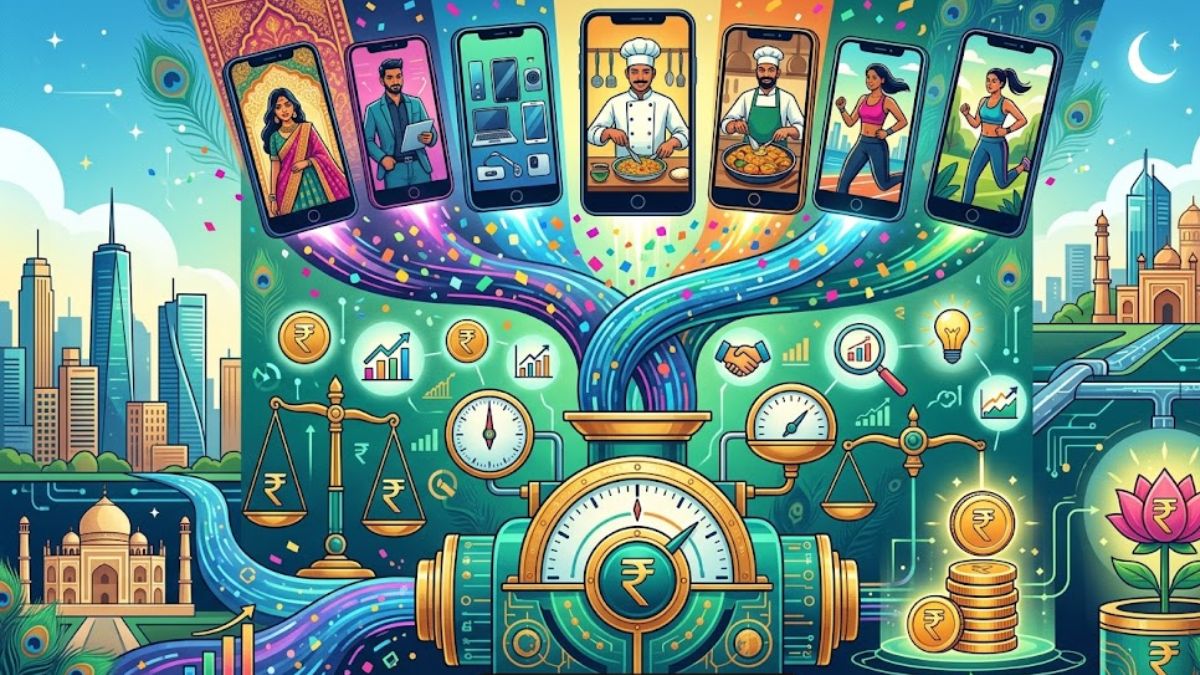
The Real Question Brands Are Asking in 2026
The Real Question Brands Are Asking in 2026. If you are running influencer campaigns today, there is one question that keeps coming back in every serious discussion. How do you measure influencer marketing ROI in a way that actually reflects business impact? Not reach. Not likes. Views on a reel that spikes for 48 hours and then disappears from memory. Real impact. The kind that shows up in revenue, customer acquisition, and repeat purchases. Because influencer marketing in India is no longer experimental. It is a scaled channel. Spend crossed ₹2,800 crore in 2025 and continues to grow at over 25% CAGR. With that level of investment, brands are no longer satisfied with “it performed well” type answers. They want clarity. They want proof. And this is where the gap starts showing.
Most reports still highlight vanity metrics. A campaign might show 1 million views, strong engagement, and good creator performance. On the surface, it looks like success. But when you trace it to the business side, the picture often changes. Traffic might be weak. Conversions inconsistent. Revenue unclear. That disconnect is what brands are struggling with in 2026. Because attention is not the same as impact. A viral reel can make people pause, but it does not always make them buy. A YouTube integration can build awareness, but the purchase decision might happen days later through a different channel. Without proper tracking, that journey gets lost, and ROI becomes guesswork.
What experienced teams have started doing differently is simple in principle
What experienced teams have started doing differently is simple in principle, but harder in execution. They stop treating ROI as a single number. Instead, they break it into a full funnel: Did the content create awareness in the right audience? Did it build trust or intent? Did it drive action like clicks or searches? Actually convert into sales? When you look at it this way, you realize most campaigns only measure the top layer properly. The rest is either estimated or ignored. That is why two campaigns with similar “performance” can produce very different business outcomes. One quietly drives real customers. The other creates noise that feels successful but does not move revenue much.
In 2026, stronger brands are fixing this by tightening attribution. They are using trackable links, creator-specific discount codes, post-purchase surveys, and platform conversion APIs. More importantly, they are looking beyond instant conversions and studying delayed impact too. Because not all influence is immediate. Sometimes a creator builds familiarity that converts later through direct search or other channels. Traditional reporting misses that completely. So the real shift happening now is simple but important. From vanity metrics to business outcomes. Campaign reporting to revenue attribution. From “how it performed” to “did it grow the business.” And that is the question brands will keep asking more aggressively going forward.
- The Real Question Brands Are Asking in 2026
- 1. Why Measuring Influencer Marketing ROI Has Become Critical
- 2. Understanding Influencer Marketing ROI Metrics India
- 3. How to Calculate ROI for Influencer Campaigns
- 4. Influencer Performance Tracking Tools That Actually Work
- 5. Social Media Campaign ROI Analysis: Beyond Likes and Views
- 6. Influencer Marketing Analytics India: What’s Changing in 2026
- 7. Influencer Marketing Strategy India 2026: ROI First Approach
- 8. ROI of Instagram Influencers India: Reality Check
- 10. Engagement vs Conversion Metrics
- 11. Best KPIs for Influencer Marketing in 2026
- 12. The Role of UGC Videos and AI Influencer Marketing
- 13. Common Mistakes While Measuring ROI
- 14. Real Case Insight from Indian Market
- 15. Conclusion: How to Measure Influencer Marketing ROI the Right Way
- About Hobo.Video
1. Why Measuring Influencer Marketing ROI Has Become Critical
1.1 Shift from Awareness to Accountability
There was a time when influencer marketing lived in a very comfortable space. Brands were not asking difficult questions. Agencies were not under pressure to prove deep impact. If a campaign “looked good” and got enough reach, it was considered successful. That phase is gone. Today, every serious brand conversation eventually circles back to one uncomfortable point. Visibility is not enough anymore. A reel with a million views might still be called “successful,” but the follow-up question is immediate now. What did it actually do for the business? Did it bring new customers? Did it reduce acquisition cost? Influence buying decisions in a measurable way?
If the answer is unclear, the campaign starts losing weight, no matter how viral it looked on the surface. This shift is not just a marketing trend. It is a business survival mindset. Brands are under pressure to justify every rupee. Leadership teams want clarity, not stories. And that is why learning how to measure influencer marketing ROI has moved from being a reporting exercise to a strategic requirement. In real campaigns, especially in D2C and fintech, this change is very visible. A brand that once celebrated engagement now sits in meetings asking why those engagements did not convert into transactions. The mood has changed from excitement to accountability. And that changes everything about how campaigns are planned, executed, and evaluated.
1.2 Budget Pressure and Performance Culture
Marketing today operates in a very competitive internal environment. Influencer marketing is no longer sitting alone as a “brand experiment.” It is competing directly with performance ads, SEO, affiliate marketing, and even offline activations for the same budget pool. And unlike earlier, none of these channels are being evaluated softly. Every channel is expected to prove its worth in numbers that the finance team can understand. This creates a performance-first culture where “good content” is not enough. Content has to justify cost. Creators have to justify selection. Campaigns have to justify continuation.

Amplify Your Brand,
One Influence at a Time.
In many brands, what used to be a creative conversation has now become a financial one. A simple example: a campaign that costs ₹10 lakh is no longer judged by how many people saw it. It is judged by what came back from it. If it did not produce enough qualified leads or sales contribution, the next question is obvious. Why continue it? This pressure forces marketers to move beyond vanity metrics. Likes and views are still tracked, but they no longer carry decision-making power on their own. They are starting points, not endpoints. The real expectation is performance clarity. And that is where ROI measurement becomes unavoidable.
2. Understanding Influencer Marketing ROI Metrics India
2.1 What Does ROI Really Mean Here?
On paper, ROI looks simple. Return on Investment = (Revenue Generated – Cost) / Cost. But in influencer marketing, the real-world application is rarely that clean. Because not every result shows up immediately. A user might watch a creator’s video today, not click anything, but remember the brand later when they see an ad or search it directly. Another user might engage heavily with content but never convert, while a quieter viewer might end up purchasing days later. So if you only measure direct revenue against cost, you end up underestimating the actual influence of the campaign.
This is where many brands misread performance. They assume influencer marketing “did not work” simply because the conversion did not happen in a trackable window. But in reality, influence often behaves like a delayed trigger, not an instant response. That is why influencer marketing ROI metrics in India need a broader lens. They have to include both immediate and indirect outcomes. In practical terms, ROI is no longer just a formula. It becomes a combination of measurable revenue and behavioral shifts. And this is where experience starts to matter more than dashboards. Teams that have run multiple campaigns begin to recognize patterns that raw numbers do not fully explain.
2.2 Types of ROI in Influencer Campaigns
To truly understand performance, brands are now separating ROI into layers instead of treating it as one flat number.
First is direct ROI.
This is the most visible and easiest to defend in meetings. It includes actual conversions like sales, sign-ups, leads, and app installs that can be clearly attributed to a creator or campaign. For example, a fintech app might see 5,000 installs from a creator campaign tracked through referral codes or UTM links. A beauty brand might see direct purchases driven by discount codes shared by influencers. This is the ROI that gets attention because it connects directly to revenue. But it is only part of the story.
Second is assisted ROI.
This is where things become more nuanced and, honestly, more realistic. Assisted ROI includes outcomes like brand recall, audience trust, engagement quality, search lift, and repeated exposure effects. It is not always visible in immediate sales reports, but it shows up in behavior over time. A user might not convert after watching one influencer video, but they might start recognizing the brand. They might search it later. They might click an ad more easily. Might trust the product faster when they finally reach the website. This is the part of ROI that many brands used to ignore, and then later realize they had undervalued. In real campaign analysis, especially for categories like skincare, fintech, and edtech, assisted impact often explains why conversions happen in waves rather than instantly. Both types of ROI matter because they represent two different layers of influence.
Direct ROI shows immediate business results. Assisted ROI shows long-term brand movement. And when you combine both, you finally get a more honest picture of how influencer marketing actually performs. Without this combined view, measurement feels incomplete. With it, brands start seeing the full journey, not just the last click.
3. How to Calculate ROI for Influencer Campaigns
3.1 Direct Revenue-Based ROI
At its core, calculating influencer ROI looks deceptively simple. If you strip everything down, it comes back to one basic equation that every marketer eventually writes on a whiteboard or in a spreadsheet: ROI = (Revenue generated − Campaign cost) ÷ Campaign cost. So if an influencer campaign costs ₹1 lakh and directly brings in ₹5 lakh in tracked sales, the ROI is 4X. That is clean. It is easy to explain. It is the kind of number leadership teams like because it feels decisive. But anyone who has actually run influencer campaigns knows this simplicity is slightly misleading. Because that ₹5 lakh rarely appears in a straight line.
It usually comes through a mix of trackable links, discount codes, and scattered attribution signals. A user might click once, leave, come back later, and then purchase through a different device. Another might see the content, not click at all, and still end up converting after searching the brand name manually. Still, direct revenue-based ROI remains the most trusted starting point. It is the anchor. It is what keeps influencer marketing grounded in business reality instead of perception. And in many Indian D2C setups, this model is where early confidence in influencer marketing is built. When a brand first sees consistent 3X, 4X, sometimes even 6X returns from a set of creators, it suddenly stops feeling like “branding spend” and starts feeling like a performance channel. That emotional shift inside teams is very real. It changes how budgets are allocated and how creators are selected going forward.
3.2 Attribution Models Matter
The problem starts when brands assume that all conversions happen immediately after exposure. That is not how real customer behavior works. Influencer content rarely acts like a direct response ad. It behaves more like a trigger that starts a chain reaction. A user watches a video today, forgets about it, then later sees the brand again, searches it, reads reviews, and finally converts days or even weeks later. If you only credit the last interaction, you miss the entire journey. This is why attribution models become critical.
First-click attribution gives credit to the moment of discovery. It tells you which creator actually introduced the brand into the user’s world. This is powerful for awareness-driven campaigns, especially when entering new audiences. Last-click attribution does the opposite. It gives full credit to the final touchpoint before conversion. It is clean, but often unfair to influencer marketing because it ignores the earlier influence that created intent. Multi-touch attribution is where things become more realistic. It spreads credit across different touchpoints in the journey. A creator might not get full credit for the sale, but they get partial recognition for starting or supporting the path.
In practice, brands that mature in influencer marketing quickly realize something important. No single attribution model tells the full truth. They start combining models instead of relying on one. And that is usually when reporting becomes more honest, but also more complex. Because suddenly, performance is not just about “who drove the sale,” but “who influenced the decision in the first place.”
3.3 Real Experience Insight
This is where things become very interesting on the ground. In conversations with Indian D2C founders and growth teams, a pattern shows up repeatedly. When they properly track assisted conversions, influencer marketing quietly becomes a much stronger channel than their initial reports suggested. Many brands report that influencer campaigns contribute to nearly 20% to 30% of assisted conversions, even when direct attribution looks modest. That means something very important is happening beneath the surface. The influencer is not always closing the sale. But they are shaping the decision.
They are building familiarity. They are reducing hesitation. Making the brand feel “safe enough” to buy from later. And this is where many teams make a mistake early on. They assume a non-click means no impact. But in reality, influence often shows up as delayed behavior, not instant conversion. One founder in the skincare space once described it very simply. “Our ads convert the customer, but influencers warm them up before they even trust us.” That line captures the reality better than most dashboards ever will. When brands ignore assisted impact, they undervalue creators. When they include it, influencer marketing often moves from being “uncertain spend” to one of the most consistent acquisition channels.
4. Influencer Performance Tracking Tools That Actually Work
4.1 Tools That Go Beyond Surface Metrics
As influencer marketing has scaled, so has the need for proper measurement systems. Today, brands cannot rely on screenshots or manual tracking anymore. They need structured influencer performance tracking tools that bring clarity across multiple campaigns and creators. These tools typically track engagement, reach, clicks, conversions, and sometimes even audience quality. More advanced platforms also try to measure sentiment, helping brands understand not just how many people reacted, but how they reacted.
Because not all engagement is equal. A comment that shows intent or curiosity is very different from a casual emoji reaction, even if both are counted the same in basic analytics. The real value of these tools is not just data collection. It is pattern recognition across campaigns. When you run multiple influencer collaborations over time, these platforms start revealing which types of creators consistently drive conversions versus which ones only drive visibility. And that difference becomes extremely important when budgets tighten.
4.2 Indian Market Tools
In the Indian ecosystem, several platforms have emerged to support this shift toward structured measurement. Tools like Winkl, Qoruz, and Hobo.Video are being used by brands to track campaign performance at a deeper level. They help map creator activity to engagement and conversion data, often across multiple campaigns rather than one-off posts. What makes these platforms useful is not just reporting, but comparison.
- Brands can start seeing patterns like:
- Which creators bring high-intent traffic consistently
- Which content formats perform better for conversions
- Which audience segments respond strongly to influencer campaigns
Over time, this builds a kind of internal intelligence system. It stops being about individual campaigns and starts becoming about long-term creator strategy. That is a big shift in maturity.
4.3 What Brands Often Miss
Even with good tools in place, many brands still struggle. Not because the data is missing, but because interpretation is weak. Dashboards are full of numbers, but numbers alone do not create decisions. This is one of the most common gaps in influencer marketing teams. They collect reports every month, but they do not always translate those reports into action. So what happens is predictable.
- They know which campaign got engagement.
- They know which post went viral.
- They know how many clicks happened.
But they still cannot confidently answer why one campaign converted better than another. And when insight is missing, strategy becomes repetitive instead of improving. This is why experienced teams eventually stop obsessing over dashboards alone. They start combining data with context, creative understanding, and audience behavior. Because in influencer marketing, data tells you what happened. But experience tells you why it happened. And without both, ROI measurement stays incomplete.
5. Social Media Campaign ROI Analysis: Beyond Likes and Views
5.1 The Problem with Vanity Metrics
Likes and views are the easiest numbers in the entire system. They are instant. They are visible. Feel satisfying. And that is exactly why they can be misleading. A campaign can easily cross a million views and still fail to generate meaningful business impact. This happens more often than brands like to admit. Because attention does not automatically equal intent. A viewer might watch a video while scrolling, enjoy it, even like it, and still forget the brand within seconds. There is no friction, but also no commitment. So when teams evaluate campaigns only on engagement, they often mistake attention for success. In reality, attention is just the first step, not the outcome.
5.2 What Actually Matters
When brands start taking ROI seriously, the focus shifts quickly from surface metrics to outcome-based metrics.
The most important ones usually include:
- Click-through rate, which shows whether content actually moved people to act
- Conversion rate, which shows how many of those actions became customers
- Cost per acquisition, which shows efficiency of spend in real terms
These metrics connect content directly to business performance. They remove guesswork and replace it with measurable outcomes. And once brands start tracking these consistently, something interesting happens. The definition of “good performance” changes completely. A post with fewer views but higher conversions starts being more valuable than a viral post with no business outcome. That mindset shift is often where influencer marketing becomes truly performance-driven.
5.3 Data Insight
One of the most consistent findings across campaign analyses is this. Campaigns optimized purely for engagement often deliver significantly lower ROI compared to campaigns optimized for conversion-focused outcomes. In some cases, the difference can be as high as 40% lower ROI when engagement is the only success metric. That gap is not small. It directly impacts how efficiently marketing budgets are used. And it explains why so many brands are now rethinking their influencer strategy.
They are no longer asking, “Did people like it?” They are asking, “Did it change anything for the business?” Because at the end of the day, influencer marketing is not just about attention anymore. It is about movement. From awareness to trust. From trust to action. And from action to measurable business growth.
6. Influencer Marketing Analytics India: What’s Changing in 2026
6.1 Rise of AI Analytics
Influencer marketing analytics in India is no longer just about reporting what happened after a campaign ends. That phase is slowly disappearing. In 2026, AI is changing the way brands even think about campaigns before they go live. Instead of waiting for results, brands are now using AI tools to predict performance in advance. These systems analyze thousands of data points in the background. Past campaign performance, audience behavior patterns, engagement quality, creator consistency, content format response, even timing of posting. And what comes out of this is not just data. It is probability.
- Which creator is likely to convert better for this category
- Which content format is likely to perform with a specific audience
- Which campaign structure is likely to deliver higher ROI
This is a very different mindset shift for marketers who were used to testing first and optimizing later. Now, in many cases, the testing is already happening virtually before money is even spent. What makes this powerful is the reduction of uncertainty. Campaigns no longer feel like bets. They start feeling more like calculated decisions. And for brands that have burned budgets on poorly matched influencer collaborations in the past, this feels like a huge relief. Because the biggest frustration earlier was not lack of effort. It was unpredictability.
6.2 Predictive ROI
One of the most interesting developments in influencer marketing analytics India is predictive ROI modeling. Instead of asking “what did this campaign do,” brands are now asking “what is this campaign likely to do.” AI models simulate outcomes based on historical patterns. They estimate reach, engagement, click-through behavior, and even conversion probability before the campaign launches. So instead of hoping a creator will perform, brands are now choosing creators based on predicted performance ranges. This changes planning completely. Earlier, influencer selection was heavily subjective. It was based on follower count, aesthetics, or brand fit. Now, data is increasingly guiding those decisions. And while it is not perfect, it is reducing costly mistakes.
In real-world usage, brands report fewer underperforming campaigns simply because weak combinations are filtered out earlier in the planning stage. It also changes how teams allocate budgets. Instead of spreading spend evenly across creators, they can now concentrate budgets where predicted ROI is stronger. This is making influencer marketing feel closer to performance marketing than ever before. But there is still one important human truth here. Prediction helps, but it does not replace intuition completely. Content still reacts to culture, timing, and emotion, which are not always fully predictable.
6.3 Real Impact
The real impact of AI-driven influencer analytics is already visible in campaign performance. Brands using these systems are reporting up to 25% improvement in campaign efficiency. Not just in engagement, but in actual cost per result. What this means in simple terms is better output from the same budget. Or similar output with lower spend. But the deeper change is not just efficiency. It is confidence.
Marketing teams now feel more in control of outcomes. There is less fear of random failure. There is more structure in decision-making. And that emotional shift inside teams matters more than people realize. It reduces hesitation in scaling influencer programs. When leadership trusts the numbers, budgets move faster. When budgets move faster, campaigns scale faster. That is how systems quietly evolve.
7. Influencer Marketing Strategy India 2026: ROI First Approach
7.1 Strategy Before Execution
There has been a quiet but important change in how strong influencer strategies are being built in India. Earlier, strategy often started with content ideas. Or influencer discovery. Or campaign concepts. In 2026, the starting point is very different. It begins with ROI clarity.
Before anything else, brands are asking: What do we actually want this campaign to achieve in measurable terms?
- Is it sales?
- Is it app installs?
- Is it lead generation?
- Is it awareness with future conversion impact?
This single question changes everything that follows. Because once the ROI goal is clear, everything else becomes structured around it. Influencer selection, content style, platform choice, budget distribution, tracking methods. Without this clarity, campaigns often become fragmented. They look creative, but they lack direction. With ROI-first thinking, even creative freedom becomes more focused. It is not creativity without boundaries. It is creativity with purpose. And that subtle difference is what separates average campaigns from high-performing ones.
7.2 Aligning Strategy with Metrics
One of the most common mistakes brands still make is using the wrong success metrics for the wrong objective. If the goal is sales, but the campaign is measured on reach, the outcome will always feel disappointing. If the goal is awareness, but the campaign is judged only on conversions, it will look underperforming even when it is doing its job. This misalignment is more common than most people admit. Strong influencer marketing strategy in India 2026 starts by fixing this alignment first.
When the goal is sales, brands focus heavily on conversion tracking, CTR, CPA, and revenue attribution. When the goal is awareness, they shift attention to reach quality, engagement depth, and audience relevance instead of raw conversions. The goal is trust building, they look at repeat exposure and sentiment rather than immediate clicks. This clarity reduces internal confusion dramatically. Teams stop arguing about whether a campaign “worked” and start discussing whether it achieved the intended outcome. That alone improves decision-making quality across the board.
8. ROI of Instagram Influencers India: Reality Check
8.1 Instagram Still Dominates
Even with the rise of new platforms, Instagram continues to be the most dominant space for influencer marketing in India. It is where most discovery happens. It is where most creator collaborations are executed. And it is where brands still see the most consistent engagement. But here is the important part. Instagram ROI is not uniform. Two campaigns with similar reach can produce completely different results depending on audience type, content quality, and creator trust level. That inconsistency is what brands are learning to manage in 2026 instead of ignoring.
8.2 Micro vs Macro Influencers
The debate between micro and macro influencers is no longer about who is “better.” It is about what role each plays in the funnel. Micro influencers often deliver stronger engagement because their audience feels closer, more personal, and more trust-driven. Their recommendations feel less like advertising and more like advice from someone familiar. Macro influencers, on the other hand, bring scale. They deliver reach quickly and create awareness at a much larger level. But when it comes to ROI, the best-performing campaigns rarely rely on one type alone.
Instead, they use a mix. Micro influencers build trust and conversion readiness. Macro influencers build visibility and awareness. When combined properly, they create a layered effect where awareness and conversion support each other. And in many Indian D2C campaigns, this blended structure consistently outperforms single-tier influencer strategies.
8.3 Data Insight
Across multiple campaign analyses, a consistent pattern shows up. Micro influencer campaigns often generate significantly higher engagement rates compared to macro campaigns, in some cases up to 60% higher on average. But engagement alone is not the end goal. What makes this important is what it leads to. Higher engagement often translates into stronger intent signals. More saves. More profile visits. Meaningful clicks. And eventually, better conversion efficiency when tracked properly. This is why brands are increasingly not choosing between micro and macro influencers. They are designing layered campaigns that use both strategically. Because ROI does not come from size alone. It comes from fit.
9. How to Track Influencer Campaign Success
9.1 Tracking Must Start Before Launch
One of the biggest mistakes brands still make is treating tracking as something that happens after the campaign ends. By then, it is already too late. If tracking is not built into the campaign from the beginning, you are essentially trying to reconstruct performance from incomplete signals. That leads to confusion, assumptions, and often incorrect conclusions. In 2026, strong campaigns are built with tracking in mind from day one. Every creator, every link, every code, every landing page is planned with measurement attached to it. Because without structure at the start, clarity at the end is almost impossible.
9.2 Key Tracking Methods
The most effective tracking methods are still surprisingly simple, but only when used consistently. UTM links help identify traffic sources clearly. Unique coupon codes connect influencers directly to sales. Dedicated landing pages isolate campaign performance from other traffic sources. When used together, they create a much clearer picture of how users move from content to conversion. The real power is not in any single method. It is in combining them. Because influencer journeys are rarely linear. Users interact in multiple ways before converting. So relying on one tracking method often gives a partial view.
9.3 Real Experience
In real campaign setups, brands that implement structured tracking from the beginning almost always report one thing consistently. Clarity improves significantly. Not just in numbers, but in decision-making. They stop debating whether influencer marketing “worked” and start understanding exactly how it worked. In many cases, teams report nearly 2X improvement in clarity simply because attribution was properly set up. And that clarity changes everything. Budgets become easier to justify. Creator selection becomes more rational. Campaign optimization becomes faster. And internal trust in influencer marketing increases. Because once you can see the journey clearly, you stop guessing. And in marketing, removing guesswork is often the real unlock.
10. Engagement vs Conversion Metrics
10.1 The Ongoing Debate
There is a debate that refuses to die in marketing rooms. Engagement versus conversion. And honestly, it is not a new argument. It has just become louder as influencer marketing has grown more expensive and more accountable. Some teams still defend engagement as the core success metric. Others push hard for conversions only. And both sides usually have valid points, depending on where the brand is in its journey. The reality is simpler than the debate suggests. Engagement and conversion are not competing metrics. They are connected stages of the same customer journey. Engagement shows attention. Conversion shows action. One without the other is incomplete. In most real campaigns, the tension between these two metrics is not about correctness. It is about timing and maturity of the brand.
10.2 When Engagement Matters
For newer brands, engagement is often the first meaningful signal that something is working. At that stage, people are still discovering the brand. They do not trust it yet. They are not ready to buy immediately. So forcing conversion expectations too early often leads to disappointment. Engagement in this phase is not just a vanity metric. It is early validation. It tells you whether the content is even resonating. Whether the message is being understood. Whether the audience is willing to pause and interact. And that matters because trust is not instant. It is built slowly through repeated exposure. In many early-stage D2C or startup campaigns, engagement acts like a foundation layer. Without it, conversions rarely happen in a meaningful way later. So in this stage, engagement is not the end goal. It is the signal that future conversions are possible.
10.3 When Conversions Matter
As brands mature, the conversation naturally shifts. Once awareness is established and trust exists, engagement alone stops being enough. At that point, the focus moves to conversions because the brand is no longer trying to introduce itself. It is trying to grow efficiently. This is where metrics like cost per acquisition, return on ad spend, and conversion rate become central. Because now every campaign is expected to contribute directly to revenue outcomes. In mature brands, influencer marketing is no longer just storytelling. It becomes a measurable acquisition channel. And in this stage, engagement is still useful, but only as a supporting indicator. Not the final decision-maker.
11. Best KPIs for Influencer Marketing in 2026
11.1 KPIs That Actually Matter
By 2026, brands have become far more selective about what they track. There is less obsession with surface-level dashboards and more focus on business-linked KPIs.
The most important ones are:
- Cost per acquisition (CPA)
This tells you how efficiently you are acquiring customers through influencers. It directly connects spend to results, which makes it one of the most important decision metrics. - Return on ad spend (ROAS)
This shows how much revenue is generated for every rupee spent. It helps compare influencer marketing with other performance channels like paid ads. - Customer lifetime value (CLV)
This is where things become more interesting. It goes beyond the first purchase and looks at how valuable influencer-driven customers are over time.
In many real cases, brands find something surprising here. Customers acquired through influencers often show higher trust and repeat purchase behavior compared to other channels. That changes how influencer marketing is valued internally.
11.2 Moving Beyond Basic Metrics
The biggest shift happening now is that brands are no longer satisfied with first-purchase data alone. They are starting to track repeat behavior.
- Are influencer-acquired customers coming back?
- Are they buying again without discounts?
- Are they becoming long-term users or one-time buyers?
This is where real ROI clarity emerges. Because a campaign that looks average on first conversion can sometimes outperform everything else when lifetime value is considered. And this is exactly what separates short-term reporting from long-term understanding. Influencer marketing, when done well, is not just about acquisition. It is about the quality of customers being acquired.
12. The Role of UGC Videos and AI Influencer Marketing
12.1 Why UGC Works
User-generated content style videos have become one of the most powerful formats in influencer marketing today. The reason is simple but important. They feel real. Unlike polished brand ads, UGC content feels like someone sharing an honest experience. That authenticity reduces hesitation in the viewer’s mind. And in marketing, reduced hesitation often leads to higher conversion rates. People do not just buy products. They buy reassurance. And UGC content provides that reassurance in a very natural way. This is why many brands see better ROI from simple, relatable content compared to heavily produced campaigns. It feels less like advertising and more like recommendation. And that shift in perception directly impacts performance.
12.2 AI Influencer Marketing
AI is now playing a quiet but powerful role in influencer marketing decisions. It is helping brands identify creators who are more likely to perform well for specific categories. Analyzing content patterns to predict engagement quality. It is even optimizing posting strategies based on historical behavior. In some cases, AI systems are also helping brands refine messaging before campaigns go live, improving content performance without increasing spend. But the most important role of AI is not replacement. It is filtering. It reduces bad matches. Reduces wasted spend. It helps brands avoid collaborations that look good on paper but perform poorly in reality. That alone improves efficiency significantly.
13. Common Mistakes While Measuring ROI
13.1 Overvaluing Reach
One of the most common mistakes is treating reach as success. Reach only tells you how many people potentially saw the content. It does not tell you whether they cared, engaged meaningfully, or took action. A campaign with high reach but no conversion impact can still look impressive in reports, but it does not contribute to business growth. And over time, relying on reach as a success metric leads to poor budget decisions.
13.2 Ignoring Attribution
Another major issue is ignoring attribution complexity. Many brands still rely on a single touchpoint to assign credit for conversions. This creates an incomplete picture. Because customer journeys are rarely linear. People rarely see one post and immediately buy. They go through multiple touchpoints before making a decision. When attribution is ignored, influencer impact is often undervalued, and campaigns are judged unfairly.
13.3 Poor Tracking Setup
A surprisingly common problem is weak tracking infrastructure. If links, codes, landing pages, or analytics setups are not properly configured before the campaign starts, the data that comes later is incomplete or misleading. And once data is incomplete, even the best analysis cannot fix it. This is why experienced teams always prioritize tracking setup before anything else. Because measurement cannot be an afterthought if ROI matters.
14. Real Case Insight from Indian Market
Across the Indian D2C ecosystem, one clear pattern stands out. Many brands are now allocating 30% to 40% of their digital budgets toward influencer marketing. But here is the interesting part. Only the brands that have structured ROI frameworks in place are consistently seeing stable and scalable growth from it. Others often struggle with inconsistency. Some campaigns perform well, others do not, and there is no clear reason why.
The difference is not influencer quality alone. It is measurement maturity. Brands that track properly understand what works and why. They refine faster. They scale smarter. Brands that do not track properly keep repeating experiments without learning. And over time, that gap becomes very visible in performance. It is not about how much they spend. It is about how clearly they understand what the spend is doing.
15. Conclusion: How to Measure Influencer Marketing ROI the Right Way
At the end of all the metrics, tools, and frameworks, the core idea is still simple. Influencer marketing ROI is not just about visibility or engagement. It is about outcomes. Real outcomes. Business outcomes. The kind that show up in revenue, customer growth, and long-term value. To measure it correctly, brands need to connect content to action, and action to revenue. That means tracking properly from the start. It means choosing the right metrics for the right goals. It means accepting that influence is not always immediate, but it is still measurable when looked at with the right lens. Because when influencer marketing is measured properly, it stops being a “creative experiment” and becomes a reliable growth channel. And in 2026, that shift is no longer optional. It is what separates brands that grow steadily from brands that only guess their way forward.
FAQs
What is influencer marketing ROI?
It is the return generated from influencer campaigns compared to the investment made.
How to measure influencer marketing ROI?
Use tracking links, conversion data, and attribution models.
Which metrics matter most?
Conversions, cost per acquisition, and ROI ratios.
Are likes important?
They matter, but they are not enough.
What tools help track ROI?
Analytics platforms, influencer tools, and CRM systems.
About Hobo.Video
Hobo.Video is India’s leading AI-powered influencer marketing and UGC company. With over 2.25 million creators, it offers end-to-end campaign management designed for brand growth. The platform combines AI and human strategy for maximum ROI.
Services include:
- Influencer marketing
- UGC content creation
- Celebrity endorsements
- Product feedback and testing
- Marketplace and seller reputation management
- Regional and niche influencer campaigns
Trusted by top brands like Himalaya, Wipro, Symphony, Baidyanath and the Good Glamm Group.
Let’s create a growth roadmap built just for your brand. We’re listening – register now.
Your reach deserves rewards. Let’s make that happen. Tap to sign up.

 Anooshka Pandey