
Introduction
Over the last few years, something quietly changed for Indian startups and D2C brands. Growth stopped feeling easy. There was a time when brands could run Meta ads, spend aggressively for a few months, and suddenly start seeing orders flowing in every single day. Founders felt optimistic because customer acquisition looked predictable. If you increased ad spend, sales usually followed. But slowly, that entire system started becoming emotionally exhausting for businesses. Advertising costs kept rising, competition exploded across every category, and consumers became harder to impress with shrinking attention spans. This is where the idea of Brand Reduced CAC became important, as brands started realizing that sustainable growth depends less on higher ad spend and more on lowering acquisition costs through better content, trust, and organic reach.
A lot of founders started feeling trapped in this cycle. Every month, marketing budgets increased, but results no longer felt stable. Some brands were spending lakhs just trying to maintain the same growth they once achieved much more cheaply. And honestly, what made it more frustrating was that many customers did not even stay loyal afterwards. They clicked an ad, bought once, disappeared, and never returned. That emotional frustration pushed many businesses toward one serious question: how do you grow a brand without constantly burning money on ads that people barely trust anymore?
That is exactly where the story of how a Brand Reduced CAC through influencer partnerships became so important across India. Many companies slowly realized something simple but powerful. People were no longer emotionally connecting with traditional advertising the same way they once did. Consumers had become too aware of polished marketing. Too aware of sales tactics. Banner ads started feeling invisible. Sponsored campaigns started blending together. But creators still held something brands were struggling to build on their own: trust.
People spend hours every day watching creators online now
People spend hours every day watching creators online now. Not because they want to see advertisements, but because they emotionally connect with them. A skincare creator talking honestly about acne feels relatable. A finance creator discussing money stress feels comforting. A fitness creator sharing personal struggles feels human. Over time, followers stop seeing creators as strangers and start emotionally trusting their opinions in small but powerful ways. That emotional trust completely changed influencer marketing India over the last few years.
Today, many brands that once depended heavily on paid advertising are shifting toward creators, communities, relatable storytelling, and UGC Videos because audiences respond differently to human experiences than to polished campaigns. Consumers may skip branded ads within seconds, but they often watch creator videos completely because the content feels natural instead of aggressively promotional. And honestly, that emotional difference changes conversion behavior more than many companies initially expected.
As a result, several Indian brands are now achieving surprisingly low acquisition cost outcomes through niche creator partnerships, organic customer acquisition strategies, and trust-driven influencer campaigns. Instead of chasing visibility alone, they are focusing on emotional credibility. This article explores how Indian brands are reducing CAC through influencer partnerships, creator-led storytelling, and community-driven marketing strategies that actually feel human in today’s internet culture.
- Introduction
- 1. Why Customer Acquisition Became Expensive in India
- 2. Understanding CAC and Why It Matters
- 3. How an Indian D2C Brand Reduced CAC Through Influencer Partnerships
- 4. Why Influencer Partnerships Work Better Today
- 5. The Role of UGC Videos in Lowering CAC
- 6. Strategic Influencer Selection Matters More Than Follower Count
- 7. The Biggest Influencer Marketing Mistakes Brands Make
- 8. How Creator Communities Build Sustainable Growth
- 9. The Whole Truth About Influencer Marketing ROI
- 10. AI Influencer Marketing Is Reshaping Campaign Execution
- 11. How to Become an Influencer in India Today
- 12. Where Brands Should Invest Their Influencer Budgets
- 13. How the Best Influencer Platform Supports Growth
- 14. Real Consumer Psychology Behind Creator-Led Purchases
- 15. Key Learnings From Brands That Successfully Reduced CAC
- 16. Summary: How a Brand Reduced CAC Successfully
- About Hobo.Video
1. Why Customer Acquisition Became Expensive in India
1.1 The Rising Cost of Paid Ads
A few years ago, running paid ads in India felt almost exciting for startups. Brands could launch Facebook or Instagram campaigns and start seeing conversions surprisingly fast. Customer acquisition felt measurable, scalable, and relatively predictable. Many founders genuinely believed performance marketing alone could build massive businesses long term. But after 2021, the entire digital advertising ecosystem became much more competitive and emotionally draining for brands trying to scale.

Amplify Your Brand,
One Influence at a Time.
Suddenly, every category became crowded. Skincare brands. Fashion startups. Finance apps. Wellness companies. Edtech platforms. Everyone started competing aggressively for the same audience attention online. According to Statista, India’s digital advertising industry crossed ₹50,000 crore in 2024, and that growth pushed advertising costs sharply higher across Meta, Google, and almost every major platform. CPMs increased. CPCs increased. Customer attention became more expensive every month. Many startups found themselves spending significantly more money just to maintain the same growth they once achieved much more cheaply.
But honestly, rising costs were only part of the problem. What frustrated founders even more was how emotionally disconnected paid ads started feeling. Customers clicked advertisements, purchased products once, and disappeared. Retention became weaker. Loyalty became harder to build. Brands realized they were spending heavily to acquire customers who often felt no real emotional attachment afterward. That realization changed how many businesses approached growth completely because acquisition alone no longer felt sustainable without trust and long-term connection.
1.2 Consumer Trust Shifted Toward Creators
At the same time paid ads became more expensive, something else quietly changed in consumer behavior. People stopped emotionally trusting polished advertisements the way they once did. Modern audiences became extremely good at recognizing marketing tactics online. Sponsored ads started feeling repetitive. Perfect brand messaging started feeling emotionally distant. Consumers no longer wanted to feel sold to constantly while scrolling social media after stressful days.
Instead, people started trusting creators much more deeply because creators felt emotionally familiar. A creator sharing personal skincare struggles feels more believable than a luxury beauty commercial. A finance creator explaining money mistakes feels more relatable than a polished banking campaign. Over time, audiences emotionally attached themselves to creators because the communication felt human instead of corporate. According to Influencer Marketing Hub, nearly 69% of consumers now trust creator recommendations more than traditional branded advertisements. And honestly, that statistic reflects something very real about internet culture today. Human experiences simply feel more emotionally trustworthy than polished sales campaigns.
This shift completely transformed influencer marketing India. Today, creators influence buying decisions across skincare, fintech, fashion, supplements, fitness, insurance, education, and almost every growing industry online. What became even more interesting is that micro-creators often started outperforming celebrities emotionally. Smaller creators usually build tighter communities where followers genuinely trust their recommendations because the relationship feels personal instead of distant. That is why many brands are now prioritizing organic customer acquisition through relatable creators instead of depending only on expensive paid advertising systems that audiences increasingly ignore emotionally.
2. Understanding CAC and Why It Matters
2.1 What is CAC?
CAC simply means Customer Acquisition Cost. In simple words, it represents how much money a company spends to acquire one paying customer. That spending can include paid ads, influencer partnerships, campaign management, content production, sales expenses, and everything else involved in convincing someone to finally make a purchase.
For example, if a startup spends ₹1 lakh on marketing and gains 500 customers from that effort, the CAC becomes ₹200 per customer. On paper, the calculation looks simple. But emotionally, CAC becomes one of the most stressful numbers founders constantly think about because it quietly decides whether growth feels sustainable or financially dangerous. If acquisition costs keep increasing while profits stay low, brands eventually start feeling trapped in endless spending cycles just to survive competitively online.
That is why reducing customer acquisition costs became such a huge priority for modern Indian startups. Every founder wants growth, but growth without profitability creates emotional pressure very quickly. Teams start panicking over budgets. Marketing departments face constant pressure to justify spending. Investors start questioning scalability. And slowly, brands realize they cannot rely only on expensive advertising forever if they want long-term sustainable growth.
2.2 Why CAC Alone Is Not Enough
But honestly, focusing only on CAC can also become dangerous if brands ignore what happens after the purchase itself. Acquiring customers means very little if those customers never return. Many companies became obsessed with lowering acquisition numbers while completely forgetting about emotional loyalty and retention. Someone buying once because of a discount campaign does not automatically mean the brand has built real trust.
That is why customer retention and acquisition should always work together emotionally. The most valuable customers are usually the ones who feel connected enough to return repeatedly over time. And this is exactly where strategic influencer partnerships become incredibly powerful. Creators do not just influence purchases before customers buy. They often continue reinforcing emotional trust after the purchase happens too. Followers keep seeing creators naturally use products, discuss experiences, answer questions, and integrate recommendations into daily life. That repeated emotional familiarity helps customers feel more confident and connected to brands long after the first transaction. And honestly, that emotional continuity matters deeply for improving marketing ROI sustainably. Because the brands winning today are not simply acquiring customers anymore. They are building emotional relationships strong enough to keep people coming back repeatedly in a world overflowing with endless choices and nonstop advertising noise.
3. How an Indian D2C Brand Reduced CAC Through Influencer Partnerships
3.1 The Starting Problem
In 2024, a mid-sized Indian skincare brand found itself stuck in a situation that honestly feels very familiar to a lot of startups today. From the outside, the company looked like it was growing normally. Ads were running daily. Orders were still coming in. Social media looked active. But internally, the marketing team was under constant pressure because customer acquisition was becoming painfully expensive month after month.
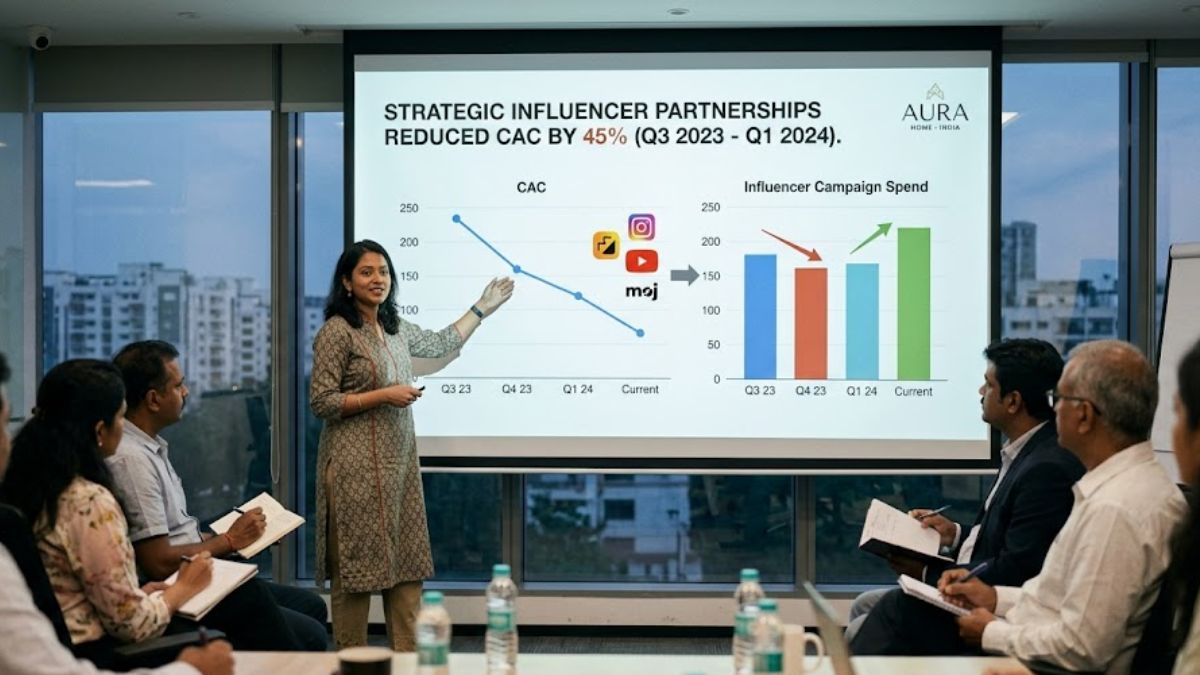
Their entire growth system depended heavily on Meta ads for years. And for a while, it worked beautifully. The brand scaled fast, performance campaigns delivered conversions consistently, and customer acquisition felt predictable. But slowly, something started changing. Ads that once performed well suddenly began losing effectiveness. The same creatives stopped grabbing attention. CPMs increased aggressively. Conversions dropped. Within just eight months, their CAC increased by nearly 42%, and emotionally, the team started feeling exhausted trying to maintain growth through paid ads alone.
What made the situation more frustrating was that the problems were happening everywhere at once. Customers were skipping ads almost instantly because they had become numb to promotional content online. Retention rates stayed weak because many buyers felt no emotional connection with the brand after purchasing. Repeat purchases started declining because acquisition-focused campaigns were not building real trust. And honestly, the company slowly realized something uncomfortable. They were spending huge amounts of money getting attention, but very little emotional loyalty was being created underneath it all.
That realization pushed the brand toward a major shift. Instead of aggressively increasing ad budgets again, they decided to explore influencer marketing and AI influencer marketing strategies more seriously. At first, it was simply an experiment to reduce acquisition pressure. But over time, that decision completely transformed how the company approached growth emotionally and strategically.
3.2 The Strategic Shift Toward Creators
One of the smartest things this brand did was resist the temptation to immediately chase celebrity influencers. Instead of focusing only on massive visibility, they focused on emotional trust. The marketing team understood something many companies still ignore. People do not automatically believe creators just because they are famous. Audiences trust creators who feel relatable, emotionally honest, and genuinely connected to their communities.
So the company started partnering with niche creators instead. Skincare educators who openly discussed acne struggles. Regional beauty creators who spoke naturally in local languages. Lifestyle influencers sharing everyday routines. College creators documenting affordable self-care habits. Wellness creators talking honestly about confidence and skin insecurities. The entire campaign strategy became less about “selling products” and more about creating emotionally believable conversations around skincare.
And honestly, that emotional difference changed everything. Instead of posting highly scripted promotional videos, creators started making UGC Videos showing how they actually used the products naturally in daily life. Some creators filmed nighttime routines while talking casually about stress and breakouts. Others shared before-and-after skin journeys in raw, unfiltered ways. The content no longer felt like advertising interrupting people’s feeds. It felt like real people sharing personal experiences honestly. Audiences emotionally relaxed while watching because the storytelling felt human instead of aggressively promotional. Slowly, the brand started experiencing something paid ads alone were struggling to create. Organic customer acquisition driven by emotional trust. Followers were commenting more genuinely. Conversations felt warmer. People started asking creators questions naturally about products instead of reacting to another obvious sales campaign. And honestly, that emotional credibility became more valuable than polished advertising ever was for the brand.
3.3 The Results After Six Months
Within six months, the results completely changed the company’s perspective on customer acquisition. And honestly, what surprised the team most was not just the lower CAC. It was how differently audiences emotionally responded to creator-led campaigns compared to traditional ads.
The brand reduced acquisition cost by nearly 37%, which immediately relieved massive pressure on marketing budgets. But the emotional engagement improvements were even more interesting. Engagement increased by 2.8 times because audiences were finally interacting with content instead of instantly scrolling away from it. Repeat purchases increased by 41% because customers now felt emotionally connected to both the creators and the products themselves. Website traffic grew by 58%, and retention rates improved by 22%, showing that creator-driven trust was creating longer-term customer relationships instead of one-time impulse purchases.
But one insight affected the company deeply. Influencer-generated videos were outperforming polished studio advertisements by almost three times in watch duration. People were spending far longer watching creators casually discuss skincare than watching expensive commercial campaigns the brand once believed looked more professional. That realization changed how the company viewed marketing completely. Because it proved something emotionally important about modern internet behavior. People do not automatically connect with polished perfection anymore. They connect with honesty, familiarity, vulnerability, and storytelling that feels emotionally real.
4. Why Influencer Partnerships Work Better Today
4.1 Consumers Want Human Experiences
Modern consumers are emotionally overwhelmed by advertising now. Everywhere people look online, someone is trying to sell something. Sponsored posts. Retargeting ads. Promotional emails. Influencer collaborations. Brand campaigns. After years of nonstop marketing exposure, audiences became mentally exhausted from constantly feeling targeted by businesses every time they open social media.
That is exactly why creators became so powerful emotionally. Creators do not always feel like advertisers. They feel like people audiences already know. Someone explaining a skincare routine casually while discussing daily stress feels emotionally softer than a polished beauty commercial demanding attention aggressively. Someone talking honestly about hair fall, acne, body confidence, or self-care struggles creates emotional familiarity that traditional advertising struggles to replicate naturally.
And honestly, human experiences simply stay in people’s minds longer than advertisements do. Audiences forget banner ads quickly because there is no emotional connection attached to them. But stories are different. A creator sharing vulnerable experiences while recommending a product creates emotional memory. People remember how content made them feel far more than they remember polished marketing messages. That emotional storytelling is exactly why influencer marketing has become so effective for brands trying to achieve low acquisition cost growth today.
4.2 Micro Influencers Often Deliver Better ROI
One of the biggest misconceptions in influencer marketing is believing larger creators automatically create stronger results. But honestly, many Indian brands are discovering the opposite now. Micro influencers often outperform celebrities emotionally because their audiences trust them more deeply.
Smaller creators usually build communities that feel much more personal and emotionally connected. Followers comment regularly. Conversations feel genuine. Recommendations feel believable because audiences still view the creator as relatable instead of distant. And that emotional closeness changes purchasing behavior significantly. People are naturally more likely to trust someone who feels accessible and familiar than someone who feels untouchably famous online.
That is why so many Indian brands now prioritize micro influencers for cost-effective customer growth campaigns. These creators usually offer higher engagement, stronger niche communities, better audience trust, and more affordable collaborations compared to celebrity campaigns. According to HubSpot, micro influencers often generate significantly higher engagement than macro creators because audiences emotionally interact with them more actively. And honestly, this trend has become especially powerful in India where regional creators and niche communities build incredibly strong emotional loyalty among followers.
5. The Role of UGC Videos in Lowering CAC
5.1 Why UGC Content Converts Faster
UGC Videos work because they emotionally feel like normal life instead of marketing. And honestly, that small difference completely changes how audiences react to content online. Consumers have become extremely skilled at identifying advertisements within seconds now. The moment something feels overly polished or aggressively promotional, attention disappears almost instantly. But creator-generated content feels softer. More natural. More emotionally believable.
When someone casually discusses a product during a daily routine, audiences subconsciously lower their skepticism because the content resembles a real human experience instead of a sales presentation. That emotional comfort matters deeply for conversions. People trust products more when they see ordinary users genuinely interacting with them instead of watching expensive commercial campaigns trying too hard to appear perfect.
And brands are realizing the value of UGC far beyond social media alone now. Companies reuse creator content across Meta ads, Amazon listings, landing pages, email campaigns, and WhatsApp marketing because the same emotionally relatable content continues performing strongly across multiple channels. Even production costs decrease because brands no longer need massive studio shoots constantly. A simple, emotionally honest creator video often outperforms expensive campaigns because audiences emotionally connect with authenticity much faster than perfection.
5.2 AI UGC Is Expanding Rapidly
AI UGC is growing rapidly because modern content demands became overwhelming for brands emotionally and operationally. Social media never stops moving anymore. Brands constantly need more videos, more creatives, more testing, more engagement formats. So naturally, AI tools started becoming attractive because they help companies generate creator-style content much faster and at larger scale.
But honestly, even as AI influencer marketing becomes more advanced, one thing still remains deeply true. Human emotion cannot be fully automated. Audiences emotionally recognize real experiences in subtle ways that technology still struggles to imitate naturally. The warmth in someone’s voice. The nervous honesty while discussing personal insecurities. The imperfect storytelling that makes people emotionally believe what they are hearing. Those things still matter enormously.
That is why the most successful Indian brands today are not choosing between AI and creators completely. They are blending both carefully. AI improves efficiency, scalability, and production speed. Real creators bring emotional trust, vulnerability, and authenticity. And honestly, that balance creates some of the strongest engagement outcomes because audiences still want content that feels emotionally human underneath all the technology driving modern marketing.
6. Strategic Influencer Selection Matters More Than Follower Count
6.1 Choosing the Right Creators
Most brands, especially when they’re starting out or scaling fast, naturally get impressed by big numbers. A creator with millions of followers feels like a safe bet. It gives a sense of instant reach, like the message will automatically land everywhere. On a presentation slide, it looks powerful. In real life, it often doesn’t play out that simply. Because reach doesn’t always mean attention, and attention doesn’t always mean trust. There are many cases where a huge audience watches a video, but nothing really happens after that. No real comments, no curiosity, no emotional response. It just gets consumed and forgotten within seconds. That’s usually the moment brands start realizing something important is missing.
What actually drives results is not how many people see the content, but how many people believe the person saying it. Smaller creators with tighter communities often perform better because their audience actually listens. There’s a sense of familiarity, like they’re hearing from someone they already know. That trust is what quietly turns content into conversions.
6.2 Regional Creators Drive Better Results in India
India has a very emotional relationship with language and culture. People don’t just understand language here, they feel it. So when a creator speaks in a way that matches someone’s daily life, the connection becomes almost instant. It doesn’t feel like marketing at that point. It feels like someone talking directly to you. That’s why regional creators often outperform expectations. A simple video in Hindi, Tamil, Bengali, Marathi, or Telugu can feel far more personal than a highly polished English campaign. Not because English content is less valuable, but because familiarity lowers resistance. And when people feel comfortable, they are far more open to listening.
This becomes even more visible outside metro cities. In Tier 2 and Tier 3 markets, people respond more strongly to creators who feel like part of their world. Someone who talks like them, understands their routine, and reflects their lifestyle. That emotional closeness is what drives stronger engagement and better conversions.
7. The Biggest Influencer Marketing Mistakes Brands Make
7.1 Treating Creators Like Ad Agencies
One of the most common mistakes brands make is trying to control everything too tightly. It usually starts with good intentions. They want clarity. They want consistency. Want the message to be perfect. So they send scripts, instructions, and detailed guidelines for how every line should be spoken.
But somewhere in that process, the content starts losing its natural flow. It no longer sounds like a real person sharing something. It starts sounding like something that was written in a meeting room and approved by multiple layers of review. And audiences can sense that shift very quickly. When content feels forced, people don’t always complain about it directly. They just stop caring. The engagement drops. The comments feel colder. The connection disappears. Because people don’t follow creators for perfect messaging. They follow them for personality and honesty. Once that disappears, the influence weakens quietly.
7.2 Ignoring Long-Term Partnerships
A lot of brands still treat influencer marketing like a one-time activity. One post, one campaign, one short burst of attention, and then they move on. It feels efficient on paper, but emotionally, it doesn’t really build anything lasting with the audience. Trust doesn’t happen in a single interaction. It builds slowly when people keep seeing the same creator using or talking about something naturally over time. That repetition creates familiarity. And familiarity slowly turns into belief without forcing anything.
Eventually, the product stops feeling like a “promotion” and starts feeling like something genuinely part of the creator’s life. And that shift is important because people trust what feels consistent more than what feels sudden or temporary.
7.3 Focusing Only on Vanity Metrics
It’s very easy to get carried away by numbers that look good at first glance. Views, likes, reach, shares. They all feel like success because they are visible and easy to measure. But they don’t always reflect what actually happened emotionally. A video can perform extremely well on paper and still leave no real impact. Someone might watch it for a few seconds, scroll away, and never think about it again. That kind of attention looks good in reports but doesn’t move the business forward in any meaningful way.
What actually matters is behavior after the content. Did someone save it? Did they click? These are the signals that show whether influence actually happened or it was just temporary attention.
8. How Creator Communities Build Sustainable Growth
8.1 Communities Create Loyalty
The real shift in digital marketing is that people don’t just follow creators anymore, they stay with them. Over time, these audiences turn into small communities where trust builds naturally through repeated content and shared experiences. When a brand enters through a creator like this, it doesn’t feel like an interruption. It feels like a natural part of what the audience is already watching and engaging with. There’s less resistance because the emotional connection already exists before the product even appears. That’s what makes this model so powerful. You’re not trying to grab attention from scratch every time. You’re entering a space where attention already exists, and trust is already forming.
8.2 Trust Reduces Friction
Every purchase decision has some level of hesitation behind it. People pause. They think. They compare. That’s normal, especially online where trust has to be built without physical interaction. But when a trusted creator recommends something, that hesitation becomes smaller. It feels less risky because the recommendation is coming from someone familiar, not a random brand trying to sell something. That’s the real advantage here. Influencer marketing doesn’t force people to buy. It simply reduces the doubt that usually stops them. And once doubt reduces, decisions become much easier and much faster.
9. The Whole Truth About Influencer Marketing ROI
9.1 Measuring Real ROI
Influencer marketing only works properly when there is real alignment. Between the creator, the audience, and the product. When that alignment is missing, even expensive campaigns can feel flat or disconnected. The best campaigns usually don’t feel like campaigns at all. They feel like natural conversations. That happens when brands understand the audience properly, choose creators who already speak to that audience, and allow the message to be delivered in a way that feels human instead of controlled. When everything lines up like that, results don’t feel forced. They feel organic. And that’s usually when performance becomes consistent.
9.2 Attribution Is Improving
Earlier, one of the hardest things about influencer marketing was understanding what actually worked. Brands could see views and engagement, but it wasn’t always clear how much of it translated into real sales. That’s improving now with better tracking tools like UTM links, coupon codes, affiliate systems, and analytics dashboards. Brands can finally see how creator content contributes to actual conversions instead of guessing. This clarity has changed everything. Influencer marketing is no longer just seen as branding. It’s becoming a measurable growth channel where emotional influence and data now work together in a much more structured way.
10. AI Influencer Marketing Is Reshaping Campaign Execution
10.1 Automation Is Increasing Efficiency
There’s been a very noticeable shift in how influencer campaigns are executed today, especially inside fast-growing D2C and startup teams. Earlier, a lot of the work felt manual and, honestly, quite draining. Teams would spend hours going through creator profiles, guessing whether an audience was real or inflated, and hoping the collaboration would work once it went live. It wasn’t uncommon for campaigns to feel like a mix of excitement and uncertainty at the same time, because so much depended on instinct.
Now, with AI tools quietly entering the workflow, that entire process feels less chaotic. Not perfect, not magical, but definitely more structured. Teams can now filter creators faster, understand audience behavior more clearly, and even spot patterns in engagement that were previously invisible. In real campaign environments, this has reduced a lot of wasted effort. What used to take days of manual research now often gets compressed into a few focused hours, which gives teams something very valuable back: mental space to think strategically instead of constantly reacting.
10.2 Human Creativity Still Wins
Even with all this technological support, something very important has remained unchanged in real campaigns: people still respond to people, not systems. No amount of automation has been able to replace that emotional pull when someone speaks honestly on camera. There’s a reason why certain videos stick in your mind even when they are not technically perfect, and others with higher production quality are forgotten instantly.
In real-world campaigns, this becomes very clear very quickly. Audiences don’t connect with polished messaging alone. They connect with small imperfections, personal experiences, and the feeling that someone is actually sharing something they believe in. That’s why the most successful brands don’t rely only on AI or only on creators. They combine both. AI handles the structure and scaling side of things, but creators bring the emotional weight that actually makes people trust the message. Without that human layer, everything else feels empty, no matter how advanced the system is.
11. How to Become an Influencer in India Today
11.1 Authenticity Matters More Than Perfection
If you talk to creators who have actually grown steadily over time, most of them will say something very similar. The beginning always feels slow, even discouraging. You post videos, you put effort into editing, and still the response feels almost invisible at first. That’s usually the stage where most people quit, thinking they are doing something wrong. But in reality, that phase is more normal than people realize.
What actually changes things is not sudden virality, but consistency paired with honesty. When a creator keeps showing up, keeps talking in a natural way, and doesn’t try too hard to be perfect, something gradual starts happening. A small group of people begins to trust them. Then that group slowly grows. And over time, that trust becomes more valuable than numbers. Because in the end, people don’t follow perfection, they follow familiarity and emotional comfort.
11.2 Brands Prefer Relatable Creators
From a brand’s point of view, something interesting has changed in the last few years. Earlier, big influencers were automatically seen as the safest option. But after running enough campaigns, many brands have realized that size alone doesn’t guarantee results. In fact, sometimes smaller creators perform better because their audience actually listens instead of just scrolling past.
This shift has opened up a very real opportunity for everyday creators. People who may not have massive reach but have real influence within their niche communities are now getting consistent brand collaborations. And what brands are really valuing is not just visibility, but response. If a creator can make even a small audience act, trust, or engage meaningfully, that becomes far more powerful than large passive numbers.
12. Where Brands Should Invest Their Influencer Budgets
12.1 Short Video Content Delivers Best Results
If you look at how people consume content today, attention has become extremely fast-moving. Most users are not sitting and watching long promotional videos anymore unless something immediately feels interesting or relatable. The first few seconds decide everything. Either someone stays, or they scroll away without thinking twice.
That’s exactly why short-form content has become the strongest format in influencer marketing. Reels, Shorts, and simple UGC-style videos fit naturally into how people already behave online. They don’t feel like “ads” in the traditional sense. They feel like everyday content someone casually shared. And because of that, brands are seeing better retention, higher watch time, and more natural engagement compared to heavily produced campaigns that feel distant or overly planned.
12.2 Long-Term Creator Networks Matter
One of the most important lessons brands are slowly learning is that influencer marketing doesn’t work well as a one-time activity. A single post might create awareness, but it rarely builds trust on its own. Trust comes from repetition, from seeing the same creator talk about or use something over a longer period in a natural way.
When brands shift toward long-term creator relationships, something interesting happens. The content stops feeling like a campaign and starts blending into the creator’s normal life. Audiences begin to accept the product more naturally because it feels like an ongoing choice, not a one-time promotion. This consistency builds familiarity, and familiarity slowly builds confidence. Over time, that emotional stability becomes one of the strongest drivers of both conversions and retention, far more than isolated viral moments ever could.
13. How the Best Influencer Platform Supports Growth
13.1 Technology Simplifies Campaign Management
If you’ve ever actually managed influencer campaigns, you know it rarely starts off as smoothly as it looks from the outside. At first, everything feels manageable. A few creators, a few messages, a few posts. But as soon as things scale even a little, it can get overwhelming very quickly. Conversations get scattered, approvals get delayed, tracking becomes messy, and suddenly the whole process starts feeling heavier than the actual marketing itself.
That’s where a good platform quietly changes things in a very real, practical way. It doesn’t feel like some fancy upgrade. It feels like relief. Everything comes into one place creators, communication, tracking, payments, performance. In real teams, this removes a lot of daily stress that most people don’t even talk about. Instead of chasing updates all day, marketers finally get time to think about what actually matters: what kind of content is connecting with people and why.
13.2 Platforms Help Smaller Brands Compete
Not too long ago, influencer marketing felt like something only big brands could really do properly. You needed large budgets, agency support, and access to well-known creators. Smaller brands often looked at it from the outside and assumed it wasn’t for them yet.
But that gap has changed a lot. Now even small brands are running structured creator campaigns without burning huge amounts of money. They can test, learn, and scale slowly instead of betting everything on one expensive campaign. And in real terms, this has completely changed how many startups in India grow today. Instead of depending only on ads, they are building steady growth through creators who feel more relatable and more trusted.
14. Real Consumer Psychology Behind Creator-Led Purchases
14.1 People Buy Emotionally
Most people don’t like admitting it, but buying decisions are rarely fully logical. Something catches attention first. A feeling, a curiosity, a small emotional pull. Then later, the mind steps in and builds reasons to justify it. That’s usually how it actually happens in real life. Creators tap directly into that emotional layer without even trying too hard. When someone shares a personal experience, talks casually about their routine, or shows how something fits into their life, it doesn’t feel like marketing. It feels like a moment you’re watching, almost unintentionally. And that feeling is what slowly moves people closer to trying something themselves.
14.2 Familiarity Builds Confidence
Very few people buy something the first time they see it. Most of the time, it takes multiple exposures. You see it once, ignore it. See it again, register it. See it a third time, and it starts feeling familiar. That familiarity quietly builds comfort in the background. And that’s where creators make a real difference. When you keep seeing the same person talk about or use something over time, it stops feeling like an ad. It starts feeling normal. So when the moment finally comes to make a decision, there’s less hesitation. It already feels familiar, almost safe in a way, and that emotional ease is what actually drives conversion more than anything loud or aggressive.
15. Key Learnings From Brands That Successfully Reduced CAC
15.1 Practical Lessons for Indian Brands
When you look at brands that have genuinely brought down their customer acquisition costs, the interesting thing is that none of them did it through one dramatic move. It was always a slow shift in thinking. They stopped treating influencer marketing as a one-time experiment and started treating it as a long-term system. Over time, they leaned into creators who felt real instead of just famous. They focused more on trust than reach. They started using UGC not just for social media, but across ads, websites, and retargeting campaigns. Slowly, marketing stopped feeling like constant pressure to spend and started becoming something more stable something that actually builds momentum instead of resetting every month.
15.2 Execution Reality on the Ground
On the execution side, what really made the difference was simplicity. The brands that performed better didn’t try to control everything. They didn’t over-script creators or over-engineer content. They allowed space for personality, for imperfection, for natural expression. And that shift mattered more than most people expect. Because once content starts feeling human again, people respond differently. They don’t just scroll past it. They pause. Relate. They trust it a little more. And that small emotional difference is often what separates high-cost campaigns from ones that actually bring down acquisition cost over time.
16. Summary: How a Brand Reduced CAC Successfully
16.1 Key Lessons From the Article
When you step back and look at everything together, the pattern becomes very clear. Reducing customer acquisition cost isn’t about chasing shortcuts or viral moments. It’s about building trust slowly, through people, over time. Brands that get this right don’t rely on loud advertising. They rely on creators who feel real, consistent storytelling, and content that doesn’t feel forced. Over time, audiences stop feeling like they are being sold to and start feeling like they are simply discovering something through someone they already trust.
UGC, regional creators, long-term partnerships, and even AI tools all play a role, but the core never really changes. It still comes down to human emotion. And brands that understand that don’t just reduce CAC. They build something much more valuable without even forcing it long-term belief in what they offer.
Frequently Asked Questions
What is CAC in influencer marketing?
CAC means Customer Acquisition Cost. It measures how much a brand spends to acquire one customer. Influencer marketing can reduce CAC because creator recommendations build trust faster than traditional ads. This often improves conversions while lowering marketing spend per customer.
Why are Indian brands investing heavily in influencer marketing?
Indian consumers trust creators more than advertisements today. Therefore, brands use influencer marketing India campaigns to increase engagement, improve credibility, and achieve cost-effective customer growth.
Do micro influencers perform better than celebrities?
In many cases, yes. Micro influencers usually have stronger audience relationships and higher engagement rates. Consequently, they often deliver low acquisition cost outcomes compared to celebrity campaigns.
What are UGC Videos?
UGC Videos are user-generated videos created by customers or creators. These videos feel authentic and relatable. Therefore, they often perform better than polished advertisements in modern marketing campaigns.
How does AI influencer marketing help brands?
AI influencer marketing helps brands identify creators, analyze audiences, detect fake followers, and optimize campaign performance. This improves efficiency while supporting improving marketing ROI.
About Hobo.Video
Hobo.Video is India’s leading AI-powered influencer marketing and UGC company. With over 2.25 million creators, it offers end-to-end campaign management designed for brand growth. The platform combines AI and human strategy for maximum ROI.
Services include:
- Influencer marketing
- UGC content creation
- Celebrity endorsements
- Product feedback and testing
- Marketplace and seller reputation management
- Regional and niche influencer campaigns
Trusted by top brands like Himalaya, Wipro, Symphony, Baidyanath, and the Good Glamm Group.
If you are a brand looking for low acquisition cost growth, stronger engagement, and scalable creator partnerships, now is the right time to work with Hobo.Video and build campaigns that truly connect with modern Indian audiences.
Let’s take your brand from “trying” to “thriving.” We’re just a click away.
The best part? No minimum followers needed. Just real content. Sign up.

 Anooshka Pandey